
Mad Jesty
The Madness of King George III
by Alan Bennett
Putney Theatre Company at the Putney Arts Theatre until 24th October
Review by Denis Valentine
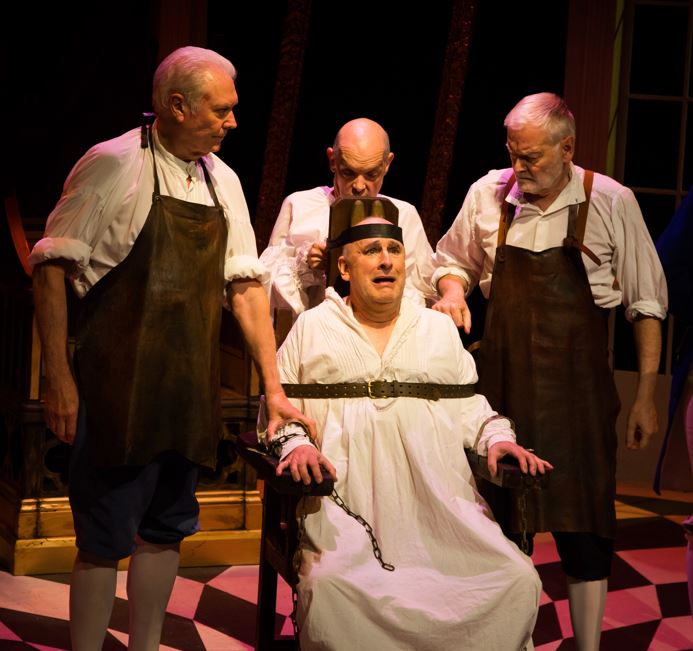
Putney Theatre delves into the summer of 1788 with its production of Alan Bennett’s The Madness of King George III. Using the large cast and great resources available, the company has managed to create a show that has a great blend of emotion, comedy and tragedy. This all the while weighted under satirical nature of Bennett’s work, the piece and its cast offer audiences an interestingly entertaining look and reflection on this time in British history.
As the titular character King George, Peter Singer is stretched to portraying a great range of different emotions and conditions and manages to handle them all with good guile and energy. His performance garners sympathy and, as the obvious linchpin of the play, his performance keeps everything on track and skilfully allows for the different storylines and branches to play off the events befalling the King.
Read more…1179 Meets 1935 Meets 2026
Murder in the Cathedral
by T S Eliot
Orange Tree Theatre at St John the Divine, Richmond until 7th November
Review by Patrick Shorrock
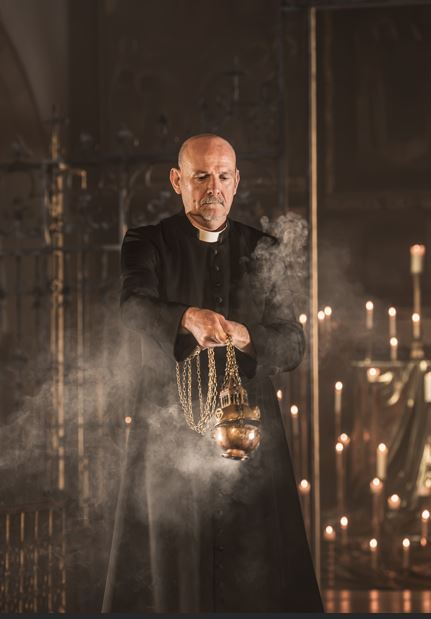
Just after lockdown, Ralph Fiennes gave readings of T S Eliot’s Four Quartets in the theatre. Even though not actually drama, Eliot’s poetry made for a riveting evening. While Eliot wrote several plays, it is very welcome to encounter the most famous of them in a production by the Orange Tree Theatre. Sensibly they have moved across the road to the church of St John the Divine, Richmond, which gives them very much the right environment for a play that is set in a cathedral, as well as enabling work on the renovation of their theatre building to continue.
Sacred space being the site of deliberate murder is somehow far more shocking in an actual church. Here, priests in full vestments are in their natural environment, a holy place, fragrant with incense. Rebel Archbishop of Canterbury, Thomas Beckett ascends an actual pulpit when he preaches on Christmas morning.
Read more…Healing in Ealing
Faith Healer
by Brian Friel
Questors Productions at the Questors Studio, Ealing, until 24th October
Review by Andrew Lawston
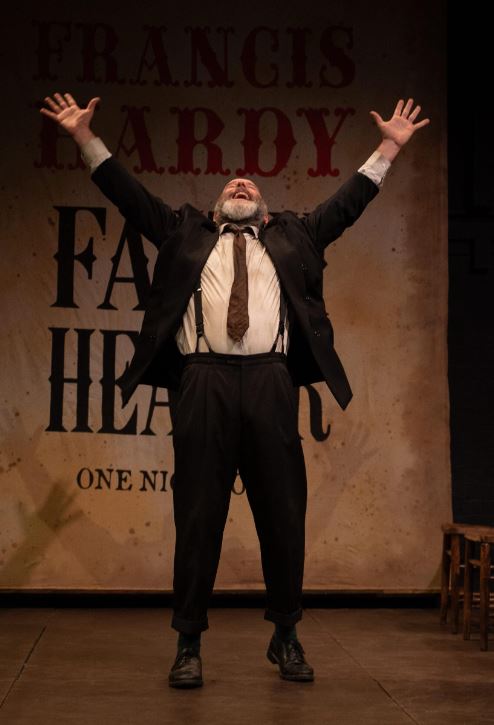
In an era of fake news, AI content, social media misinformation, and polarised attitudes on any issue you care to mention, unreliable narrators have increasingly moved from fiction to the forefront of our everyday lives, and as such this evening’s production at the Questors Studio feels particularly timely.
Brian Friel’s Faith Healer is a deceptively simple tale of Frank Hardy, a travelling faith healer who journeys through the Welsh, Scottish, and Irish countryside with his partner Grace and his manager Teddy, attempting to cure the sick. Against black walls adorned with a single enormous poster for Frank’s act, the play is told in four lengthy monologues, each of them almost a short play in its own right. But each of the monologues returns to the same events and relationships, and all of them tell a slightly different story.
Are these characters misremembering, due to long years and the effect of alcohol, or are they deliberately lying? And are they lying to the audience, to each other, or to themselves?
Read more…Not Entertaining Angels
Angel’s Bone
by Du Yun, libretto by Royce Vavrek
English National Opera at the London Coliseum until 31st October
Review by Patrick Shorrock
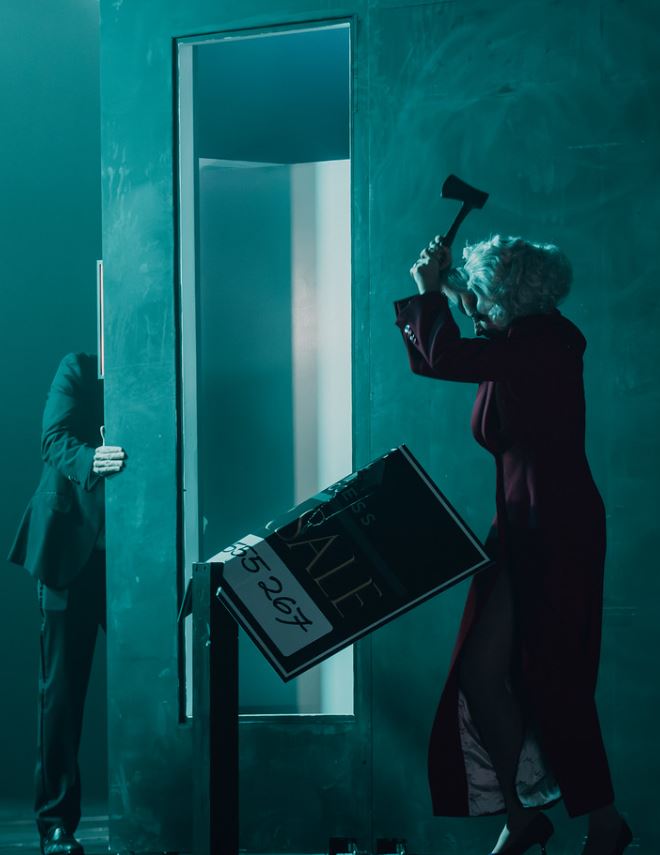
This was a rather downbeat launch to English National Opera’s new season. Composer Dun Yun and librettist Royce Vavrek decided on human trafficking as their subject, so this piece is never going to be great night out material.
Unfortunately, Du Yun and Vavrek had the idea that the victims of human trafficking should be two angels who have been injured when they fell to earth. This certainly gives rise to some resonant and disturbing images, as the angels are pruned of their wings and stripped of their feathers. But it comes at the cost of making the action remote from the awful reality of human trafficking. Implausibility is further enhanced by the references to “cash preferred” and “bounced cheques” (surely out of date even in 2017, when the piece had its New York premiere). Vavrek’s vague libretto disdains clarity, and the plot summary in the programme does not supply details of what takes place in the end.
Read more…Affairs of Mate
The Marriage of Figaro
by Wolfgang Amadeus Mozart, libretto by Lorenzo Da Ponte after Pierre-Augustin Beaumarchais
Glyndebourne Productions at the Glyndebourne Festival Theatre until 7th November
Review by Michael Rowlands
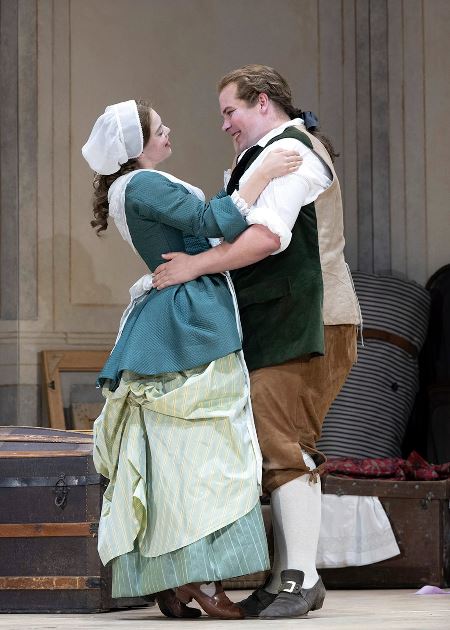
One can’t help but think that if we have further summers as hot as the summer of 2026, then the “Autumn Season” will become the favourite for the audiences at Glyndebourne. In mid-October it was a perfect evening, mild and balmy, but it was also clear that the audience was thoroughly relaxed and enjoying themselves. Hardly a dinner jacket in sight, so all nice and informal, as the dress code is casual.
Read more…Not In Mine
The Cherry Orchard
by Anton Chekhov, in a version by Ben Clare
Teddington Theatre Club at the Hampton Hill Theatre until 16th October
Review by Polly Davies
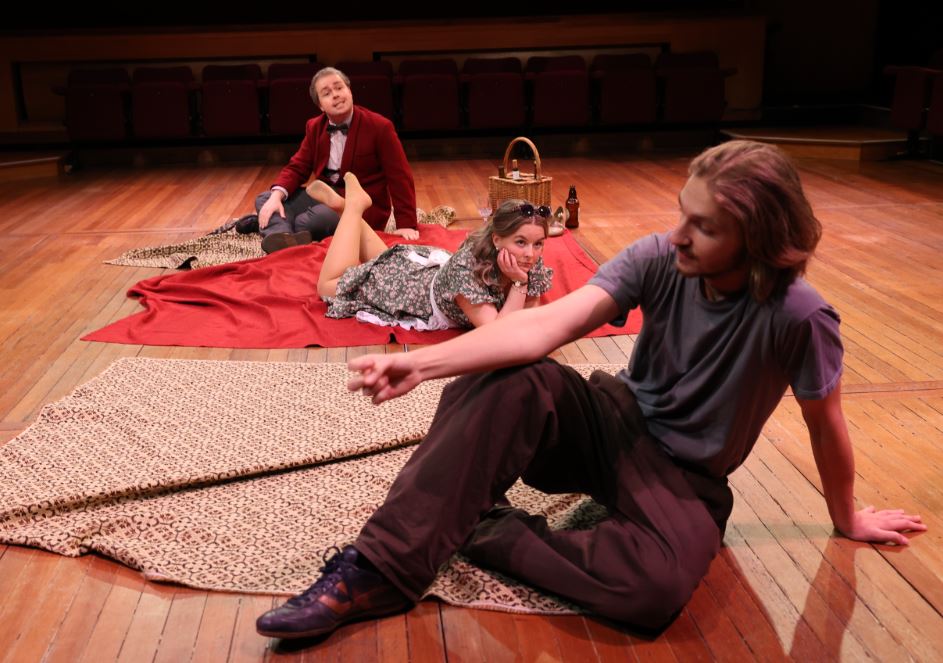
With wars, social media and AI competing to disrupt our way of life it is not surprising that Chekhov’s The Cherry Orchard is having something of a revival. And TTC’s is a fascinating and sometimes intense interpretation of this well-known play.
The plot follows the emotional reunion of Liubov Ranavskaya, a Russian aristocratic, with her childhood home. Her abiding memories are of the large cherry orchard that is a well-known feature of the estate, and the death of her young son. The play is set in the early part of the 20th Century; a time of change in Russia. The emancipation of the serfs at the end of the last century is bringing social change. Life is no longer easy for the elite, and a new middle class is emerging which both resents and seeks to emulate the aristocracy. A communist ideology is emerging which, before long will seed the Russian revolution. Against this background, Liubov and her family have lost the wealth and position they had taken for granted and their family estate is up for sale. And to make matters worse her beloved cherry orchard is likely to be cut down and replaced by Dachas, holiday homes, for the new middle classes.
Read more…Habitable Histories
Blood of My Blood
by Joy Nesbitt
The English Stage Company at The Royal Court Theatre, Chelsea until 7th November
Review by Ravenna Vale
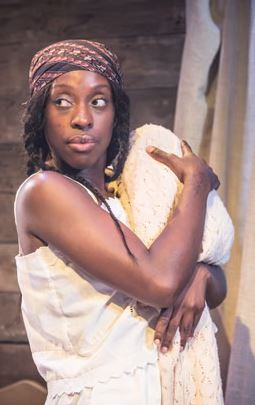
There are histories that refuse to remain buried. They linger in the walls of old houses, in the silences between generations, and in the lives of those who inherit the consequences of events they never witnessed. In Blood Of My Blood, playwright Joy Nesbitt brings these ghosts into the present, crafting a searching, provocative drama about ancestry, ownership and the uneasy question of who has the right to claim a story. Staged at the Royal Court Theatre, this is a production of considerable ambition, emotional depth and startling theatrical intimacy, elevated by an immersive design and a company of actors whose performances breathe extraordinary life into its intergenerational narrative.
The play’s setting is a cabin in South Carolina, bridging 1862 and the present day. Once a home during the American Civil War, it becomes, in contemporary America, a ‘fashionable’ Airbnb, where a pregnant Black woman turns to conjure up the voices of her ancestors in search of answers. Nesbitt understands that the past is not merely a sequence of events to be revisited; it is an active presence, shaping identity, complicating belonging and demanding recognition. The cabin becomes a repository of memory, a contested inheritance and a reminder that history is never as distant as those who benefit from forgetting might wish. What happens when a place marked by suffering becomes a consumer experience? And what does it mean to inhabit a space whose history has been repackaged, sanitised or simply ignored?
Read more…Mesmerising
An Oak Tree
by Tim Crouch
Francesca Moody Productions at The Other Palace, Victoria until 15th November
Review by Claire Alexander
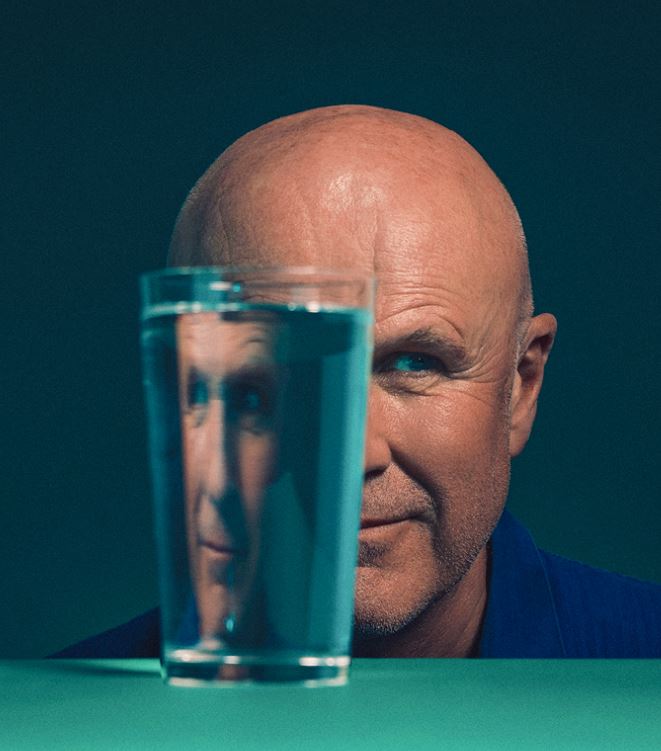
Could this be the future of theatre? At a time when audiences are dwindling, ageing, and less engaged with live theatre than ever before, in his play An Oak Tree, Tim Crouch invites a different actor* on stage at each performance to perform without having seen the script or knowing very much, if anything, about how it is going to play out. It’s not a new idea – Red Rabbit, White Rabbit by Hassim Soleimanpour has been incredibly successful throughout the world creating live and spontaneous theatre while he remains trapped in Iran. Tim Crouch actually premiered An Oak Tree in 2005 and over 350 performers have shared the stage with him.
Read more…Entitled to Be Proud
Toy Soldier
by Helen Goodman & Joseph Dewey
Theatre on the River and Stephen Leslie Productions at the Union Theatre, Southwark until 18th October
Review by Gill Martin
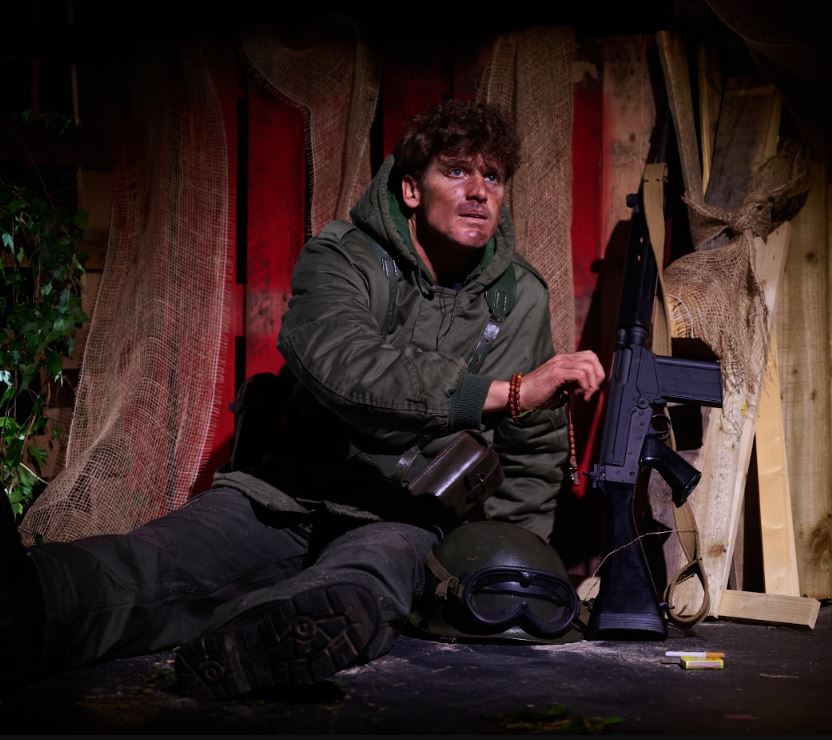
We catch the odd phrase of a chart topper. We glimpse snatches of grainy newsreel. We shudder at the sound of heavy mortars, of a ship being shelled, a fireball exploding, lives extinguished.
These are the haunting lyrics of Tears for Fears’ biggest chart hit, part of the soundtrack to an arresting new play, Toy Soldier:
Welcome to your life
There’s no turning back
Even while you sleep
We will find you
Acting on your best behaviour
Turning your back on Mother Nature
Everyone wants to rule the world
Zoomin’ and Boomin’
The Brown Suite
music and lyrics by James Brown, Sam Cooke and Etta James
Fundamentally Dance at Richmond Theatre until 3rd October, then on tour until 22nd May 2027
Review by Vince Francis
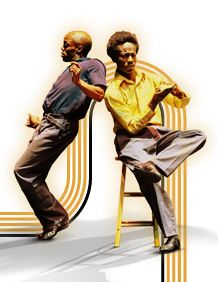
This week, Richmond theatre is the premiering The Brown Suite, a funk-soul dance show, set in 1970s New York, created by Nahum McLean and Darius Drooh, under the moniker BlackBrik, produced by Fundamentally Dance, with Jamiel Davernay-Laurence as Creative Producer.
Here’s the background. Having met in The Ailey School in New York Nahum McLean and Darius Drooh discovered a shared enthusiasm for the music of James Brown in particular, but also Etta James and Sam Cooke. They describe their jointly choreographed duet, Death of the Bachelors (2023), as being “pulled forward” by Brown’s music, rather than being secondary to the movement in any way, which, in turn, led them to consider how they might put together a full-length piece.
The show seeks to depict the evolving relationships, connections and tensions within a group of friends, and uses a fusion of dance styles from ballet to hip-hop, with a soupçon of locking – remember that? – to boot.
Read more…


