
Opera Gala Concert
Sublime Balm for a Hot Evening
Opera Gala Concert
West Green House Opera, at the Theatre on the Lawn, Hartley Wintney, 19th July
Review by Mark Aspen
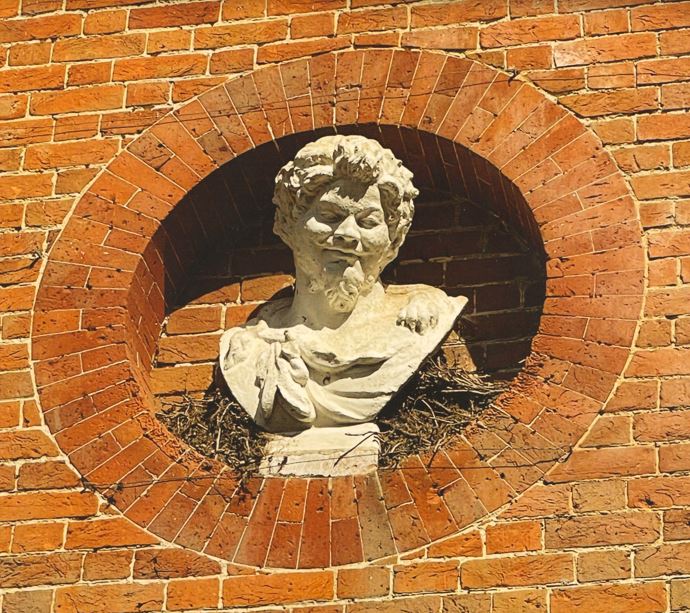
Gleaming white decorated canvas of the dining pavilions by the glittering lake and Marylyn Abbott’s gardens, swollen with blooms in all their glory, form the setting for the opening event of West Green House Opera’s new season. It is the hottest day of the year (“so far”, add the meteorologists) and there is quite a party atmosphere as the champagne corks pop. And pop they do, as ice-pack sleeves don’t stay frozen long at 32°C. Bacchus smiles out, appropriately, from the programme cover.
It is that same Bacchus that smiles out from the central rondel of the façade of West Green House, which forms the backdrop in the Theatre on the Lawn, itself a generously proportioned pavilion, sans upstage wall, affording a view across the sheltered greensward towards the handsome house.
The theatre’s location has returned to its pre-Covid home, while plans for the much admired Theatre on the Lake to be permanent feature are (like our wine) temporarily on ice. Here the theatre has an equal but different charm, witness the heady scent of honeysuckle at its garden entrance during the interval twilight.
The evening, you see, is no bacchanalia, but has that genteel feel of the garden party, a very English feel one might dare to say, even now, and the gentlemen are still black-tie in spite of the heat.
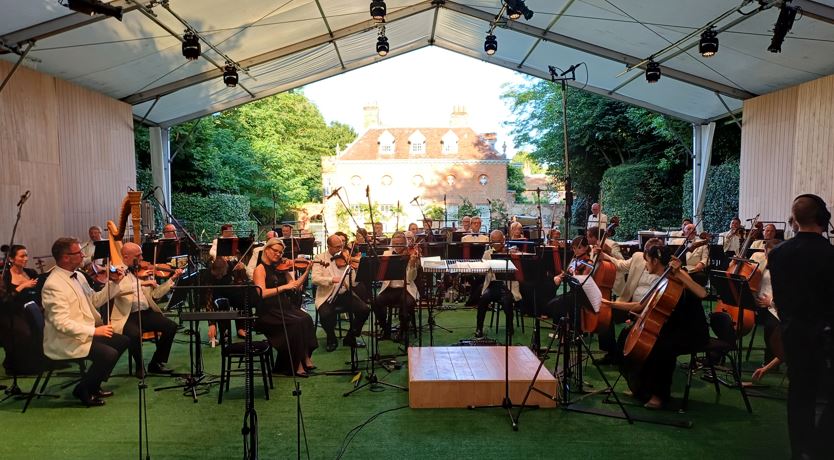
Equally the gentlemen of the BBC Concert Orchestra are magnificent in their white dinner jackets, and its ladies gorgeous in black flowing cocktail dresses. They number fifty or so (the number varies for piece to piece) and musically are incomparable. The BBC’s besieged orchestras and choirs (nine ensembles at present), together with Radio 3, are arguably some the few things of worth still left on the Beeb. The BBC Concert Orchestra is indefatigable, and forms the beating heart and soul for West Green’s Opera Gala Concert.
Out of the pit and on stage, they form a visual spectacle, full of energy in spite of the heat. When you see conductors using their full body, not just the baton, to conduct, you know the music will really come to life. One such is John Andrews, who is no stranger to West Green, having conducted last year’s Cav and Pag. He is also known for championing neglected oratorios and operas, and their composers. (Who has forgotten John Eccles, Thomas Arne or John Lampe?)
Andrews’ case in point for this concert is an excerpt from Francis Poulenc (whose Dialogues des Carmélites is his claim to operatic fame), and his seldom aired opera Les Mamelles de Tirésias. The opera (The Breasts of Tiresias) is based on a surrealist play by Guillaume Apollinaire. The plot is bonkers, concerning the put-upon wife Thérèse who becomes the man Tirésias. Sex changes may be currently all the rage, but not like this. Her breasts and belly becomes balloons and float off. Not to be outdone, her husband finds a way of giving birth by sexless conception to 40,049 children in a single day, already adult and successful! The play and opera are in fact serious satires about the need to rebuild France after the World Wars, but our guest soprano soloist, Soraya Mafi, brings out the wicked playfulness of the opera as a very spirited Thérèse in a oo-so-so French, Piafian sort of way.
However, rest assured that the rest of the concert is a wide range of familiar and not quite so familiar lollipops from opera, musicals and post-music-hall songs.
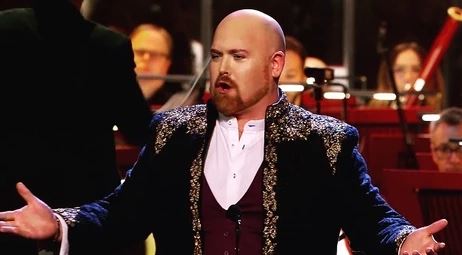
Both of the star special guest soloists, Soraya Mafi and Nicky Spence OBE, are no strangers to West Green. Nicky Spence’s West Green debut was in 2009 in Pyramus and Thisbe, and Soraya Mafi’s in 2016 as Despina in Così fan tutte, a role she reprised with the English National Opera in 2022.
Awarded in the King’s Birthday honours list last year, tenor Nicky Spence is an accomplished Wagnerian in productions such as ENO’s 2021 The Valkyrie, in the lead role of Siegmund, and David in Die Meistersinger. His versatility, though, extends to roles as diverse as Alwa in Alban Berg’s Lulu to Heurtebise in Philp Glass’s Orphée.

Soraya Mafi featured recently as the princess Ismene in last year’s Mitridate, re di Ponto at Garsington, and as a crowd-pleasing Susanna in The Marriage of Figaro at Glyndebourne the previous autumn.
Together Spence and Mafi sparkle as they are clearly enjoying the hot evening as much as the audience, as indeed are the orchestra, and it is infectious.
The orchestra opens with the overture from Heinrich Marschner’s Der Vampyr, a Weber-like wake-you-you dramatic start. Der Vampyr is about Lord Ruthven, the eponymous vampire, who is given the task, on pain of death, of sacrificing three virgin brides within twenty-four hours. It’s a big ask, even for a busy vampire. The tone is set for the first half of the concert which seems to concentrate on various conflicted characters.
Nicky Spence is cuts a splendid figure, immaculate from fingernails to shoelaces (literally) as he launches into “Pastorello d’un povero Armento” from the earliest piece of the evening, Handel’s 1725 opera Rodelinda. Handel can’t help but be effervescent even at his most reflective, and Grimoaldo can’t be quite as ruthless as he should be as an usurping king. Spence spells out the remorse Grimoaldo feels. Then, as Annio in Mozart’s La clemenza di Tito, Spence similarly has to deliver the unwelcome message “Del più sublime soglio” to his fiancée Servilia about the Emperor Titus’s ideas on marriage brokerage. Moving on to Tchaikovsky’s Eugene Onegin, Spence in pensive mood spells out Lensky’s reflection, prior to his ill-fated duel with Onegin, on the golden days of his spring.
Then of course the must for any tenor recital, Puccini’s Turandot and “Nessun dorma”. As the nameless Prince tells of his confidence against all the odds, in betting his own head against marriage to the hitherto unattainable Princess Turandot, we in the third row of the stalss feel the full force of the power of Spence’s rich voice, even against every instrument in the orchestra in the vincerò! vincerò! crescendo.

Interlaced with these tenor solos, soprano Soraya Mafi gets her fair share of conflicted characters, although none quite as physically conflicted as trans Thérèse. Everyone’s much loved tragic heroine must be poor little Juliet, and Vincenzo Bellini gives her the full tear-jerking treatment in I Capuleti e i Montecchi. In her pale olive green dress with its diamante bodice, Mafi looks the part of the frustrated and devastated Giulietta as she sees the preparations for her wedding to Tebaldo. (The plot is not quite Shakespeare’s.)
Her “Oh! quante volte”, as she asks how many times she needs to pray, opens a cappella followed by a harp arpeggio. It is very affecting, and the simple phrasing mesmerising. Then, in Rigoletto, Verdi’s masterpiece of irony, as Gilda, the hidden daughter of the eponymous court jester, Mafi portrays the guileless innocence of the young girl, deceived by the predatory Duke into thinking he is an impoverished student called Gualtier Maldè (hinting at maledetto, cursed) in love with her. Dreamy-eyed she sings of that name, Maldè, dear to her heart, Caro nome che il mio cor. Mafi’s gentle decoration of this delicate aria blends beautifully with the flute and pizzicato strings.
The second half dispenses with all this turmoil, goes more light-hearted, and mixes in some robust stuff for good measure. The orchestra sets the scene with the overture to Gioachino Rossini’s La gazza ladra, with its timpani opening, in march time complete with snare drums, telling off the military background, before dissolving at the behest of the bassoons into a musical woodwind portrait of the eponymous Thieving Magpie, the source many of Ninetta’s woes. The orchestra is also featured at the midpoint of this second half, with an exuberantly energetic attack on Johann Strauss II’s czárdás from his only opera, Ritter Pasman, all about knights, kings, hunters and stolen kisses. It is folksy Hungarian gypsy-style multi-tempo dance, full of zesty zip and zing. Leader of the orchestra, Nathaniel Anderson-Frank shows his virtuosic vigour, as he lets rip with the prestissimo violin passages.

The czárdás segues nicely into Spence’s solo rendering of Granada. This most Spanish of songs was actually written by Mexican composer Agustín Lara, but Spence gives it the full Andalusian heel-tapping toreador verve. In a similar vein is the well-known Funiculì, Funiculà, like Granada made famous by Mario Lanza. It is a is a Neapolitan song composed by Luigi Denza to commemorate the opening in 1880 of the funicular railway on Mount Vesuvius, which incidentally was destroyed by an eruption in 1944. What better for the hottest day of the year … so far? Spence has great fun with this one, encouraging the audience to sing along with the repeated lines, which they do enthusiastically, once English reticence is overcome.
Between these two pieces Mafi, also has fun with Glitter and Be Gay, from Bernstein’s operetta Candide. Her character, Cunegonde is arraying herself in jewellery before a night out in gay Paris. Appropriately, Mafi is now wearing a gorgeous gravity-defying dress covered in emerald green sequins. Demi-mondaine Cunegonde may be on an emotion roller-coaster, whether to be naughty or nice, but she decides to be pragmatic … “everything has a cost …”. It is a famously demanding soprano aria, but Mafi’s nimble coloratura skips along even through its most florid sections. Her eyes twinkle, as much as her dress, with the naughtiness of the piece.
Earlier, Spence as a warrior-knight Mylio has his own acting opportunity. Édouard Lalo’s opera Le roi d’Ys relates some epic Fifth Century goings-on in the city of Ys in Brittany. Mylio, defying convention, sings an aubade to his bride, the princess Rozenn, in the early morning of his wedding, conscious of the jealousy of her sister Margared. But he does not know that Margared intends to assist the hostile Prince Karnac to inundate the city by opening the sluices that hold back the sea. (This is quite hard to stage.) The aubade has an opening rich cello accompaniment to match Spence’s velvety aria, Vainement, ma bien-aimée.
However, it is the duets that grip the audience. People Will Say We’re in Love from Rogers and Hammerstein’s musical, Oklahoma! gives the opportunity for Spence and Mafi to combine their considerable talents. Their artistic chemistry is palpable as Mafi’s Laurey Williams declares unconvincingly that she does not love Curly McLain. (In Spence’s case Curly is clearly an ironic nickname!) 1906 Oklahoma may have been even hotter than 2024 Hampshire, but Spence couldn’t resist adding in “I wish” to the line, “Don’t stand in the rain with me”. Lippen Sweigen, the much-loved waltz from Franz Lehar’s The Merry Widow, is the duet that forms the finale for the concert. As the merry widow Hanna Glawari and Count Danilo admit their love for each other, the familiar lyricism of the piece permeates the audience, Mafi and Spence dance the waltz, and everyone believes that “all the world’s in love with love”.
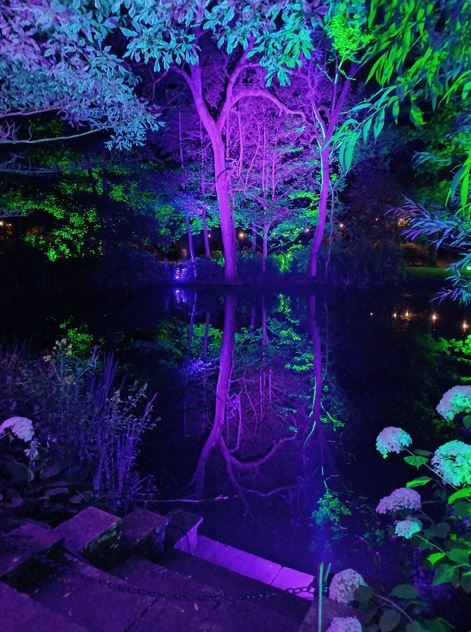
West Green’sOpera Gala Concert, giving the chance to see top-class performers, creates a very uplifting evening and the icing (non-melting) on the cake is the walk in the now attenuated, almost tropical, heat of the evening back to the dining pavilions through Neil Dakyn’s illuminated gardens, a magical wonderland of glowing pools and niches and fountains. Tonight all the senses are alive.
Mark Aspen, July 2024
Photography by EAW, Nicky Spence.com and Soraya Mafi,com

 Mark Aspen
Trackbacks & Pingbacks