
555: Verlaine en Prison
L’Heure Exquise
555: Verlaine en Prison
by Logan Lopez Gonzalez and Eleanor Burke, music by Debussy, Hahn and Fauré
Green Opera, Grimeborn Festival at the Arcola Theatre until 7th September
Review by Patrick Shorrock
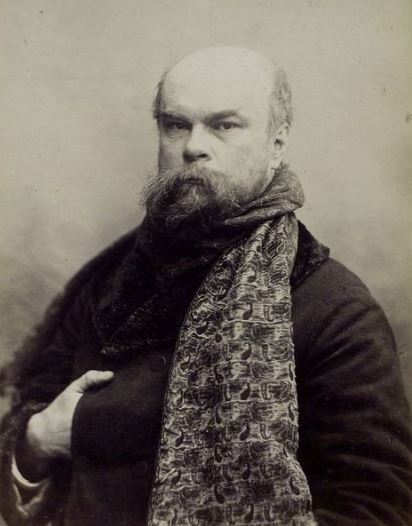
This is, essentially, an artfully crafted hour-long song recital with a bit of acting, narrative, and context thrown in, and featuring extracts from the poems and letters of Paul Verlaine. Those who love the French Chanson – and I do – are likely to be extremely happy. We have some glorious singing from countertenor Logan Lopez Gonzalez, who put this this show together with director Eleanor Burke. Accompanied nicely by Pianist Stella Marie Lorenz, he entrances with his long beautifully sustained high notes at the end of the sensuous phrases. This is just gorgeous.
By turns, these Verlaine settings by Debussy, Hahn and Fauré are rapturous, languid, serene, elegant, and gently melancholic. We are spared the self-pity and bad faith of the addict, but they are not very varied in overall mood and don’t – to be cruelly honest – have the vitality, range and emotional pain of Schubert. An hour of this lovely music is enough.
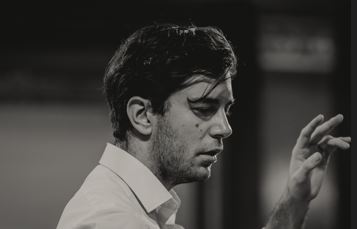
I suspect that it was concern about the potential lack of variety that led Gonzalez and Burke to provide some narrative and context in the form of telling the story of Verlaine’s marriage, encounter with the seventeen year old Rimbaud, and descent into recrimination and alcoholism that led to his shooting of Rimbaud and imprisonment for 555 days. It’s a messy, miserable life that doesn’t seem to have much to do with the music, or even the poetry, which often seems beguiled by the landscapes in which the poet finds himself rather than expressing despair or pain.
And the music does rather overwhelm the poetry somehow. The narrative is somewhat confused with its multiple flashbacks that prevent any sense of emotional trajectory. Anna Sideris, who plays all the parts other than Verlaine – Rimbaud, Verlaine’s wife, the narrator – in a way that often leaves us unclear who is speaking. Eleanor Burke’s direction is subtle and effective, with pianist, narrator and Verlaine all wearing similar black trousers and white shirts. Scenery is a single chair and some lighting effects that evoke prison bars. At one point Verlaine comes in clutching a bottle with his shirt untucked. But it’s hard to avoid the guilty thought that it might have worked almost as well on the radio.
The story on which the piece is based is pretty ghastly. The alcoholic Verlaine seems to have been a virtuoso of domestic violence (to his poor wife as well as to Rimbaud) and would be judged today as a child abuser, even if one got the impression that Rimbaud was just as awful in his way. But they both produced poetry of an enduring beauty that doesn’t so much transcend the awfulness of their lives as seem to have little connection to it.
The poster misguidedly refers to Verlaine as the French Oscar Wilde, which seems wrong on so many levels. Verlaine doesn’t really do irony or wit. Shooting a seventeen year old while drunk is on a rather different level from Wilde’s misdemeanours. And then there is the paradox that prison was beneficial to Verlaine – whereas Reading Gaol destroyed Wilde – in that, deprived of access to absinthe and people to quarrel with, he had nothing to do but write marvellous poetry.
This show did leave you plenty think about even though it only lasted an hour.
Patrick Shorrock, September 2024
Photography by Otto Wegener and Peter Mould


 Mark Aspen