
Maria de Rudenz
Back from the Dead
Maria de Rudenz
by Gaetano Donizetti libretto by Salvadore Cammarano
Gothic Opera at The Battersea Arts Centre, Battersea until 2nd November
Review by Patrick Shorrock
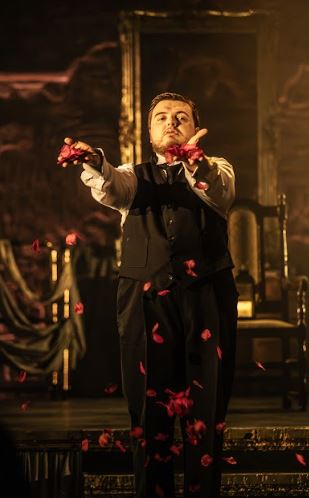
Donizetti’s Maria de Rudenz doesn’t sound promising. It only lasted at its Venice premiere for two performances, and has never been performed in the UK before. Its gruesome plot – only the baritone of the four major characters survives at the end – is rather less scary than Katia Ricciarelli’s vocal wobbles on the only commercial recording. But this splendid performance by Gothic Opera proves that the piece is well worth dragging from the vaults of operatic obscurity and that it is wrong to assume that neglect is always justified.
While there are no knock-out arias, or the kind of big numbers like the sextet and the mad scene that distinguishes its more famous sister Lucia di Lammermoor, there is plenty to enjoy and some fine music. Salvadore Cammarano is more famous for producing the libretto for that opera and for Verdi’s Il Trovatore. While Maria de Rudenz does reuse some of the same plot motifs from Trovatore – the marriage that is over before the wedding night, the baritone and tenor as romantic rivals and brothers, the convent as the only alternative to marriage with your beloved – they produce a dish with a very different flavour. The soprano here is as much focussed on revenge as regaining her lover, and her love-hate relationship is with the baritone rather than the tenor.
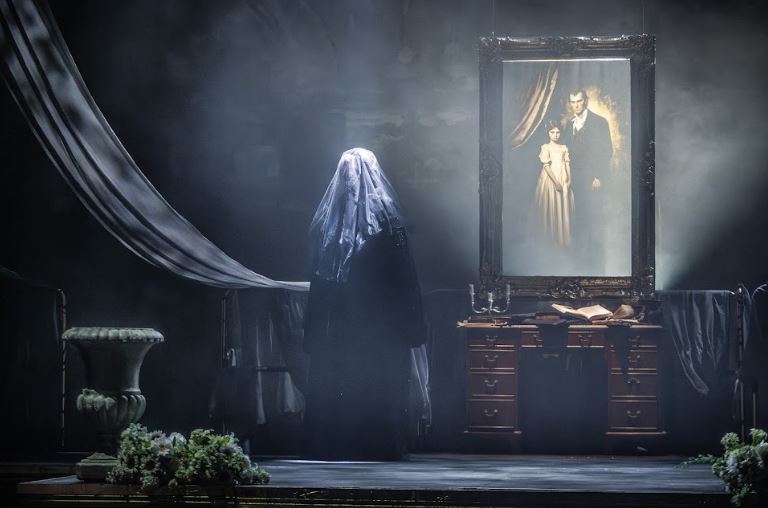
The plot is utterly ridiculous, but the emotions that it depicts – romantic rapture, the pain of rejection, fury, and the desire for vengeance – are all very real. Maria is stabbed by Corrado, but she survives to reappear and kill his bride, after which she reopens her wounds and dies (Wagner’s Tristan wasn’t the first to kill himself this way.)

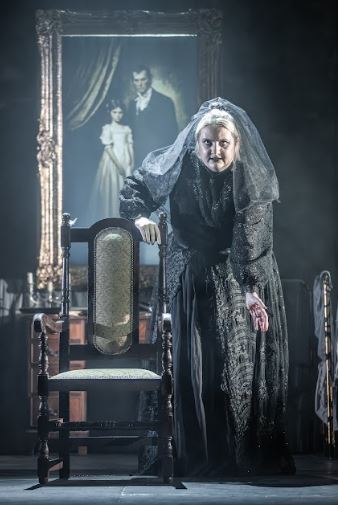
The approach here is very different too from Gothic Opera’s last offering at Grimeborn, Marschner’s Der Vampyr where a lot of fun was had and the piece was rewritten. Lysanne Van Overbeek’s direction of the Donizetti is straightforward and serious, but always effective; she has an intuitive understanding of when the focus needs to be on the music. Nate Gibson’s designs– aided by the Victorian grandeur of Battersea Arts Centre’s Grand Hall – conjure up a suitably Gothic atmosphere with little more than drapes, flowers, candles, and a large portrait of a dominating pater familias with daughter, although Maria’s Miss Havisham in black get-up is not very flattering.

The singing is extremely good – and all the more impressive when this is the second of two casts. Lorna McLean’s Maria is marvellously incisive – clear tone without any wobbles – in a challenging part and seems undaunted by having to climb into the vocal stratosphere. Kieran Rayner as Corrado, the love rat baritone who abandons Maria to marry her cousin Mathilde, has plenty of vocal charm. Davide Basso provides golden tone, lots of heft when needed, and a fine musical intelligence as Enrico, as well as giving a perfect refutation of nominative determinism, when this is a part for tenor.
The principals are well supported by Gheorghe Palcu’s Rambaldo and Béatrice de Larragoïti’s Matilde, along with a small chorus of six singers. A smallish and sympathetic auditorium and Leon Haxby’s effective arrangement for four strings, clarinet, and organ no doubt make things easier for the cast, but they are all fine singers and have been extremely well trained by conductor Anna Castro Grinstein
Congratulations to Gothic Opera for a musically strong and involving performance. I look forward eagerly to its next operatic exhumation.
Patrick Shorrock, November 2024
Photography by Craig Fuller

 Mark Aspen
Trackbacks & Pingbacks