
The Pirates of Penzance
Skill and Top Tones
The Pirates of Penzance
by W.S. Gilbert and Sir Arthur Sullivan
The English National Opera at the London Coliseum until 21st February
Review by Brent Muirhouse

It may have been a chilly December evening outside to shiver my bones, but inside it was me timbers a-shivering as the Coliseum, alive with colour and chaos, and the English National Opera brought the nautical nonsensical Pirates of Penzance to tread these hallowed boards.
Far from the perils of walking the plank, Gilbert and Sullivan’s tale was a genuinely buoyant pantomime of vivacity, of absurdity, and of life. Much like the so-called “topsy-turvydom” extolled in the programme notes, the production leaned wholeheartedly into the comic incongruities of Gilbert’s writing, delivering a high-energy romp that was as dazzling visually as it was musically enthralling, balancing an almost festive frivolity with musical mastery.
Frederic, the naive and dutiful (and accidental) apprentice to the titular pirates, anchors the show (pun intended, apologies lost at sea), portrayed here with charisma and boundless energy by William Morgan, one of three past or present ENO Harewood Scholars in the cast. His performance cuts a confident path through the material, equally able with the comedy and the melody, alongside the spectacle of swashbuckling pirates, virtuosic maidens, bumbling constables, and, of course, the iconic Modern Major General himself (the latter a game Richard Suart). Alongside him, Isabelle Peters as Edith delivered a performance pairing stunning vocal agility with comic timing more akin to Friday Night Dinner than a night at the opera.

Meanwhile, John Savournin’s Pirate King offered a masterclass in larger-than-life faux-villainy of a “he’s behind you” Captain Hook. Yet, again, the balance of the skill of the sketch show with his deep, resonant vocals – matching his vibrant, statement-making attire – exuded a warmth that belied his character’s supposed criminal profession; an endearing bear hug, perfectly suited to the wintry season.
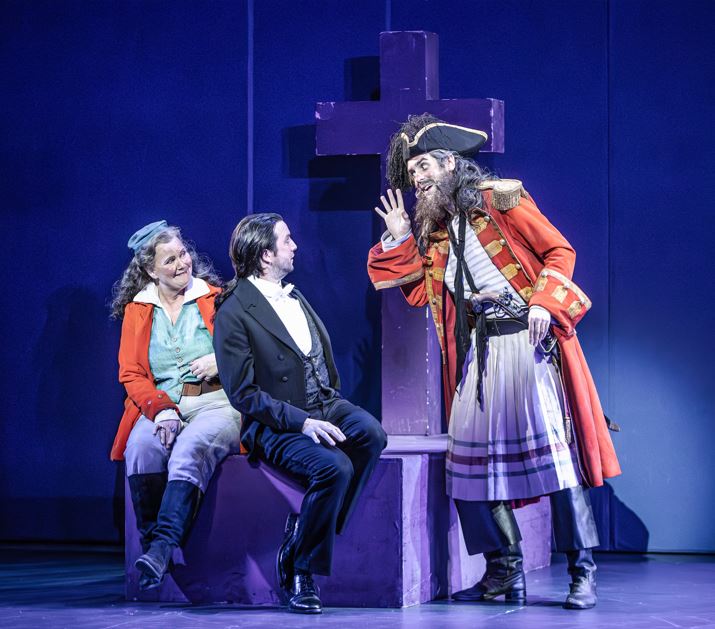
Whilst the individual performances sailed (pun apologies still all at sea), it was the ensemble and staging that elevated these Pirates of Penzance to a level of genuine greatness. Sullivan’s score – masterfully conducted by Natalie Murray Beale and performed in a happy, tinsel-tinged timbre by the ENO orchestra – filled the cavernous Coliseum with melodies so infectious that in any other context this winter audience members would have been advised to take Lemsip and bed rest. The orchestra’s performance was a triumph, oscillating between thunderous crescendos and delicate, nuanced passages with the precision of a ship navigating a storm. The music wove seamlessly into the laughter of the audience, creating a rich, symphonic tapestry that underscored the evening definitively. Indeed, if there were any criticism of this production then it would be that, such was the audience reaction, on occasion words from stage were drowned out, a feat usually reserved for, say, a Twenty One Pilots live show, rather than these twenty one pirates.
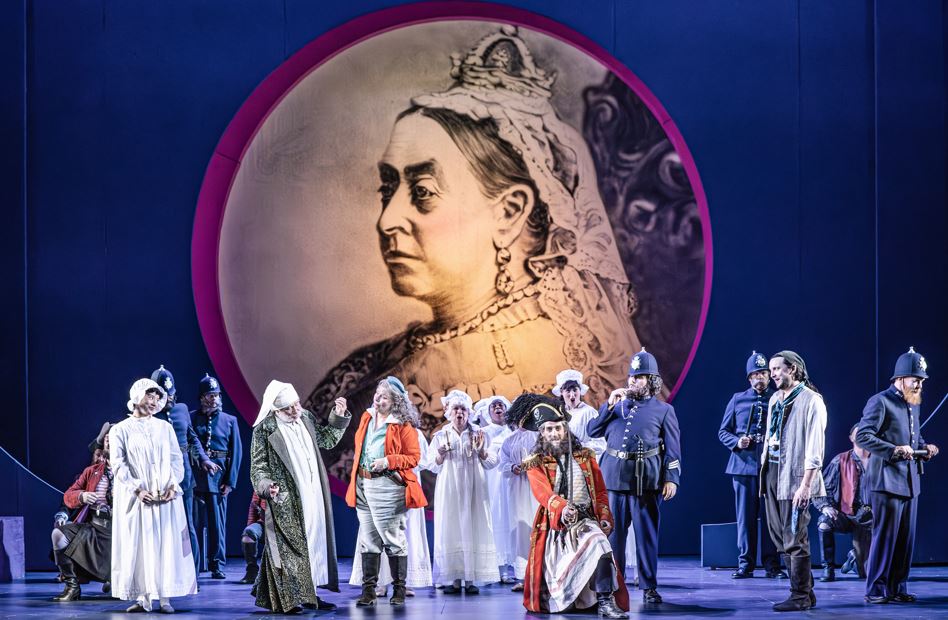
Complementing this auditory brilliance was a bold set design, centred on a giant circular facade somewhat reminiscent of a porthole of the Pirates’ ship. This dynamic feature framed the action with remarkable versatility, shifting the audience’s focus between expansive, high-energy group scenes and more intimate moments of introspection. The design made clever use of the Coliseum’s soaring stage height, with ship-inspired elements lending an appropriately seafaring sense of scale to the production.

The production’s visual vibrancy felt almost synesthetic in its impact, combining colour, light, and melody into a unified sensory experience that seemed tailor-made for modern audiences, despite the upper-class Victorian nature of its humour. Amid ongoing efforts to diversify opera’s reach and appeal, this The Pirates of Penzance stands out as a paradoxically accessible case study, its irreverent humour and absurdist comedy offering entry points for even the most opera-averse viewers. The parallels to more modern or contemporary comedies – whether that is the quirks of Monty Python, The Mighty Boosh, or even the deadpan witticism of cult US sitcom Arrested Development – were connections in this reviewer’s neurones which only enhanced the show’s appeal and charm. Revival Director Sarah Tipple has put Mike Leigh’s ship to sea again, and she and the aforementioned Natalie Murray Beale conducting deserve praise for maintaining such balance between chaos and control.

As the final chorus swelled and the curtain fell, the audience’s lengthy applause continued, a testament to the performance, with lead William Morgan adding a final note on the warranted (and just witnessed) value of the Harewood Scholars programme. The vibrant melodies and mischief of ENO’s The Pirates of Penzance continued swirling in my mind, this technicolour triumph a tonic against the chilly December evening I stepped out into, towards Trafalgar Square and onto the streetlights of suburbia.
Brent Muirhouse, December 2024
Photography by Craig Fuller

 Mark Aspen
Trackbacks & Pingbacks