
What Dreams May Come
Shakespearian Chocolate Box
What Dreams May Come
by various composers, words by William Shakespeare
English Touring Opera at the New Diorama Theatre, 15th February and on tour until 25th April
Review by Patrick Shorrock
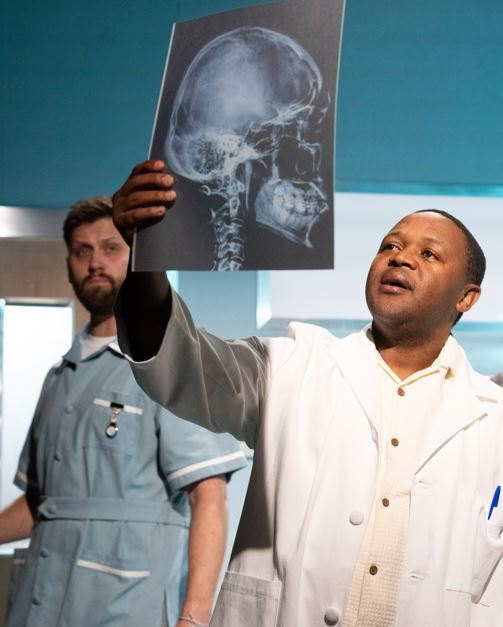
Valerina Ceschi’s collection of Shakespeare’s song settings provides lots of food for thought and an opportunity to showcase some impressive talents. It displays broad musical range. Just to mention the most famous names, we have songs by Henry Purcell, Thomas Arne, Gerald Finzi, Amy Beach, Joseph Haydn, Benjamin Britten, and Franz Schubert. It was probably a forlorn hope that these fragments, wrenched from their original context, could all be reassembled into a jigsaw that was musically and dramatically coherent. But what fun to try and break out from the obvious concert format.
In any case, this lack of coherence – something more politely termed fluidity or encyclopaedic range – is one of the distinguishing characteristics of Shakespeare himself. He blends the comic and the tragic, the sublime with the silly. What feels like cliché because of overfamiliarity is often actually daring linguistic innovation. But Shakespeare’s monumentality means that he can get away with pretty well anything, including this ambivalent fluidity, even though it would be condemned in almost any other playwright as pulling focus or spoiling the mood.
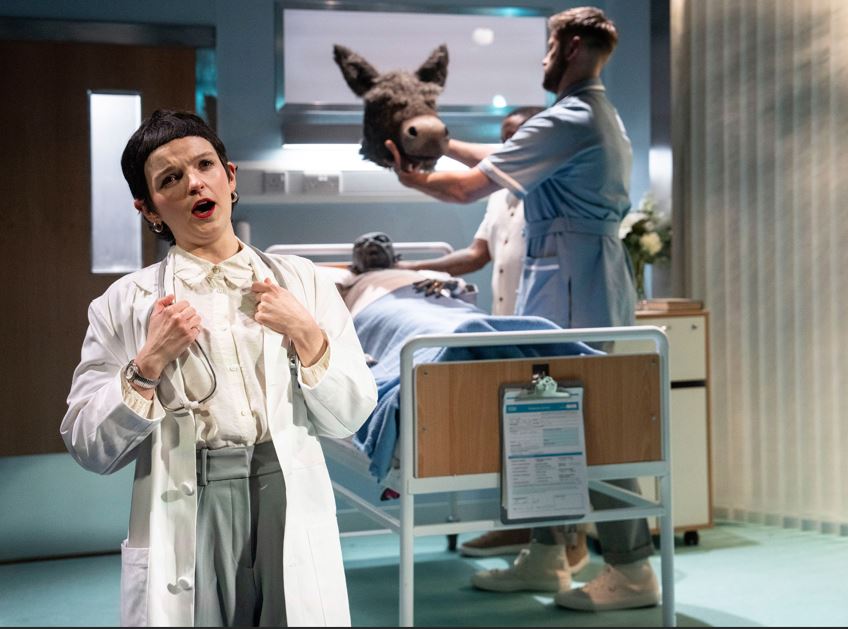
The fluidity that makes his plays annoyingly messy to the tidy minded is in evidence here. We enter the auditorium to be confronted by an intensive care ward. What really takes the breath away is that the bed is occupied by Bottom from A Midsummer Night’s Dream still wearing his ass’s head. This fabulous start is unfortunately misleading, as it promises something comic that never materialises. After the initial unaccompanied version of Ernest Moran’s Under the Greenwood Tree sung by medical staff (er, aren’t we in a hospital ward?), the ass’s head is removed to reveal the gaunt face of a man in the last stages of illness (actually a superbly designed puppet by Matt Hutchinson).
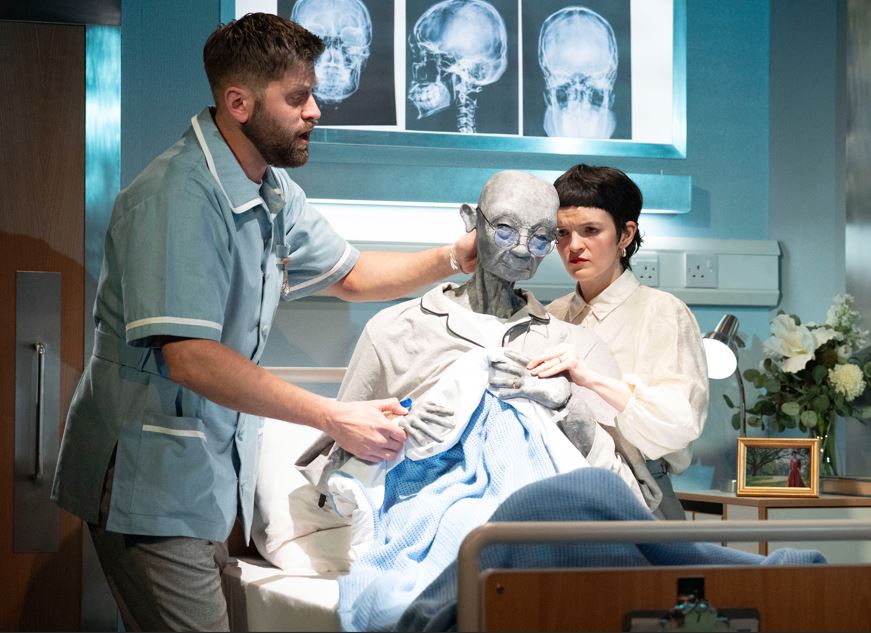
This show is about memory, regret, pain, death, the powerlessness that comes from old age and sickness, but also new life, and is understandably deadly serious. The mood would be killed stone dead by the comic whiff of bedpans, for all that Lily Arnold’s designs and Valerina Ceschi’s production deploy extensive medical apparatus including x-ray slides, white coats, nurses’ uniforms, clipboards with measurements, and intravenous drips.
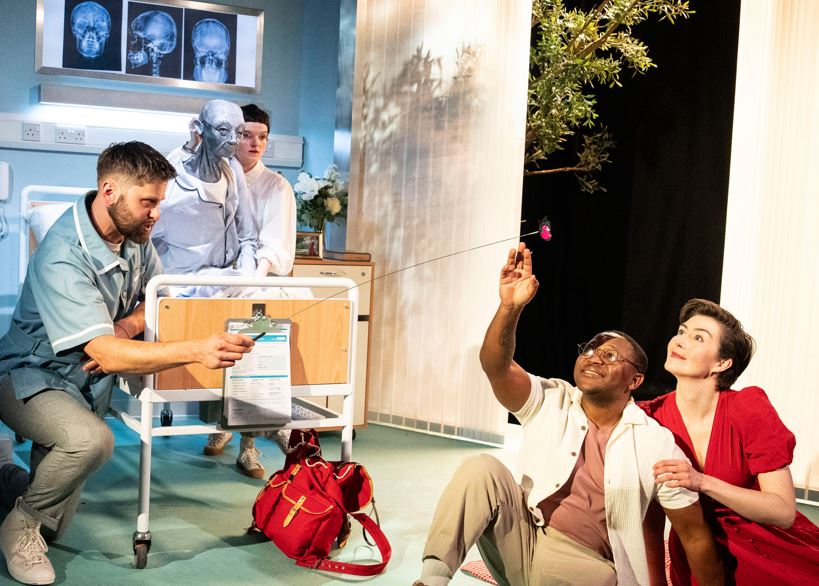
The man reminisces about a picnic with his wife to be (It Was a Lover and His Lass) and is visited by family with a new baby (Who is Sylvia?). He continues to reminisce, as we hear Mario Castelnuove-Tedesco’s version of The Moon Shines Bright from The Merchant of Venice, a text better known in Vaughn Williams’ version as the Serenade to Music. But death then comes. (Fear No More the Heat of the Sun, followed – rather oddly – by Ernest Legové’s Death of Ophelia in French, which rather dragged things out.)
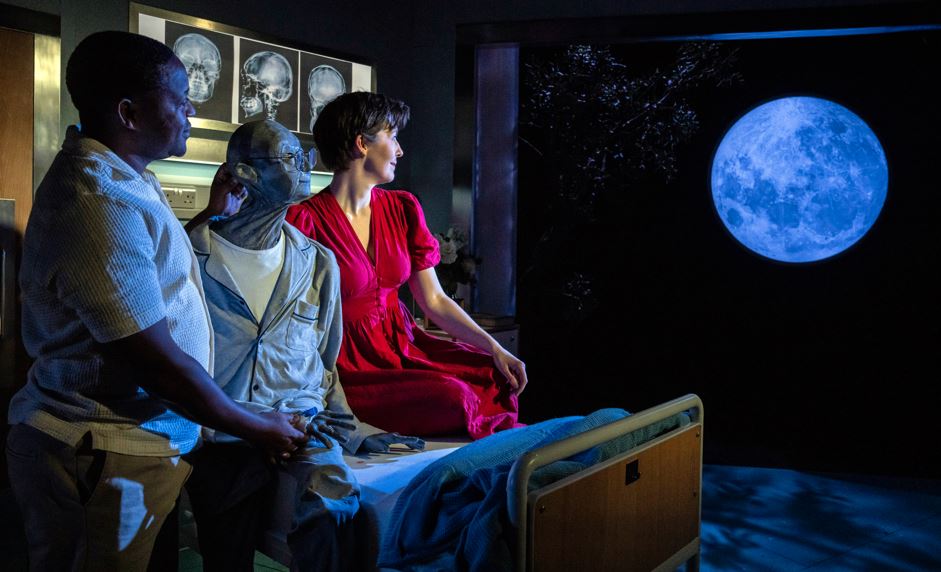
The production was a mixture of brilliant ideas that didn’t quite work – butterflies and parakeets would not normally be let into a hospital ward – and some affecting moments of stillness. The puppet was astonishingly effective and affecting, partly because we couldn’t see the sticks that operated it, partly because it was a moving indication of the passivity of being a patient. The opening of the venetian blinds to reveal a garden and later a gigantic moon delivered splendid coups de théâtre with very little.
A big difficulty was working out exactly what was happening. Were the singers playing a different character when they were out of medical uniform, or did the man in the bed have lots of medical relatives? Some spoken dialogue might really have helped us to understand better what was going on, even if it would have broken the mood.
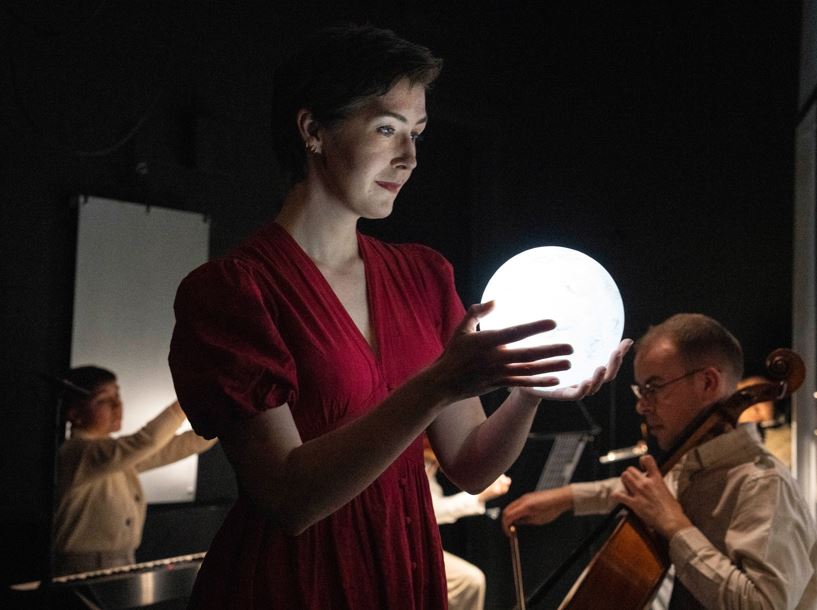
Mezzo Emily Hodkinson was the finest of the singers, with an appealing slightly smoky timbre and not enough to do. Alys Mereid Roberts tended to lose sweetness as she climbed up the stave, which was a pity as her coloratura is impressive. Tamsanqa Tylor Lamani had a rather light tenor but acted well. Samuel Pantcheff has an appealing baritone that has the potential to develop further. Erika Grundesen fielded an impressive group of accompanists, even if we only got to hear them on their own briefly in Purcell’s Dance of the Winds from The Tempest.
Patrick Shorrock, February 2025
Photography by Richard Hubert Smith


 Mark Aspen
Trackbacks & Pingbacks