
Sixtieth Anniversary in Music : Preview
Lifetime Rewards
Sixtieth Anniversary in Music : Preview
Donovan at Richmond Theatre, 12th October, Preview 12th September
Interview and preview by Vince Francis
So, yours truly was up with the lark on Friday morning, on his first assignment for a while, as part of a carefully calibrated plan to intercept the District Line’s first service following a strike. The objective of this dawn foray was to rendezvous in Notting Hill Gate with a hero of the musical, and social, revolution that was the 1960’s, namely Donovan, and I am pleased to report the objective was achieved.
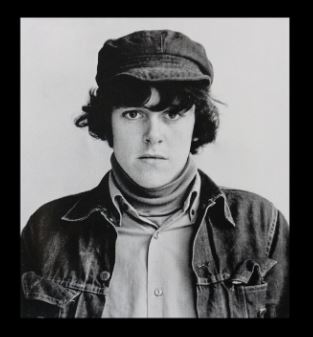
We took a table in the hotel bar and, refreshments served, Donovan, happy to provide as much background as might be required, proved to be an effortless raconteur and most generous with his stories. Our conversation explored a rich and varied life in music, which has led him from his birthplace in Glasgow, to the hotbed of the folk music scene that was 1960s Hertfordshire, through to the transcendental meditation craze in the ashram of Maharishi Mahesh Yogi in Rishikesh, India, where he taught John Lennon how to fingerpick, and tours to the U.S.A., and on to more current activities.
Much has been documented about his life and career in all media, but to summarise, Donovan, more formally Donovan Phillips Leitch, was born on 10th May 1946 in Mary Hill, Glasgow. At the age of 10, his father moved the family to Hatfield in Hertfordshire,
“… ’cause I’m 10 and it’s the 1950s, and Glasgow’s bombed, of course. All the old cities are bombed, so we moved down in that great migration down to the south from the big industrial towns …”
Donovan’s album work is often markedly distinct from the records he is more famous for. The arrangements are more comprehensive and the influences from other genres are readily apparent, for example, “Sunny Goodge Street”, from the 1966 album “Fairy Tale” is a nicely arranged and quite sophisticated jazz waltz, with tasteful jazz guitar fills throughout. Similarly, the 1968 album “Hurdy-Gurdy Man” gives us “West Indian Lady”, and easy afro-beat number. Yet his enduring image to the wider public was of the archetypal guy-and-guitar (and harmonica) folk singer. I was interested in his take on this.
“… Well, a folk singer can be described as one voice and one acoustic guitar. “
And, noting that this might today be described as “Indie -folk”, he went on to reflect,
“But what it is, is one guitar, one voice, one song, you’re pretty much in control of what you do. And so, as I began as a guitar player, with one song, others said, ‘he must be a folk singer’. But really, growing up, I listened to my father’s record collection, which was a lot of jazz, small combo and big band jazz.”
Expanding on this, Donovan tells me his first musical ambition was to play drums, influenced by the likes of Art Blakey and Gene Krupa, with vocal inspiration provided Billie Holliday. Thus, his primary orientation was more toward the “Beatnik Bohemian” lifestyle, rather than the Hippy movement that he has been associated with,
“The whole idea was to get to be a part of the Bohemian scene and that was definitely jazz, blues and folk.”
A drum kit, bought for him by his father, on the “never-never”, gave him the platform to explore the instrument, but also brought him to the realisation that he didn’t want to actually play drums in a band, but more to understand them. This discovery undoubtedly improved relations with the neighbours, who had been sharing his musical development with, it is probably fair to say, varying degrees of enthusiasm, given the thinness of the walls in the new-built houses. However, a key benefit from learning percussion was the development of perfect time, a skill much appreciated by other musicians when he did get to record.
Donovan paints a picture of a vibrant music scene around the Hertfordshire towns of Welwyn Garden City, Hatfield and, most notably, St Albans, where, today, the Cock Inn on St Peter’s Road proudly displays a plaque commemorating his performances there, along with those of Maddy Prior and Keith “Mac” MacLeod. He recalls attempting to improve his guitar playing skills at these venues, through watching other players and asking, but reflects that many players could be a little cagey in this regard and might turn themselves away from an overly analytical glance at their performance. By contrast, one player who was helpful was Bert Jansch, who held ‘salons’ at his flat after the pubs closed and was happy to share his knowledge.
“He didn’t mind, because he was not heading for what you might call super fame, he didn’t want anything to do with it. But everybody that was anybody wanted to play like Bert. Or a kind of thing like Bert, because it was jazz and it was folk. And he would slap the strings, and it was incredible.”
Another significant meeting in that period was with the sculptor Peckham, born Dave Mills, known as “Gypsy Dave”, later shortened to “Gyp”, someone who became a trusted friend and confidant and who played a significant part in supporting Donovan’s emerging musical approach and influence among other musicians and bands.
Disillusionment with the state of popular music and, indeed, of society in general – “we both agreed society was mentally ill” – prompted Donovan and Gyp to retreat to the south-west for the summer. Busking on the beaches yielded little in income, but it was there that Gyp identified that Donovan’s genre bending approach to songwriting could be act as an inspiration, or catalyst, to other bands and artists who were seeking to expand their horizons, particularly where those horizons were being restricted by producers and record labels. Gyp’s thought, prior to their departure, on the ambition to influence was,
“There has to be another way to introduce millions of young boys and girls, teenagers who know nothing about anything. So, Don, you and me. Let’s try to invade popular culture.”
Donovan clearly views Gyp as someone who acted as a protector and mentor, keeping his feet on the ground, guiding him away from the potentially destructive power of egoism and shielding him from the excesses of the musical scene, particularly with regard to drugs.
The definition of a catalyst, in this context, was given as, “A catalyst brings two elements together that change and create a completely new element. And it works best my Linda (Donovan’s wife) says, when the two that are going to be changed by this don’t know what’s happening at the time.”
This was clearly appealing and, Donovan offers as an example the events surrounding the recording of the first three tracks of “Sunshine Superman”, being “Sunshine Superman”, “Legend of a Girl Child Linda”, and “Bert’s Blues”, under Mickey Most, with the Beatles completing “Rubber Soul” in an adjoining studio,
“… it was all there, wasn’t it? The jazz, the classical, the Indian music. And then Mickey Most said, “For God’s sake, we’re not finished this album. Don’t play it to McCartney!” And we did. Why? Because a I’m a catalyst and Gyp said, “They’ve got to know how to do it.”
The net effect was seen in the expansion of song writing styles used by the Beatles in subsequent albums and singles. A later example was John Lennon’s use of acoustic fingerpicking styles in songs such as “Dear Prudence”, following tuition by Donovan at the Rishikesh in India, where, as indicated above, Donovan, Gyp, the Beatles and sundry others were learning the techniques of transcendental meditation.
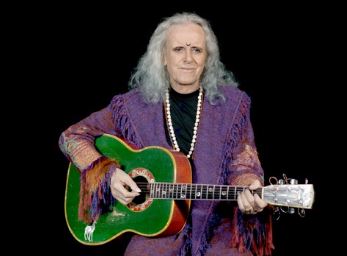
The stories are endless and endlessly appealing, but, sadly, time in the interview, and room in this article are limited, so I wanted draw proceedings to a close be getting a feeling for more current activities, one of which is what Donovan describes as a “Film Essay”, called “The Tale of the Gæl”, available on his website (www.donovan.ie ). This is a contemplation of the impact and influence of Gæls and Gælic traditions of music, poetry and storytelling on western culture. This work demonstrates some of Donovan’s more spiritual reflections on the nature and duty of the Poet and Gæl, embodied in the thoughts,
“It is the rôle of the poet to balance the angst of life’s journey”, and
“The mission of the Adept Gael is to save the Mythical Dreaming of Humanity”
The piece explores these ideas and others, such as the concept of the catalyst, through associating them with events in Donovan’s own life and artistic development, demonstrating on the way Gyp’s guidance and influence, particularly in relation to the concept of catalyst and the need to stay grounded. It is an interesting listen, but, at over two hours, warrants a second cup of tea and biscuit.
Donovan is currently on a tour to celebrate his Sixtieth Anniversary in the business, with a week of events in select capital cities, although he wryly observes,
“Sometimes, I don’t know what I’m congratulating. But I’m still here, and it’s the big one.”
The first tour date will be an intimate solo acoustic concert at the iconic Richmond Theatre on Sunday, 12th October, where he will perform all his popular songs, “Catch The Wind”, “Colours”, “Universal Soldier”, “Sunshine Superman”, “Season of The Witch”, “Mellow Yellow”, “The Hurdy Gurdy Man”, “Jennifer Juniper”, “Wear Your Love Like Heaven”, “There Is a Mountain”, and many of his early acoustic gems from his Cult Albums. If you have never experienced the ‘Mellifluous Voice’ of Donovan, his extraordinary stories of his journey, and his famous guitar ‘Kelly’, now is the time. For fellow geeks, Kelly was custom-made by U.S. luthier Danny Ferrington, to replace another custom-built guitar, by luthier Tony Zemaitis, who later changed focus to electric guitars.
Donovan has a great affection for Richmond and acknowledges its place in the history of popular music, housing, as it did, the Crawdaddy Club in the Station Hotel, which later became part of a pub chain. Add to that the proximity to Twickenham, with its associated history of Eel Pie Island and we have a veritable Mecca of music.
“I was remembering very well before I booked the theatre to play this time, that I played there before. And I really loved it. We did an evening of Betjeman poems and the DJ, Mike Read, he put it together. And Jeremy Irons was there. I t was Cliff Richard was there. It was me and a bunch of others. And I don’t know the year, but when I did it, I just said, this is a lovely, beautiful theatre. I love old theatres.”
Maestro Donovan has always supported youth, and the Richmond Theatre concert will allocate free seats to Students of London Colleges of music, film-making and drama. The students will also be invited to one of the week-long events.
The concert will be filmed for those who cannot travel and available to view on his website, which will also show details of the week-long London events, amongst which will be the re-release of Donovan’s classic single and vinyl album “The Hurdy Gurdy Man”. (He will be signing the album, which will be available exclusively at HMV Oxford Street on Sunday 5th October 5th from 12:30 – 14:30, where he will also sign his book and sing a couple of songs.) The album will be available everywhere from Friday, 10th October.
A key motivation in his celebration of this significant anniversary is his desire to thank all his followers, as he put it,
“… a true thank you, because Donovan knows that it’s not the promotion, the record company, the TV show, the radio. What makes music successful is the people that are listening and buying the records. I just wanted to say that. And you’ve got it on there as well.”
It was a genuine pleasure, nay, privilege to have the opportunity to meet and chat with one of the iconic figures of my youth. Apart from being an influential musician, Donovan is delightful company, and I left the hotel with a spring in my step and I’m sure he will have the same effect on the audiences he will undoubtedly attract. Book early to avoid disappointment, as they say.
Vince Francis, September 2025
Photography by Jaume Caldentey and Donovan Private Archive

 Mark Aspen
Trackbacks & Pingbacks