
La Fille mal gardée
A Thing of Beauty is a Joy Forever
La Fille mal gardée
choreography by Frederick Ashton, music adapted and arranged by John Lanchbery after Ferdinand Hérold
The Royal Ballet at the Royal Opera House, Covent Garden until 9th June 2026
Review by Michael Rowlands
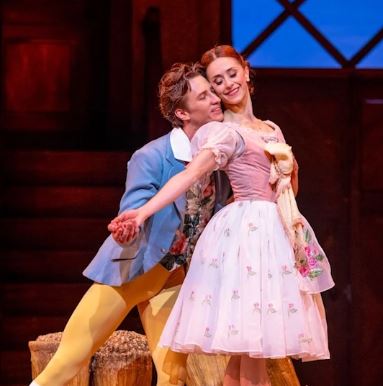
La Fille mal gardée, or The Wayward Daughter, is a complete joy and it is a perfect way to escape from the troubles of everyday life. Its classic Frederick Ashton choreography is highlighted by the bucolic backdrops designed by Osbert Lancaster. Lancaster was a prominent architectural historian and for many decades a cartoonist at the Daily Express, so he picks the right note in representing the perpetual sunny countryside of this comic rural tale. First performed, in this version, in 1960, it was musically reinterpreted and orchestrated by John Lachbery. He incorporated a lost dance found in a box at The Paris opera to a melody from Donizetti from L’elisir d’amore, the so-called Fanny Elssler pas de deux from 1837. Frederick Ashton took him to see some Lancashire clog dancing at the Royal Albert Hall, which was then included for Widow Simone (amusingly danced by Thomas Whitehead). It has not aged one bit.

It astounds and amuses each generation. I was next to two four-year-olds, the daughters of a Russian Ballerina, who were transfixed throughout, giggling and laughing at the comic portrayals of the thwarted love affair between the handsome farmer’s boy, Colas performed by Vadim Muntagirov and Lise, the daughter of Widow Simone, by Marianela Nuñez. Widow Simone is insisting that her daughter should marry the rich son Alain of a nearby farmer, Thomas, danced by Christopher Saunders. Alain happens to be a comic halfwit, superbly danced and acted by Luca Acri. It is an uplifting comic masterpiece, but it easy to overlook how difficult the choreography is when it is so engaging and effervescently presented.
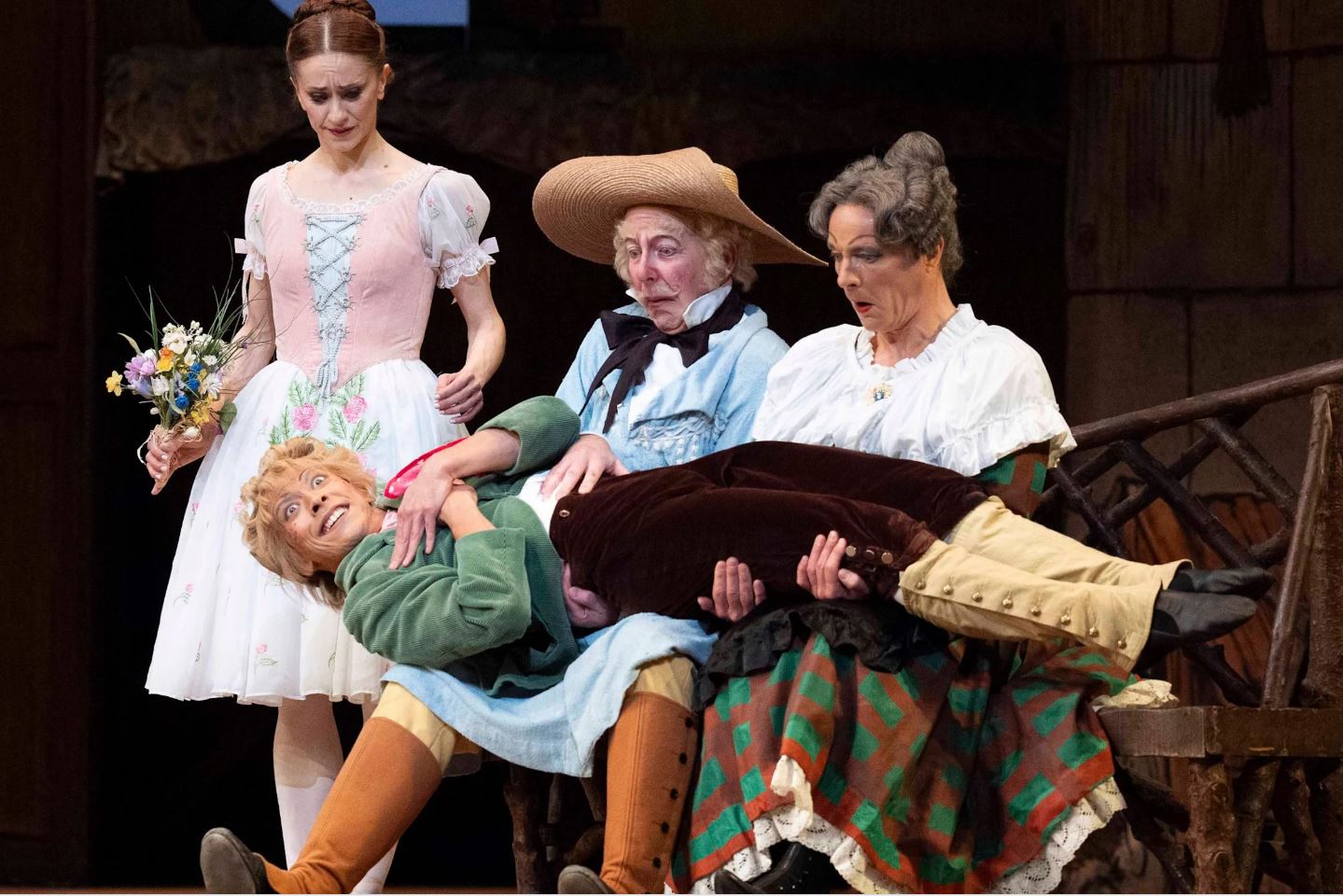
The principals, Marianela Nuñez and Vadim Muntagirov, showcased their talents, assisted by an excellent portrayal of a cockerel (Daichi Ikarashi) and his four hens. The other highlights are the maypole dance, which did look as though it was going to go horribly wrong, but almost completely corrected in time; the clog dance, a framer’s son flying through the air, and Oscar the white Welsh pony, who got the axle of his cart briefly caught on the proscenium arch. I’m sure 2000 people were hoping he was not going to add too much to the stage proceedings, but there is a junior member of the corps on hand with a dustpan and cloth at hand in case of accidents.

There is the famous Pas de ruban when the lovers become entangled in red ribbon only to produce a cat’s cradle. It is a tribute to the professional skill and experience of Nunez and Muntagriov when it appeared to be getting entangled that they sorted it out without a fluster. The technical virtuosity of Marianela Nuñez in the Adagio pas de deux, is astonishing, being rotated en pointe by eight corps, also en pointe,by ribbons held above her head. It must be one of the most challenging movements in the repertoire, and all the more amazing to still perform it perfectly at this stage in her career.

The ballet is much older than it appears, as it’s origins are from the time of Mozart. It was put together in 1789 by Jean Dauberval, from a collection of rural folk tunes, and first performed in Bordeaux fourteen days before the storming of the Bastille. It was orchestrated by Hérold in Paris incorporating the storm scene from La Cenerentola by Rossini, and snatches of Haydn and Donizetti. It was successful in St Petersburg, and Tamara Karsavina who worked with Ashton on its English creation danced Lisle in Russia. Some of the mine movements have their origin going back to the 1840’s, which provides beauty and continuity.
Jonathan Lo, a Jette Parker award recipient, shows the skills in conducting ballet which are so different to that of opera, and he will remain much in demand. A great evening out – what’s not too like?
Michael Rowlands, October 2025
Photography by Alice Pennefather and Alastair Muir
La Fille mal gardée is also showing live in selected cinemas on Wednesday 5th November

 Mark Aspen