
The Rivals
All in a Flap
The Rivals
by Richard Brinsley Sheridan
Orange Tree Productions at the Orange Tree Theatre until 24thJanuary
Review by Susan Furnell
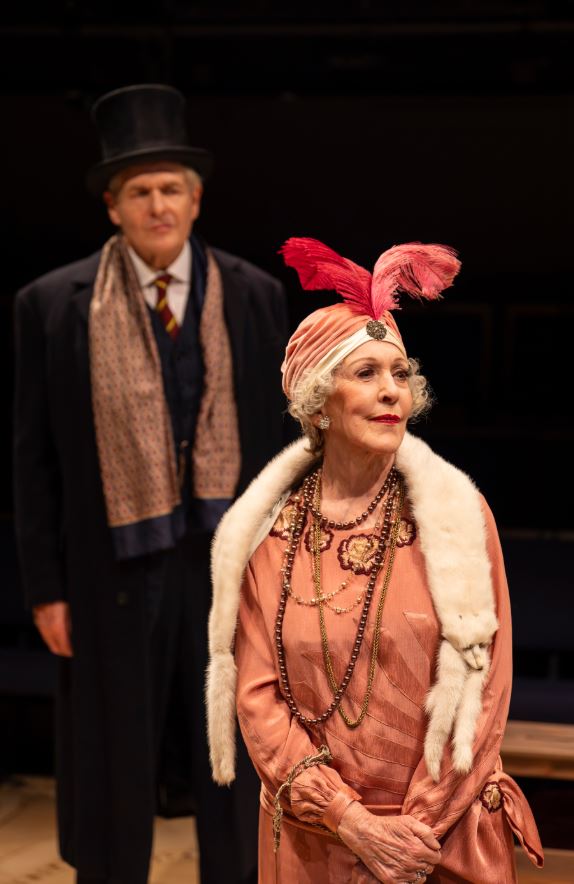
Tom Littler’s update of The Rivals to a modernised script and to the feel-good 1920s, with Charleston music, flapper dresses, feathered hats pin, striped suits and blazers and dancing with disco lights, was a triumphant success, radiating joy and laughs from the moment we entered the auditor (accompanied by the song You’re the Cream in my Coffee) until the last bows.
This is a masterclass in production integrity. Littler’s purpose was to make it as accessible, funny and enjoyable to today’s audience as it would have been in the 18th Century large theatres which followed the slightly earlier Restoration era theatre (more moralistic, for smaller elite circles).
The barriers overcome are considerable, from its long running time, to the rapid scene changes, to the aged humour and references, and lastly the round, intimate stage of the Orange Tree itself requiring careful thought so that there is no bad view, characters are audible, and the sets work from every angle. As Artistic Director and Joint Chief Executive of the Orange Tree, Littler brings deep expertise of what works and doesn’t work in this specific theatre.
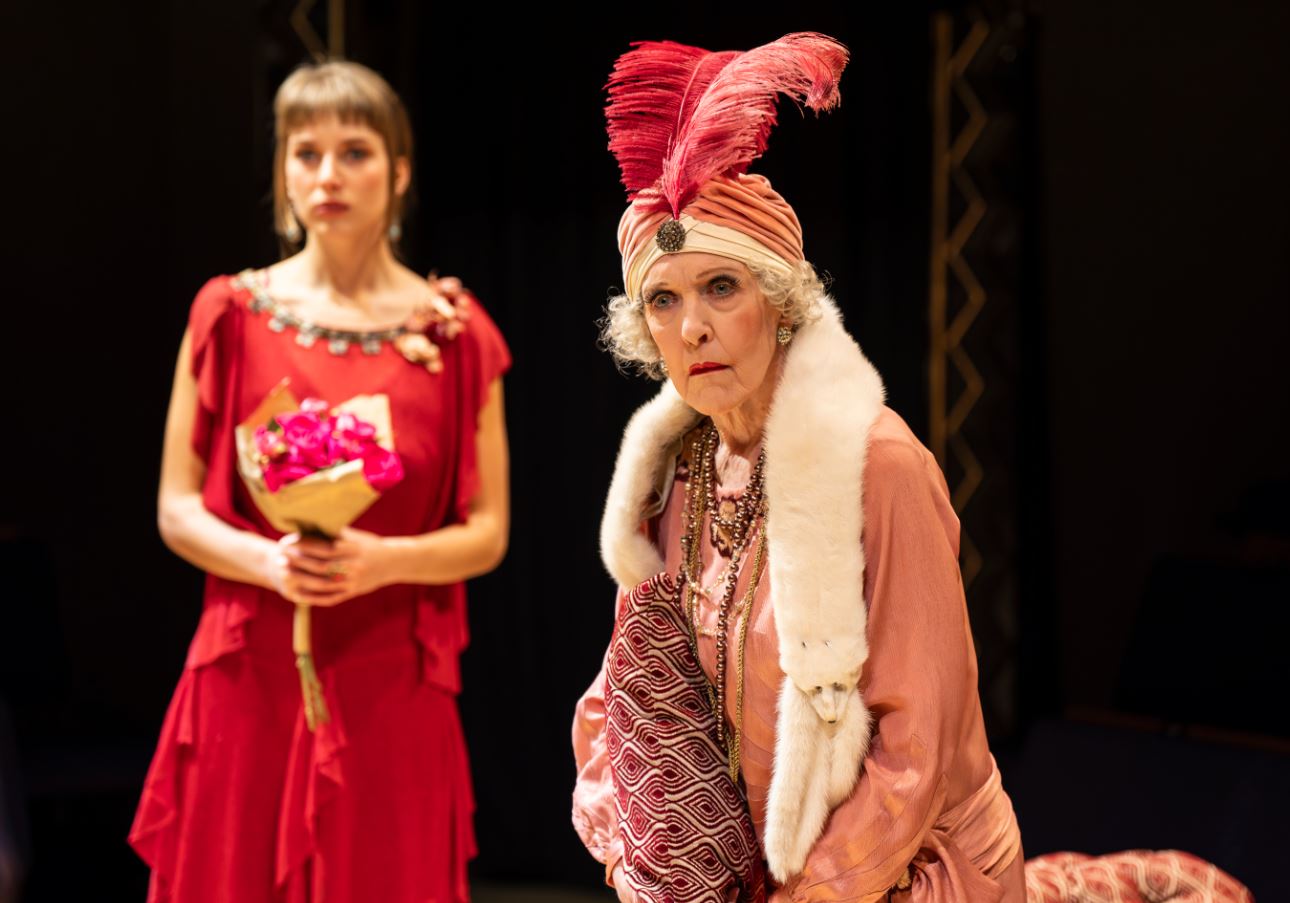
The original play has been cut by a third. According to the programme, many of Mrs. Malaprop’s original malapropisms were so obscure today that they require lengthy footnotes to explain them – so replacements were found for the worst offenders. Individually, many risked being too obvious but the delight came from the absence of any barrier to understanding them in their fast cascade as one after another trip off Patricia Hodge’s tongue, exquisitely delivered, while demonstrating her “great range of constabulary” and bemoaning the friends who “cast nasturtiums on my speech”. She has the audience eating out of the palm of her hands with only rare pauses from laughter. Hodge’s facial expressions are infinite, altering by the nanosecond to the rest of the cast and it is hard to believe she isn’t revelling in delivering this as much as the audience enjoys receiving it. At one point she tells a bench of audience members to shift up so she can sit down and then gives the person nearest her a free programme with a laugh before going on stage.
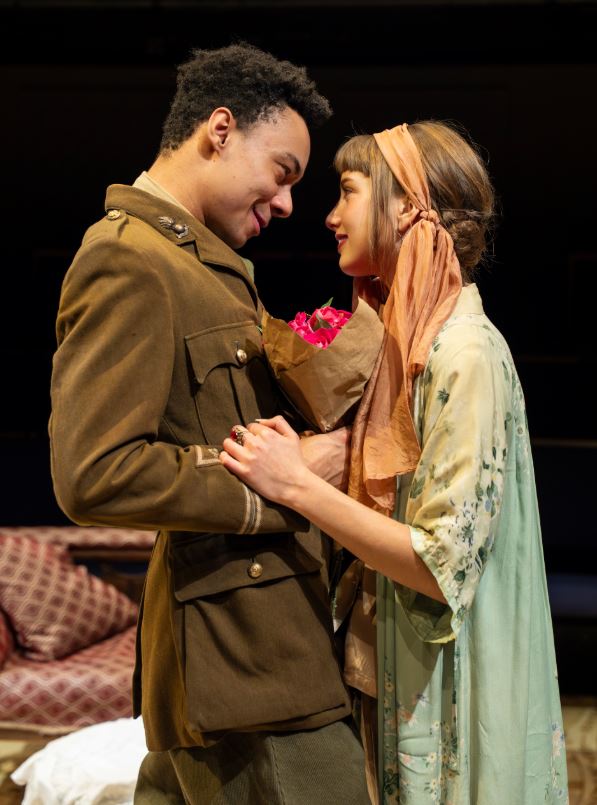
For the plot to work, the audience needs to understand quickly that Jack Absolute is rich, the poor Sergeant Beverley is fake and Lydia doesn’t know they are the same person and that Sir Anthony would be furious if he knew. As a deviation from the original, in this production, the audience is literally told this multiple times – in a slightly laboured way – but delivered well by Kit Young’s Jack. The case can be made that the ensuing camaraderie and joyful attentiveness of the audience for the next two hours justifies the very deliberate suspension of the usual “show don’t tell” rule of dialogue.
Young delivers a very convincing Jack Absolute. We will-on the rogue and care that he should win over Lydia in one of his personas. We see ourselves when he rebels against his father’s authority with playful humour. Laughs come from the audience being ahead of Lydia (because they fully understand what is happening). He’s charming, funny, convincing, projects his voice clearly – and he can definitely dance!
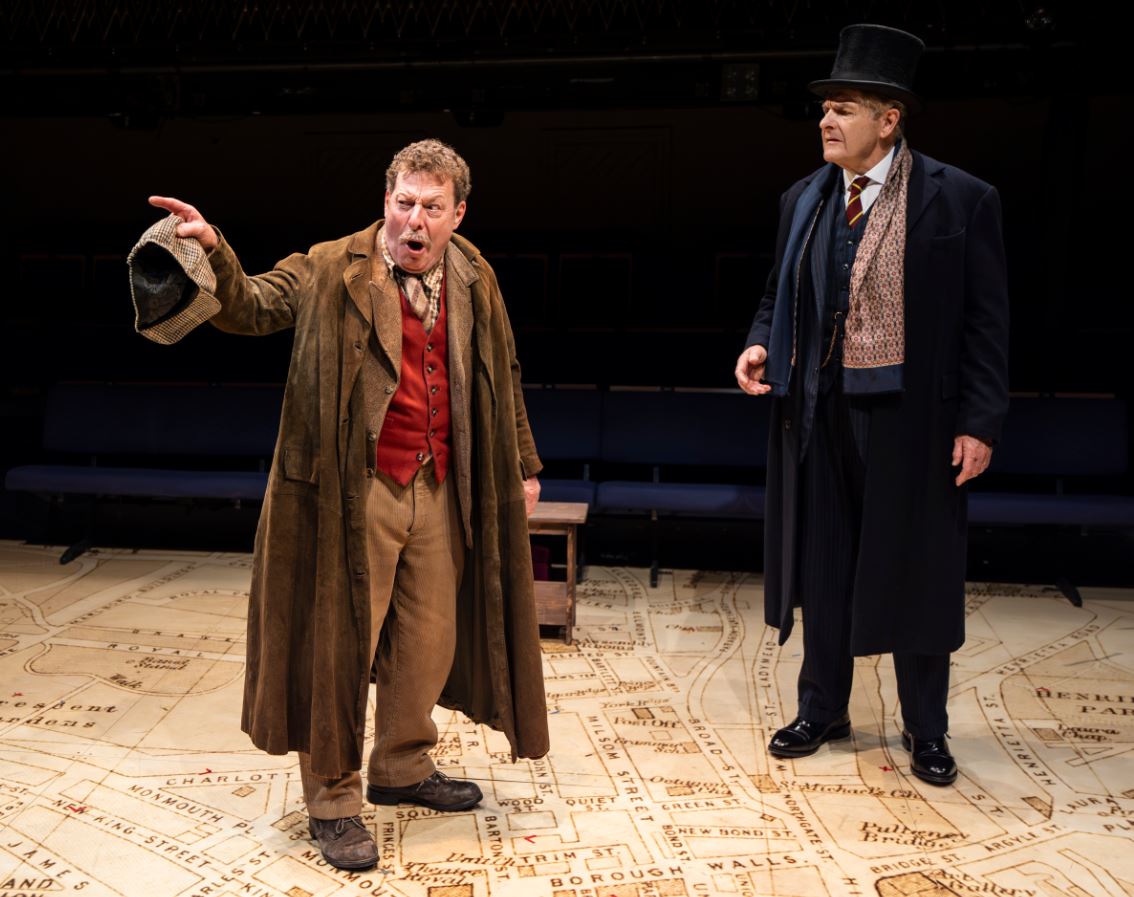
Anthony Absolute (Robert Bathurst) is Jack’s father and is obsessed with status, and respectability. He expects instant obedience. The humour works because Sir Anthony is volcanic and performative and slightly desperate not just loud. His rage borders at time on feeling genuinely threatening and at other times he plays to the audience saying outrageous things in the manner 1980s sitcoms like The Good Life would have done, including a slew of witty lines about keeping women from being too educated that are impossible not to enjoy . . . even as a woman. Its good to see the British able to laugh at themselves again in this production, as it seems to be a trait we have been losing. It’s too tempting not to involve the audience in this particular theatre and Faulty Faulkland (James Sheldon) plays with the audience telling them to desist from watching Jack get out of the bath and then feigns shock and tells them again they MUST desist from watching. Unsurprisingly, a similar device had been used a few weeks earlier in another play here.
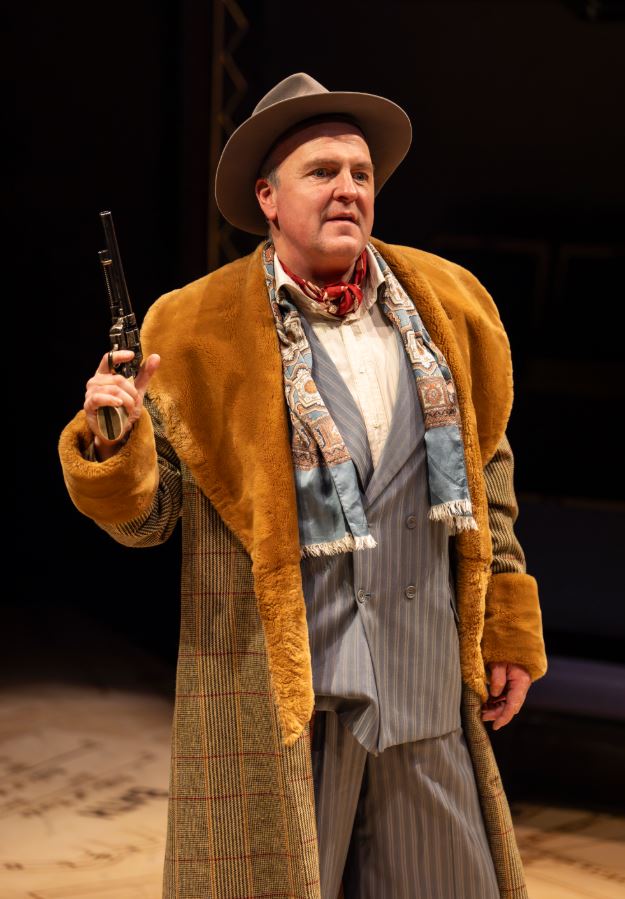
O’ Trigger (Colm Gormley) is the Irish character that bombed in the first production of Sheridan’s play. Here he is updated to a gum-chewing, pin-striped suit American with silk scarf and pocket handkerchief that the audience recognizes as a type from the many Holywood films visting this era. He is a great foil for Mrs.Malaprop.
The whole cast is strong though Julia (Boadicea Ricketts) doesn’t always manage to sustain quite the same clarity of voice projection that is a hallmark of the rest of the production.
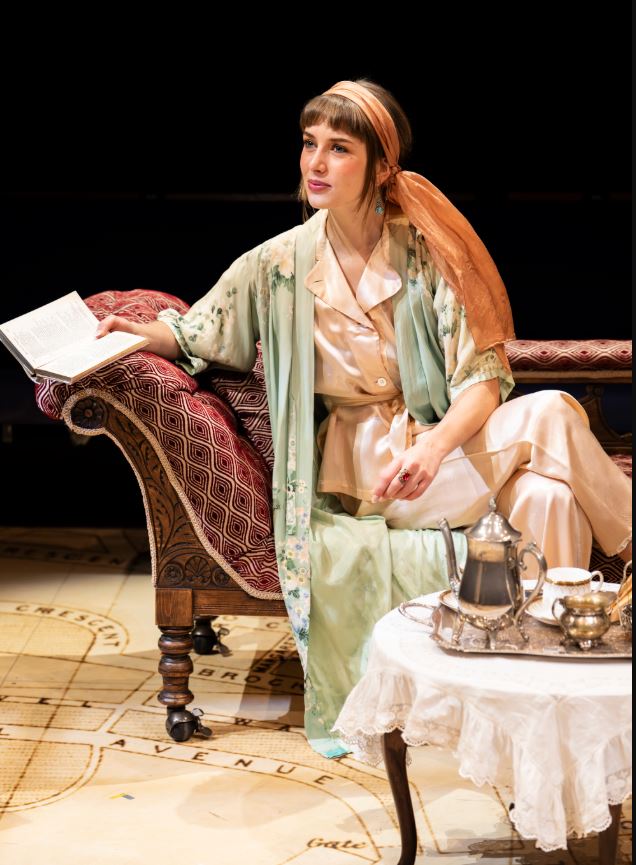
The set and costume designers (Amett Black and Neil Irish), lighting designer (William Reynolds) and sound designer (Tom Atwood) work magic between them. The women’s’ outfits are full of ebullient elegance and colour with fine silks, matching hats and feathers. The men wear their stereotypes well – nothing felt like a “costume” and everything integrated into a cohesive whole. The sets were simple but elegant and effective – a greasy spoon café, a living room with couch, a church with red carpet and candle sticks, pews and hymns, a dance venue and the fast set changes were done with joyful foot tapping music, low lighting and sleight of hand.
The movement director (Leah Harris) deserves a mention too. The drama is dynamic, as characters frequently rotate around the stage or swap sides in a way that never once seemed contrived yet meant no audience member was ever left staring at an actor’s back for long. All the movement between characters had artistic purpose and direction. And the sleight of hand of the frequent set changes through the dance choreography is very clever, joyful to watch, and highly effective.
All in all this, is a truly uplifting and wonderful production and a marvellous way to start 2026 – I urge you to get a ticket if there are any left!
Susan Furnell, January 2026
Photography by Ellie Kurttz


 Mark Aspen