
Practically Imperfect
Who’s Who
Practically Imperfect
by Clare Norburn
The Telling at the OSO Arts Centre, Barnes until 15th February, then on tour until 20th March
Review by Claire Alexander
Whilst PL Travers did write other books she is by far and away known for her Mary Poppins series — perhaps even more so because of the enormous success of the Walt Disney film of the same name — its rights acquired by Disney in 1962. As an author primarily known for one work that has become a household name she is in good company: Harper Lee (To Kill A Mockingbird) Emily Bronte (Wuthering Heights) Boris Pasternak (Dr Zhivago) JD Salinger (Catcher in the Rye) to name a few.
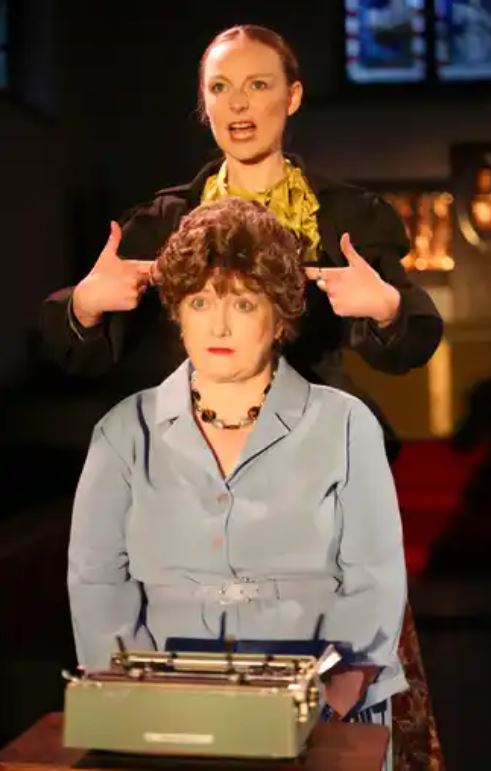
Clare Norburn’s play Practically Imperfect starts from the premise of what might have happened if Travers had met her heroine, or indeed if her heroine had met Travers. Thus starts a clever engaging dialogue between the two and you begin to wonder who’s in charge, Mary Poppins or Travers. Part biographical and part psychological exploration of what happens when an author becomes controlled and overtaken by her creation of a character that is far bigger than herself, this is a thought-provoking and interesting reflection on quiet, frumpy PL Travers, and her larger than life creation.
In many ways the two could not have been more different. Travers was apparently unassuming and fiercely private whereas Mary Poppins is engaging, charismatic and has a gift (along with a bit of magic) for making everything ‘right’. One wonders whether Mary Poppins is who PL Travers would like to have been. Indeed there are some nice touches in the play – Travers the children’s author who couldn’t bear being asked questions by children because they asked the wrong questions; as opposed to Mary Poppins, the charming and irresistible nanny! Travers, the lonely author who desperately sought love from her adopted child (Camillus); as opposed to Poppins whose children in her care flocked to her.
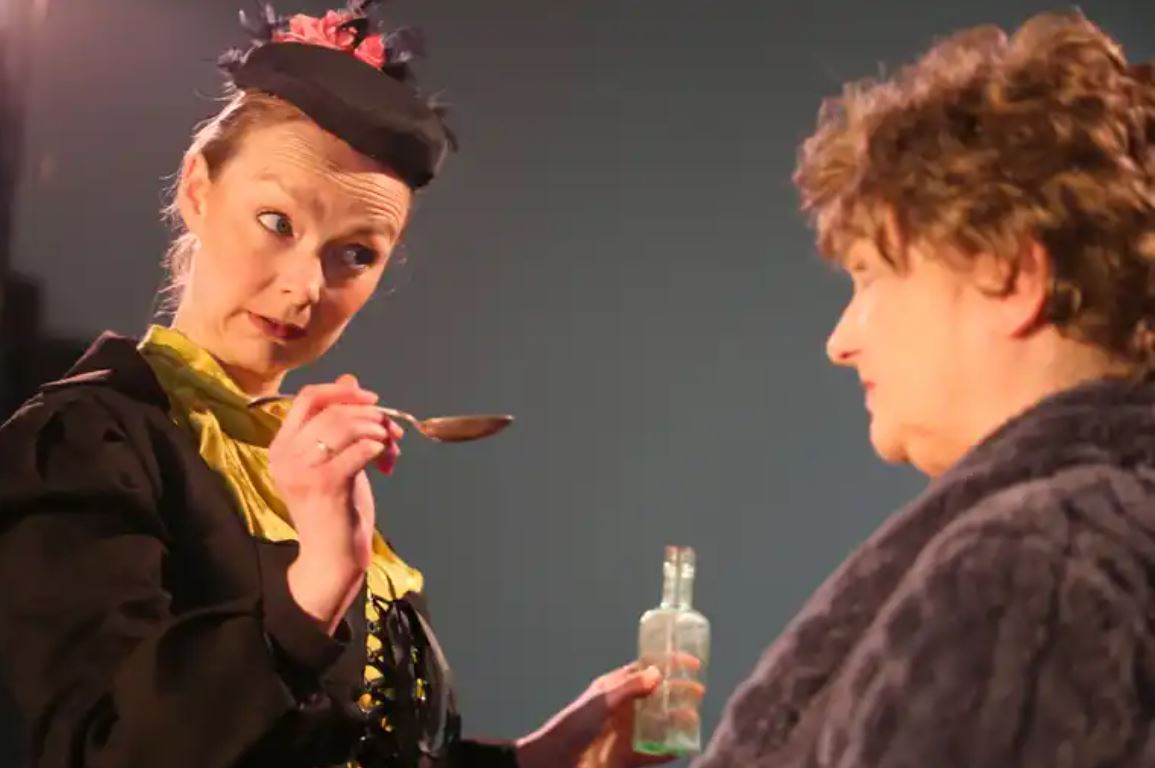
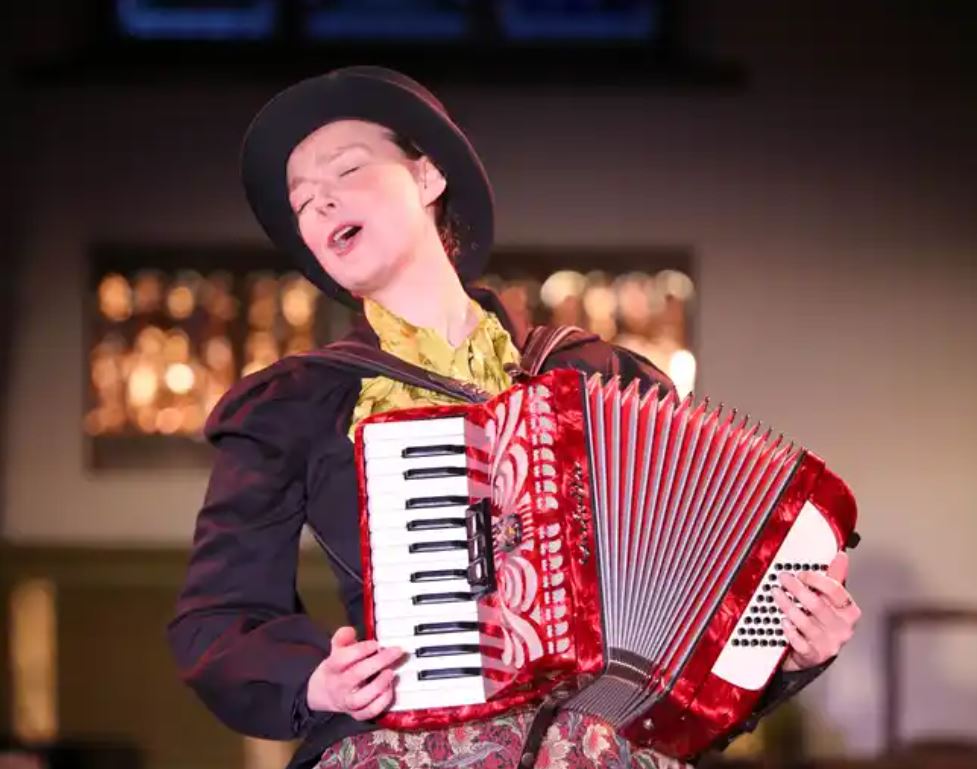
Lottie Walker (who has created some excellent one woman shows around forgotten women, including Marie Lloyd Stole My Life and Chopped Liver and Onions) gives a touching performance as PL Travers, totally believable as the slightly embarrassed, unconfident, lonely spinster. This contrasted perfectly with Joanna Brown’s spirited Mary Poppins, ably aided by accordion and singing the songs Travers would have imagined Poppins singing had Disney not insisted on his own blend of sugary catchy tunes – we know the rest! Inevitably the set is simple to allow for the demands of a touring production – any anonymous 1960s room, fittingly with typewriter at the forefront. But there was also some lovely detail – Poppins using her infamous umbrella and carpet bag to good effect especially.
At times I would have liked more of a change of energy from Walker, particularly in the biographical sequences towards the end of the first half exploring Travers’ childhood and early life. I wanted to see her excitement as she won her first acting role, and a little more disappointment at her father’s disparaging comment, remembered many year’s later, for her first poem – “well it’s hardly Yeats is it”. But perhaps that is the real Travers, flat and overcome. Directed sensitively and unpretentiously by Nicholas Renton, this production was genuinely intriguing.
In summary Perfectly Imperfect provides an interesting and highly thought-provoking reflection on what happens when your muse becomes more successful than you. It has kept me talking and thinking all evening – even though this is based upon PL Travers and Mary Poppins the idea could well be extended to many other pairings.
As a play, at less than ninety minutes, it is perhaps too short to merit an interval, and I felt this broke the momentum, but as a muse, and a divertissement, and especially if you have an interest in PL Travers and the books and films that have spun from her success of Mary Poppins you will enjoy this quiet reflection.
Claire Alexander, February 2026
Photography by Robert Piwko


 Mark Aspen