
The Dawn of Reckoning
Past Mistress
The Dawn of Reckoning
by Mark Bastin
MBA Productions at The White Bear Theatre, Kennington until 28th March
Review by Harry Zimmerman
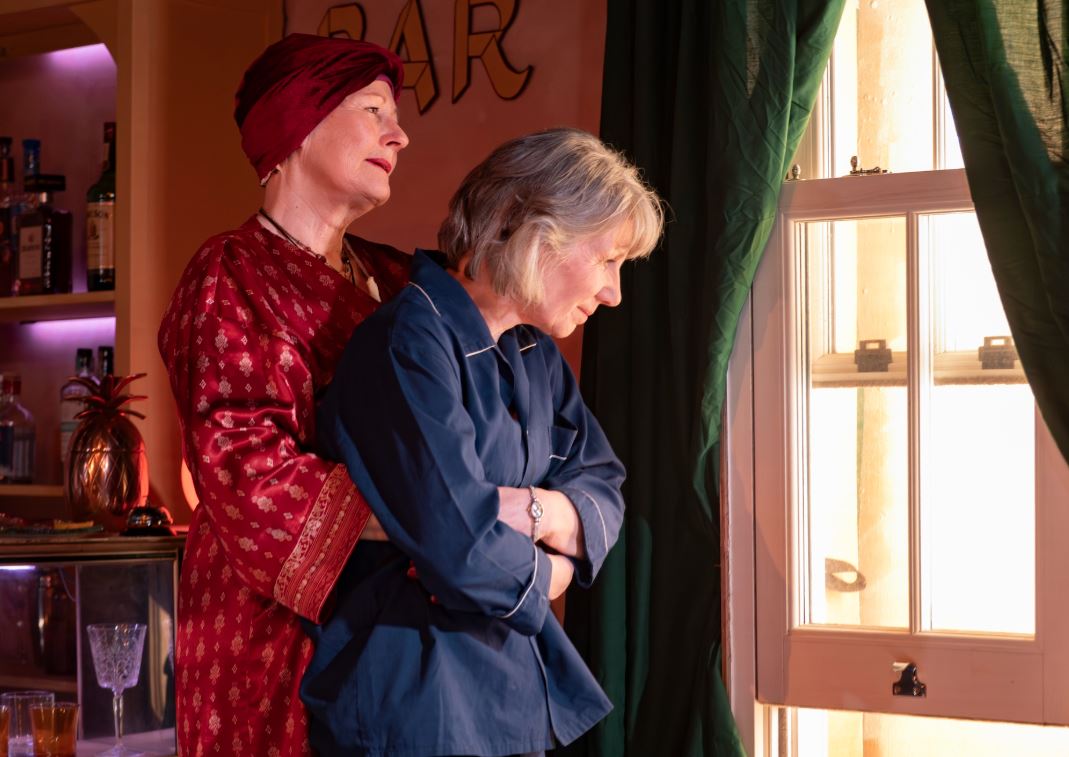
A play for two actors is a popular construct these days, especially for the burgeoning fringe theatre scene. In his introduction to Mark Bastin’s The Dawn of Reckoning, director Matthew Parker, in a piece entitled The Lure of the Two-Hander, says that this format enabled him to work with his actors to “…create something quite powerful and intense”.
He has certainly succeeded in this production.
Upon entering the intimate playing space of The White Bear, hugely appropriate for the dynamics of this production, the audience are faced with the resident’s lounge of The Clevedon Hotel, Bayswater, a small hotel with an air of faded grandeur and a décor which is in need of some attention and care. However, the chairs are comfortable and there is an honesty bar, which is all that is really needed for the action to develop.
Ruth and Helena meet here seemingly by chance at 3am on a cold, foggy January morning. Helena, a successful paediatric neurosurgeon, and Ruth, a celebrated children’s book illustrator, first met as freshers at university. We learn that these once inseparable best friends, who navigated the frantic years of university and had shared everything together, had been estranged for over twenty-five years, driven apart by a, at first glance, typical love triangle. Ruth had had an affair, and subsequently married, Anthony the former husband of Helena.
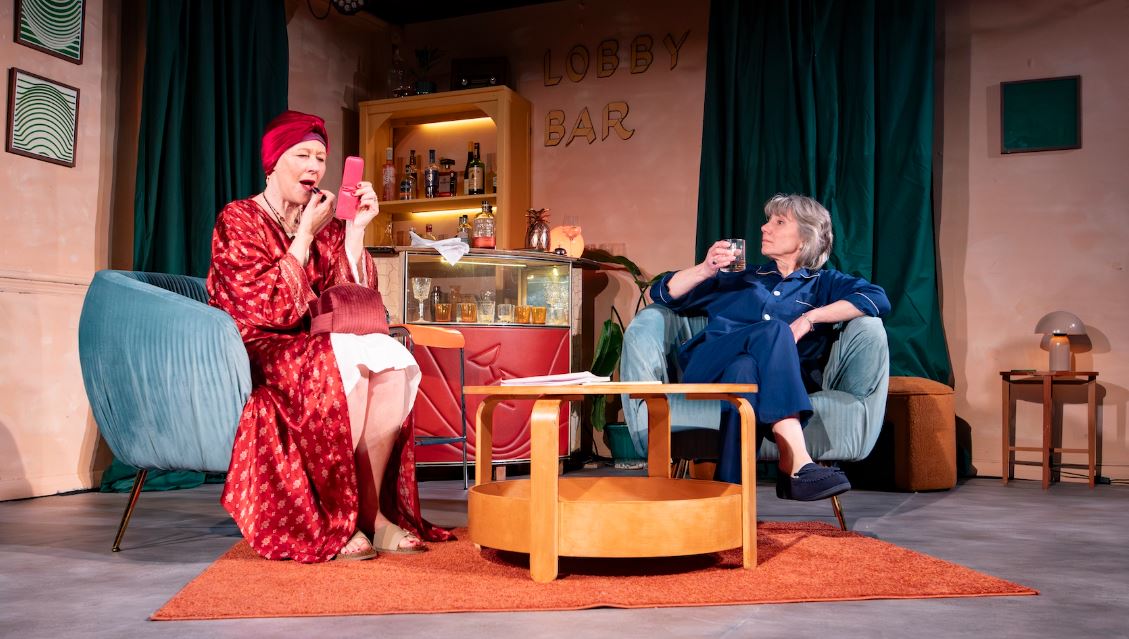
In the course of a riveting hour, we learn that what had begun as an unfortunate inadvertent meeting in the wee small hours slowly changes, as we learn more details about their estrangement, to reveal some very deep truths about love, loss, betrayal and, eventually, the power of forgiveness, reconciliation and ultimate redemption.
The actors in this piece are both superb, and give polished, subtly nuanced portrayals of two very different characters, forever bound together by the intricacies of their shared past.
“No-one can change the past . . . . If I could, I would. Of course I would.”
Helena, (Bryonie Pritchard), is a no-nonsense, clear eyed Northern woman who does not suffer fools gladly. Professionally successful, having carved out an outstanding career in New York, Helena was, in her youth, a sexually liberated, former “punk princess”, whose driving ambition and hedonistic attitude had been shaped by the slight chip on her shoulder about succeeding in a social and economic environment very different from the one she grew up in.
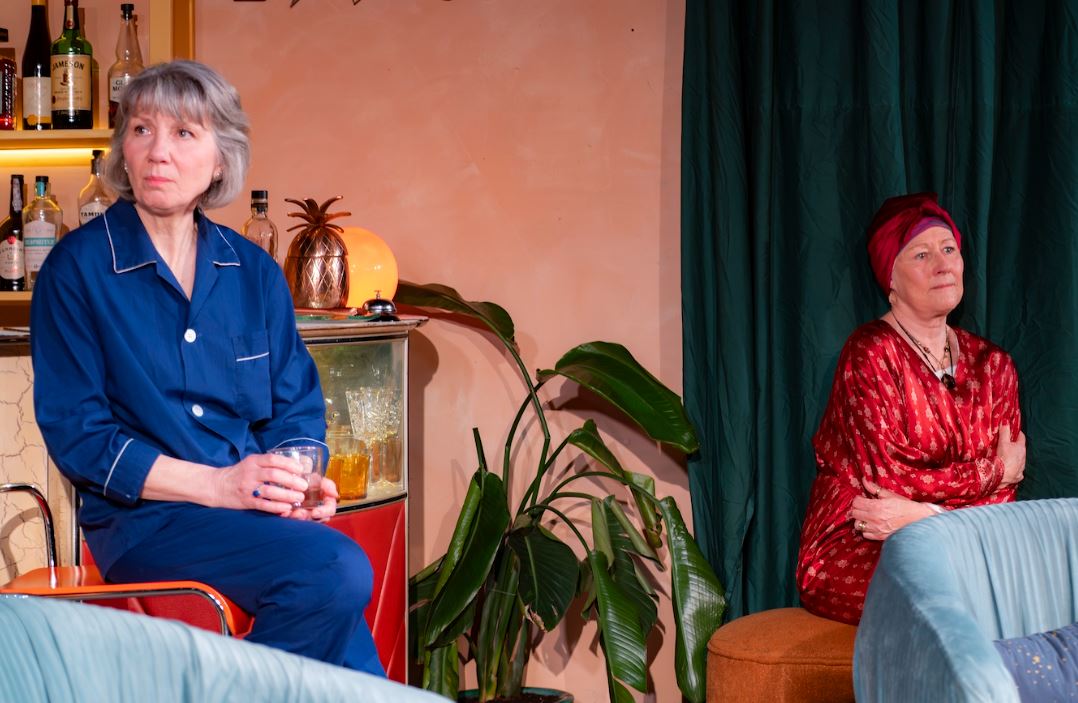
In contrast, Ruth, (Jilly Bond), is an artistic, yet rather buttoned-up, woman from the Home Counties, whose friendship with Helena had always been based upon a greater degree of submissive flexibility. In the escapades of university life, Ruth followed while Helena led. As Helen observed, Ruth was “compliant”, until the day she became involved with Helena’s husband and fractured the relationship between them.
Both actors are utterly credible in their characterisations, and the dialogue moves naturalistically and convincingly.
As the play develops, we see a gradual, if guarded, element of reconciliation and reconnection, as they reminisce about their wilder university days. Such recollections only underpin the severity and apparent finality of the rupture in their relationship occasioned by the fall out following the recently deceased Anthony’s leaving Helena for Ruth.
As the early morning wears on, more drink is taken (by Helena), and discussions become deeper and more painful, we see that the reason for their alienation and separation runs deeper than merely their relationship with Anthony, and is inextricably linked to the mutual feelings of guilt and betrayal surrounding the loss of a child, Helena’s son, James.
There are a few curious elements in the narrative which are ambiguous and suggest that the action may veer off in a different direction. There is a distinct fantasy, a supernatural tinge, to some aspects of the plot that suggests that all is not exactly as it seems, especially in its final moments. Such ambiguity is not particularly helpful to the development of the play and serves unnecessarily to muddy the waters. There is enough emotional raw meat in this production to obviate the need to dabble in, or hint at, the metaphysical.
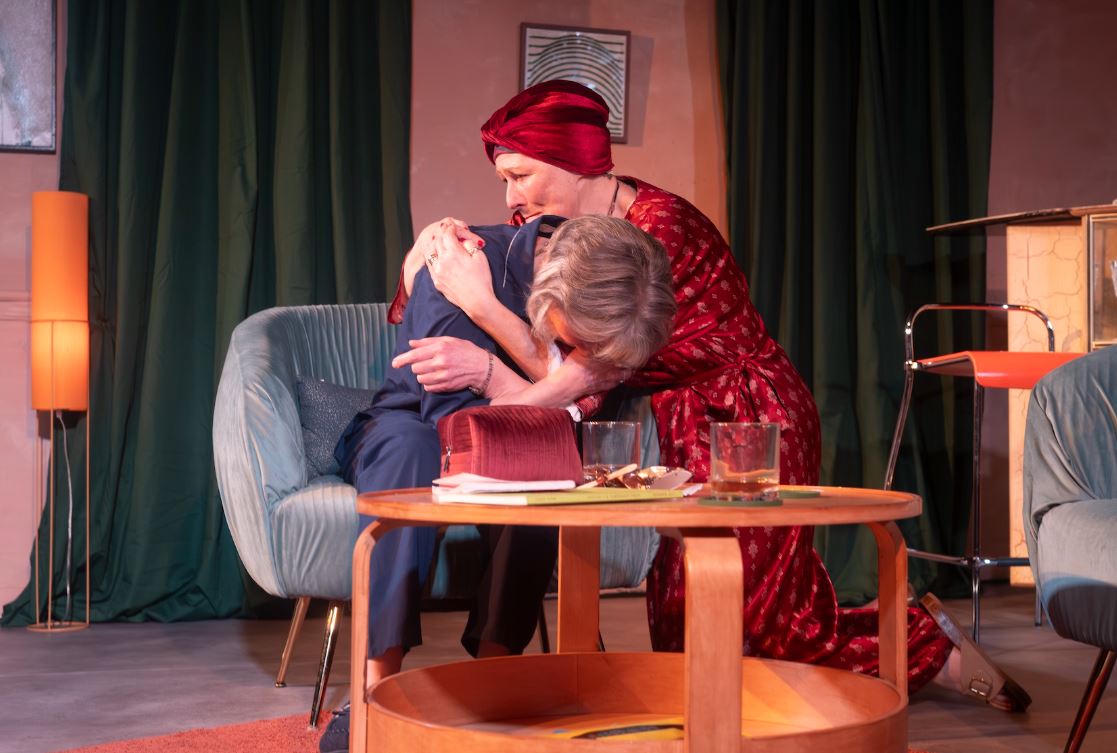
The climax of the play delivers a cathartic realisation that both women have suffered, and that the way forward to true happiness and emotional rehabilitation lies in the ability to recognise what can, and what cannot, be achieved; that is that ultimately forgiveness and reconciliation are more powerful forces than an ossified continuation of entrenched attitudes, schism and alienation.
As Ruth says towards the end of the play “I am a great believer in second chances,” and, if nothing else, this is a play about the powerful healing properties of the second chance, especially a second chance which arrives when and where it’s least expected.
Harry Zimmerman, March 2026
Photography by Rob Cheatley

 Mark Aspen