
Sunny Afternoon
Sunny Afternoon
music and lyrics by Ray Davies, book by Joe Penhall
Sonia Friedman and ATG Productions at Richmond Theatre until 4th April, then on tour until 30th May
Review by Vince Francis
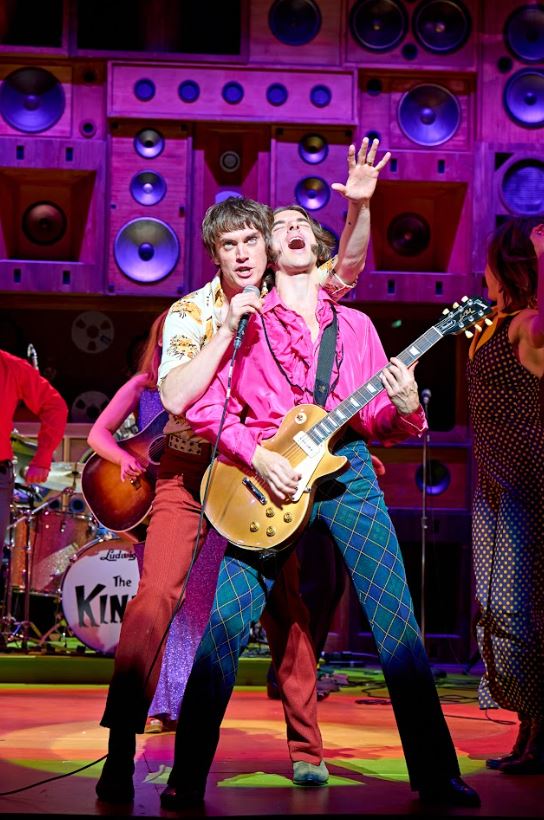
The 1960s saw significant changes in popular music and the UK made a significant contribution to its development. From the jazz and crooners (Who remembers Dicky Valentine?) and raw rock’n’roll of the 1950s, there emerged a more sophisticated style of writing which frequently incorporated social commentary or political activism as well as innovative pop and rock to simply have a bop to. The major contributors, such as the Beatles and the Rolling Stones are well documented, but a band that doesn’t, in my view, get the credit it deserves is The Kinks. The often cited “Bad Boys of Rock” reputation, although justifiably earned through pugnacity, internal conflict and often physical violence, seems itself to conflict with some exquisitely crafted lyrics and music and Sunny Afternoon attempts to find the connecting tissue between the two.
Joe Penhall’s script, his first stage musical, focusses on the story of the band and the resulting effects on the band members. In this respect, the production, under the pacey direction of Edward Hall, achieves that objective, but, as an approach, it can be criticised for what is omitted or interpreted as mentioned in passing. For example, the death of Ray and Dave’s elder sister, Rene, is mentioned a number of times in the script, and its initial impact and ongoing effect on Ray is touchingly apparent. The effect on Dave and, indeed, the remainder of the family is not really captured, but given that Ray Davies was driven to compose on the guitar given to him by Rene, the effect on him becomes more relevant to the show. The script is, however, witty and offers a number of opportunities for gags such as “You can’t imagine John Lennon just sitting in his bed all day!” as an admonishment to Ray during an episode of depression. Miriam Buether’s open stage design provides space and appropriate cues to environment, with furniture and props being set and struck by cast and crew, as required, whilst Rick Fisher’s lighting provides mood and atmosphere. Matt Mckenzie’s sound keeps everything crisp, articulated and balanced, but also provides some beautifully thunderous rock sounds where required. It is genuinely thrilling to hear a distorted guitar at, I would guess, 100dB perhaps higher, but you may not want to make a habit of it.
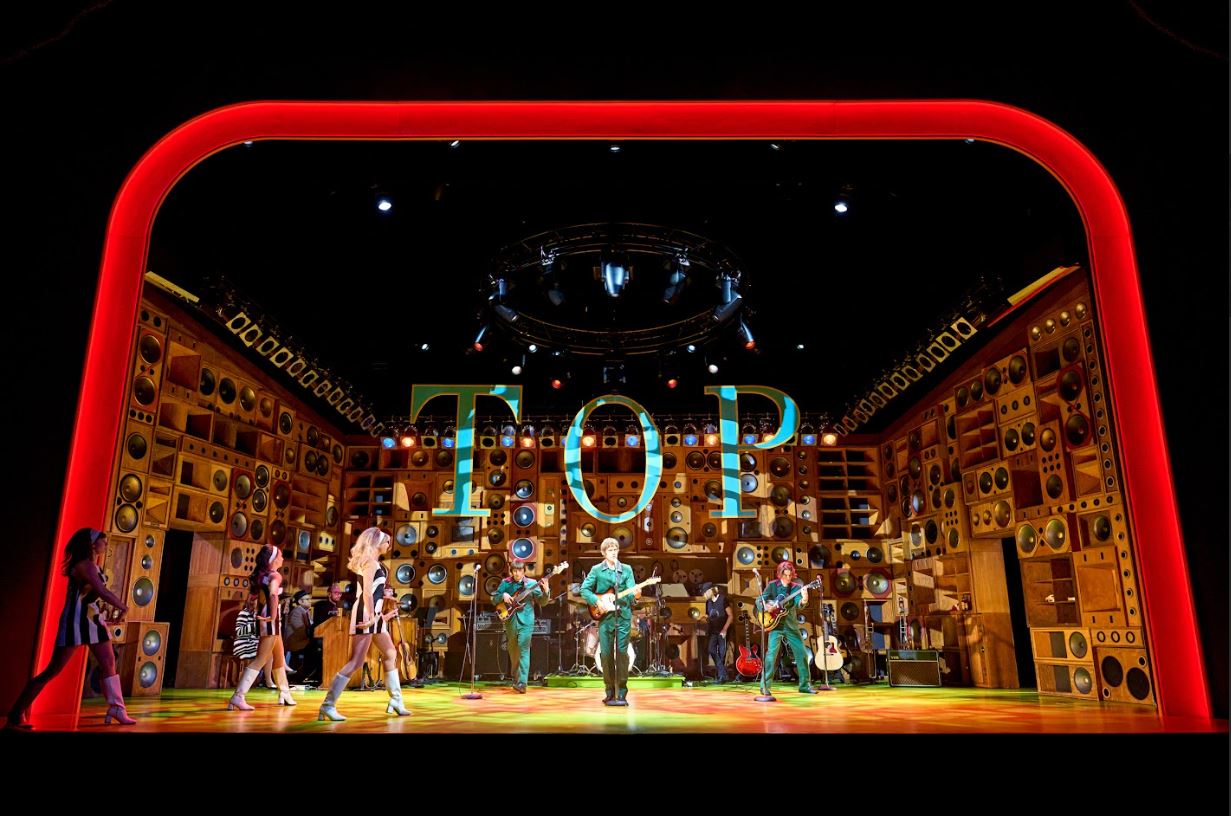
The band are first seen as the Ravens, backing the crooner Robert Wace, in a frenetic opening scene which grabs attention and provides a slick display of physical comedy as dancers appear from the audience collide, or nearly collide, with each other and Wace as they attempt to waft their way across the stage elegantly, and the band seethes in frustration behind. As a result, an early expectation might be that this is going take a more laconic look at how the band develops, but that is quickly countered and the piece establishes a rhythm of light and dark, built on the underlying tension of Ray’s internal struggles and his relationship with Dave. In this regard, one of the things the production does well is to integrate the songs of Ray Davies into the script, such that the inspiration for the song is either actually apparent or indicated in some way. An example of this is I Go to Sleep, which is delivered with great poignancy as part of a conversation between Ray and Rasa, his partner, whilst they are both experiencing the loneliness of separation during a tour.
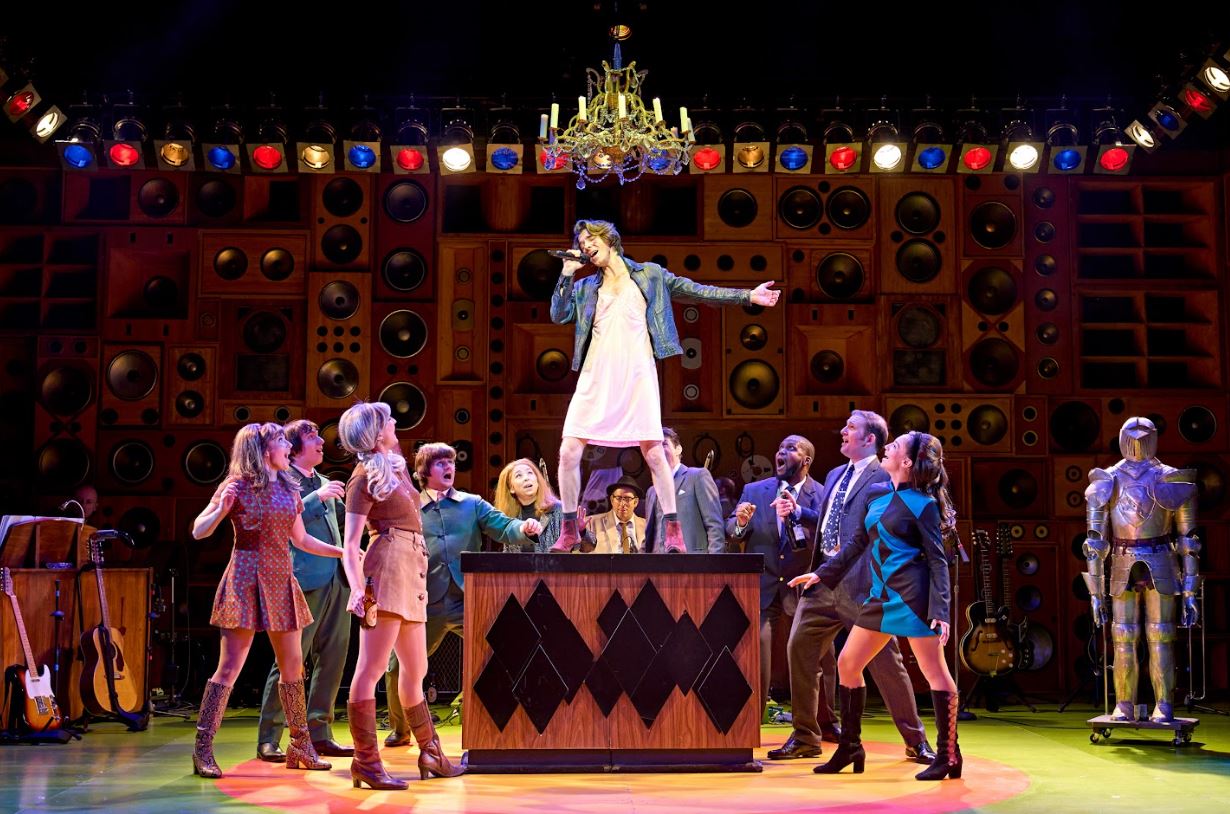
Davies’ lyrics are worthy of a moment’s reflection. Yes, there was the aggressive simplicity of You Really Got Me and All Day and All of the Night, but alongside that consider, from Autumn Almanac:
From the dew-soaked hedge creeps a crawly caterpillar
When the dawn begins to crack
It’s all part of my autumn almanac
And, from Waterloo Sunset, which is one of my personal Desert Island Discs:
Millions of people, swarming like flies round Waterloo Underground,
But Terry and Julie cross over the river, where they feel safe and sound
The columnist Richard Littlejohn has provided a thoughtful piece for the programme, based on his own love of The Kinks and his acquaintance with Ray Davies. He includes in it the sentiment that Davies lyrics are “up there with Betjeman”. I agree with him on that point. Davies was prolific, too and covered a breadth of material commentating on life in Britain in the sixties, such as Sunny Afternoon itself, Village Green Preservation Society, Dead End Street, and many, many others.
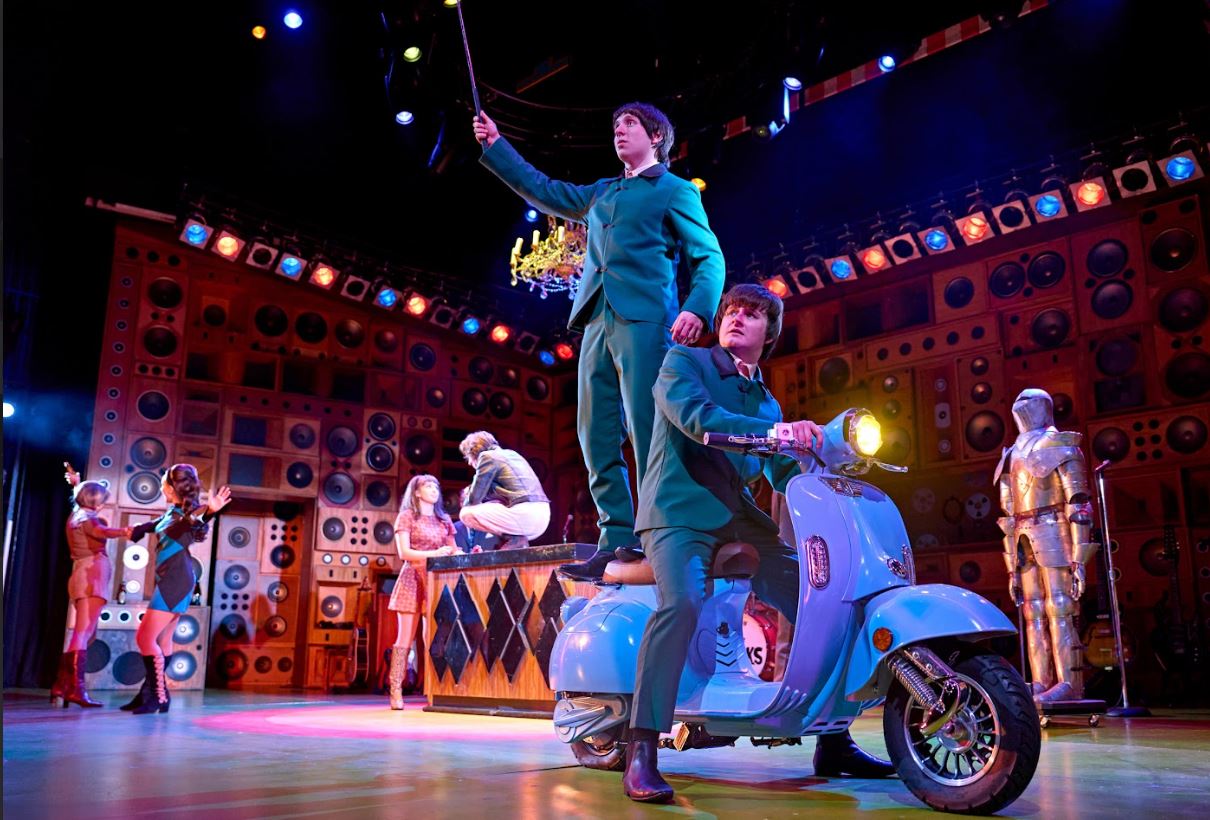
This may be considered by some as a “Jukebox Musical”, in so far as the music is the featured element, with plot and character taking second place (and often trivial). I think Sunny Afternoon rises above that considerably, although it does tread the line occasionally. If we may quote from Alan Menken and Howard Ashman’s Beauty and the Beast, Sunny Afternoon is, in many ways a “tale as old as time”, describing as it does the arc of artistic inspiration ascending through challenge to a zenith of fulfilment and self-actualisation before falling away through internal conflict and, if tragedy is avoided, seeking some final reconciliation and redemption following the inevitable crash. In the world of popular music, this could also describe plot of, for instance, A Star is Born, in all its incarnations. That said, there does seem to be a certain inevitability in the development of raw talent, particularly where there has been little or no prior exposure to the industry. Sibling rivalry in bands is not unheard of either, the Everly Brothers being a prime example, and the Gallagher brothers in Oasis representing a more recent instance. The thing, for me, is to get to know who is involved and what motivations, contexts and events prompt the progress through the arc. This production provides sufficient understanding of those elements, both positives and negatives, without dwelling ponderously and showcases the music excellently.
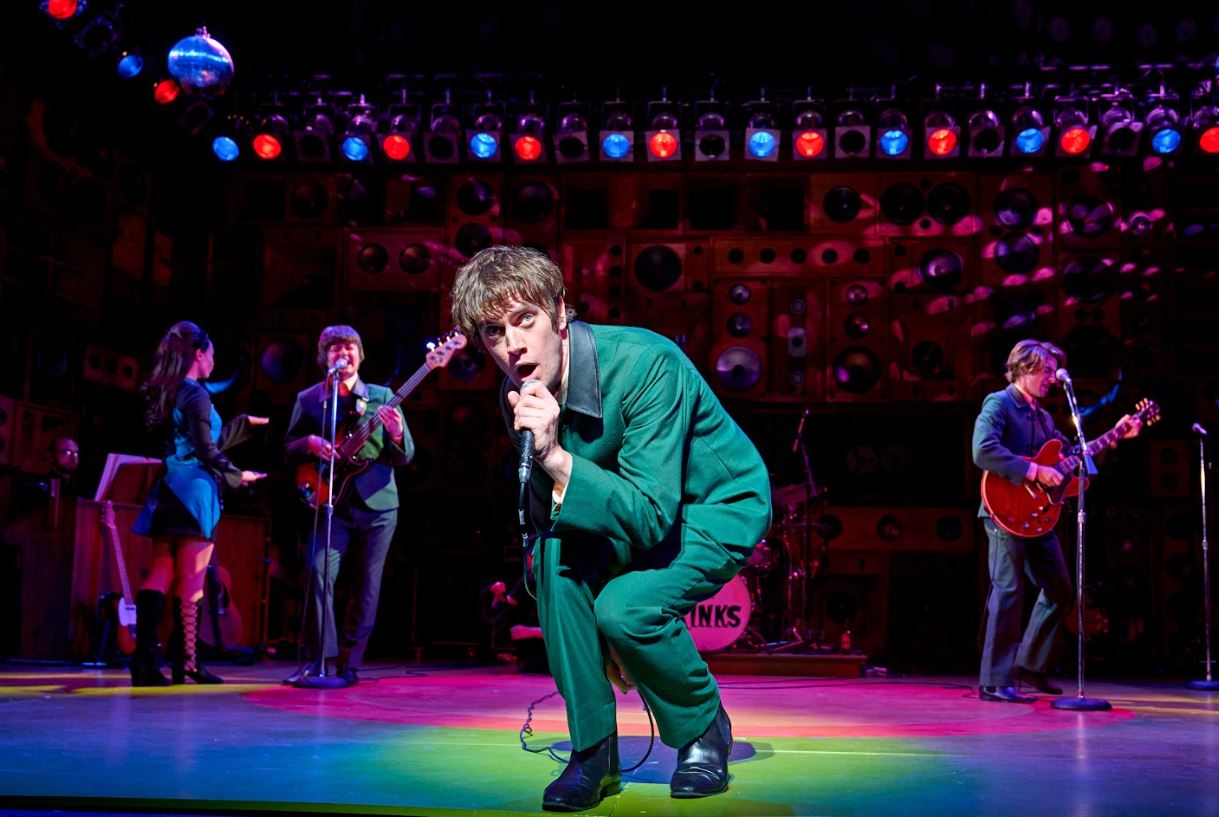
The characters of the band members are well drawn, with Danny Horn providing a wonderfully brooding Ray, contrasted by Oliver Hoare’s completely out of control Dave. Zakarie Stokes gives us a nicely nuanced Mick Avory, apparently an exponent of the Swan Management method, that is, calm and serene on top, but paddling like crazy under the surface. Zakarie also gives us a very creditable performance as a drummer, including a tasty extended solo spot early in the second act. Finally, Harry Curley’s bewildered and innocent Pete Quaife provides a counterpoint to the chaos surrounding him. Other characters sometimes, and perhaps understandably, veer toward the pastiche, but Ben Caplan’s Eddie Kassner has authenticity. Caplan also doubles as drummer for some of the numbers, and a very decent job he makes of that, too. Speaking of doubling, the small ensemble under musical director Elliot Ware is enhanced by various cast members on a number of songs and there is some particularly impressive trombone playing from Joseph Richardson and Alasdair Craig, but also guitars, banjo, ukulele and trumpet, cajón, and on and on.
A surprise guest for the evening was Mick Avory himself, who came to the stage during the bows to express his admiration for the cast and crew and wonderment at the continued interest. He shouldn’t be surprised, really. The Kinks were a genuinely influential band, even if they didn’t achieve the heady heights of the Beatles and The Stones.
Overall, this is a great evening’s entertainment, highlighting the history of The Kinks and the quality and breadth of Ray Davies writing. I would care to wager a whole 50p that you will at least be tempted to get on your feet and boogie to the finale mash-up of greatest hits, as were the Richmond audience, even if some needed a little support in the enterprise.
Vince Francis, March 2026
Photography by Manuel Harlan

 Mark Aspen