
Mambo Italiano
Wife Material
by Heleana and Sophia Blackwell
Heleana and Sophia Blackwell at The Camden People’s Theatre until 19th August
Review by Heather Moulson

Dressed in vintage glamour, married couple Sophia and Heleana shoot straight from the hip. Anyone expecting a cosy ideal of marriage are soon brought up short, as we are drawn into niggles, bad habits, duvet covers and lockdown. Both skilfully draw on their Italian and West Indian roots, with hilarious results, in their slickly devised show, sharply directed by multi-award winning comedian Maria Shehata.
Read more…Watch Out
Scavengers
by Bryan Oliver
Urban Wolves Theatre Company at The Etcetera Theatre until 20th August
Review by Brent Muirhouse
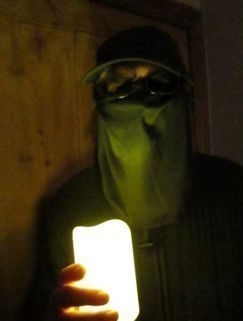
Strolling into Scavengers, in the deceptive and darkened staging of the Etcetera Theatre, you could be forgiven for thinking you’d taken wrong turn and trespassed into somebody’s dwelling. Sitting there at a table, fiddling between make-up and mobile, sits Zeb, who is acting in no particularly remarkable way, yet is about to take centre stage in Bryan Oliver’s new play at The Camden Fringe, which offers an exploration of human survival in a post-apocalyptic world with more than one moment being closer-to-reality than you’d hope.
Read more…Unseen Wounds
Gaslight
by Shaira Yasmin Berg
CADS at The Etcetera Theatre until 20th August
Review by Heather Moulson
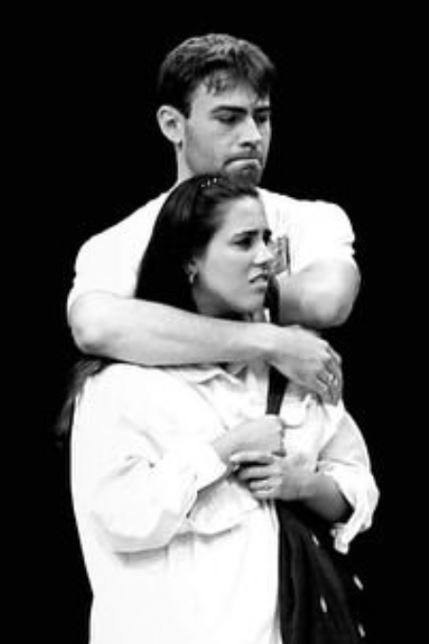
Student Angela goes straight for the throat in the deceptively mellow opening scene of Gaslight.
In this exploration of “a world where life-threatening physical wounds were treated the same as psychological trauma”, relationships fall apart quickly, and abruptly take the first steps towards a downward slope. Arianna Munoz’s sensitive direction and quick pace works with the emotions, accusations and betrayals in a tense drama, new writing by Cambridge University students who are active in Cambridge Footlights and the Marlowe Society.
Read more…Interrogatory Introspection
An Evening with Gene Montague
by Lewis King and Robert Thomas
Hot Car Vodka Collective at the Rosemary Branch Theatre until 17th August
Review by Heather Moulson

We sat on dining chairs with eclectic cushions, the intimate space before us ideal for a talk show setting. Or rather, a significant Q&A session, in which the original interviewer Jamie Pringle had been replaced by the over-keen Aubrey, putting the interviewee, actor Gene Montague, on a wrong footing, and into downward spiral as the stand-in interviewer read from poisonous cue cards. Thus is the plot of An Evening with Gene Montague.
Read more…Turn Again
Paved with Gold and Ashes
by Julia Thurston
Threedumb Theatre, at the Old Red Lion Theatre, Islington, then at the Edinburgh Fringe until 26th August
Review by Denis Valentine

The brand-new play Paved with Gold and Ashes, written by one of its actors, Julia Thurston is a show which combines the stories of five female immigrants to America and triumphantly works as a great supporting ensemble piece, which despite the events taking place in the early 1900s has resonances right up to today.
The five actors work brilliantly together and, with increasingly more ensemble pieces being recognised as best supporting actors, this is in a similar vein. As the intention of the writer steers the piece, no main character emerges, but it is five stories told by five women with equal importance, regardless of class, aspiration and circumstances.
Read more…John Wayne in Middlesex
Poems on Gender
by David Lee Morgan
Camden Fringe at The Hen and Chickens Theatre, Highbury until 13th August
Review by Heather Moulson
Prolific American poet David Lee Morgan has an impressive background as a London, UK and BBC Poetry Slam Champion. Morgan made a monumental figure standing on the bare stage and greeted us warmly as we took our seats. He explained that he would give us twelve poems for precisely 38 minutes, then a twenty minute discussion. Would this work? I wondered.
Read more…Apples Become Chestnuts
Phrases
by Lewys Holt
Perfectly Serviceable Productions at The Hen and Chickens Theatre, Highbury until 13th August
Review by Heather Moulson
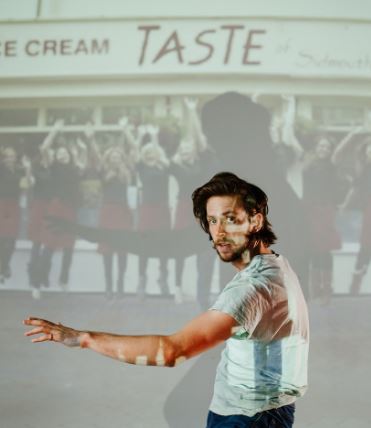
With Arsenal fans en masse downstairs, we embrace the calmness of a small theatre. Described as a one-man dance and spoken word performer, Lewys Holt moves supplely against a minimal slideshow. Tormenting slogans appear above him: ‘Did I leave the oven on?’ … that well-known paranoiac situation and its desperate logic worked well. After a witty story, the old chestnut, ‘An apple a day keeps the doctor away’ is reflected upon, before becoming an interactive discussion that brought hilarious results. Then Holt excels with some captivating dance movements.
Read more…Joyful Exploration of the Obscure
Loyola
by Domenico Zipoli
El Parnaso Hyspano at the Grimeborn Festival at the Arcola Theatre, Dalston until 12th August
Review by Patrick Shorrock

To be brutally frank, I am not convinced that Zipoli’s Loyola is actually an opera. It is contemplative rather than dramatic, and a staging doesn’t seem to add very much to what is a long cantata or a short oratorio. But, having got the pedantry out of my system, I can focus on celebrating Zipoli’s marvellous score, a glorious piece of musical fusion combining Baroque oratorio with South American influences from the people who were intended to perform it.
Read more…Dystopia in Suburbia
Trouble in Tahiti
by Leonard Bernstein
Arcola Theatre, part of the Grimeborn Festival at Arcola Theatre until 12th August
Review by Patrick Shorrock

This short show is forty-five minutes of pure delight. My only complaint is that, after Bernstein incorporated it into his later full length opera A Quiet Place, Grimeborn didn’t give us the longer work. Maybe next year.
Written in 1952, this gentle satire hasn’t really dated, as suburban married couple Sam and Dinah, imprisoned by the stereotypical gender roles they have adopted, express their mutual unhappiness and frustration, something they find easier to do to the audience than to each other.
Read more…Fan Fair
The School for Scandal
by Richard Brinsley Sheridan
YAT, Coward Studio at the Hampton Hill Theatre until 10th August
Review by Andrew Lawston
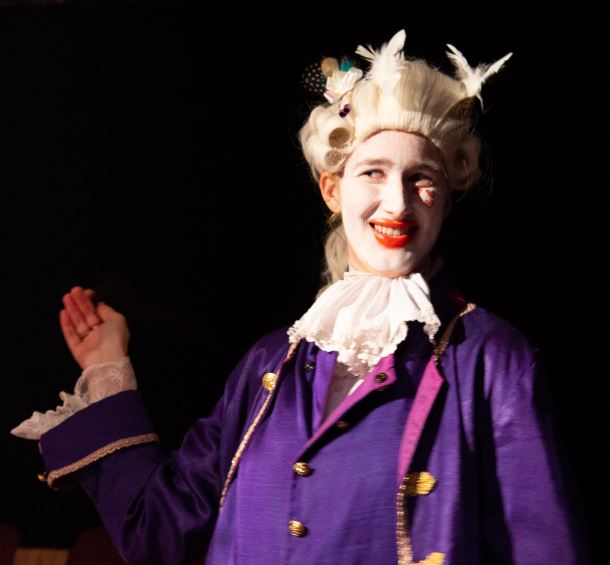
In a world where reputations can be built and demolished in the blink of an eye on social media, The School for Scandal is a particularly timely play with its clique of rumour-mongering gossips. YAT’s “heavily-abridged” Edinburgh Fringe preview production, wastes no time in labouring any contemporary resonance, however, preferring to cram as much of Sheridan’s script as possible into the 55 minute EdFringe run time.
Read more…

 Mark Aspen