
Small Pleasures
Venus and Adonis
by John Blow, libretto by Anne Kingsmill
Ode on St Cecilia’s Day
by Henry Purcell, text by Nicholas Brady derived from poems by John Dryden and others
Richmond Opera at the Normansfield Theatre, Teddington until 16th April
Review by Patrick Shorrock

The Normansfield Theatre, with its gold leaf and beautiful floral paintings at the side of the stage, is an astonishing Victorian jewel to find in suburban West London. Inside, it’s a cross between Wigmore Hall and the Sam Wanamaker Playhouse (although the seats are much more comfortable than the latter!) It was the house of Dr John Langdon Down (after whom Down’s syndrome is named) who made it a place is where people with learning disabilities could be cared for and educated, which it still is.
It was an ideal setting for these two small English pieces from late 17th century, both overshadowed by the mighty Handel who followed them and produced works of greater substance. That said, they are not without their charms.
Read more…Dark, Disturbing and Powerful
Machinal
by Sophie Treadwell
Youth Action Theatre at Hampton Hill Theatre until 15th April
Review by Heather Moulson
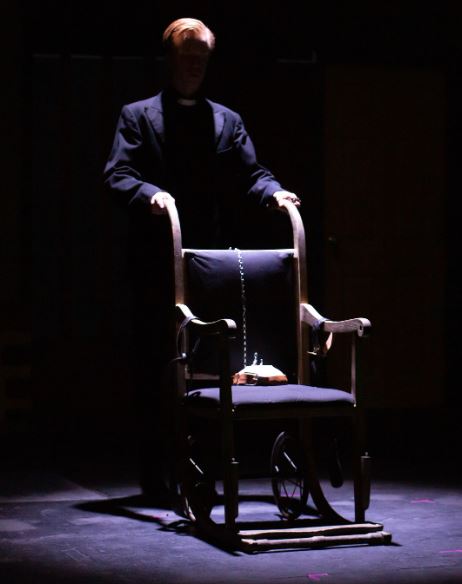
When it opened in New York in 1928, Machinal featured a young actor making his Broadway debut, Clark Gable. The play was a runaway success. An early example of Expressionist theatre in the US, the play is loosely based on the trial of Ruth Snyder, who was convicted of murdering her husband. It created a lot of attention in an era when a woman’s role was confined to being a wife, mother, and homemaker.
With a bold painted set, designed by Tom Wright and Priya Virdee, of cogs and doors that symbolised turmoil, the production opened up to a New York office where the staff, like a Greek chorus, talked in a refrain as they bullied the secretary for being late.
Read more…Never Mind The Quality …
Quality Street
by J.M. Barrie
Northern Broadsides and New Vic Theatre at Richmond Theatre until 15th April then on tour until 7th July
Review by Patrick Shorrock
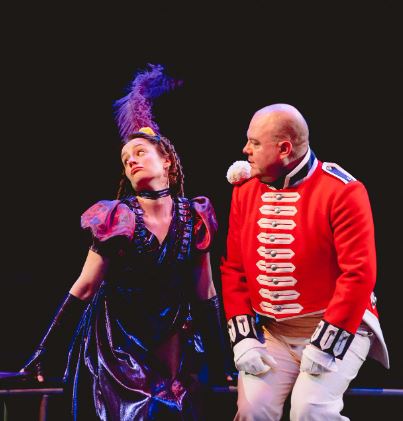
Old-fashioned, cheaply packaged, gaudily wrapped, and entirely lacking in nutritional value, Quality Street toffees were named after a well and truly forgotten play of J.M. Barrie, which Northern Broadsides have imaginatively disinterred and taken on tour.
Barrie’s play was hugely popular in its day and used by a Halifax toffee manufacturer as a marketing ploy. Now the well-known toffees – which retain a place in the nation’s affections, and, for reasons not entirely clear to me, are seen as a great treat at Christmas – are used to sell a play that nobody has heard of.
Read more…Old Father Farting
Terrible Thames
by Terry Deary and Neal Foster
Birmingham Stage Company at Tower Bridge Quay until 29th October
Review by Vince Francis

“Sir, when a man is tired of London, he is tired of life; for there is in London all that life can afford.” Thus quoth Dr. Samuel Johnson in 1777 and it has remained true ever since.
One of the opportunities London currently affords the Birmingham Stage Company’s production of Terrible Thames, part of the Horrible Histories series. As a life-long London lover, your intrepid correspondent will always leap to the challenge of a new experience in the great city, and theatre on a riverboat, courtesy of Wood’s Silver Fleet, felt like one to land.
Read more…Pan Cakes
Peter Pan
by Chris Cuming, adapted from J.M.Barrie
Reading Rep at Reading Rep Theatre until 29th April
Review by Nick Swyft
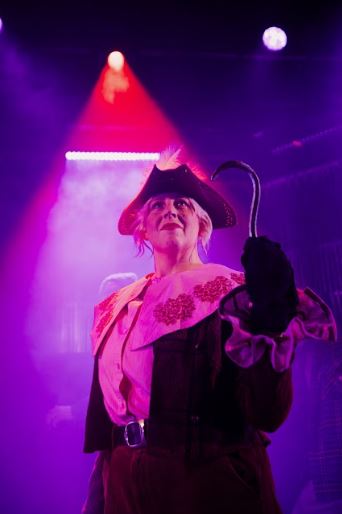
Curtain up and the music starts, and I thought this is going to be great. The music mixed sinister with magical to just the right degree. Added to which just about anything by J.M.Barrie is sure to be good, and I remember being enthralled by the world he creates in Peter Pan from a young age.
I was there with a selection of grandchildren, and was keen to find out if they reacted the way I did. The problem with children is that when questioned by adults, they tend to clam up, but you can always tell at the end if they really enjoyed it or not. All I got when I asked what they thought of it was a dutiful ‘good!’, so maybe I didn’t ask the right questions. It was nevertheless a good night out for them.
Read more…Multiverse of Possibilities
Constellations : A Preview
OHADS at Hampton Hill Theatre, 18th – 22nd April
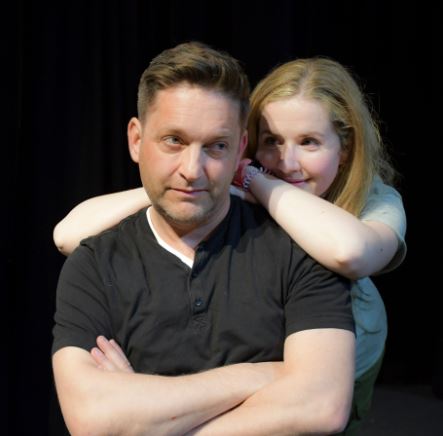
Drama critic Thomas Forsythe discusses OHADS’ forthcoming production of Nick Payne’s acclaimed play Constellations with Director Wesley Henderson Roe
Wesley is a well-respected director with a string of hit shows to his name for many local societies. In addition, as a trained set designer he is much in demand for his scenery planning and building skills. He was awarded the Arts Richmond Accolade in 2013 for services to amateur theatre.
TF: Hello Wesley,it’s great to meet up with you again and to have the chance to chat about Constellations. I recall that the play had several nominations at the Olivier Awards about ten years ago, after it had had a fairly rapid rise from the Royal Court into the West End. What drew you to directing this play?
Read more…Back to the Good Life
Home, I’m Darling
by Laura Wade
Bill Kenwright Productions at Richmond Theatre until 8th April, then on tour until 13th May
Review by Andrew Lawston

The opening moments of Home, I’m Darling feature the classic 1950s song Mr Sandman. For a large part of the audience, the song recalls a key moment in the film Back to the Future, in which Marty McFly and cinema audiences are treated to an initially rose-tinted and glossy advertising vision of the 1950s, before the era’s uglier elements are reinforced. It’s a fitting opening to this play, in which a married couple have decided to embrace the stereotypical gender roles of the 1950s.
Read more…New Expression
For Black Boys Who Have Considered Suicide When the Hue Gets Too Heavy
by Ryan Calais Cameron
The Royal Court, Nouveau Riche and New Diorama at the Apollo Theatre, West End until 7th May
Review by Denis Valentine

For Black Boys… is a multi-layered show with many different elements to it. Firstly as just a show and spectacle it is great fun to watch, with many funny moments and delivered in a way that at times turns the audience from observers into a one-bodied movement with its actors on stage. It is also delivered by six outstanding performers who excel in several different crafts, whether that be acting, singing or dancing, to deliver something that can at times be considered highly humorous but then cuttingly dramatic, relevant and poignant.
Read more…Bohemians Like You
La Bohème
by Giacomo Puccini, libretto by Luigi Illica and Giuseppe Giacosa
Ellen Kent Productions and the Ukrainian Opera & Ballet Theatre Kyiv at Richmond Theatre, then on tour until 7th May
Review by Andrew Lawston

Puccini’s beloved opera La Bohème comes to Richmond Theatre for one night only, produced and directed by Ellen Kent, and the house is packed. A production of an Italian opera, set in Paris, and comprising mostly Ukranian, Moldovan, and Romanian artistes, the show feels extremely timely. And it becomes even more so when you consider that a large section of the plot is driven by people who can’t afford to heat their rooms.
Staged simply but effectively against a painted backdrop of the Paris skyline, this is clearly a production which has been designed for touring, but the set across all four acts is richly detailed and vibrant. Familiar arias are sung with ferocious energy, as though being performed for the very first time.
Read more…Spring Tide
You Bury Me
by Ahlam
Paines Plough at The Orange Tree Theatre, Richmond until 22nd April
Review by John Davies

“Cairo will push you to your absolute limits and then suddenly…you’re in love”. But how do you explore your identity and relationships under oppression? How do you focus on a partner, while looking over your shoulder for who might be coming to get you? How do you love freely, if you can’t live freely? This play explores these issues in a high-energy, high-emotion production that pushes its audience to try and connect with the lives of a group of young friends in Cairo and to understand the harsh realities, decisions and feelings they face.
The play is set a few years after the Arab Spring and Cairo is under military control. We meet six young people living in Cairo – Osman, a journalist who is determined to keep fighting against the oppressive regime; his gay friend Rafik and sister Maya; Maya’s gay friend Lina; and Lina’s brother Tamer, a Christian who is in a relationship with Alia, a Muslim. Teenage relationships and sexual encounters are played out with an eye to who might be watching. Not simply because of possible spiteful comments from classmates and disapproval of friends, but the real fear of criminal charges or being ‘disappeared’.
Read more…
 Mark Aspen