
Best Wine Saved
Virtual Third
Poetry Performance, On-Line, 6th December
Review by Quentin Weiver
The contributors to Poetry Performance, that wonderfully enthusiastic potpourri of purveyors of poetry, do exactly what it says on the tin: they perform their own (or sometimes other poets’) works. The predations of microbiological marauders have this year driven their monthly readings from the fuggy conviviality of Teddington’s Adelaide pub to the crackly cosiness of the Zoom room. It is there that we now go for the third of the group’s virtual monthly meetings.

It is often said that poets cannot read their own poetry. Words sired in the mind and which blossom on the pen can easily be killed on the lips. A tragic example of a master committing filicide is TS Eliot reading his poem The Hollow Men. Thankfully in the hands of a skilled reader, such as Jeremy Irons, the same poem sings.
Here lies both the strength and the weakness of Poetry Performance. As a body it is a broad church ranging, on the Poetry side, from tyro rhymesters to published professional poets and similarly, on the Performance side, from shrinking violets to consummate thespians. Through the portals of Poetry Performance lies the potential for unpolished poesy to shine, or soaring verse to plummet. To be fair, usually the balance is for good poetry to be well presented, but there is a frisson generated by the possibility of a figurative car crash.
However there was no F1 fire-ball at the Zoom track in December’s Virtual Third, but rather a cold start. It took most of the first half of the event for momentum to build, but unfortunately those of the audience who slipped away before the interval missed some exciting displays of skilled driving of the beauty of words by wordsmiths and performers alike.
Read more…Passion with Panache
Kieran Rayner and Gamal Khamis
Opera Live At Home, On-line from 24th November
Review by Kate Cleeland
Another superlative evening of opera arias was presented by Helen Astrid this week, the second of her Opera Live at Home series, a marvellous idea and well-suited to these musically deprived times, providing the audience with a special opportunity to hear some outstanding emerging artists in the UK.

The programme notes gave some indication that the duo of New Zealand born baritone Kieran Rayner and his accompanist Gamal Khamis, was going to be a veritable feast of music and so it proved.
To begin Kieran literally leapt onto our screens with the Largo from Rossini’sIl Barbieri di Siviglia, a thrilling opening packed with joie de vivre. Here was a barber who was anything but a servant. Kieran was thoroughly at home in the characterful role, full of lively bonhomie and engaging wit whilst delivering plenty of his very own wisdom.
Read more…Chill in the Air
13 Frights of Hallowe’en
Audiotorium!
Teddington Theatre Club until 31st October, then as Podcast
Review by Eleanor Lewis
The afternoon light gave way to the dim, grey evening as the shadow of a tall figure fell across the glass panel in the front door, snuffing out the remaining sunlight in the small hallway … … It was in fact the man from DPD delivering the latest of Lockdown 2.0’s online Christmas shopping, but following a couple of hours spent listening to TTC’s latest podcast (branded under its Audiotorium! soubriquet ) 13 Frights of Hallowe’en, it could just as easily have been some vague but frightful presence from beyond the grave.

What else does anyone want to do at this time of year – dark evenings, fog, the prospect of another Zoom call – other than equip themselves with a suitable beverage, occupy the entire sofa (whilst keeping another human being close by for reassurance) and drift off into the world of old, rambling manor houses, parsonages (there’s always a parsonage) and mysterious locked rooms into which you must not go? All of these things and more can be found on TTC’s podcast 13 Frights of Hallowe’en.
Read more…The Blessing of Freedom
Benedictus
by Karl Jenkins
St Mary’s Hampton, 8th November, then on YouTube
Review by Mark Aspen
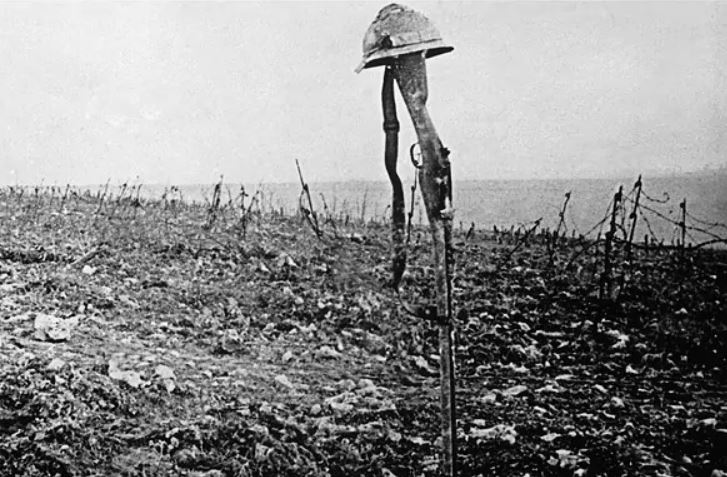
If there are two overarching emotions from the mixed bag of feelings that Remembrance Sunday evokes, these surely are sadness and pride. Although particularly associated with the Armistice of the Great War on 11th November 1918, Remembrance Sunday honours those lost in fighting all wars, including both World Wars. Sadness is of course inevitable when one contemplates the millions deaths in the World Wars. However, without a sense of pride in the fighters for our freedom and way of life, we dishonour those who made the ultimate sacrifice on our behalf. Now in 2020 when there are many threats to our way of life and our national culture that these brave warriors died defending, it is even more important that we should commemorate Remembrance Sunday.
‘The floor is yours!’
Poetry Performance
Online, 1 November
Review by Matthew Grierson
It might have been Halloween the night before, but the spectral season is still on the minds of participants at the latest online Poetry Performance – and, in one case, on the face.

Before the event has even begun, it’s clear that the spectre of death hangs over proceedings. Until, that is, it reveals itself as Andrew Evzona, who is dressed as the Grim Reaper to read ‘Halloween’. The costume certainly adds something to the poem. Visual aids for his follow-up piece are more personal, in the form of family photos that illustrate this loosely versified autobiography. As does the room around him, part of the titular house in which he has lived all his life.
Other poets opt for a musical effect as much as a visual one, with John Sephton’s ‘Blue Notes’ conjuring the maudlin atmosphere of a woman in jazz club. It shares a shadowy ambience with his next piece, ‘Expecting to Fly’, which he confesses is inspired by Neil Young. Carol Wain’s ‘Familiarity’ also tries for both visual and musical effect: we may have to imagine its pattern on the page as an acrostic, but, helpfully, the end-rhymes give it a sonic structure. The title riffs on another of the themes this evening, family, which she celebrates more directly in her poem ‘Family – it’s All You’ve Got! (A Homily)’. The sentiment that, while you can’t live with ’em you definitely can’t live without ’em, is especially timely as we head into a second lockdown, and Pat also recognises that family for many can also manifest as friends, charity or church.
While Carol’s poem spells things out, Bob Kimmerling, who is up next, rather pointedly remarks that the meaning of a poem should be left to interpretation. Still, Poetry Performance is a broad church. Bob’s spare, enigmatic anecdote about a couple kissing on ‘The Eurostar to Paris’ certainly drops no hints about the tenderness of the pen-portraits that he then reads. In ‘I Watched my Father Dig’, he concentrates a family relationship into the evocative imagery of agricultural labour and makes discreet use of rhyme to honour debts to Heaney and Hardy. ‘One-eyed Terry’ meanwhile reaches into the mind of the titular invalid, empowered by the image of a missing eye to ‘see’ his life from the confines of his hospital bed.
The assured use of form to convey family reminiscence continues with two poems by the late Frances White, read by Heather Montford. ‘Damsons & Dahlias’ is a fond recollection of the speaker’s aunt, uncle and cousin, whose lives seem more exciting and enticing than her immediate family, while another take on ‘Halloween’ includes such riches as ‘This is the time when the hour moves back into the darkness’ and ‘The pumpkin rules the vegetable plot’.
Nostalgia and family can have an edge, though, as Tom McColl’s poems remind us. ‘The Phoney War’ use staccato lines to relate the war games of two brothers in imaginary arms, which are then poignantly contrasted with the image of their grandmother sobbing as she remembers the personal cost of the conflict. It’s a theme Tom pursues in ‘The Usual Address’, with the war recreated in a boy’s comic books in graphic contrast to the feeling that he has been abandoned by his mother.
Lifting our spirits ahead of the interval is Tony Josolyne, with ‘Rambling’ taking us dogwalking not just over Wimbledon Common but down memory lane. The pooch wanders all the way into the next piece, ‘Dog Overboard’. It’s written in the voice of the family pet on a boating holiday, who cannot understand why his owners are so angry at his decision to go for an impromptu swim.

In lieu of having a bar to visit, Heather Moulson leads a discussion of poems and their titles during the interval. Beer there may not be, but this a valuable opportunity for the group – which would normally have been meeting at the Adelaide in Teddington – to have a chat when they can’t do so in person. In the ensuing lively exchange, just as many opinions are expressed as there are styles of writing in evidence over the evening.
Ever the diplomat, our host Clive Rowland chips in to say how intriguing he has found the titles in advance of the poets reading. He is an encouraging MC, finding something positive in each performance, and keeping the business moving along smoothly – no small feat given the technical difficulties that an online event may present.
The only real setback of the night, though, occurs when guest reader Math Jones has problems with his bandwidth, necessitating a jump ahead to next-on-the-bill Pat Camish. Thematically, she picks up on Tom McColl’s poems, based as they are on Pat’s research into her family’s wartime experiences. ‘Love & Violence; or Grandmama’s Tale’ and ‘Our Tom’ go back to the Great War, while ‘Northern Bonfire Night’ is both a warm retrospect and a look ahead to 5 November.
Math Jones returns once his gremlins have been sorted out. But there are more spirits to come, as he explains his writing is informed by pagan ritual and folklore. If we had difficulty hearing him before, there is no such problem as he declaims his first poem, which passes through the ‘gate’ from summer to winter, projecting forward into spring to find hope beyond the darkness. In ‘The Fairy Road’ he addresses the poet’s perennial problem of inspiration striking at inconvenient moments, while fairies themselves figure in a brace based on Scottish folklore, ‘The Blue Jacket’ and ‘The Midwife’, and there is a ghost at the dance in ‘Dust’.
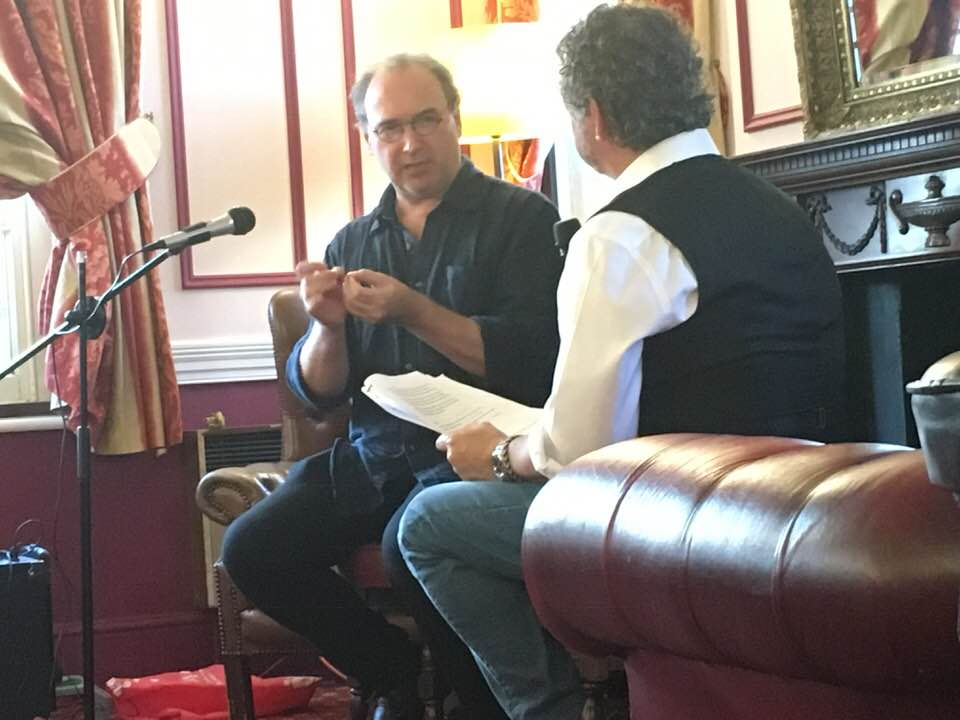
Math’s poems employ an archaic diction and rollicking rhythm that give them an appropriately seasonal tone. It’s no surprise when he reveals in a subsequent Q&A that he once trod the boards, with discussion revolving around how the heightened language and fairy folk of A Midsummer Night’s Dream have been a particular inspiration to him.
He is followed by a series of poems by the Luther Poets; and if one of Math’s presiding spirits is Shakespeare then theirs is the late Bob Sheed, the group’s founder and former host of Poetry Performance itself. After Pat was bumped up the bill, Robin Clarke is the next of the Lutherans to read, with ‘The Family’ taking us through a busy household morning in tight couplets; I savoured the reference to ‘doggy toothmarks’ in the post and a gag about changing the baby, as well as the refrain of the teenager managing to sleep through the chaos. Then there’s another nod to the Bard with ‘Something this way comes’ – a ‘something’ presumably wicked, despite the poem’s jokey conclusion!
Fran Thurling offers a couple of meditative poems next, with ‘“They’re Selling the Old Farm House”’ putting personal experience at arm’s length, and ‘By the Long Water, Home Park July 2020 (with reference to David Hockney)’ lyrically reflecting on perspective, seeking a picturesque calm as she asks ‘Which way to look, how far?’ Connaire Kensit’s ‘Stepping Stones’ successfully integrates memoir into verse to lament the removal of this childhood river crossing, but it’s not long before he falls into speculation about the town planning processes behind the decision, essentially concluding that it’s health and safety gone mad. He’s more to the point in the imagistic and insightful ‘Homecoming note’, which complements the theme of the longer poem. He has translated this from the classical Chinese of He Zhizhang, and he reads it in the original before his English version.
There is a response both to Connaire’s stepping stones and his East Asian imagery in Anne Warrington’s ‘Oh the Joys of Teaching’, which recalls her days in charge of a primary class. On a school visit to a Japanese garden the kids peer into the pond to observe a carp and are held in a moment of lyrical stillness – before, like Tony’s ‘Dog Overboard’, they inevitably fall in the water. Much to the chagrin of the fish.
Heather Moulson is characteristically jaunty in her ‘Happy Families – A Loaded Card Game’, recounting how as a child she strove to collect the beautiful Mr & Mrs Daub, the artists, but ended up with the tradespeople instead. Although the game provokes rows with her sister – not to mention insinuations about how the cards are really pairing up – there’s a warmth to the piece that suggests a happiness underneath the bickering. In ‘Longing’, by contrast, a lost friend from childhood is tenderly remembered.
Last on the bill tonight is Barbara Lee, who first reads a piece based on the traumatic experience of an abused wife. During the interval, Barbara was an advocate for not titling poems, but there’s no doubt she’s capable of a memorable ending, and she concludes with the speaker’s recollection of ‘the day I got strong’. That sense of the individual is carried on into a poem that celebrates the benefits of being single during the pandemic – all that space to oneself.
The evening finishes rather arbitrarily with a video of HMS Pinafore reworked to give it a lockdown spin: I’m not altogether sure it’s a shame the sound drops halfway through. And, as poets and friends bid each other farewell for another month and their faces pop up one by one, it’s clear that Andrew Evzona has been sweating inside a Donald Trump mask for the second half of the event. Surely the most horrific image of all.
Goodnight, readers. And don’t have nightmares.
Matthew Grierson
November 2020
Photos © Taylor Rooney/Unsplash; Steve Tognoli/Unsplash; Heather Moulson
Bouquet of Roses
Opera Gala
Rose Opera at Normansfield Theatre, Teddington, 25th October
Review by Helen Astrid
Not having been to an opera this year since Fidelio at the Royal Opera House in March BC (before-Covid), it was a joy to attend Rose Opera’s Opera Gala at the Normansfield Theatre in Teddington. It was a very welcome evening indeed!
With appropriately stringent anti-Covid measures in place, the audience as well as the performers were socially-distanced giving us the assurance that health and safety were of paramount importance.
A programme of operatic arias, duets, trios and chorus ensemble (clad in sparkly-designer-esque face masks), we heard some familiar and some not so well-known pieces offering a carefully chosen selection. Bravi to all concerned .
The evening opened with an all-time favourite; Mozart’s tranquil trio from Così fan Tutte, ably sung by Helen Bailey (Fiordiligi), Anna Marie Mclachlan (Dorabella) and Crispin Lewis (Alfonso). We later heard Helen sing Mimi’s aria Donde lieta usci from Puccini’s La Bohème with clarity and stylistic verve. Ian Helm showed promise in the Russian repertoire singing Prince Yeletsky’s aria from Tchaikovsky’s Queen of Spades: most definitely a genre for him to explore.
It is hard to imagine Wagner as being jolly and uplifting’ but in the excerpt from Der fliegende Höllander,the Spinning Chorus, brought some welcome light-relief in this opera, which belongs to his middle romantic period. Tamara Ravenhill’s rendition of Senta’s Ballade was sung with warmth and beauty of tone, her voice soaring effortlessly. Credit must also go to Lorna Jan Perry who displayed some special vocal qualities throughout the evening.
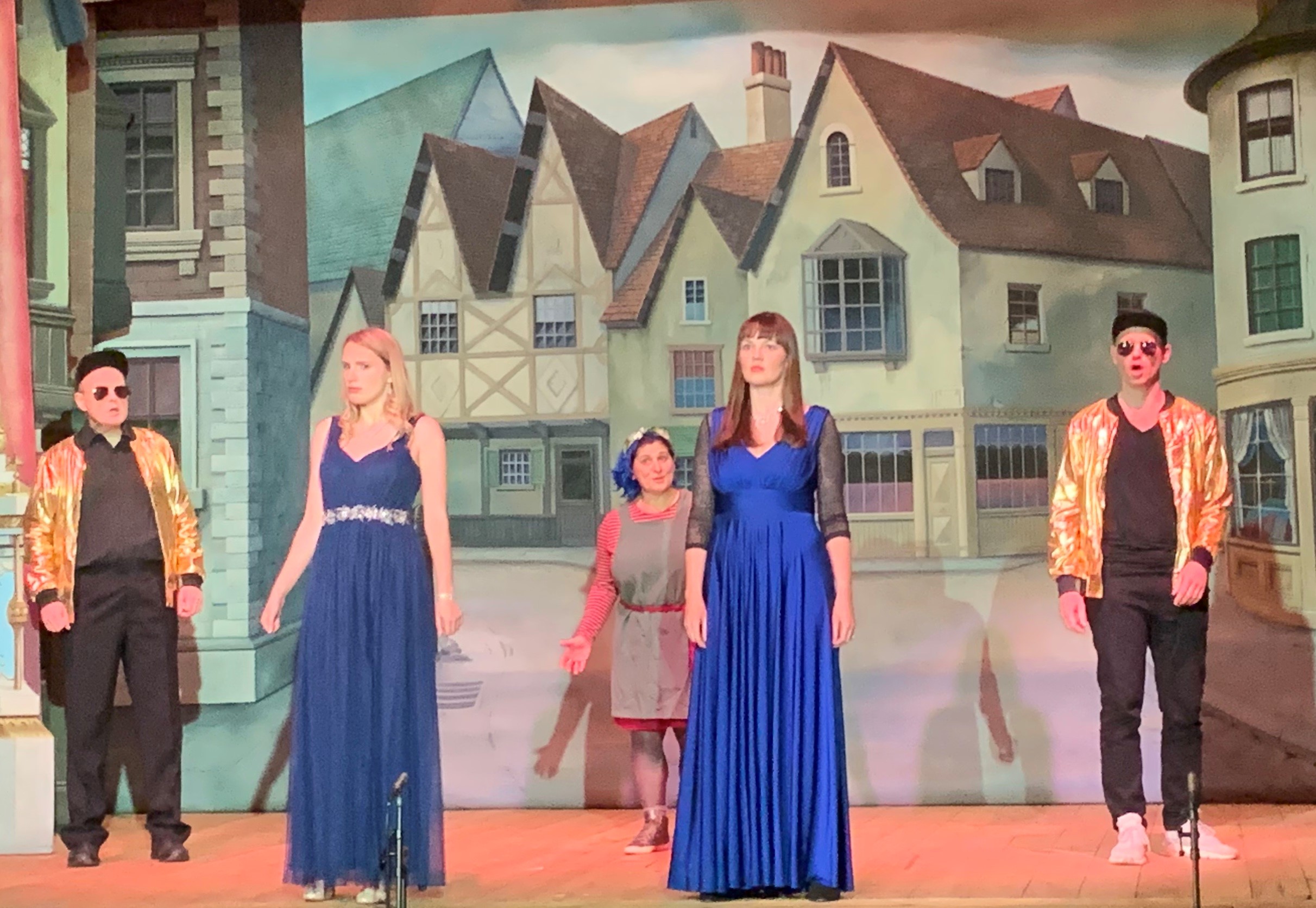
The sextet from Mozart’s Così fan tutte was especially delightful with the two heroes, Guglielmo (Ian Helm) and Ferrando (Andy Evans), as the potential suitors, donning gold bomber-jackets, baseball caps and shades. Hilarious!
Read more…Poignant Human Values
Negotiating Caponata
by Carla Scarano D’Antonio
Review by Heather Moulson
Come with me to Scilly. This beautifully designed debut book of poetry, written by the prolific poet, Carla Scarano D’Antonio, is a very personal collection that presents us with real human values, voices and relationships.
Pajarita embraces us at the beginning of the book. The definition of a delicate yet empowered bird designed in folded paper that takes us gently on the poet’s journey.

Poignantly unravelling, and placed into three very significant sections, we are greeted by the book’s title … Negotiating Caponata.
Read more…Thirteen Frights and Chilling Delights
Phantasmagoria
13 Frights of Halloween, Audiotorium! TTC on-line from 31st October
Horror Stories for Hallowe’en, The Questors, The Judi Dench Playhouse, 31st October
Preview by Thomas Forsythe
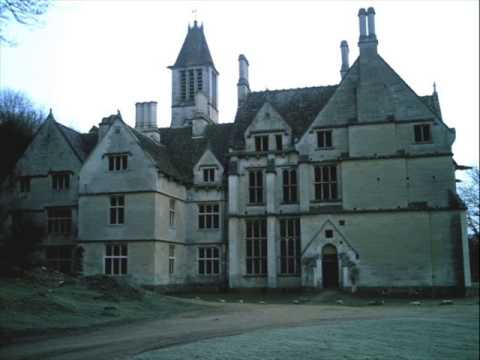
The nights are turning colder, but what caused that shiver in the warm room? Was it the impending darkness? The sinister ambience of the fading facades of the old building? Or was it that you noticed the date at the end of October calendar?
Halloween always brings up conflicting thoughts. Do you eat the centre of the pumpkin; (recipes galore are available!) or do you carve it out and throw the middle away (a quid for a vegetable this big is a bit suspicious)? Is it another frightful transatlantic import; or am I just being a rotten spoilsport? And is silly superstition; or is it dallying dangerously with the occult?
Read more…The Clock Strikes Six
Opera in the Ether
A theatre thought by Mark Aspen
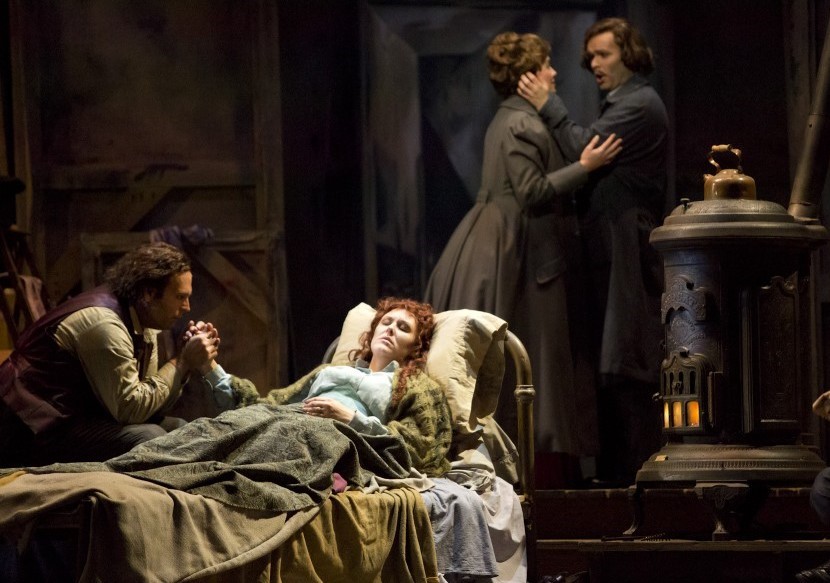
It is said that in opera if somebody is killed he does not bleed but instead sings six arias. “That few?”, one might be tempted to reply. And have you noticed that in opera when anyone is dying, whether struck by some fatal blow or of natural causes (usually consumption), nobody fetches a doctor or calls for an ambulance. They don’t even try to staunch the blood flow: they just sing.
Scorched Earth Quenched
Virtual First
Poetry Performance, On-Line, 4th October
Review by Mark Aspen
With the exigency of the scorched earth policy of containment, the Covid pandemic has ravaged the world of the arts. The theatre arts, drama, opera, music have fared worst; the visual arts, which need galleries to be open, has done slightly better. Nevertheless, there is one art form that is solitary in its creation and fireproof in lockdown. That is poetry. If proof is needed that poetry has thrived in 2020, then Virtual First stands witness to the fecundity of verse, which, like a rosebay willow herb on a bomb-site, has blossomed in lockdown.
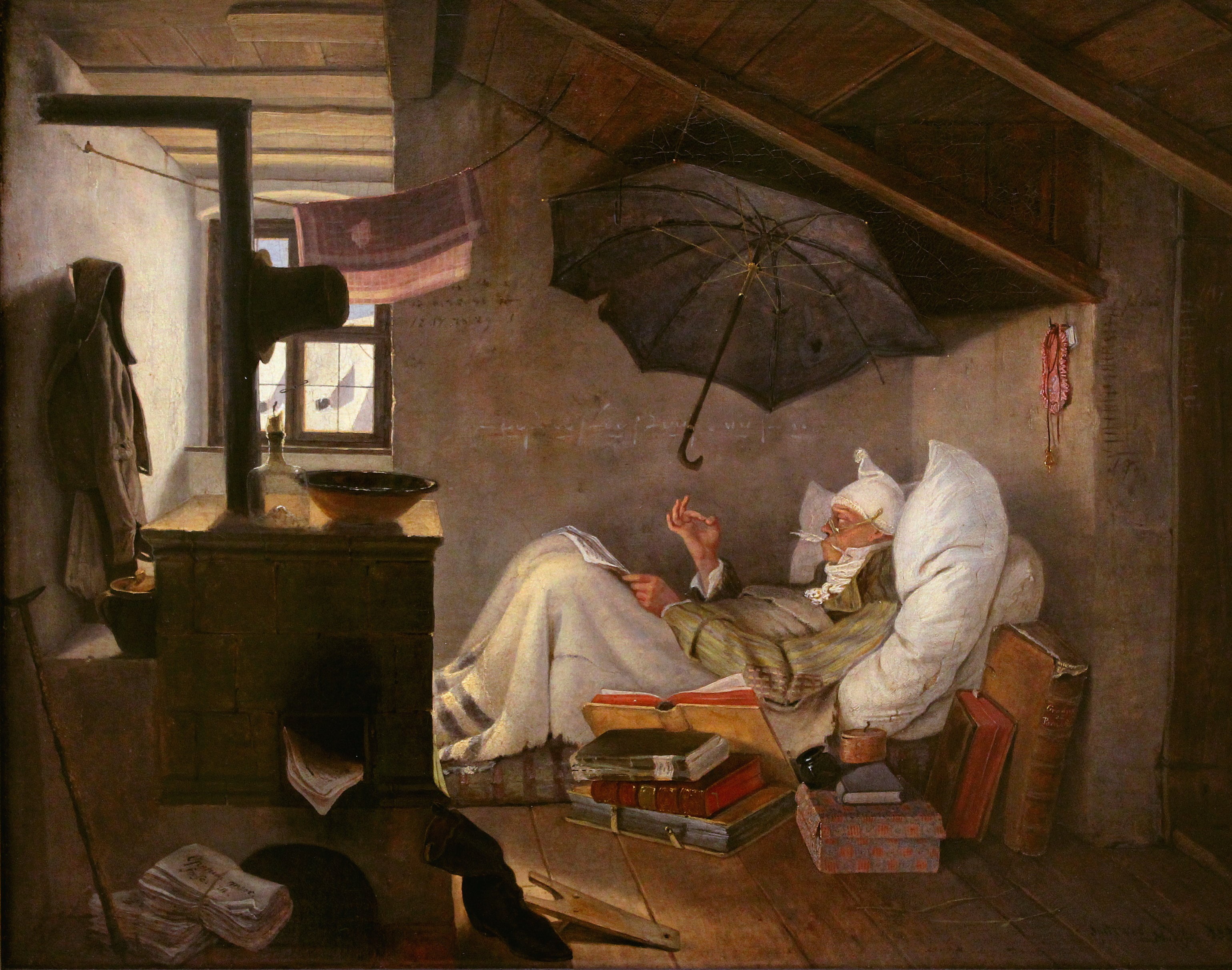
However, the ethos of Poetry Performance is that poetry needs a listener, that the page needs a stage, that the spoken word is paramount. Its monthly readings at the Adelaide in Teddington had become the must-do for lovers of the liquidity of language. Restrictions since March though have forced the poets around Teddington back to their metaphorical (we trust) freezing garrets. Nevertheless, the garret windows have now been flung open once more with Poetry Performance’s inaugural on-line conversazione, an experimental toe-in-the-water presentation of two dozen poems.
Did it work? Yes it did! With a mixture of established work and new writing, the evening buzzed with enthusiasm. The poets own works ranged eclectically from ecology to ecdysiasts, exhibited with éclat.
Read more…

 Mark Aspen