
Ding dong!
The Marriage of Figaro
by Wolfgang Amadeus Mozart, libretto by Lorenzo Da Ponte, after Beaumarchais
ENO and Oper Wuppertal at the London Coliseum until 18 April
A review by Matthew Grierson
Through the four doors of Johannes Schütz’s set – a white Ikea bookcase denuded of its shelves – tonight’s cast appear and disappear like the little figures in an antique weather house as the overture to Mozart’s comic opera is played. Their to-ings and fro-ings and occasionally frozen poses, photos from the weddings that are yet to take place, also forecast the romantic runaround gleefully staged in this uplifting production.
This Marriage plays with the idea of the secrets the characters are keeping from one another and plots they are hatching: the doors sometimes keep the rest of the world at bay while they have their confidential conferences, while at other times the action taking place in front of them is for real and the doors open on to the imagination or unconscious, like eerily lit erotic tableaux from a Soho of yesteryear.
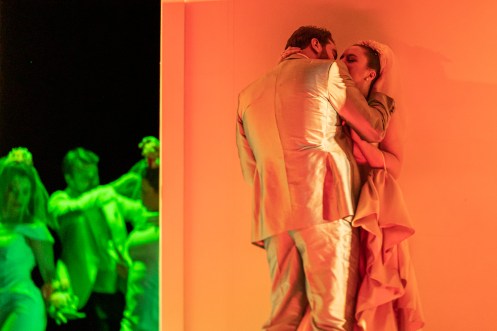
The farce is well choreographed in these two dimensions, but director Joe Hill-Gibbins is keen to add a third: hoisted into the gods, the bookcase is socially as well as physically elevated to become the apartments of the Count and Countess, allowing some nicely coordinated interplay between the nobles above and servants below, who are often oblivious to one another. This increases the tension when the approach of someone below is visible to the audience but not those having a liaison above, enhanced by some beautiful comic business when horny adolescent Cherubino has to throw himself onto a crashmat hastily positioned under him by the servants.
If one were somehow to see only the first half of the performance, it would in fact be quite easy to imagine the young page to be the main character, such is his part in the action and Hanna Hipp’s charisma in the part, her look putting me in mind of Tilda Swinton’s more androgynous performances. Whether strutting in full R ’n’ B style to the lovesong the boy has written or being dressed and redressed by the maids like a doll, Hipp manages to be both impish and ingenuous at the same time.
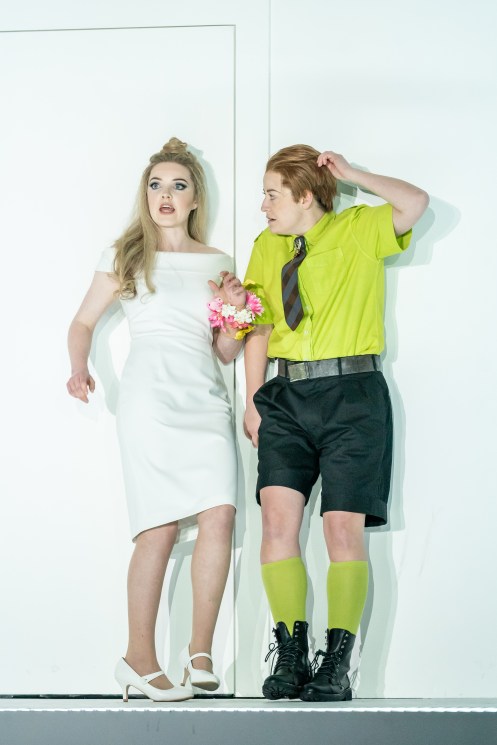
Come the interval at the end of Act II, the raising and lowering of the set is starting to feel unnecessary – but by the time of the wedding night as Act IV begins it is quite literally backgrounded. It’s hardly a safe space, but its distant whiteness – lit up throughout in moods variously lively and sordid by Matthew Richardson – means there is a downstage darkness where all the cons and confusions can play themselves out.
In these bed tricks and badinage, Mozart & co. are clearly having a lot of fun with the conventions of comic drama. ‘A play should end in jollity in theatrical tradition’ is one refrain, for instance, while the sudden disclosure of Figaro’s origins – gamely played by Božidar Smiljanić – is a self-aware strategy to pluck the plot from a pickle, akin to the wild revelations and reversals of Henry Fielding a generation before the composer.
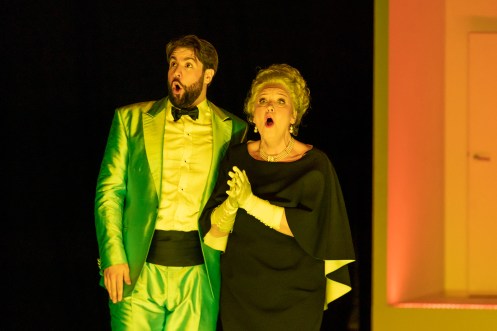
That knowingness is embraced, but never overdone, in this production. Susanna and Figaro respectively invoke the faults of men and women in direct addresses to the audience, as if to say ‘Am I right?’, while Jeremy Sams’ English version of the libretto has the quality of some of W. S. Gilbert’s finest, as well as a nice nod to Monty Python (no-one expected that).
Figaro also sings that his master may be dancing but that he will call the tune, and Hill-Gibbins picks up this cue very obviously by having the manservant mimic maestro Kevin John Edusei to conduct a chorus of fellow below-stairs staff in singing mock praises of the Count. The way the ne’er-do-well nob is manoeuvred into affirming his own decency and disclaiming his droit de seigneur seems especially timely, and plays against the protestations Susanna is forced to make of renouncing her own rights when under pressure from the Count and music instructor Basilio (played with an incongruous estuary accent by Colin Judson).
But if Figaro believes he is conducting matters and Basilio is looking to steer his pupil Susanna into a duet with her master, they only think they are in charge of proceedings: for it is the sanguine bride-to-be who remains the most clear-sighted protagonist, even when she cannot always exercise direct control. Louise Alder’s portrayal mingles wit and weariness, as is evident when she ends an occasional line with a word almost spat in indignation rather than sung. And she is a joy to watch, whether she’s slipping from the Count’s grasp or delivering a beautiful aria to Figaro when he suspects her fidelity. She proves the critical role of female agency in ‘rounding the play off nicely’.
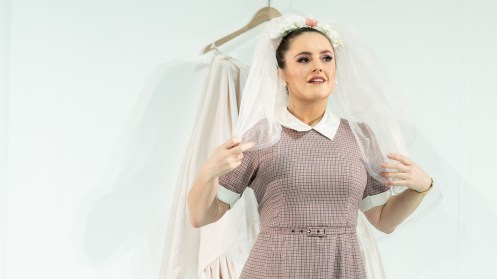
She is complemented in this by Elizabeth Watts as the Countess, whose heartfelt singing expresses her continued love for her unfaithful spouse. Hanging in the set above him, she is literally floored to hear him conduct one of his assignations below and, even when she is silent in the closing scene, she conveys dignity and distress in equal measure in her realisation of how irredeemable is his behaviour.
Wily though he is, Figaro always remains a beat or two behind the two women when it comes to subterfuge, instead breezing his way through his deceptions of the Count on an ad hoc basis. In Smiljanić’s characterisation, he’s an ebullient comic presence, and his wedding attire, which wouldn’t be out of place in Vegas, matches his showy good humour. In his final reconciliation with Susanna – his surrender to her, in fact – it is this charm that ensures her understanding of him is moderated by forgiveness.
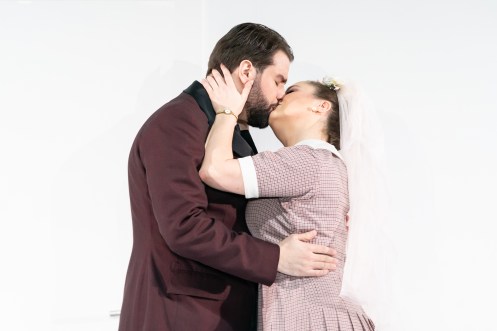
It’s not only Figaro and Susanna among the servants who claim their share of the action: Clive Bayley’s interruption as gardener Antonio forces both Count and Figaro to improvise him into their plans, while pity his daughter Barbarina (Rowan Pierce), who not only has to cope with her father’s drunkeness but also endeavours to make an honest man of Cherubino. Good luck to her. And of course there are the opportunist Marcellina and Dr Bartolo (Susan Bickley and Andrew Shore), at first dead set on prosecuting Figaro, but then suddenly on his side when they discover their … true relationship to him.
As Count Almaviva, meanwhile, Johnathan McCullough has to tread a careful path, not a villain so much as an exponent of unenlightened self-interest. While it’s uncomfortable to watch his hands roving over Susanna or see him standing above Barbarina, trying to indulge the power he might once have exercised, there’s equally a sense in which he is a man out of time, isolated as he is in our final image of him: shut out of proceedings as the happy couples race back to the house and slam the doors behind them. It’s a fitting moment, albeit one that is at risk of being lost in the speed with which the curtain falls.

In a world where old orders are crumbling and new certainties are hard to lay hands on, those who succeed – as this production does – seize their moment joyfully.
Matthew Grierson
March 2020
Photos © Marc Brenner
An Intriguing Point of No Return
The Night Titanic Sank
by Jonathan Goodwin
Don’t Go Into the Cellar Theatre Company at OSO Arts Centre, Barnes until 12th March then on tour until 4th June
Review by Heather Moulson
As the theatre fell into darkness, as well as attending an account of the ultimate maritime disaster, we were also drawn into our own personal séance!
Focusing on personal testimonies by survivors was, changed forever by this public tragedy. The Night Titanic Sank brought the loss, in April 1912, of the RMS Titanic into vivid reality.
We unwittingly entered into a medium’s aura by Peter Llewellyn, who gave us an eerie and effective introduction. Written and starring Johnathan Goodwin, from the Victorian theatre company, Don’t Go Into The Cellar, the atmosphere was thick and intense, an intriguing point of no return.
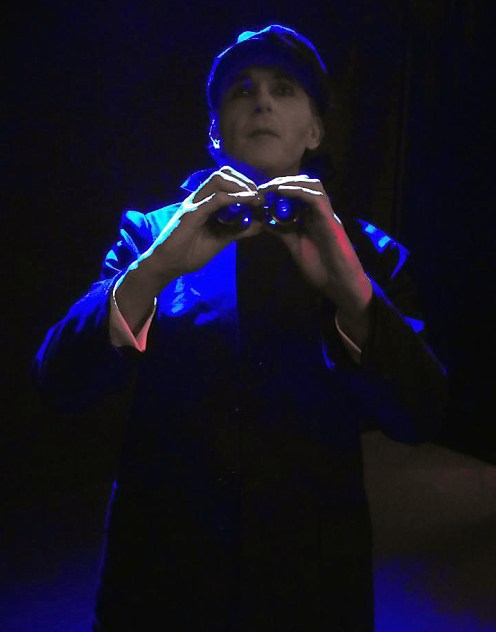
The first spirit, and eyewitness, Laurence Beesley, an English teacher and journalist, recalled sadly how the Irish cliffs were the last sight of land that many would see. He emphasised how huge the Titanic actually was, with its eleven levels. Beesley also recalled the irony of how Third Class seemed to have the most fun, dancing and singing and genuinely enjoying, the experience of the voyage. Like others, he felt the judder of the iceberg, and his guilt was palpable as he was instructed to jump into Lifeboat 13.
Charles Joughin, the ship’s head baker, a dipsomaniac, was then called up. He shared his insight of throwing deckchairs out to sea for people to cling onto. Through his drunken haze, the cries of help rang in his ears. His account of swimming round the bitterly cold sea until a lifeboat came, has become a thing of legend. Defying the odds of hypothermia, we got the impression that being drunk saved his life.
Military man, Archibald Gracie followed, blustery, gruff, angry, he elaborated bitterly how his friend, Clinch Smith, didn’t survive the brutal wave that carried them. Sadly, his remains were never found. Exhausted, Archibald was pulled onto Lifeboat 12.
After a very long first half of one hour and ten minutes, which I’m not sure worked, as the audience were flagging, the shorter second half transformed the theatre as we met another survivor tortured by accusations of cowardice and corruption.
Sir Cosmo Duff Gordon, an eminent Scot, bore these scars and bitterly denied the allegations. Accused of getting into Lifeboat number 1, along with his wife and secretary, (Lady Gordon refused to go without him), and bribing the crew with cheques of five pounds not to return and rescue others, he became emotional in his denial, and the impact on the rest of their lives. He presented a valid and real case, and came over as a sympathetic character. Urging us not to believe the slander written about him, and the stigma of men getting into the lifeboats.
 Llewellyn cast up the final and most haunted, the Captain who had steered that “Ship of Death”. With the grim task of retrieving the bodies, he reached the depths of his sadness when many had to be recommitted back to the sea, as they were so damaged. A very moving account.
Llewellyn presented a touching epilogue that there was no single fault, nor blame. What mattered most was that we heard from those who shared the horror. A mature and thoughtful production by a gifted and passionate actor.
This is a theatre company well worth watching.
Heather Moulson
March 2020
Photography courtesy of Don’t Go Into the Cellar
Frequent Flyers
The Kite Runner
by Khaled Hosseini, adapted by Matthew Spangler
UK Productions and Flying Entertainment. at Richmond Theatre until 14th March, then on tour until 4th July
Review by Andrew Lawston
In 1970s Kabul, kite-fighting is all the rage. Amir, the creative son of a prominent businessman, flies kites and plays cowboys with his servant and close companion, Hassan, until a terrible incident separates the pair forever. Years later, as a writer living in California, Amir still struggles to deal with his guilt from the childhood tragedy. He is finally offered a chance to atone for his past cowardice, but will he seize the opportunity?
The Kite Runner, adapted by Matthew Spangler from Khaled Hosseini’s best-selling 2003 novel, offers the audience at Richmond Theatre a fascinating if frequently harrowing look at Afghanistan’s turbulent history in the late 20th Century.

The first act focuses on Amir and Hassan’s childhood, up until their separation in the late 1970s. David Ahmad alternates between an adult American accent as the grown-up Amir and the play’s narrator, and a childlike Afghan accent as the younger Amir. He switches between the two effortlessly, and with exuberant body language to match Amir’s younger self. Andrei Costin gives the stand-out performance as Hassan, the eponymous kite runner whose meekly subservient dialogue is undercut by his fierce devotion to Amir, and his immense dignity in the face of his cruel treatment.
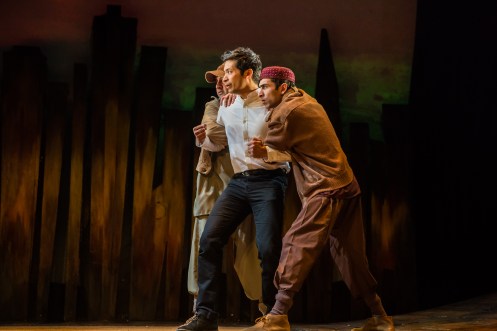
Amir’s father, Baba, is played by Dean Rehman in a strong performance that develops throughout from authoritative scotch-sipping Kabul businessman to principled but humble flea market vendor. His friend Rahim Khan (Christopher Glover) manages to convey the heart of the play, full of wise words and advice for Amir throughout his life. Hassan’s father Ali doesn’t get a huge amount to do within the play, but conveys a humble but dignified man, and his low-key confrontation with Baba when he resigns is powerful.
Against all these dignified performances that shelter deep passions and dark secrets, The Kite Runner also provides a solidly unpleasant villain in the form of Bhavin Bhatt’s Assef. From his first appearance, it’s clear that this menacing youth is far more dangerous than the average bully figure that pops up in coming-of-age narratives.
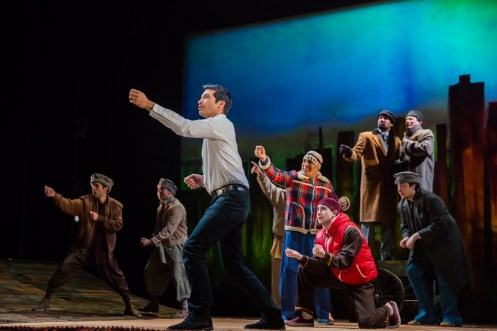
The second act covers a period of over twenty years, jumping between California, Pakistan, Kabul, and back again. As such it sometimes feels a bit choppy, in spite, or perhaps because of, director Giles Croft’s smooth and pacy direction. Given the span of time covered by the play, the tone also begins to feel uneven. The play’s next confrontation between Amir and an older Assef sees the bully transformed almost into a caricature figure, and his final pratfall, complete with windmilling arms, struck a bit of a discord considering the context.
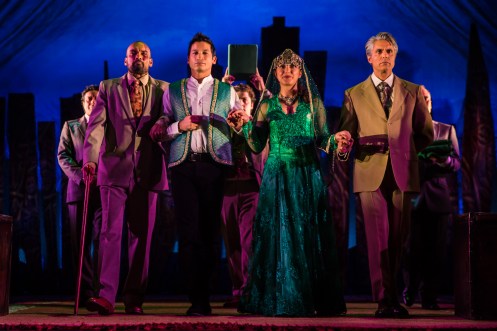
It’s in the second half that Lisa Zahra steps forward from the ensemble to play Soraya, the only significant female role in the production, and she gives a spirited performance, particularly when telling Amir about a teenage adventure that provoked the wrath and shame of her staunchly conservative father General Taheri (Ian Abeysekera, playing with just enough of a twinkle in his eye to stop the patrician character sliding into stereotype territory). It would have been great to see more of Soraya, as her main function is to illustrate his ongoing spinelessness in conversations with General Taheri.
When a play is adapted from such a widely-read and comparatively recent book (and film adaptation), there is a whole conversation to be had about to what extent audiences will be aware of the story’s twists and turns, and thus how much care should be taken when foreshadowing them. I’m faintly embarrassed to say that I came to Richmond completely ignorant of the story, but within ten minutes I was extremely confident as to certain revelations that inevitably popped up in the second act.
Throughout, however, Barney George’s design is wonderfully evocative of the play’s Afghan setting, while opening out the full width of Richmond Theatre’s stage. The swooping kites become an effective motif, with two huge kites forming a backcloth for projected backgrounds during many of the Kabul scenes.

Jonathan Girling’s musical direction is similarly evocative, using instruments including tabla, Tibetan Singing Bowls, and Schwirrbogen. During set-piece scenes such as the kite-fighting tournament, the instruments, played live on stage, come together to produce a fantastic soundscape that conjures up the roar of the wind and the excitement of the spectators.
The Kite Runner is strongest in those scenes set in 1970s Kabul, and during some of the meatier dialogues in the second half: Soraya’s speech to Amir during their courtship, for example, and Amir’s final meeting with Rahim Khan. At other times it feels like a dizzying scattergun of a production: plenty to enjoy, but rarely enough time to truly savour it.
Andrew Lawston
March 2020
Photography by Manuel Harlan
Oceans Apart
Madama Butterfly
by Giacomo Puccini, libretto by Luigi Illica and Giuseppe Giacosa
Ellen Kent at Richmond Theatre until 8th March then on tour until 22nd April
Review by Vince Francis
The drive to Richmond was enriched by an intense rainbow straddling the A316. Was this a portent of some kind? We were on our way to see Ellen Kent’s production of Madama Butterfly at Richmond Theatre and I was a little apprehensive at the prospect of this assignment, not being an opera buff’ ’n all that. My initial thought was that it would boil down to my responses to three questions; firstly, given that my Italian is rudimentary at best, would the cast be able to convey the story? Secondly, would I be able to say that I was entertained by it? Thirdly would it engage me sufficiently to cause me to explore opera further?

Madama Butterfly is a tragedy – aren’t they all? – set in Nagasaki, itself to become the scene of the ultimate tragedy later in the century. Based on a one act play by David Belasco which, in turn was based on a short “pot boiler” story by John Luther Long, At its most basic, it is a case of girl meets boy, girl loses boy, the end. However, this is an oversimplification of a plot that explores some interesting and uncomfortable themes, such as the marriage of our heroine at the age of fifteen to an American naval officer. Also, we (I) learn that Butterfly, or Cio-Cio San, as the character is named, was a geisha prior to this marriage, hinting at exploitation of children. The cavalier attitude of the naval officer to this, and to his marriage vows perhaps suggests a view of American imperial ambitions of the time.
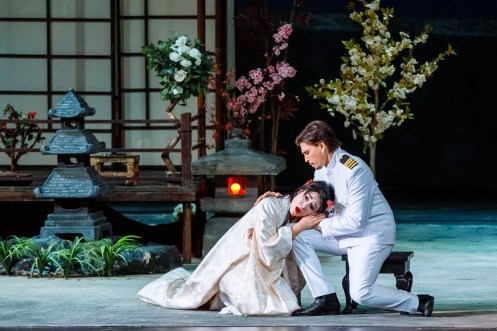
The principals all present us with well-drawn characters and real character development. Giorgio Meladze’s Pinkerton establishes himself as a swaggering cad in Dovunque al Mondo (Throughout the world), but shows real remorse when he realises the extent of his shallowness and duplicity at the end in Addio, fiorito asil (Farewell, flowery refuge).
I also enjoyed Miroslava Shvakh-Pekar’s portrayal of Suzuki, Cio-Cio San’s maid. The duet with Cio-Cio San in the second act, Tutti i fior? (All the flowers?) is particularly appealing. Iurie Gisca as Sharpless, the U.S. Consul brings a natural presence and authority to the role. Both have the talent of being able to react authentically and naturally in exchanges and when they are not in the focus of the action.
However, it is Elena Dee, as Cio-Cio San, who carries the main load of the show and gives us the complete emotional palate of the character. In this tyro’s humble opinion, Ms Dee is to be congratulated for maintaining a consistency throughout, having a delightful soprano voice, which can vary from delicacy to full force strength with apparent effortlessness.
It goes without saying that the singing is of premier quality. It may sound strange to say, but it is good to hear it sung in the original language, even if that presents a challenge to the less linguistically adroit among us (me). It appeals to my reasoning to suggest that the original language and the development of the music are inter-related.
However, if you are seated with a full orchestra between you and the performers, who I don’t think are mic’d, it is inevitable that there will be the odd moment when the vocals aren’t quite the match of the twenty-two musicians supporting, but such instances are rare.
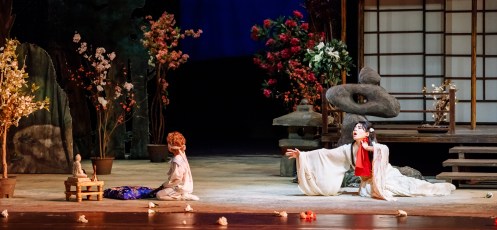
I did wonder whether Zac O’Toole, as Cio-Cio San’s child, Sorrow, was entirely comfortable on stage and there was a minor moment of unscripted comedy when Cio-Cio San accidentally covered him entirely with the sleeve of her robe.
There are a couple of things which I was curious about, but which any regular opera goer might be able to enlighten me on; firstly, if the night is indeed so quiet and peaceful and serene, why exactly are we singing at full volume about it? Secondly, there is an intermezzo in the second act which, presumably was written to cover a scene change between act II and act III. However, since the scenery is not changed throughout, it would seem to be a candidate for a little judicious pruning – or is that a heresy?
Having said all that I felt more engaged in the second act, which seemed to have more emotional content.
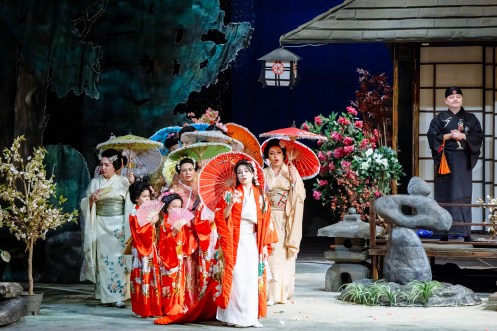
This is a touring production, so the set is kept simple in principle, with the focus being the house truck set centre stage. This uses translucent panelling, which is effective in providing silhouetted action at various points in the show. There are two other flats set stage right and left to depict garden walls, but which also serve to mask entrances and exits. The real artistry here is in the set dressing, though. Clever and interesting use of floral arrangements, together with a working water feature provide enough to describe the setting without being overly fussy. Lighting is subtle and efficient.
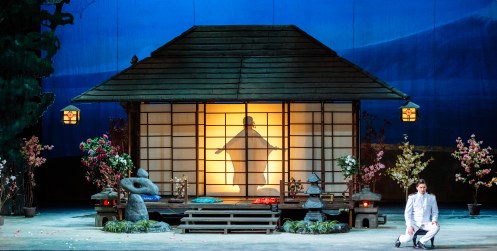
The orchestra, under the brisk and expressive direction of Vasyl Vasylenko, supported well and delivered Puccini’s trademark flowing and sweeping lines with aplomb.
Looking at the souvenir brochure, there appear to be two orchestras involved, each with its own conductor. The cast list provided for Sunday evening’s performance indicated that the conductor was Nocolae Dohotaru, which would imply the production was supported by Orchestra of the National Opera and Ballet Theatre of Moldova. However, the conductor in front of us looked an awful lot like the photograph of Vasyl Vasylenko, which, according to the brochure, would imply that the orchestra was that of the Ukrainian National Opera. They were superb, in any event and received a well- deserved cheer at the end. Incidentally, I did spot a little motif which I would be prepared to have a small side bet on that Schönberg “lifted” and used in the song Bring Him Home in Les Miserables.
So, how did it do on my initial questions? Well, linguistically, the sur-titling helps considerably, although it can be distracting. Did the cast portray the story well anyway? Yes, they did. Was I entertained? Yes, very much so. Do I want to see more? Maybe. It’s good to get outside your comfort zone. So they tell me.
Vince Francis
March 2020
Photography by Mark Douet
Passions Reflected
Cause Célèbre
by Terence Rattigan
Teddington Theatre Club at Hampton Hill Theatre until 13th March
Review by Eleanor Lewis
Set in the 1930s, Cause Célèbre was based on the true case of Alma Rattenbury and George Wood. When Alma Rattenbury’s marriage to the elderly Francis reaches the sleeping on separate floors of the house stage, she hires 17 year old George as chauffeur and general help. He becomes her lover. However, on realising that Alma and Francis’ marriage is not in fact entirely dead, George finds himself unable to cope and takes extreme action. Horrified, Alma rises to the occasion, assumes personal responsibility and is tried alongside George for her husband’s murder.
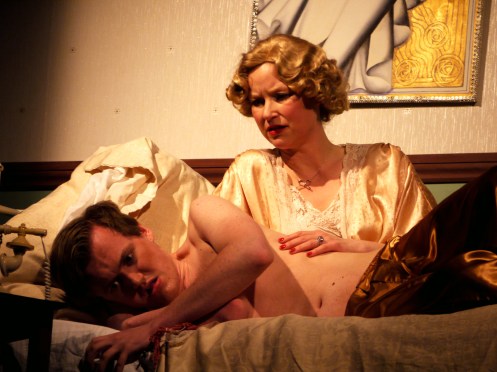
Rattigan, however, has more to bring to his audience’s attention than a shocking trial. He is fabulously good at women, specifically women of a certain age about whom he writes with great sensitivity. Hester Collyer in The Deep Blue Sea (1944) and Olivia Brown in Love in Idleness (1952) are witty, intelligent and firing on all cylinders, their lives restricted only by the social mores of the time, and their men – both lovers and sons. Alma Rattenbury is another of these women, far more than the wicked corruptor of boys the tabloids would have her be. Rattigan’s master stroke in Cause Célèbre, though, was to include the character of Edith Davenport and TTC’s master stroke (presumably in the person of director Fiona Smith) was to cast Jane Marcus as Mrs Davenport.
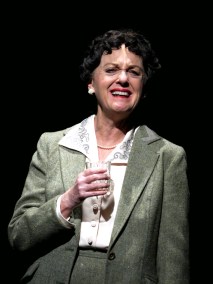 Superficially Edith Davenport is the antithesis of Alma Rattenbury. Alma takes sexual freedom for granted. Edith is someone for whom ‘that side of things’ has never given her any pleasure, but the two women are in fact close in character and in their sense of what is right. Both are also doomed to misery, one for following her passionate soul, the other for not knowing hers existed. Jane Marcus’ performance as Edith Davenport was both skilful and endearing. This potentially wounded and embittered woman was seen as a sympathetic, dignified character whose emotional life had been cruelly unfulfilled. When the judge refuses her pleas to be excused jury service as she knows she is prejudiced against Mrs Rattenbury, Edith grits her teeth and goes on to do her duty with great integrity.
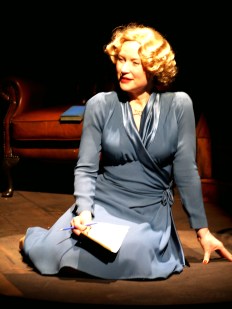
Similarly Alma Rattenbury as played by Mia Skytte-Jensen, loving and seeking male attention of any sort, was an honourable woman, a victim of the times rather than any one individual.
The level of performance in this production was consistently high. Jake O’Hare as George Wood had little to work with but nonetheless produced a convincingly confused and unpredictable teenage boy far out of his depth. Jacob Taylor managed to convey the exact boy-to-man point at which Edith’s son Tony found himself with the mix of excitement and panic that entailed.
Particularly enjoyable were the exchanges between Edith and her sister Stella (Dionne King) which were both brisk and authentic. Everyone in fact shone in this production. Daniel Wain clearly enjoyed himself playing the eccentric, slipper-wearing KC, O’Connor acting for Mrs Rattenbury and if Sue Reoch as Montagu isn’t already in the legal profession, she probably should be. Additionally, the gentle ‘thawing’ of Heather Mathew as warden Joan Webster was endearing and Genevieve Trickett as the put-upon companion Irene was played as a character with more to her than was on display. Jack Dwyer produced a particularly mature performance as Alma’s young son Christopher.
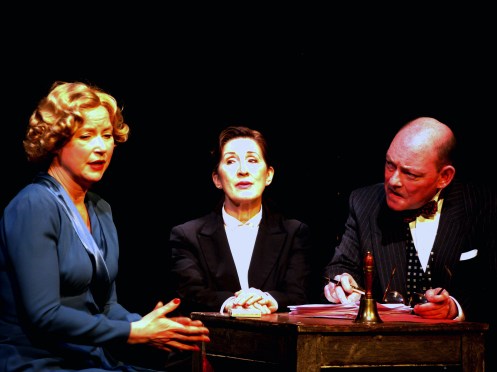
Patrick Troughton’s wood-panelled set brought a ‘closed in’ atmosphere to the proceedings (beautiful staircase), though any action taking place stage left seemed a little cramped. Mike Elgy’s lighting was perfectly judged, the darkening and spotlighting at certain points added a sense of things shutting down. There seemed to be some small issues with sound on opening night, Chris Morris as the floundering policeman was not always audible when he was positioned at the top of the set but these, I imagine were first night issues.

Zoe Harvey-Lee’s costumes were exemplary, including hats, all hats male and female were worn at the correct angle for the period. (We do love a detail!)
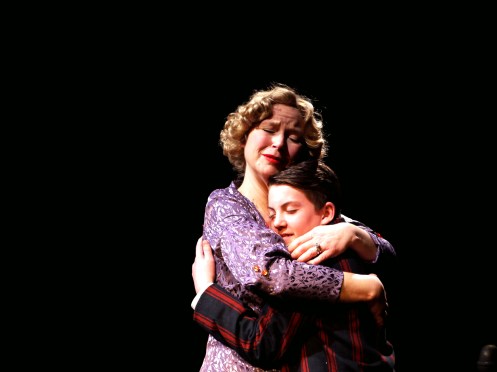
In 1968, 33 years after the trial of Alma Rattenbury, Paul Simon wrote a song about a certain Mrs Robinson. Fifty years on and despite huge social progress, it is probably still the case that a middle aged woman with a younger man will attract more general opprobrium than the other way around.
“Laugh about it, shout about it,
When you’ve got to choose
Every way you look at this you lose.”
This is a very good production, TTC and Terence Rattigan are a very good mix. Highly recommended.
Eleanor Lewis
March 2020
Photography by Cath Messum
Raw Bonds
First Love is the Revolution
by Rita Kalnejais
The Questors at the Questors Studio, Ealing until 14th March
Review by Nick Swyft
Basil Brush meets Shakespeare, in this imaginative retelling of the Romeo and Juliet story like no other.
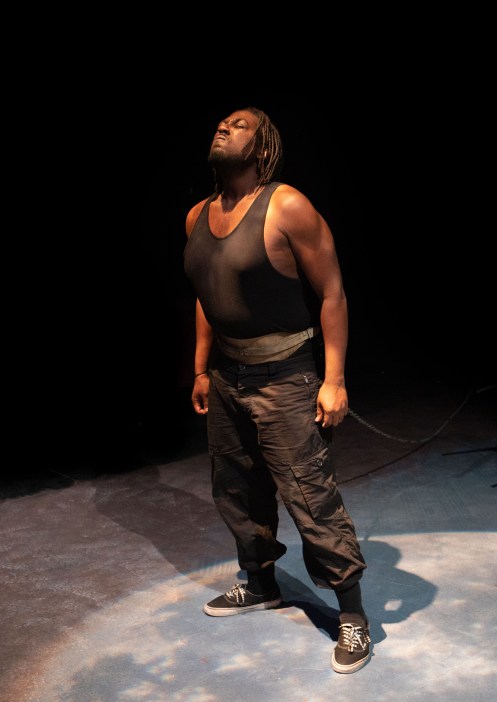
The play opens with a brother and sister holding up a leaf covered window and looking through it. The girl shrieks randomly, and at first the audience might be forgiven for thinking that the play is about mental health. It is not, although the synopsis suggests that this could be a fantasy that the main character, Basti (Zac Karaman) uses to shield himself from the trauma of his mother’s absence. Like The Life of Pi, you can choose which story to believe.
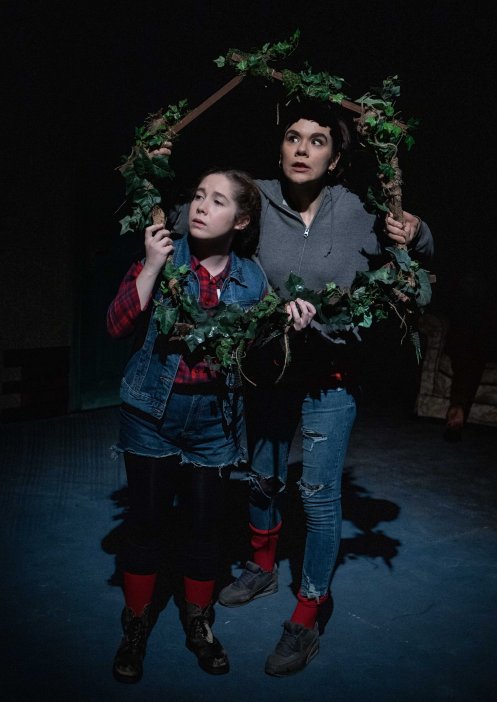
It turns out that the brother Thoreau, played by Jason Welch, and sister Gustina (Gusti), played by Lucy Palfreeman, are foxes, and the window is the entrance to their den.
The play portrays the discomfort and violence of life in the wild very effectively, starting with the mother Cochineal, played by Maya Markelle capturing a mole, Gregor, played by Iain Reid. The youngest daughter Rdeca, played by Fionna Gough, is introduced to Gregor. He is to be her first kill. She must, after all, learn to hunt like the rest of her family. Gusti shows her what to do, and Rdeca attacks him, but doesn’t kill him outright. She is ordered to bury his corpse and there is a lovely piece of comedy in which Gregor ends up digging his own grave. Being a mole he just wants to do a proper job.
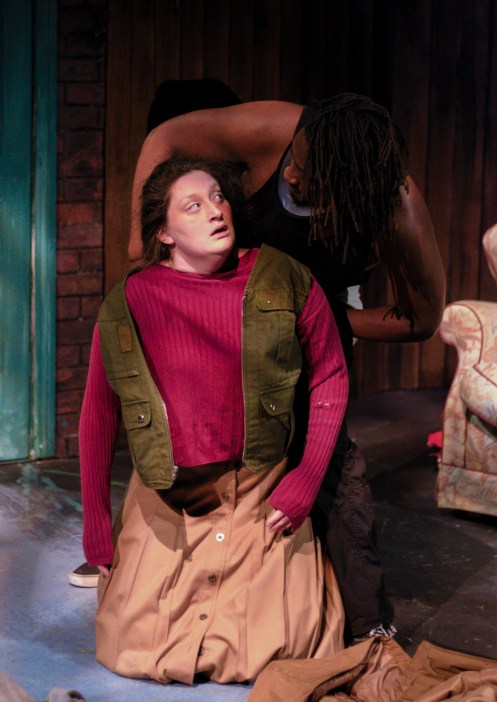
The scene then switches to show us another family, this time human. Basti played by Zac Karaman lives with his dad Simon played by Mike Hdjipateras. He is being bullied at school, because of his state of mind. Basti is focussing his mind on building traps for foxes.

He meets Rdeca when she is caught in one of his traps. We are not told how, but the two of them can talk to each other, and an unlikely relationship develops. Rdeca teaches Basti how she lives, and Basti treats her fleas.
Like all good plays, the comedy is counterpointed by moments of high drama and emotional tension. There is, for example, something uniquely distressing about the inhuman way the foxes cry when tragedy strikes.
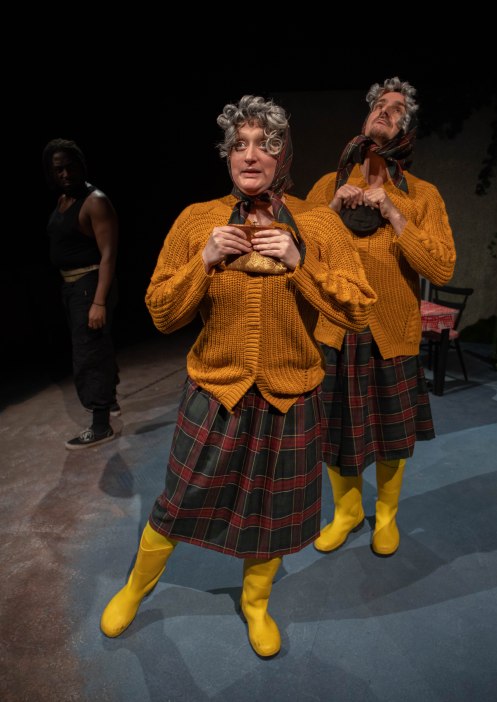
The production is refreshingly sparse, although having the actors eating cereal saying ‘crunch crunch crunch’, seems unnecessary; we know what they’re doing. Many of the actors play multiple parts. Lucy Palfreeman, who plays Gusti, also plays Basti’s upstairs neighbour Gemma whom dad, Simon, is hitting on. She is also delightfully sensual as the farm cat Smulan, who teases the farm dog Rovis, also played by her ‘fox brother’ Jason Welch. The farm chickens may be recognised as Cochineal the fox mother (Maya Markelle) and Simon, Basti’s dad (Mike Hadjipateras). One might read something into this, perhaps?
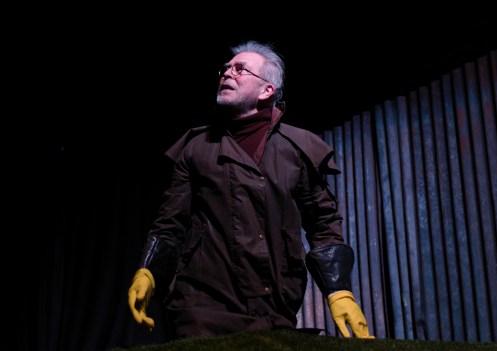
Actually one could read a lot into this play. Shakespeare’s Romeo and Juliet highlighted the tragedy of star-crossed lovers in inter-family strife, and there have been many productions that have applied this to race and sexuality. To apply it to species might seem a step too far. Society is maybe not ready to accept bestiality, but it’s not likely that many audience members will go away disgusted. That is the genius of the playwright Rita Kalnejais, the actors and the production team.
Nick Swyft
March 2020
Photography by Robert Vass and Evelina Plonyte
All in Place
Hairspray JR
by Marc O’Donnell and Thomas Meehan
Questors Youth Theatre at Judi Dench Playhouse, Questors Theatre, Ealing until 7th March
Review by Vince Francis
Hairspray JR is a cut-down version of the full musical, Hairspray, edited to be family friendly and thus a candidate for schools or youth theatre productions.
For those who may not be familiar, the original Hairspray is an American musical with music by Marc Shaiman, lyrics by Scott Wittman and Shaiman and a book by Mark O’Donnell and Thomas Meehan, based on John Waters’s 1988 film of the same name. The action is set in Baltimore, Maryland in 1962 and the songs include 1960s-style dance music and downtown rhythm and blues. The plot revolves around the heroine, teenager Tracy Turnblad, whose dream is to dance on The Corny Collins Show, a local TV dance programme based on the real-life Buddy Deane Show. When Tracy wins a role on the show, she becomes a celebrity overnight, leading to numerous consequences. One consequence is stealing the boyfriend of the incumbent Miss Teenage Hairspray; an altogether bigger consequence is the beginning of social change as she campaigns for racial integration on the show.
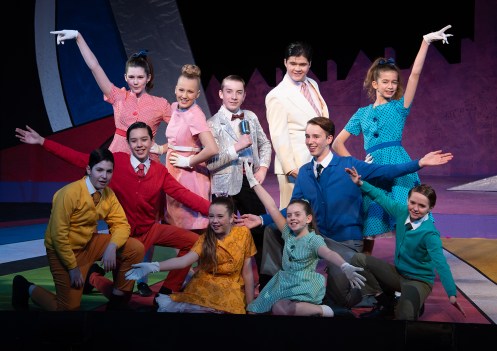
So, where to start? Well, the show is a one-act version, running for approximately 75 mins and, with a curtain up time of 7:15pm, it is both appealing to and practical for parents and the children involved. It is playing in the main auditorium, where the stage thrust has been removed to provide space for extra seating facing the proscenium and a walkway created in the space surrounding this seating.
The production itself is a delight. I did wonder whether abridging the book to this extent might mean that some significant elements may be lost. Some are, of course, for example the relationship between Tracy’s parents, Edna and Wilbur, isn’t explored to the same extent as the full production, which means their comedy duet (You’re) Timeless to Me is dropped. However, Alice Barker and Joshua Carr in the respective roles capture the deep connection between the two. There are a couple of other numbers omitted, but actually – dare I say it – they aren’t missed as much as I thought they might be. So, the lesson for me is that this is a production in its own right and should be treated as such.
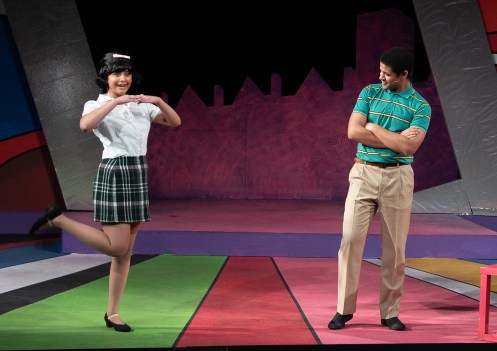
Emily Turner gives a beguiling performance as Tracy Turnblad, having an excellent singing voice and a sense of innocence and wholesomeness that is key to the character.
Isaac Beck has captured the spirit of the 1960’s television presenter; slick, slightly sickly, but always seemingly in control. Similarly, Sam Thompson Roche’s Link Larkin provides the veneer of Elvis-like louche cool that cracks with the warmth of true affection. The Temptations-style number It Takes Two is one to savour.
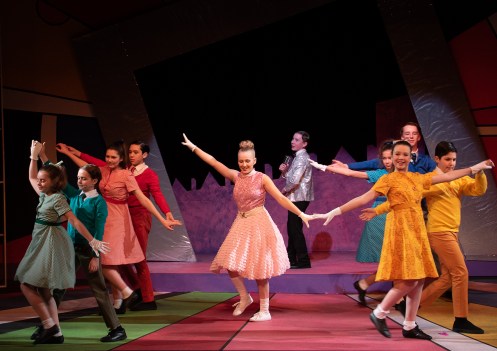
I’ve often heard actors say that playing baddies is more fun that playing goodies and Blonda Bolganschi, who I’m sure is delightful in real life, is clearly having fun here providing us with the deliciously spiteful over-indulged princess that is Amber Von Tussle in the process. A nod here, too, to Stella Robinson’s interpretation of Amber’s ambitious mother, Velma, which was equally forcefully played.
William Connor gives an admirably assured and mature portrayal of Seaweed J. Stubbs, complimented by some of the slickest dance moves in the show.
I like Motormouth Maybelle ‘s rendition of the iconic I Know Where I’ve Been very much. Motormouth is played by Destiny West, whose voice is well suited to this number, but I felt she was a little nervous, which is perfectly understandable for opening night in the main house. She needn’t be, in my view, and once she relaxes a little, I’m confident that will soar.

The direction of the piece was overall pleasingly pacy and made good use of the space, with cast and chorus using the auditorium stairways and the passerelle to great effect – particularly in minimising the crowding that can take place exiting the stage after a big chorus number. Also, the use of suggested scenery, such as the hand-held jail bars, helps to keep things rolling.
Sarah Page’s choreography hits the mark with period appropriate moves and a well-disciplined chorus. Everyone looks confident and happy in what they’re doing – well, nearly everyone, but, hey. The three girls as backing singer-dancers work particularly well.

Musical Director Dave Roberts is well established in youth theatre, his experience stretching back beyond 1996, when he formed Starlight Theatre Company. This experience shines through the performances both of principals and the chorus – and, indeed, the band. I liked Chris Edwards drum percussion lines a lot and had a sneaking suspicion he may be adding to the score. If that’s true, then credit to him, but also to Dave Roberts for being confident enough in his team to give that space.
Great use is made of colour in the design. The set consists of a decorated cyclorama with a large angled square frame set slightly downstage, which represents the television screens of the time and provides a focal point for parts of the action. Other pieces, such as jail bars, are set and struck by the cast as required. The use of bright colours is effective in suggesting the décor of the period and supporting the generally upbeat spirit of the show. Costumes reflect this approach too. Everyone on stage looks authentic and comfortable in their rig. The ‘glam’ costumes sparkle and the day-to-day costumes fit nicely with each other. Good straightforward lighting brings out the best in both and the use of strobe in one of the later scenes is very effective.
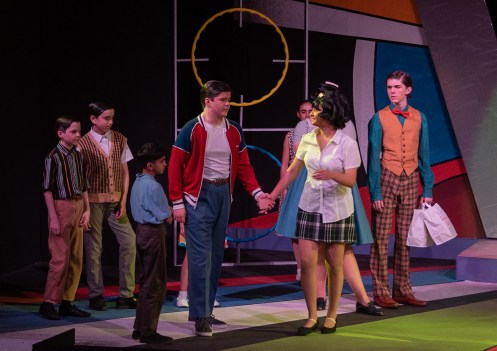
Sound-wise, Danny Tigg’s design was exactly what was required. The score for this show is energetic and soulful and there is a risk that the band could run away with it and overpower the cast. To Dan’s credit, that isn’t the case here. There is a bit of ‘techie-ness’ used that gets the musicians wired directly into the sound desk, thus removing the need for any local amplification. I think – I may be wrong – that even the drummer was playing an electronic kit, which was ideal for this production, as the output levels are wholly under the control of the desk. The sound desk in Questors is in the auditorium, so the sound operator can monitor and adjust according to what’s going on. The benefit is twofold, in my opinion: firstly, the musicians can still play with all the energy that is required and secondly, that energy can be managed to a level that is pleasing to the audience and supportive to the cast.
From the optimistic opening number Good Morning, Baltimore, to the celebratory closer, You Can’t Stop the Beat, this is a joyous production and a great night out. See it if you can.
Vince Francis
February 2020
Photography by Jane Arnold-Forster
‘As if a magic lantern threw the nerves in patterns on a screen’
Madam Butterfly
by Giacomo Puccini, libretto by Giuseppe Giacosa and Luigi Illica, after Bellasca
English National Opera, Metropolitan Opera and Lithuanian National Opera, the Coliseum, until 17th April
A review by Matthew Grierson
Madam Butterfly opens in silence: from the cinematic space at the rear of the stage, the silhouette of Cio-Cio San appears and moves down the ramp towards the audience, fluttering fans and trailing cloths in a way that suggests the insect from which she takes her name. It’s a striking image, presumably conceived by the original director Anthony Minghella, and prepares one for a production in which visual spectacle will predominate.
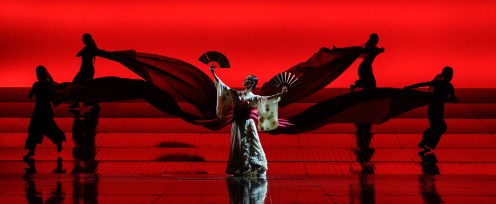
At its best, this emphasis is a perfect complement to mood and action. Near the end of Act I, Pinkerton and Butterfly are alone together and the lights pick them out, both in their white outfits against the dark, with moon-shaped paper lanterns gradually closing in on them. It’s a tender moment that concentrates our attention on the lead and her lover, and one can almost believe, as she does, that he will love her forever. But the image also speaks to their isolation, given her ostracism from family and society in Nagasaki, and his distance from home – and the life he will live without her.
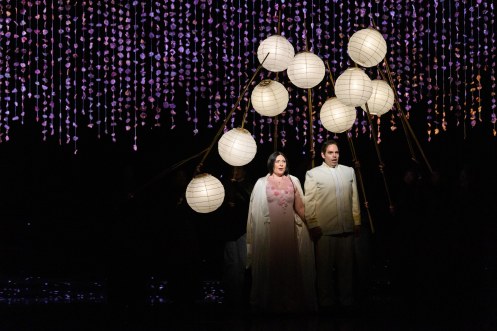
There is an echo of this scene after the second interval: whether it is Butterfly’s dream or that of her maid, Suzuki, a marionette of Cio-Cio San is married to an Asian dancer in the guise of Pinkerton, and they perform a ballet that parodies the relationship between the two lovers to that point. The motif of puppetry is an important one to this production, what with its mini mannequin son, origami birds and even servants playing puppets, and suggests we need to be conscious of who’s pulling the strings even as the stagecraft contrives to hide them.
The production treads lightly at first, conscious it is walking on thin ice with a tragic depth beneath. The marriage scene is rueful, almost playful, although with Sharpless’ enquiry about whether the 15-year-old Butterfly has a sister we are never far from the sordid realities of the trans-Pacific relationship. The mannered quality is clear in the contrast between Butterfly’s white bridal gown – matching her husband’s uniform – and the vibrant colour blocks of her entourage, there first to witness the nuptials with a jaunty good humour, and subsequently drawn into denouncing it by her uncle, the Bonze.

As the tragic Butterfly, Natalya Romaniw is remarkable, her performance tender and mischievous in her flirtatious early encounters with Pinkerton, deepening as they become closer throughout the first act. In each of her arias, Romaniw sings affectingly, raising the hairs on one’s neck. Through the middle of Act II she awaits the return of her husband with a fragile faithfulness, ultimately broken when he arrives with his American wife in tow. Romaniw completely sells these transitions, with the precision of her singing giving way to the rawness of her screams, and this allows her sudden suicide the weight it might otherwise lack.
Support comes from Stephanie Windsor-Lewis as Cio-Cio San’s reliable maid, Suzuki, a wry presence who is later realistic enough to see that her mistress has been betrayed. Butterfly also gets a good hearing from US consul Sharpless, who in Roderick Williams’ performance is endearingly awkward, and one still senses that, some diplomatic faux pas aside, he wants to do right by her.

The difficult task of making one sympathise with Pinkerton – a failed Romeo who does not match his lover’s suicide – falls to Dimitri Pittas. Despite whipping up some good-natured booing from the audience at his curtain call, Pittas is successfully engaging over the preceding three hours, his Lieutenant blithe and careless, at least at first. Indeed, his intimidation by Cio-Cio San’s assembled family, and the way his libido bursts into expression through song, make him almost as adolescent as his bride. So absorbed he has been in his own desire that he doesn’t seem to realise that his wife, young as she is, is a person in her own right, and not his puppet.
There is, then, a gentle, surprised humour in the way he responds to the dolls that she produces of her ancestors, and this has two ramifications in the production. First of all, within moments we learn that his full name is Benjamin Franklin Pinkerton and that he is a lieutenant about the USS Abraham Lincoln, both of which are celebrations of his own ancestors through American cultural swagger. Yet, second, their son, is a descendant brought to life as a puppet himself, manipulated by black-clad, ninja-like stagehands. The craft they use is simple and manages to be very touching, each turn of the head or gesture of the hand speaking of the child’s awestruck attention to the world.
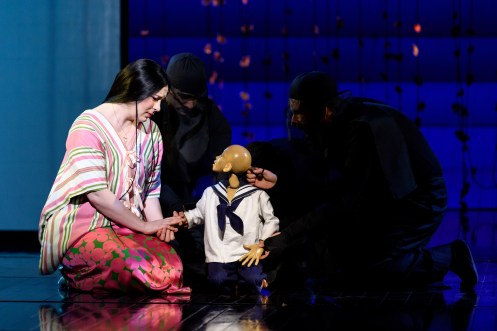
None of the production’s design is anything less than accomplished – it looks fabulous, in fact – but given so many outlets it is difficult at times to know where to look. The sliding paper screens making up Pinkerton’s love nest are slid in and out by the stagehands, sometimes disguising an entrance or exit by one of the principals, sometimes serving as a blank on to which the shadow of another can be projected; behind them is the ramp down which the cast can enter in silhouette, backed by widescreen light that varies from clear day to romantic sunset; and in front the puppets that may represent children, dreams, or just puppets. So giddy with possibility, it’s as though no one has decided what the visual focus of the staging will be.
With this reliance on spectacle, there is also a lack of dynamism in the blocking. Although entrances are strikingly visual as characters come in great waves over the back, once they are downstage most of the action takes place in one plane, and tends to be fairly static, though this may be a function of the most dynamic performers – the puppeteers and scenery hands – being specifically invisible in black.
It is a more fitting spectacle with which this rousing production ends, however: where the trains of cloth that accompanied Butterfly on her arrival signified the freedom of her flight, they are at the close the blood she sheds as she renounces this world forever.
Matthew Grierson
February 2020
Photographs © Jane Hobson
One Step, Two Steps, Tickly Under There
Round and Round the Garden
by Alan Ayckbourn
Rare Fortune Productions at OSO Arts Centre, Barnes until 6th March
Review by Eleanor Marsh
Part of Ayckbourn’s The Norman Conquests trilogy, Round and Round the Garden is based on the premise that Annie, who is the main carer of her demanding mother, has decided she needs a weekend off. She has been beguiled by her sister Ruth’s husband Norman and is planning on a “dirty weekend”; something she has never before contemplated. Things inevitably go wrong when Norman arrives early to collect her rather than meet as planned and they are joined by brother Reg and his wife Sarah and – for added farcical comedy value – sister Ruth. The family are also visited by local vet, Tom, who has ostensibly called in to check on the cat but really has his eye on Annie. Drunken escapades, temper tantrums and inappropriate liaisons ensue.
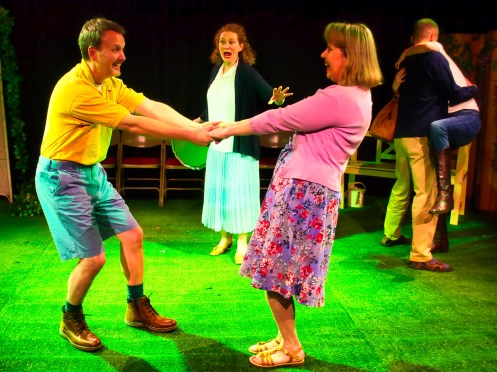
The play is presented “in the round”, which is an interesting pun on the title and could work in another venue, but at the OSO the term is somewhat misleading as the vast majority of the audience were situated “end on” as normal, with twelve lucky punters literally on the stage and this felt a little uncomfortable and very unbalanced. The play itself is of its time and the design and direction paid suitable homage to the classic TV sitcoms of that era. It would have been very easy to fall into the trap of trying to update the setting and thereby making the play appear dated. As a period piece it works well. Congratulations, therefore, to director Maurice Thorogood for having the courage of his convictions and a true belief in the writing. Congratulations to him, also for taking on the formidable task of covering for an indisposed actor and playing the part of Reg himself, book in hand. And playing it very well, too. The energy levels of the entire cast seemed to increase every time Reg made an appearance.
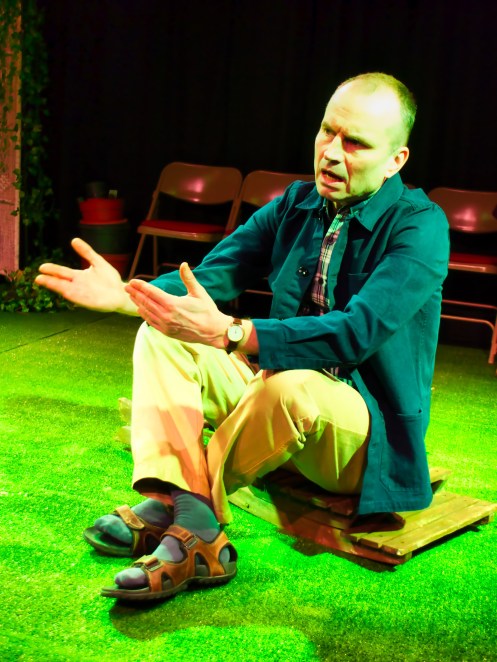
The characters in this, and every Ayckbourn play, are far more complex than they first appear, and they require actors to be thoughtful in producing a multi-layered performance. Despite holding that script Maurice Thorogood gave us the impression that beneath the blustering “hail fellow well met” lurked a much darker character and it came as no surprise that wife Sarah (Fiona Evans) was just a little tempted to stray. Jeremy Drakes as Tom was the quintessential sitcom underdog and played the role straight without trying too hard for laughs. The laughs came, as they always do when the writing is of this standard. A totally different approach was taken by Mike Duran as Norman, who played up the comedy so much that there were times it was quite irritating and, more importantly, made us question why any of the intelligent women he managed to seduce would have been interested. Why did the fragrant Ruth (nicely portrayed by Julia Haythorn) marry him in the first place, let alone stick with him when he was not only a cad and a bit of an idiot but also left her to pay the mortgage! As for poor Annie, she is the most difficult character of all to play; downtrodden carer with no self-confidence one minute and glamorous femme fatale taking no prisoners the next. Robin Miller was most effective in her scenes with Tom, where she appeared to have the upper hand; it would have been good to have seen some of that steel of character in the scenes with Norman, too.
Rare Fortunes provided a very enthusiastic audience with an entertaining evening and fought valiantly against the handicap of losing a leading actor at short notice. And for two short hours they transported me back to the orange wallpaper and brown carpets of my 1970’s youth.
Eleanor Marsh
February 2020

 Mark Aspen