
The Merry Wives of Windsor
Queering the Pitch
The Merry Wives of Windsor
music by Otto Nicolai, libretto by Lars Harald Magagerø after Salomon Mosenthal based on William Shakespeare
Queer Voices, at the Arcola Theatre until 22nd July
The Grimeborn Festival 2023
Review by Patrick Shorrock
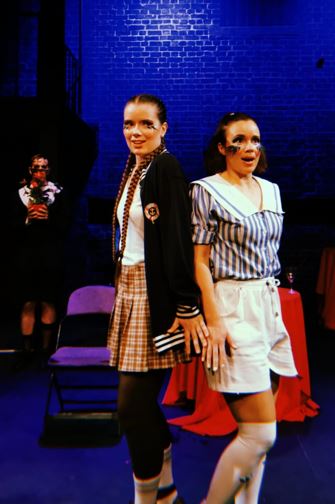
Otto Nicolai’s take on The Merry Wives of Windsor is a thoroughly delightful piece that doesn’t entirely deserve its neglect. It’s been overshadowed by a far greater work on the same subject (Verdi’s Falstaff), rather like Paisiello’s Barber of Seville, which is, if anything even more obscure than Nicolai’s work.
And then there is what one might call the Boris Johnson problem: the figure of the posh liar, with the gift of the gab, a high sex drive, and no moral scruples, has, for many of us, lost whatever charm it had. These days, we are more likely to side with the citizens of Windsor in their disapproval of Falstaff, while raising an eyebrow at the way that they see their daughters as commodities to be given in marriage to the husband most likely to support their business interests. Nicolai is truer to Shakespeare in making the wives as guilty of this as their husbands, whereas Verdi has them supporting the cause of true love, tipping the balance very much in favour of the women.
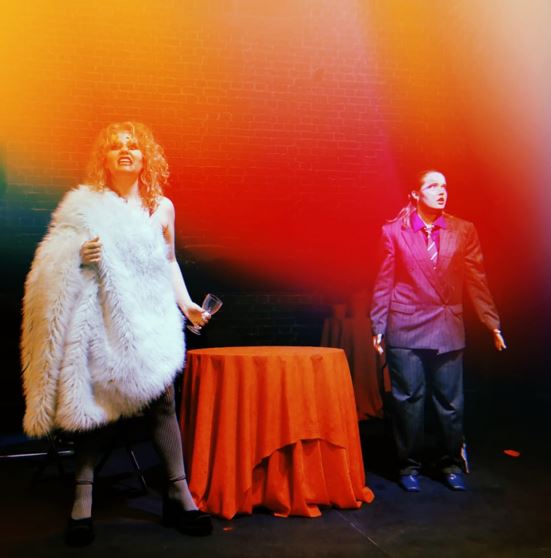
The opera is sung in Norwegian with English narration and subtitles. Queer Voices (who describe themselves as Norway’s only queer opera company) had the interesting idea – I quote from their publicity – of transforming ‘the archaic, fat, and sexist Sir John’ into a ‘liberated and gender non-conforming Falstaff with the narrow-minded people of Windsor reflecting society’s attitudes to those of us who break the binary code’. However, they didn’t really deliver what it said on the tin.
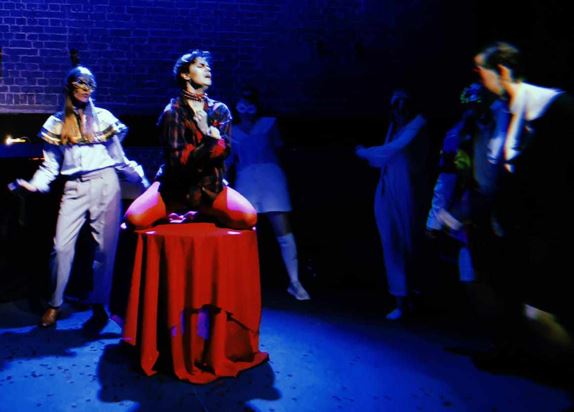
Part of the difficulty with queering traditional operas lies in the music. Unless you restrict yourself to operas with male roles that can be sung by women, it is going to be necessary to rewrite the music, something that doesn’t always work. Fenton’s music, beautifully sung by Eldrid Gorset, sounds absolutely fine sung by a soprano, but transposing Falstaff’s role is much less satisfactory, as Mae Heydorn lurches from using a chest voice for the low notes to something higher and more comfortable. Nor is her character very convincing. In reality, someone gender non-conforming is not going to be acting as a sexual predator in the blatantly public way that Falstaff does, because they will be far too worried about being queer-bashed. This Falstaff, for all the charisma that Heydorn brings to the role, comes across as more deluded than dangerous: young, thin, and not entirely masculine; for all the peacocking, this isn’t really Falstaff because the character no longer has the patriarchal dividend.

Another musical option is singers who have transitioned and retained their lower voices. Mathilde Hofvind Borgen as Mr Page wears a male suit and sings the part as written, as does her wife, which certainly intensifies the queer vibe. Indeed Windsor, for all its faults, couldn’t really be more queer if it tried. Mrs Ford and Mrs Page are very touchy feely. Ford carries a handbag and wears a skirt and heels, although his top half is businessman butch. There is barely any convention left in Windsor for Falstaff to disturb.
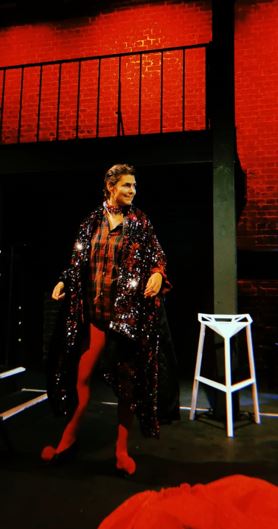
After the teasing and baiting of Falstaff gets out of hand, there is a long silence and a considerable cut, after which everyone waves rainbow flags for the finale (and we don’t get to hear whether Fenton and Anne are married). I’m not sure that it added up dramatically. But nor am I sure that it matters that much. The score is captivating with plenty of charm although it isn’t deep: this piece is a very conventional comic opera of its time that doesn’t engage with the melancholy of age or the class and gender antagonism that Verdi and Boito mine so effectively in Falstaff.
Director Kristin Lundemo Overøye keeps things moving along nicely, supported by Fridtjof Brevig’s minimal set and inventive costume designs, and the singing is impressive. Therese-Angelle Khachik (Mrs Ford) exhibits a fine grasp of coloratura and makes the most of her musical opportunities, as do the Anne Vilde Johnsbråten (Anne Page) and Maria Dale Johannessen (Mrs Page). Marte Arnesen (Dr Cajus), Mathias Vistnes (Slender) and Patrick Egersborg (Mr Ford) make telling contributions and fit in well with the ensemble.
Congratulations to Kelvin Lim, the solo pianist, for his stamina in maintaining the momentum over three acts. This is a lively and enjoyable start to 2023’s Grimeborn Festival.
Patrick Shorrock, July 2023
Photography by Talitha Khachik


 Mark Aspen