
Sea Witch
Tide Turns
Sea Witch
by Kristopher Russell and Michael David Glover, music by Segun Fawole, book by Michael David Glover
Russell and Glover Theatrical at The Theatre Royal Drury Lane, West End, 1stMarch
Review by Ravenna Vale
There are moments in theatre when a production announces itself not with spectacle, nor with narrative revelation, but with something rarer: a sense of creative propulsion. Sea Witch, which enjoyed its world premiere this weekend at Theatre Royal Drury Lane, belonged to that category. Whatever hesitations the evening invited, its musical and choreographic imagination was unmistakable. One left the theatre persuaded that something bold had been attempted, even if the vessel carrying it had not yet entirely found its shape.
The evening’s most persuasive achievement lay in the score. Segun “Segue” Fawole’s music and lyrics possessed a rhythmic confidence that was difficult to ignore: a synthesis of gospel exaltation, contemporary musical theatre lyricism, and pop architecture that felt neither derivative nor cautious. The music did not merely accompany the narrative but rather supplied the production’s central dramatic vocabulary.
At its strongest, the score reached a level of invention that felt entirely invigorating. I found myself thinking more than once that the original musical numbers, and the choreography that animated them, represented the most exhilarating union of music and movement I had encountered since the seismic arrival of Hamilton. It is a bold comparison, but one justified by the synthesis of choreography and musical invention which represented, in my view, the most compelling and imaginative integration of the two since that landmark production.
Musically, the work was unquestionably the production’s greatest triumph with Fawole’s scores continually pulsating with rhythmic vitality. Several numbers stood out immediately as highlights of the evening. Tonight Belongs to You arrived early with the buoyant confidence of an opening declaration, establishing the show’s communal energy. Glory expanded that energy outward, drawing the company into a sweeping choral moment. Later, Unstoppable unleashed a surge of momentum that almost physically accelerated the performance, while They Won’t Forget Me Now provided the evening’s most resonant emotional crescendo.
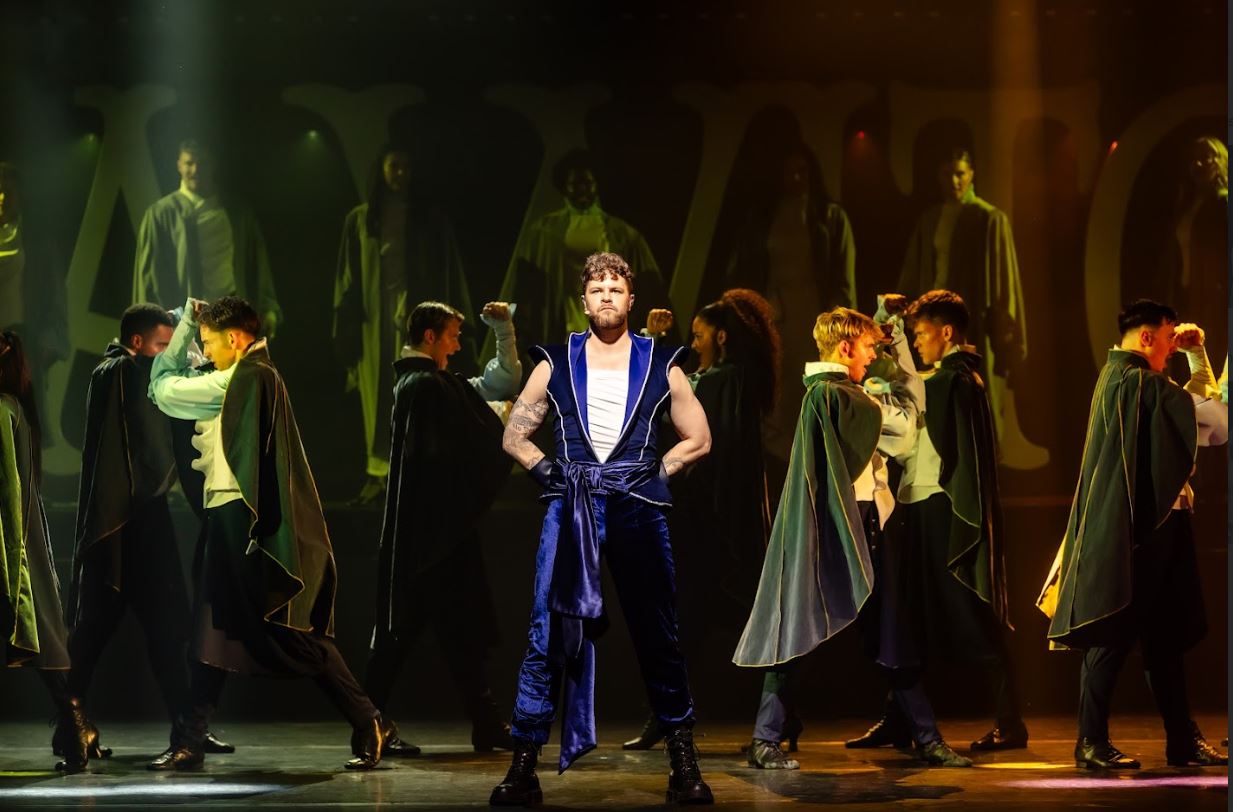
Integral to the success of these sequences was Dean Lee’s choreography. It was rare to encounter ensemble movement so intricately attuned to its musical environment. Lee’s choreography appeared to grow directly from the score itself, shaping the performers’ bodies into shifting patterns that evoked currents, tides, and undertow. The effect was both fluid and unpredictable. Rather than presenting fixed formations, the ensemble seemed to move as a single organism, surging, dispersing, and reforming, each movement responding directly to the tonal shifts of the music.
The ensemble performed this demanding choreography with admirable discipline and vitality. To single out individuals risked understating the collective achievement; nevertheless, certain performers inevitably drew the eye. Dancers Charlie Clowes and Lilonke Nyangwa, for example, brought particular physical assurance to Lee’s choreography. Their movements in particular articulated the fluid vocabulary of the piece with impressive precision.
Among the supporting vocalists, Samuelle Durojaiya possessed the stage presence of a Broadway star. There was a sense of soulfulness in her performance that rendered even brief appearances quietly magnetic. Robin Simoes Da Silva, meanwhile, contributed vocal flourishes of striking musicality, his riffs alive with colour and rhythmic ease.
The principal cast provided several performances of considerable strength. Natalie Paris, as Evie, anchored the production and supplied a compelling emotional centre. Her voice moved effortlessly through Fawole’s score, balancing power with lyric sensitivity, and she carried the role with an authority that made her presence immediately persuasive. Amy Di Bartolomeo’s Annemette was performed with steely conviction, her defiant portrayal bringing a dramatic intensity that enhanced the narrative.
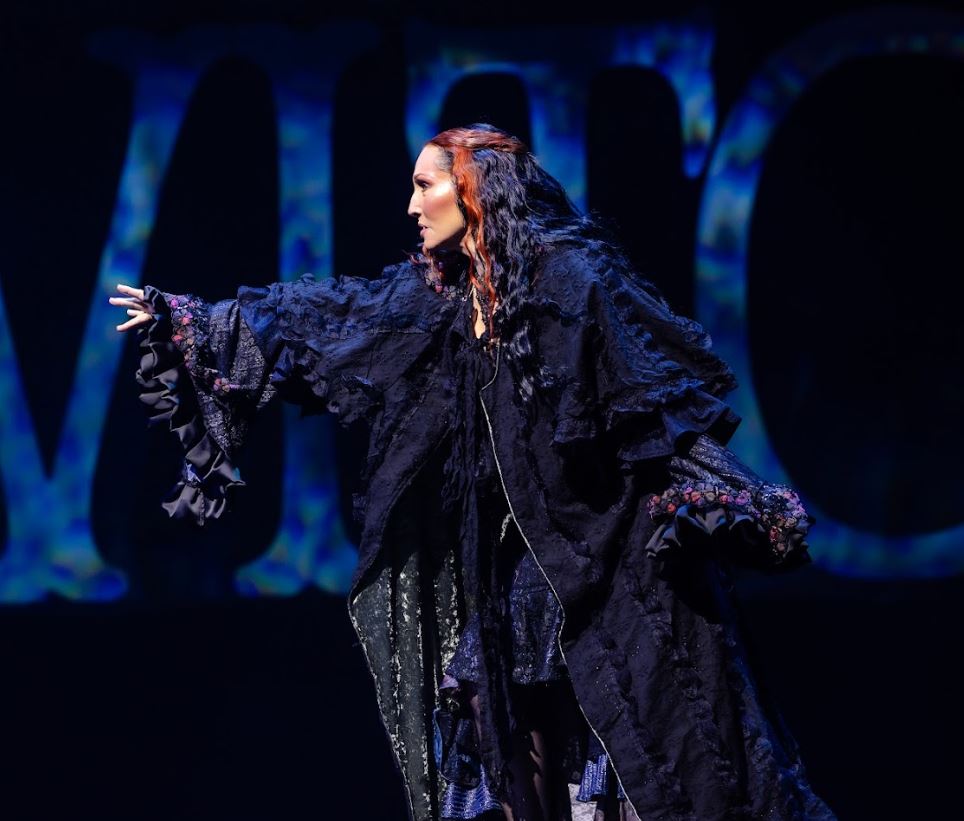
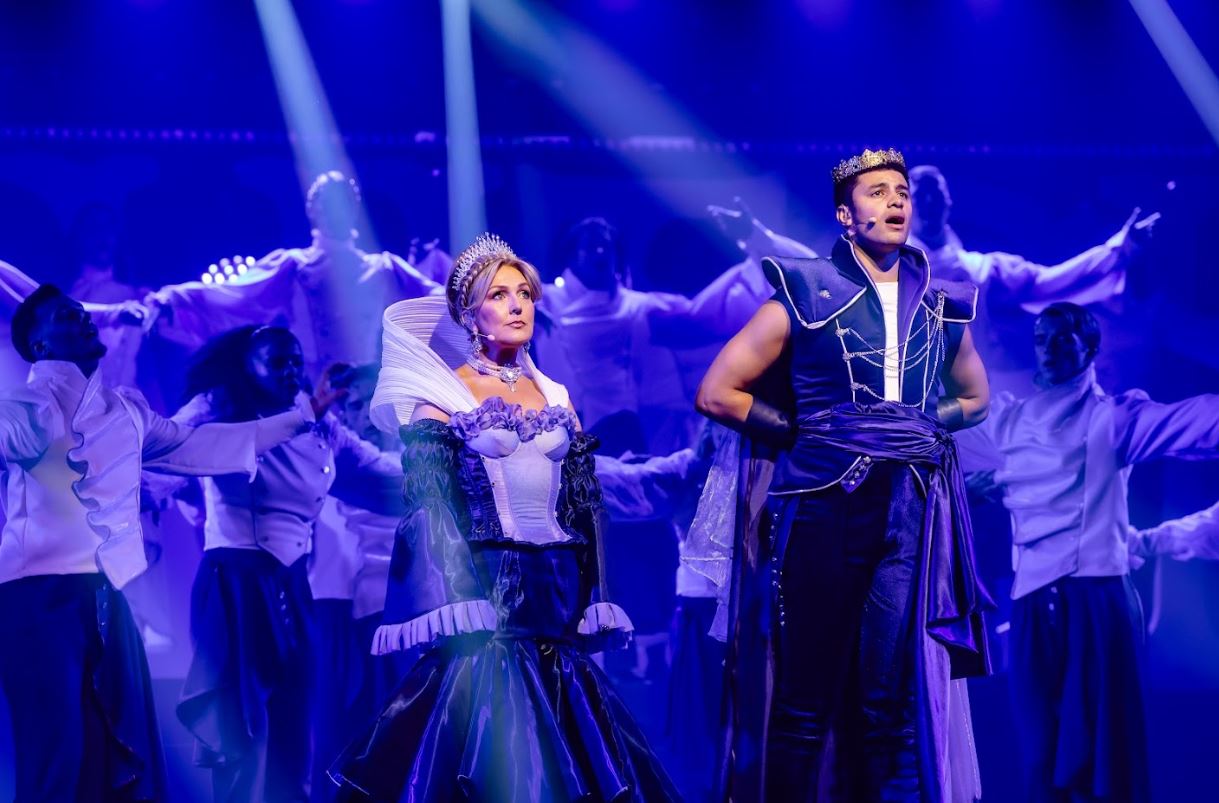
Mazz Murray’s Queen Charlotte arrived with the commanding theatrical confidence one expected from such a performer. Her scene possessed a sharp authority that cut cleanly through the surrounding spectacle. Djavan van de Fliert offered a sincere and engaging portrayal of Nik, his emotional notes surging effortlessly through the music. Michelle Visage’s Tante Hansa proved an unexpectedly vivid presence, emerging as one of the production’s most memorable figures.
However, not every casting decision proved equally persuasive. Jay McGuiness, cast as Iker, appeared somewhat constrained by material that sat awkwardly within his vocal range, and moments that required vocal power occasionally fell short of their intended impact. Natalie Kassanga delivered a capable performance, though one could not entirely escape the feeling that the role might benefit from a sharper injection of attitude: more bite, more swagger, and more unapologetic theatricality.
Visually, the production presented a curious imbalance. The women’s costumes were strikingly conceived, curated with textured and imaginative visual artistry evocative of the world the musical sought to inhabit. The men’s costumes, by contrast, sometimes drifted toward an aesthetic that felt unexpectedly camp, closer to flamboyant pantomime than to the atmospheric tone suggested by the music.
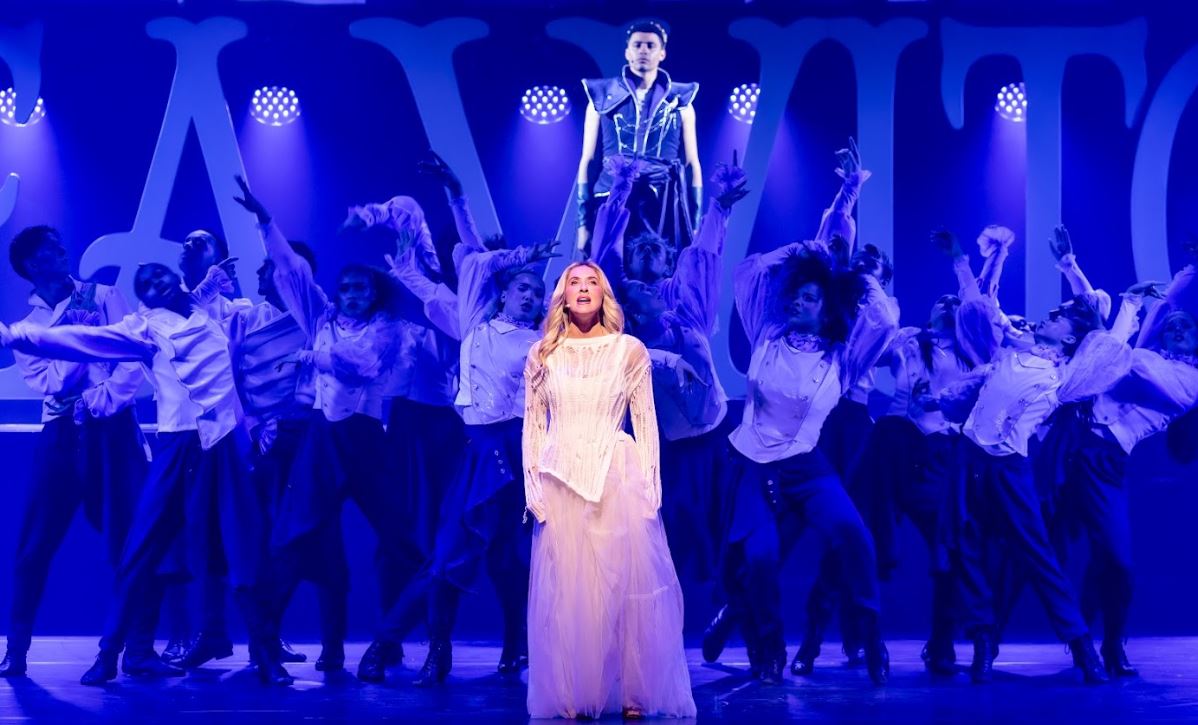
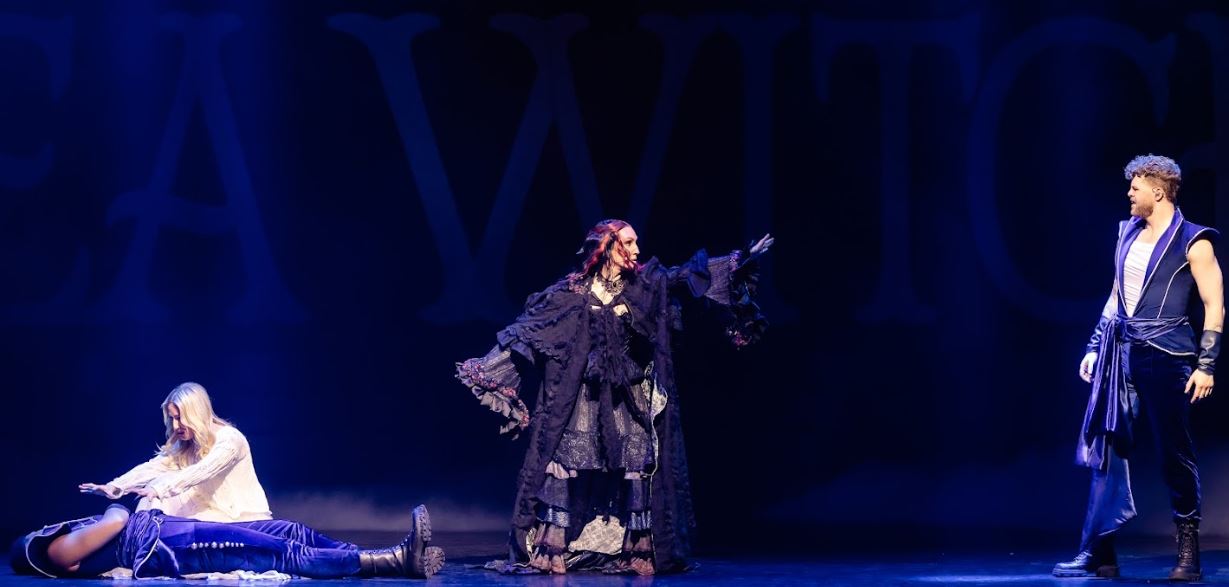
More perplexing still was the austerity of the set design. For the whole of the evening the stage remained entirely bare, with little more than the words Sea Witch displayed at the rear. Without significant scenic architecture or staging devices, the narrative occasionally struggled to establish a tangible sense of place. The performers therefore moved through an imaginative musical landscape that the physical production did not always fully support.
At times, the result was that the piece felt closer to a concert presentation than to a fully realised theatrical environment. Certain passages of dialogue interrupted the otherwise propulsive musical momentum, and the pacing could feel momentarily disjointed as the production shifted between spoken and sung material.
And yet it would be unwise to dismiss the production on these grounds alone. Opening nights are inherently transitional events, and one suspects that the staging might yet evolve as the production settled into its run. Should the visual world expand to meet the scale of the music and choreography, Sea Witch could very well develop into something groundbreaking.
For now, however, the production stood as an intriguing paradox: a musical of immense sonic and choreographic vitality whose physical staging, much like the tide itself, still appears to be finding its sea legs.
Ravenna Vale, March 2026
Photography by Danny Kaan


Trackbacks & Pingbacks