
The Harmony Test
It’s Hard to Conceive
The Harmony Test
by Richard Molloy
Putney Theatre Company at the Antony Bridges Studio, Putney Arts Centre until 16th May
Review by Harry Zimmerman
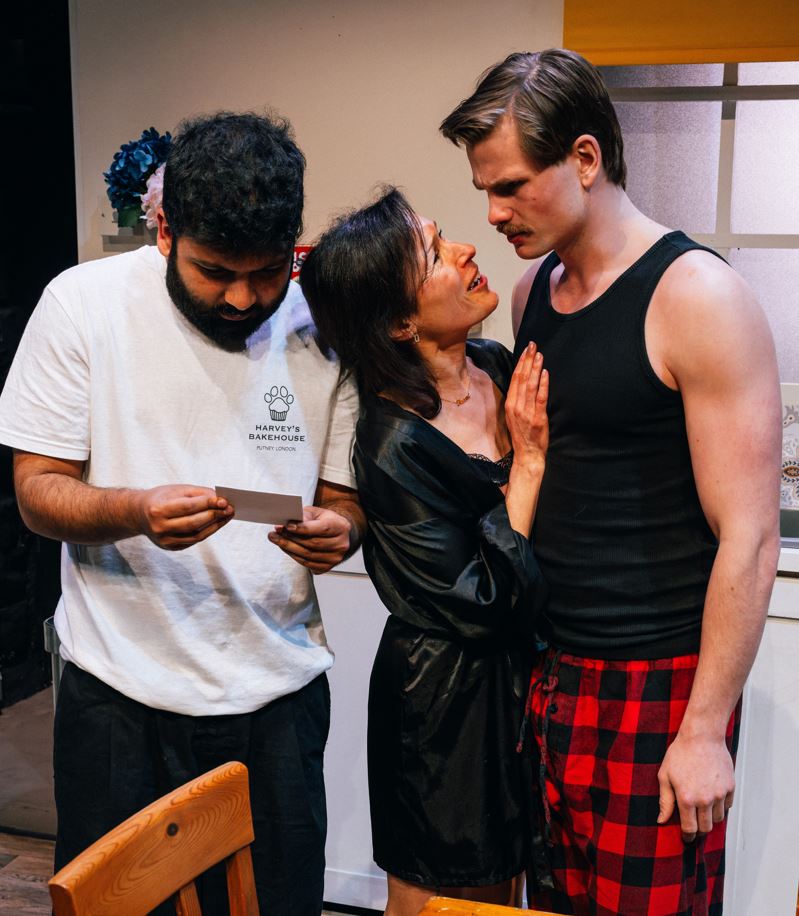
The Harmony Test weaves together two distinct storylines, with large dollops of comedy and serious sorrowful angst in equal measure, as we follow the fortunes of two couples at very different stages of their relationship.
We firstly meet teacher Zoe and terminally unemployed actor, Kash, who are trying for a baby. Zoe takes a pragmatic, clear eyed and common-sense approach to the task with almost military precision. She has a distinct fertility plan, incorporating vitamin supplements, a strict diet, planned conception timetabling broken down into optimum times and dates and even the judicious intimate application of a bag of frozen peas to maximise the prospects of success.
Kash is more laid back, preferring to let nature take its course, although his almost puppy dog desire to be helpful and proactive extends not only to the icing of certain body parts at appropriate times, but also spending money he doesn’t have on an extremely dubious “aid” to conception from a fellow actor he bumped into in Holland and Barrett, providing one of the comedic highlights of the show.
Meanwhile, empty-nesters Naomi and Charlie are facing a different matrimonial challenge, and it looks terminal. Charlie is bewildered that his wife does not share his excitement at finally having the house to themselves now their daughter has gone to university, whilst Naomi cannot remember what ever attracted her to Charlie in the first place. She wants a dog, partly to fill the empty space, he is allergic to them. Naomi’s own allergic reaction is, increasingly, towards Charlie. Lacking any meaningful connection in her life, she leaves Charlie, takes up residence in Zoe and Kash’s spare room, and heads to the gym, where she finds chemistry and connection aplenty in the shape of Rocco, a well-toned personal trainer twenty years her junior. Yet Charlie doesn’t want their marriage to be over….
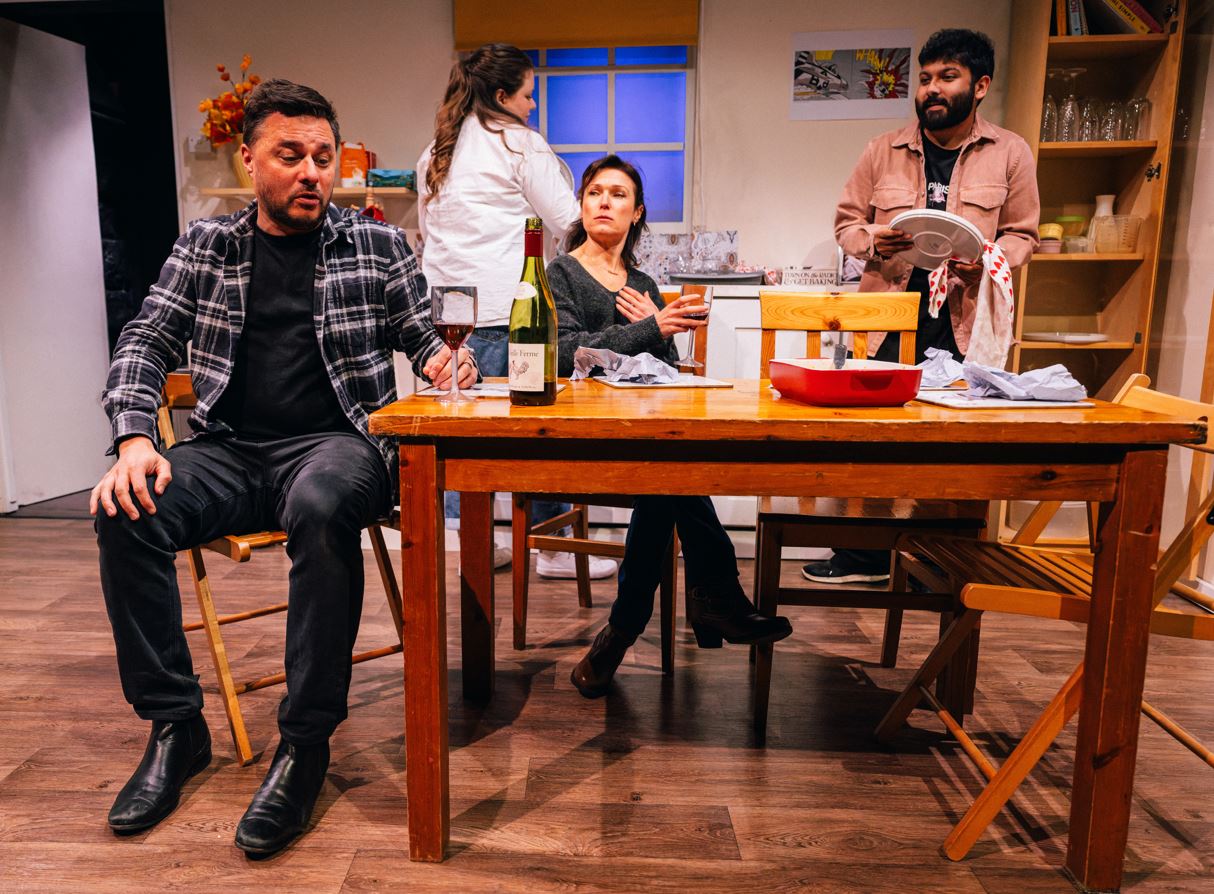
Inevitably, when Zoe does become pregnant, other anxieties soon arrive: will her maternity leave salary be enough, or does Kash have to shelve his artistic ambitions and get a “proper job”?
Thus, the tale of two couples (and a stripped-down interloper), develops as we see, in roller-coaster form, their two stories intertwine, twist and spiral with alternating episodes of hilarity and heartache, merriment and melancholy.
More fundamental than this is the news that there may be a problem with the healthy development of their baby. Zoe is required to take Non-Invasive Prenatal Testing (NIPT), known as a “Harmony Test,” a process whereby the foetus is screened to identify signs of genetic, chromosomal abnormalities and possible lifelong physical or mental disorders. As they anxiously wait for the result of the test, the pair are forced to confront their worst fears.
In a play such as this, excellent ensemble playing is critical. Here, we are well served. All of the actors work effectively with each other and help the narrative move effortlessly along by ensuring that the dialogue crackles with life and is always appropriately paced. They all have excellent comic timing and judge their relevant pauses and glances skilfully.
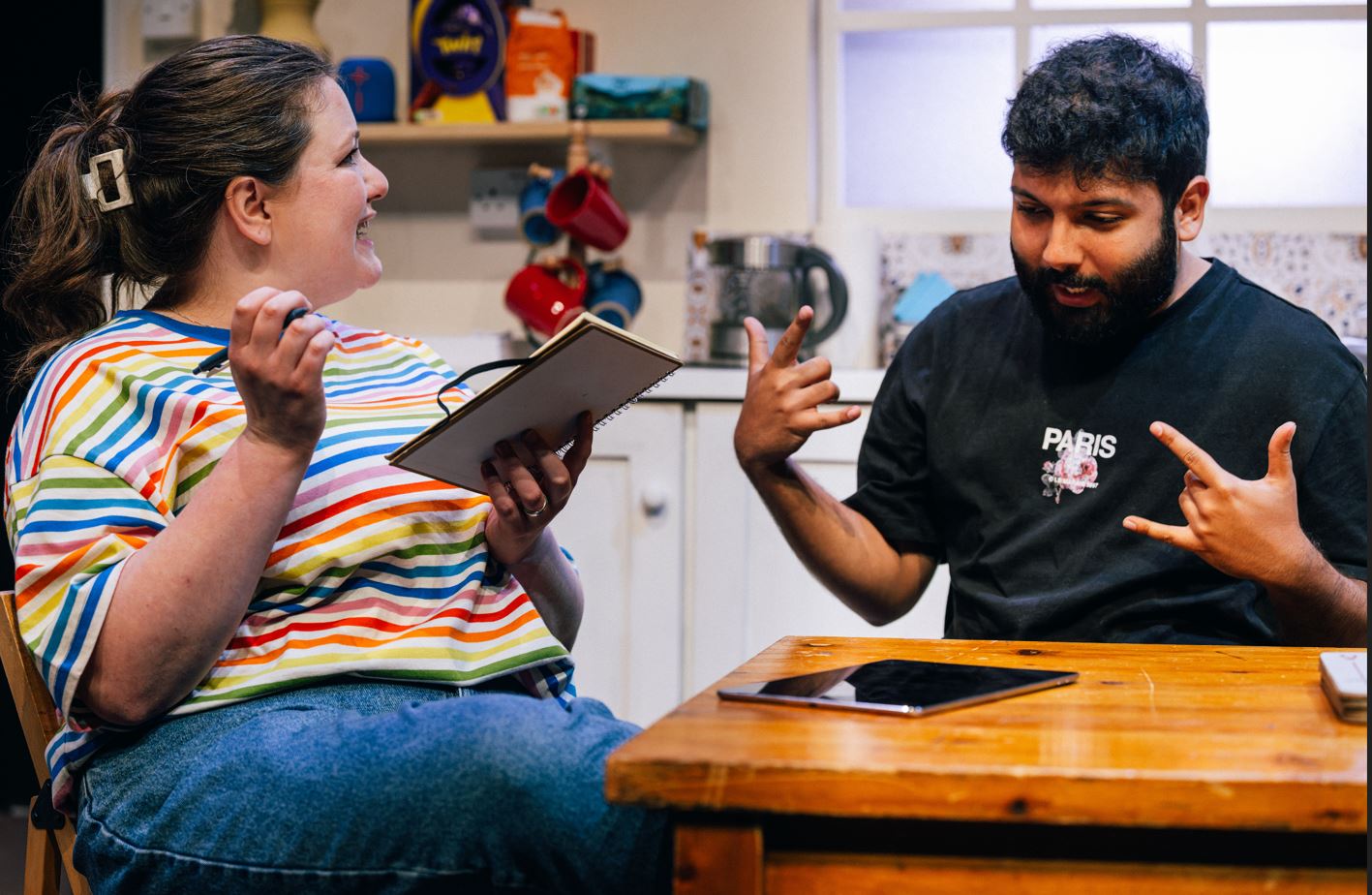
Emily Kate Dixon’s Zoe balances comedic exasperation with heartfelt seriousness adroitly, at some points acidly amusing, at others painfully anguished, in control and yet also hugely vulnerable.
Aaron Thakar’s Kash has a likeable, simplistically optimistic ingenuousness that is endearing. At times, he is the personification of confusion and discombobulation, especially when seeking to understand and support Zoe’s detailed conception planning and mines this characterisation to get laughs.
Naomi is played with just the right amount of bitterness by Emily Fellows. Her caustic selfishness cannot hide or disguise her quintessential vulnerability and fear of being alone; a sensitive portrayal.
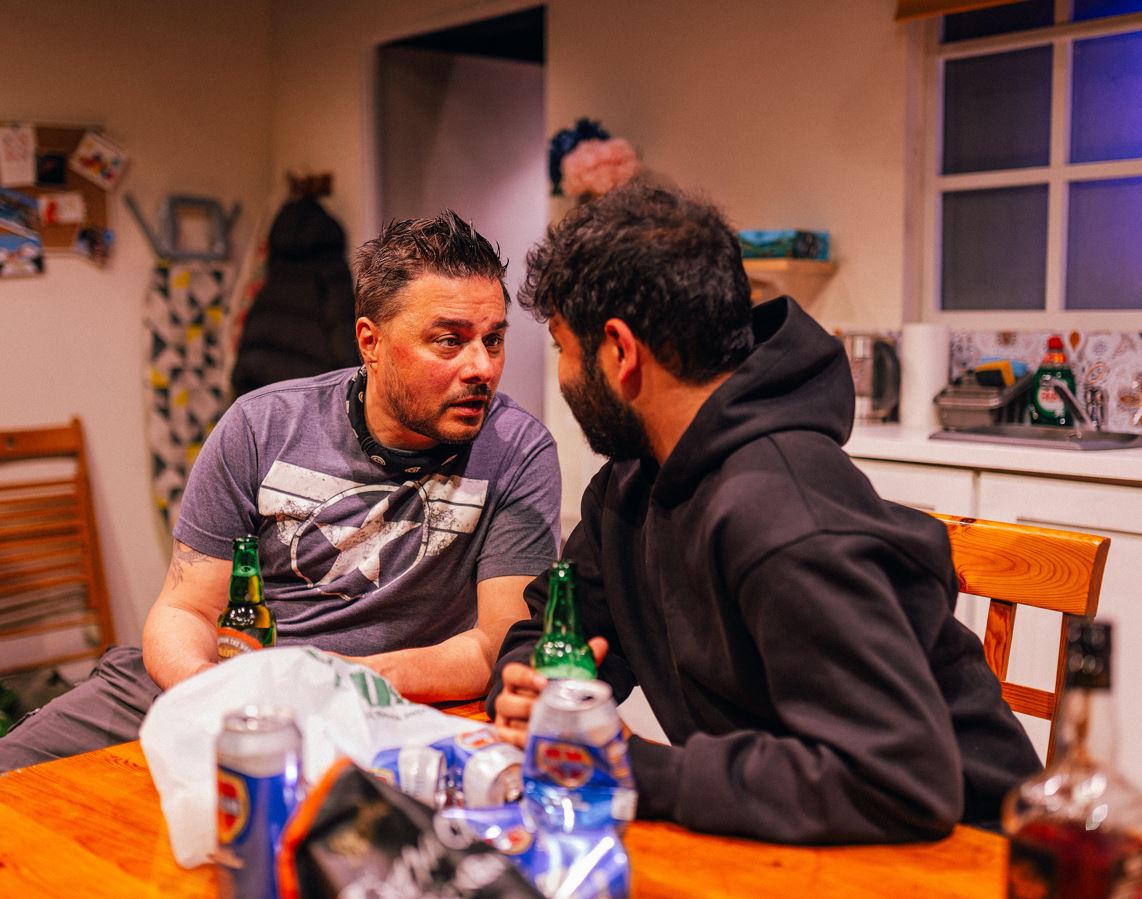
Whilst the character of Charlie is written in a more one dimensional way, Jerome Joseph Kennedy imbues him with a strong sense of pain and bewilderment at the disintegration of all that he has known, veering from melancholy to anger in an effective drunken peroration later in the play as he demonstrates his lingering love and desire for his long-time wife.
Caleb Clarke also makes the most of his character. Rocco is much more than an archetypal “hunk in trunks”. During the course of the play, he becomes more mature, empathetic and supportive of the others, and comes into his own in the drunken party scene, never straying into parody.
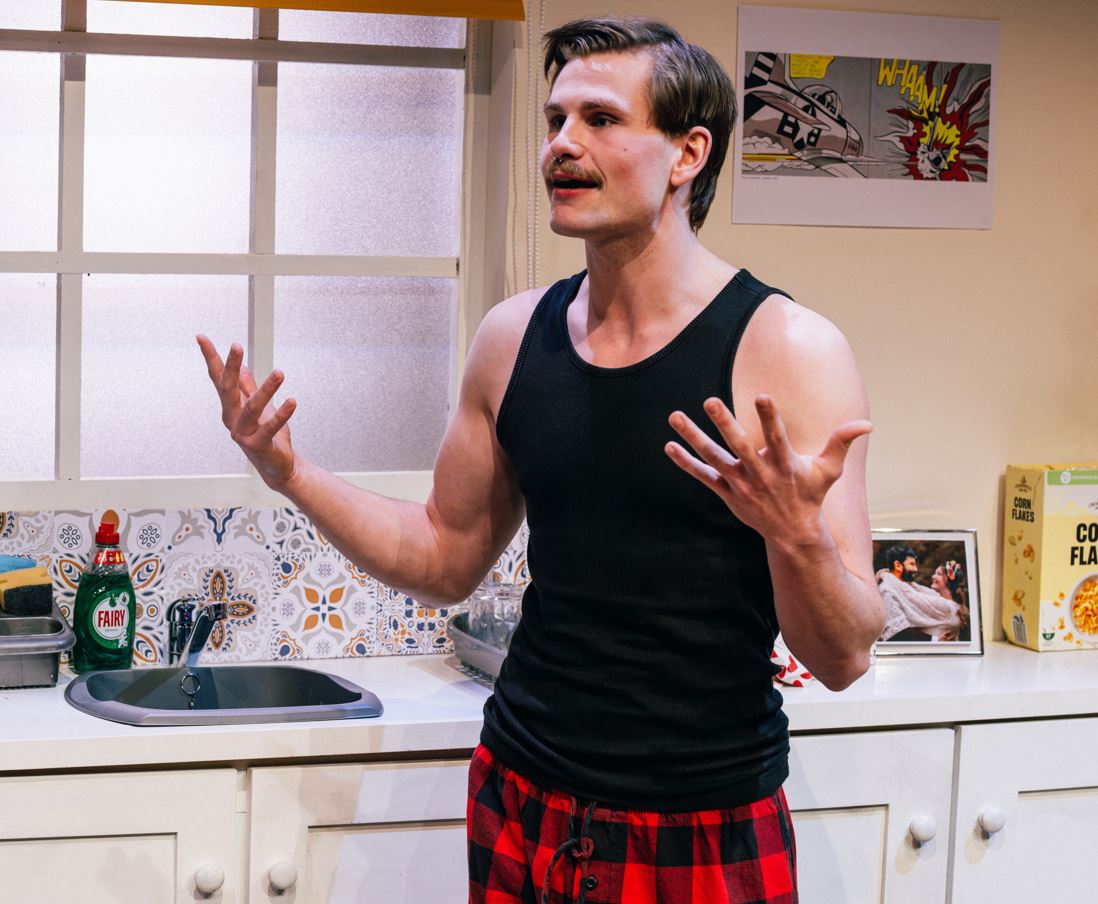
Director Jodi Rilot keeps the narrative thrust of the play flowing and interest in all the various permutations of character interaction believable and realistic. The juxtaposition of comedy and apprehensive doubt and anxiety is well positioned and never feels forced.
The intimate space of the Studio, with the compact kitchen providing a realistic and appropriate setting for all of the action, is the perfect environment for this piece. It enables the audience to feel fully immersed in everything they are seeing. The cast faced a difficult task in keeping the action moving forward in the transitions, some of which were a little long and clunky, but, overall, they were successful in keeping the audience interested and engaged throughout.
The climax of the piece seemed a little contrived, with the overwrought ambiguity of the ending no real surprise.
The Harmony Test is, in essence, two tales intertwined to form a cohesive narrative. It has very much a traditional, well-trodden sitcom-esque structure, with the plot consisting of a series of vignettes linked to two very recognisable scenarios running in parallel yet finding sufficient Venn diagram overlapping to deliver an enjoyable and entertaining, if rather predictable play.
Running at one hundred minutes straight through, the piece is towards the upper end of comfort levels, and might have benefited from a few judicious cuts here and there, (especially in the musical “interludes”), but it is a testament to the enthusiasm and brio with which the actors threw themselves into the production that none of the scenes or characters overstayed their welcome and, overall, delivered an evening of laughter and empathy.
Harry Zimmerman, May 2026
Photography by Steve Lippett


 Mark Aspen
Trackbacks & Pingbacks