
What the Dickens?
Humbug Humalong
What the Dickens?
by Clare Norburn
The Telling at The OSO Arts Centre, Barnes until 30th November, then on tour until 8th December
Review by Brent Muirhouse
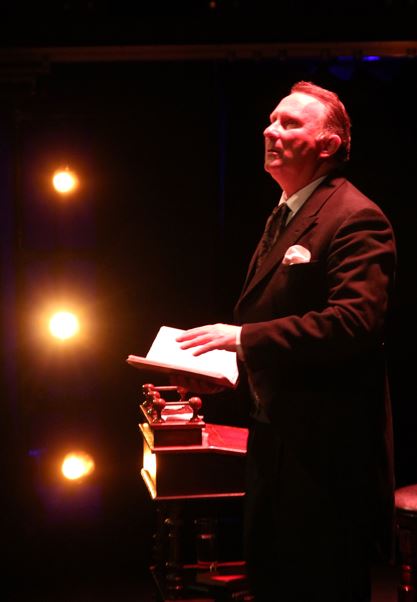
What The Dickens? begins in the shadowy ambiance of a sparse stage at the OSO Arts Centre on a cold London night, appropriately evoking a ripple of the timeless setting of A Christmas Carol, in this theatre on the banks of Barnes Pond. Clive Hayward’s Charles Dickens steps forward, marching to his spot, ostensibly to deliver a reading of his festive classic. However, it soon becomes clear that the audience is not simply in for a methodical retelling of Ebenezer Scrooge’s redemption, since Dickens finds himself written into the role of protagonist, as the performance delves into his personal story – whether he consents to it or not. Clare Norburn’s play then exists as a sort of meta narrative arc reserved more commonly for dystopian science fiction. For the sake of a pun, if it were a century later, it would be Philip K. Dickens.

What follows is a playful and unexpectedly lively biographical journey, bolstered by a jubilant musical accompaniment throughout. The performance recounts Dickens’ early struggles, from working in Warren’s Blacking factory as a child (an original tune here showcasing the fine songwriting of keyboardist Steven Edis) to his blossoming passion for storytelling, and ultimately to his complicated personal life as an adult. The narrative does not shy away from his flaws, including his disregard for those closest to him, particularly his wife, Catherine, played with a haunting presence and quiet strength by Karen Ascoe. Yet, rather than wallowing in sombre introspection, underlining this historical biography with strings and keys at a great frequency – more impressive than the rapid rate of passing swans I spotted in the pond before the show – produces a highly engaging musical-theatre experience.

The ensemble cast, doubling as musicians, infuses the production with energy and charm. Alexander Knox stands out, his fiddling and vocals adding a lively texture to the proceedings, while the accompaniment of accordion, cello, and keys (Rosa Lennox, Rosalind Ford, and the aforementioned Edis) creates a fittingly festive air. The musicians intertwine with the narrative, too, playing not just band members but characters in the story, most prominently Rosalind Ford leaving her cello in the basement (like a 1997 Weezer album track) to take centre stage as Nelly, Dickens’ younger mistress, whose brilliantly portrayed but sad plight is instrumental in giving the audience an increased sense of distaste for the actions of the literary man formerly on the £10 banknote. The combined musical-dramatic axis lifts the performance into something almost akin to a Dickensian cabaret, with moments of song and dance that haven’t been seen since Gonzo and Rizzo the Rat in The Muppets’ classic take on A Christmas Carol decades earlier. It also plays into this meta experience – Dickens telling a story he gradually becomes a part of, with the music he hears being about his own actions, leaving his life and his works intertwining and unravelling in ways both comic and poignant on stage.
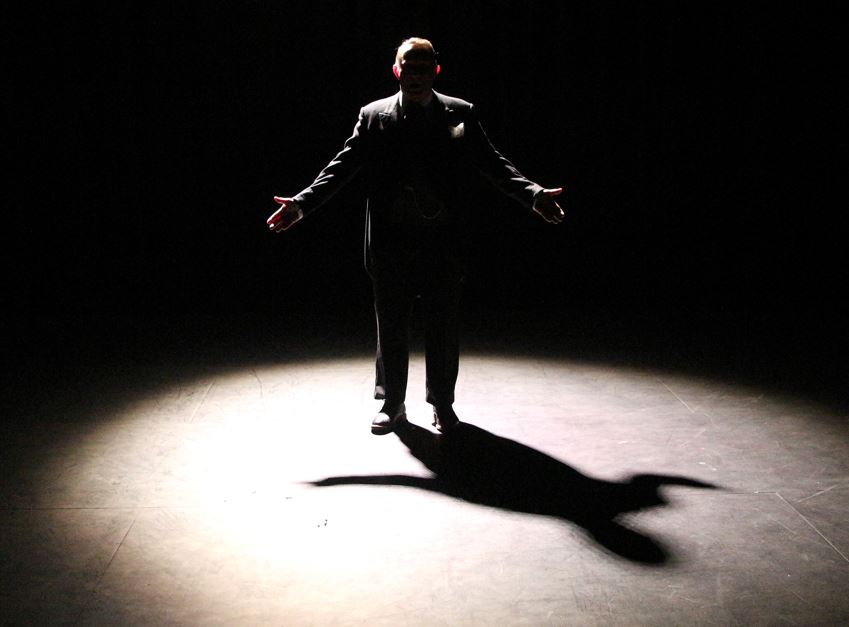
Director Nicholas Renton keeps the pace brisk, ensuring that the performance never lingers too long on Dickens’ darker moments. Instead, the production balances introspection with whimsy, capturing the contradictions of a bearded man with literary brilliance, matched only by his subpar treatment of some of those closest to him. The sparse set, cleverly designed with simple props, allows the music and performances to take centre stage, while the lighting always remains central to the festive tones and shadows that reflect Dickens’ more turbulent moments.
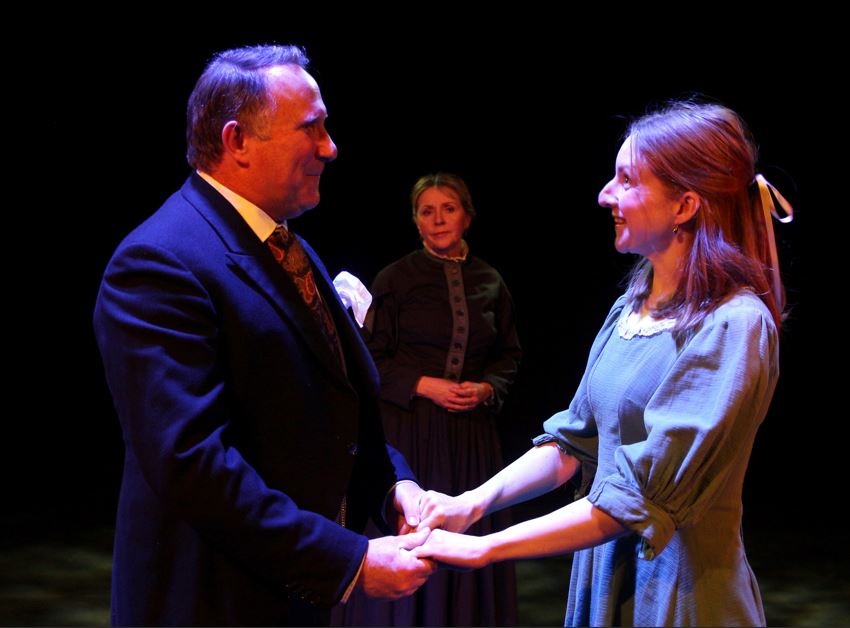
By the play’s conclusion, one is left with a mixed impression of Dickens the man. Whilst his humanity may be flawed, his quality as a storyteller is superb, enduring and indeed creates the compelling fictional structure for this play’s entire narrative about his real existence. As the final bars of the ensemble’s performance fade, it’s to A major crescendo rather than simply to B flat. The question is asked throughout What The Dickens? is to what extent Dickens is Scrooge, and Scrooge is Dickens. Whilst Scrooge is synonymous with miser-turned-generous-giver, his story protected within the pages of fiction and generations of traditional festive psyche, it poses the somewhat poignant question of to what extent Dickens should be afforded the same protection as his characters who transcend generations. Whilst the Ghost of Christmas Yet To Come may be due a future say on this, The Ghost of Christmas Present felt in the moment that this production of What The Dickens? is an ebullient, energetic, inventive reminder that the art of storytelling – particularly one as humble and human as A Christmas Carol – remains at the heart of both the theatre and the festive season. It was a season that felt nearer still, the jangly jingles remaining in my head as I walked out into bitterly brisk Baltic Barnes November and wandered amongst the streetlights of suburbia.
Brent Muirhouse, November 2024
Photography courtesy of The Telling

 Mark Aspen
Love this – sounds like a very wholesome and tuneful experience