
I Capuleti e i Montecchi
Romeo and Juliet, but Not by the Bard
I Capuleti e i Montecchi
by Vincenzo Bellini, libretto by Felice Romani
West Green House Opera at the Theatre on the Lake, Hartley Wintney, 18th July
Review by Patrick Shorrock
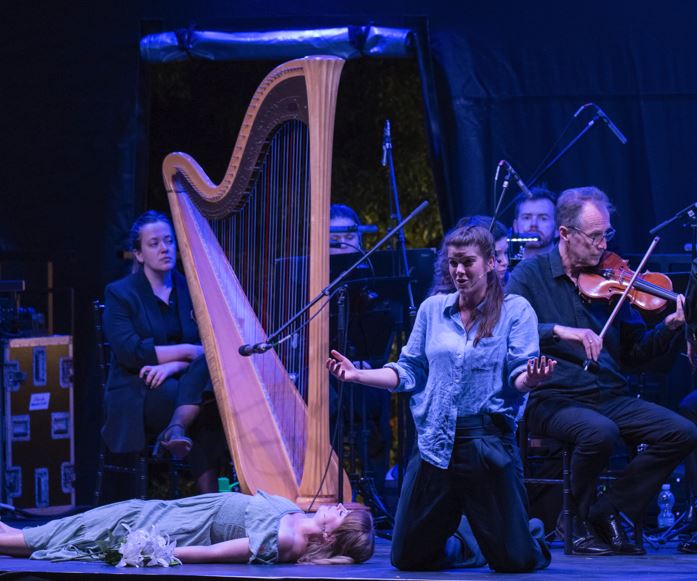
This musically fine performance of a splendid but neglected opera left me wondering why Bellini’s take on the Romeo and Juliet story is not better known and not more frequently performed. It can’t simply have been the ravishing lakeside setting. (That said, West Green Opera is a well kept secret that deserves to be far better known as an alternative to Glyndebourne, Grange, or Garsington.)
Bellini’s music is downright ravishing and gives that instant operatic sugar hit of emotional intensity combined with unforgettable melody that only the best works provide. As well as oodles of splendid arias and duets for the lovers, we get a marvellously catchy cabaletta from minor character Tebaldo (the Tybalt character) that would adorn any collection of the top tenor hits, a superbly melancholy solo for clarinet, and some excellent ensembles. Musically, it is the equal of Norma but without any of that “how do we handle the Callas widows?” baggage. It certainly left me wanting more Bellini on the operatic menu.
As an operatic depiction of Romeo and Juliet, it works a lot better than Gounod’s version, which can seem bloated and over-elaborate, unless very well done. The interruption of Romeo’s and Tebaldo’s fight by Juliet’s funeral cortège is a wonderfully dramatic moment that Verdi himself might have envied (even if, as here, it is done without chorus). The music has an emotional directness that is immensely appealing. Bellini’s Guilietta is under heavy patriarchal pressure to marry for family convenience when she loves the family enemy in a way that very much recalls Donizetti’s Lucia, but her music provokes sympathy rather than provides an opportunity for vocal showing off. If not quite Shakespeare’s feisty teenager, she is vulnerable and sympathetic in the same kind of way as Verdi’s Violetta but without the coloratura.
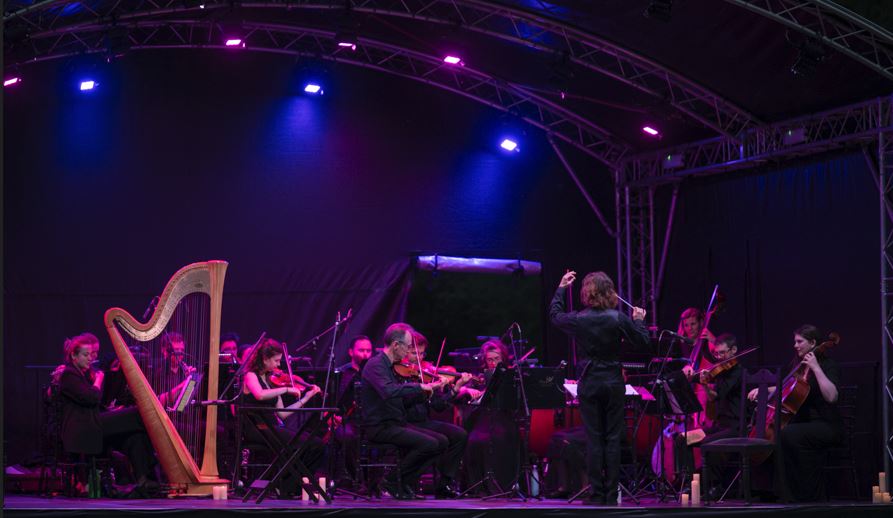
So why isn’t it in the core repertoire? The idea of a mezzo soprano Romeo may put some people off, along with the somewhat cumbersome title, but the main reason I think for its neglect is probably a casual but misplaced sense of ownership: who do these Italians think they are altering one of our Shakespeare’s best known plays? This forgets that Shakespeare himself was making an adaptation of an already well-known story that hails from, er, Italy in the first place.
Certainly, the opera is very different from the Bard’s version: Romeo and Juliet are already lovers before the opera starts. Romeo is the leader of the Montagues and has killed Juliet’s brother but is now suing for peace. There is no Mercutio. Friar Lawrence (Lorenzo) is no longer a friar, but a member of the Capulet household. Juliet is the only female character, cruelly isolated without a maid or a nurse or any kind of female confidante. But these departures from the play strike me more as advantages, as they result in something ideally operatic that can focus on the characters’ feelings and provoke them to song with only a minimal quantity of exposition. Perhaps it is because Bellini’s writing provides hazards as well as opportunities that will expose any weaknesses in a singer’s vocal armoury.
I must admit to knowing the piece from the rather splendid Guiseppi Patanè recording with Dame Janet Baker, Beverly Sills, and a rather nasal Nicolai Gedda. This sets a rather challenging benchmark, but this performance was well able to stand the comparison, fielding some very fine singers. Fflur Wyn (Guilietta) and Katie Coventry (Romeo) were an appealing pair of lovers, well able to meet the challenges of this music and singing with an appealing directness, simplicity, and musicianship that takes a good deal of skill to bring off. Good support was provided by Julian Henao Gonzalez (Tebaldo), Timothy Nelson (Lorenzo), and Henry Waddington (Capellio).

Although the production was described as semi-staged, nobody used scores and the interaction provided by Lysanne Van Overbeek’s production was always effective with the men all in suits and inventive lighting from Sarah Dell. John Andrews, conducting the Orpheus Sinfonia, took a largely brisk approach to the score – even I will admit that there are patches of rum-ti-tum filler that need to be despatched quickly – but knew also when to let it breathe.
Inevitably, some compromises are inevitable with outdoor performances, including the use of microphones and addition of sound effects from aircraft overhead and contributions from the birds swimming in the lake. But the magic of the setting – with the lake between stage and audience and a profusion of glorious horticulture – provides ample compensation. The fragrance of the flowers and the wonderful lighting effects in the gardens after the performance make for a glorious conclusion to the evening. On the evidence of this performance, I strongly recommend West Green to any opera and garden lover looking for something a little off the beaten track.
Patrick Shorrock, July 2025
Photography courtesy of WGHO


 Mark Aspen
Trackbacks & Pingbacks