
Hindle Wakes
Millers’ Tale
Hindle Wakes
by Stanley Houghton
Questors Productions at the Questors Studio, Ealing, until 25thOctober
Review by Andrew Lawston
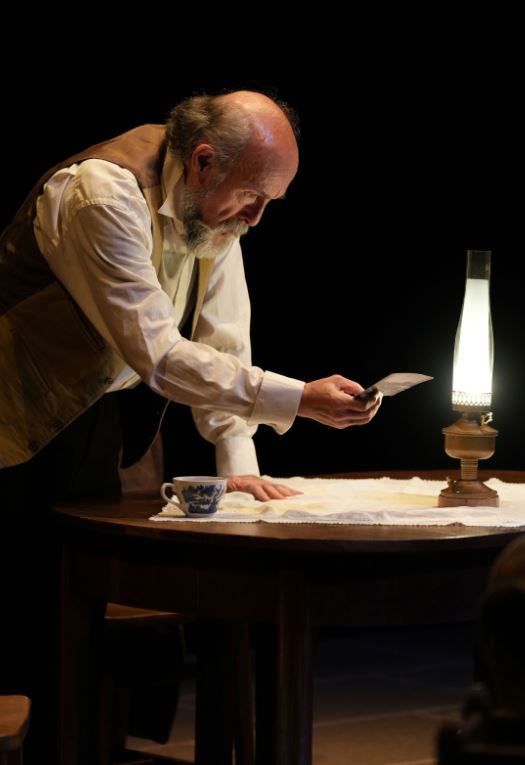
One bank holiday weekend, Christopher and Mrs Hawthorn wait for their daughter to return home, to confront her about her whereabouts. It gradually emerges that young Fanny Hawthorn has spent the weekend in Llandudno with the son of the local mill owner, and not in Blackpool as she claimed.
This being 1912, there seems no choice but for Christopher Hawthorn to visit his old friend, Nathaniel Jeffcote, to confront him with the news of their children’s dalliance and to insist that his son Alan do the decent thing and marry Fanny. The trouble is, Alan is already engaged to Beatrice, daughter of Nat’s friend and fellow mill owner, Sir Timothy Farrar.
This apparently slight premise fuels two hours of surprisingly humorous drama in the Studio at The Questors Theatre, as all the characters involved have slightly different perspectives on the situation which unfolds over just twenty-four hours.

The class system is the elephant in the room throughout, though Stanley Houghton’s script plays down the scandalous relationship between heir Alan Jeffcote and weaver Fanny Hawthorn, by emphasising that the Jeffcotes themselves are from a relatively humble background.
More overt is the examination of the double standards with which the behaviour of young men and young women are judged, a theme which remains relevant and keeps this 115 year old play feeling as though it could have been written today.

Although he reacts angrily to the news of his son’s adventure, Nat Jeffcote insists Alan marry Fanny as a matter of principle. James Goodden drives the play’s pace in an affecting performance as Nat, alternating between authoritarian ogre and exasperated but caring father and husband. Clare Cooper’s Mrs Jeffcote is suspicious of Fanny’s motives, suspecting she has deliberately ensnared her son to advance herself socially. The couple are at odds for much of the play, but still share touching moments of affection throughout.

Daniel Thompson gives a charming performance as Alan Jeffcote, the somewhat coddled heir to Daisy Bank Mill (the housekeeper puts out a special tray for him on nights when he’s late home, so he can still have some supper). Alan initially comes over as somewhat feckless, before later coming into his own as he explains his actions and feelings. Alan expresses himself somewhat artlessly in his conversations with both Beatrice and Fanny, but Thompson keeps the audience on side despite his character displaying some outrageous double standards.
For most of his scenes, Alan wears a green waistcoat, white shirt, and tweed trousers, which lends him an amusing fleeting resemblance to a fellow Lancastrian, the plasticine inventor Wallace from the Wallace & Gromit films.
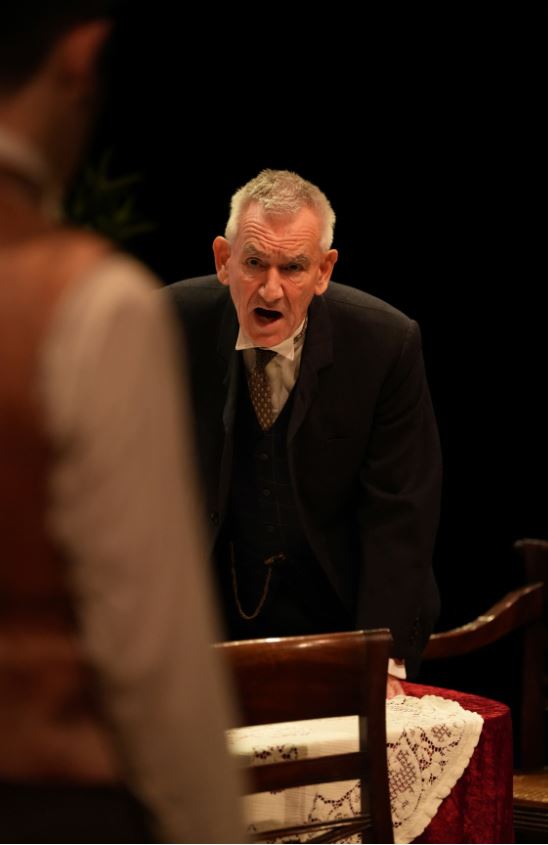
Christopher and Mrs Hawthorn are played with great gusto by Anthony Curran and Fiona Partington, both despairing over their daughter Fanny’s behaviour. Katie Russell gives a great performance as Fanny, a thoroughly modern girl hemmed in by the expectations of others. Initially taciturn, Fanny steals the show whenever she is persuaded, or provoked, into speaking her mind.
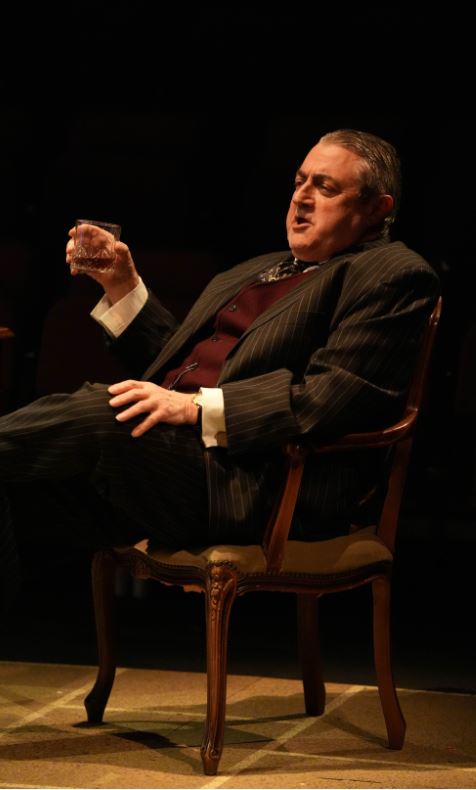
In the second act, Sir Timothy Farrar appears, a broader comic performance from Adam Kimmel. Sir Timothy’s more flexible approach to moral questions sets up an enjoyable three way confrontation between the two mill owners and young Alan, which gives way to a more serious dialogue between Alan and Beatrice Farrar, the fiancée he has betrayed. Maria Thorpe makes the most of a comparatively short scene. The characters, and the audience, are somewhat on her side as the wronged party, but Thorpe elevates this further as Beatrice reflects on the different standards applied to men and women, and visibly tussles with her conflicting emotions towards Alan.
Patricia O’Brien rounds out the cast as the Jeffcotes’ somewhat put-upon housekeeper Ada, frequently glimpsed and given some wonderfully pithy observations.

Clare Stopford directs the play at a brisk pace, and the show pauses only for laughter. Given that it is set entirely in the living room of the Hawthorn and then the Jeffcote family, Bethany Nias’s set features an impressive amount of period furniture to ground us within the world of Hindle, and strobe lighting and sound effects are employed to convey a bank holiday thunderstorm. Every effort is made, from the original script to costume designer Rachel Moorhead’s costume choices, to make the world outside those two rooms feel as immediate as possible.
The transition between the two sets during the first act was lengthy, and while it was necessary in order to highlight the contrast between the Hawthorns’ simple home and the Jeffcote’s more lavish lifestyle, and carried out with brisk efficiency, one couldn’t help wondering whether it could have been simplified to some extent.
The cast all boast impressive Lancastrian accents courtesy of accent coach Richard Gallagher, and two hours sails past in their company. Hindle Wakes is a play that has been revived and adapted many times, but it contains much that is unexpected, entertaining, and as relevant today as it was in the early 20th century.
Andrew Lawston, October 2025
Photography by Kanako Hata


 Mark Aspen