
Dance of Death
A Marriage Made in Hell
Dance of Death
by August Strindberg, adapted by Richard Eyre
OT Productions at the Orange Tree Theatre, Richmond until 7th March
Review by Patrick Shorrock
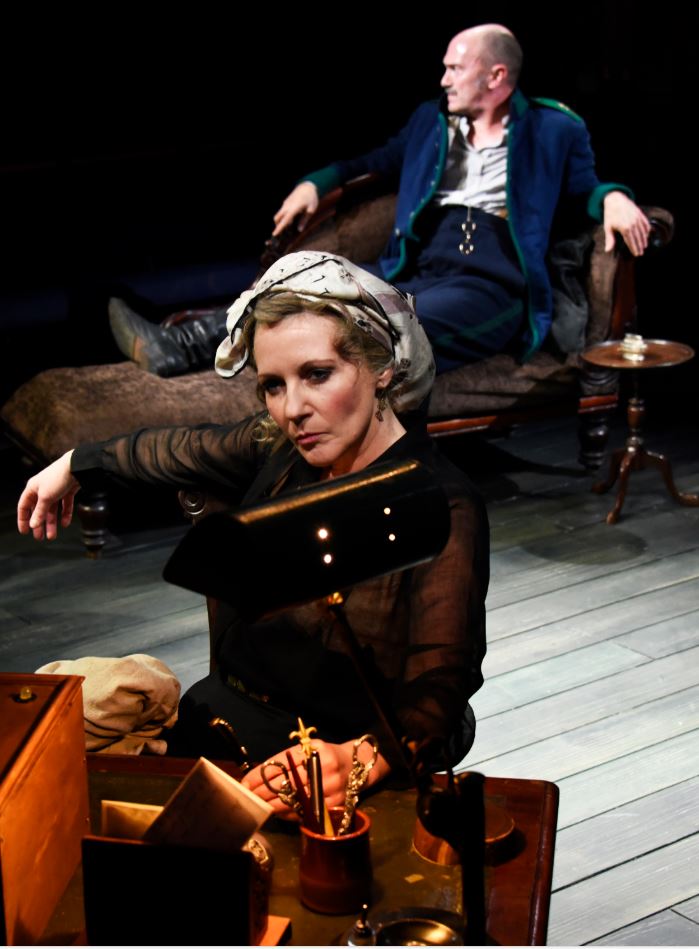
Samuel Butler once wrote: “It was very good of God to let Carlyle and Mrs. Carlyle marry one another and so make only two people miserable instead of four.” Alice and Edgar, the awful unhappy couple in Strindberg’s Dance of Death, would clearly find the Carlyles lamentably unambitious, as they take turns to make mincemeat of Kurt, who is Alice’s cousin and Edgar’s friend, and who is unwise enough to pay them a visit.
We are told that the servants (understandably) have abandoned this nasty couple to their own devices, and that their neighbours avoid their company as much as possible (I don’t blame them). This comes across as a sardonic joke by Strindberg at the audience’s expense, as we have the misfortune to be shut in a darkened theatre with Edgar and Alice for two hours (albeit with a fifteen-minute interval). Will Keen, as Edgar, gives a wonderfully detailed portrayal of toxic militarism that is mixed with strokes and fainting fits that he seems able to deploy at will. Lisa Dillon plays Alice unhammily as a confused blend of frustrated attention-seeking retired actress addicted to manipulation, an oppressed woman damaged by patriarchy.
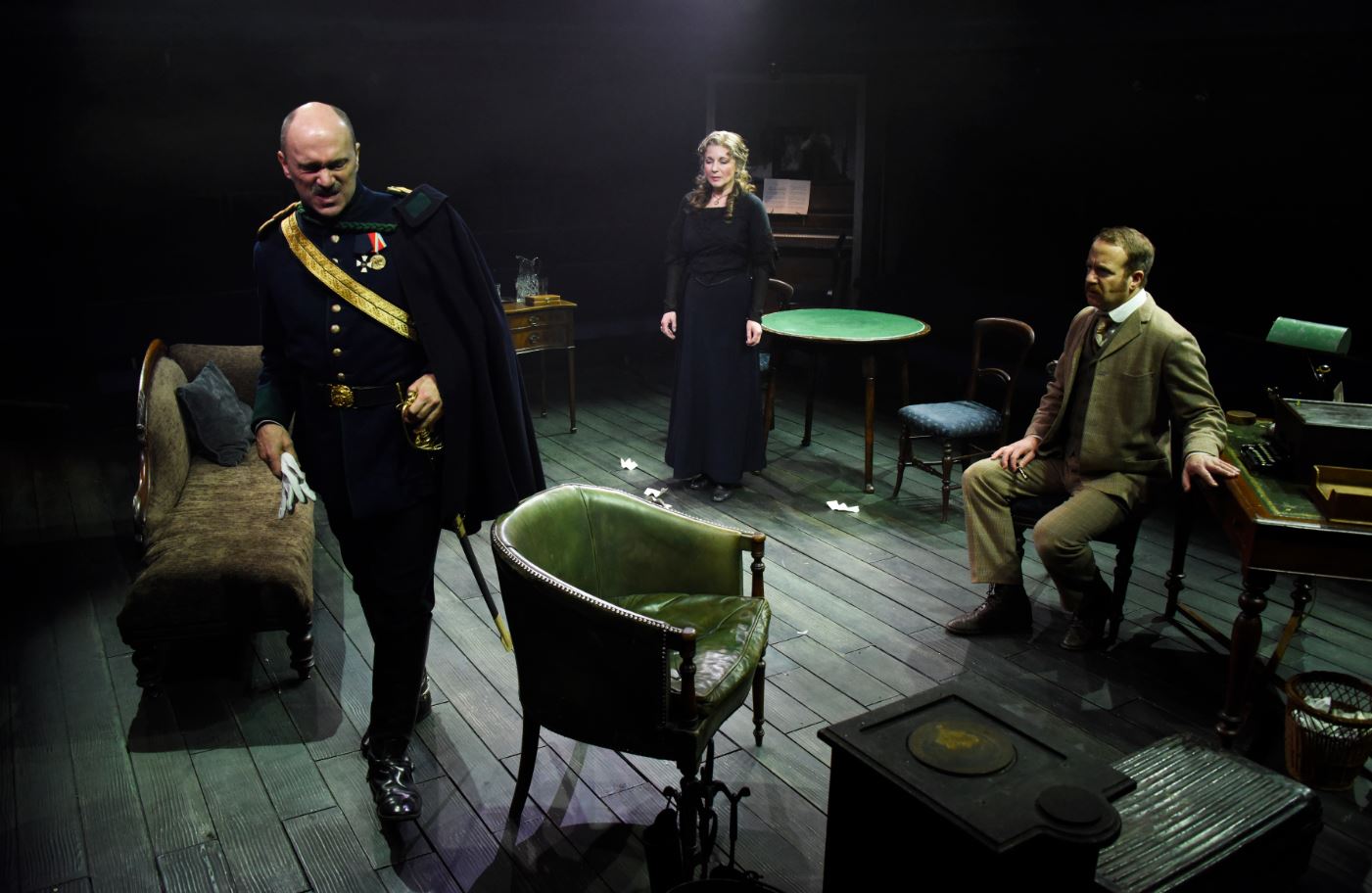
Richard Eyre wrote this adaptation just before Covid, but decided to move the period in which it is set from 1900 to 1918, when Europe was being devastated by the Spanish Flu epidemic. This increases the sense of isolation – the play is set on an island – and Kurt arrives wearing a face mask, which reminds us of all of lockdown in a way that is interestingly topical rather than meaningful. It also seems rather strange that Edgar, an army captain, barely mentions the war, although he is clearly more engaged by waging conflict in the marital home than in the field.
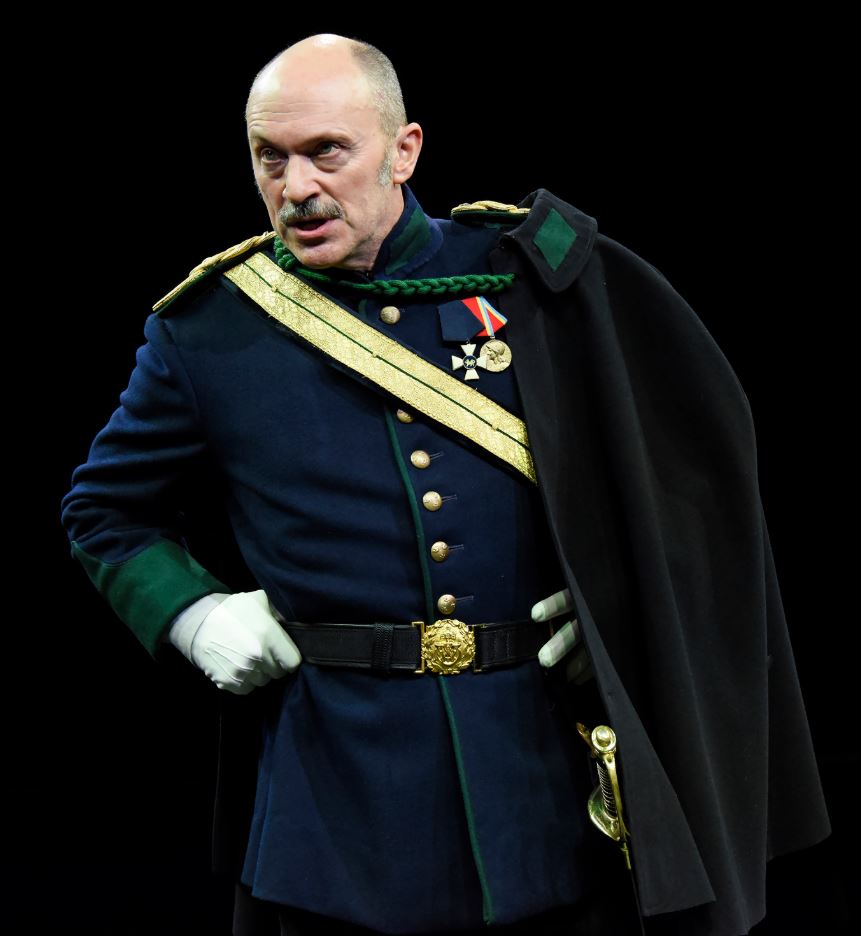
The mutual bickering starts off quite mild and low key, with none of the sheer nastiness of Miss Julie which culminates in the decapitation of a pet songbird and the suicide of one of the characters. Captain Edgar doesn’t attain the virtuoso alcoholism of George and Martha in Who’s Afraid of Virginia Woolf? . His poor health means that he is only able to manage a couple of glasses of whisky over the evening, despite Alice’s tales of epic drinking with his army mates. Eyre’s witty and conversational version allows for a few bitter laughs along the way. But, as time goes on, you realise that their mutual hatred is so total and all-consuming that they are barely able to inflict any further damage on one another without bringing in outside parties to join in. Geoffrey Streatfield’s Kurt, as their hapless plaything, is rather good at dazed ordinariness, as he discovers to his horror that if one of them is bad, the other can still be worse. They are as high on self pity as they are on quarrelling. “Do we know anyone who is actually happy?” and regularly expatiate on the awfulness of life in a way that isn’t entirely convincing: unlike the warring couple, we can look forward at the end of the evening to being spared any more of their company.
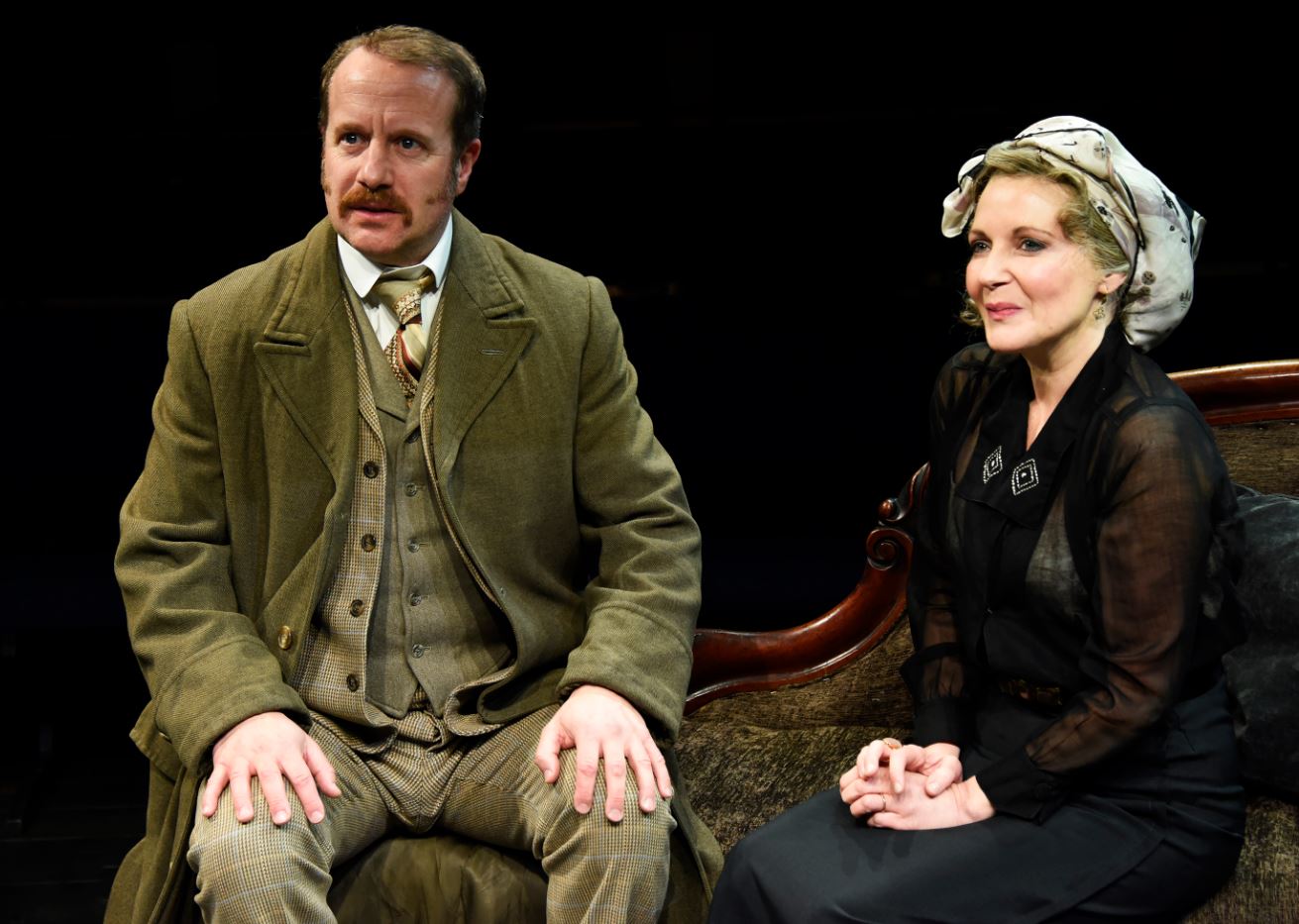
It’s all frightfully well directed by Richard Eyre, with three excellent performances, superbly atmospheric sets and costumes (oppressive wooden furniture combined with bright blue abstract sky above by Ashley Martin-Davis) and menacing sound design (John Leonard) and lighting (Peter Mumford). But I am left wondering what is the point of all this relentlessly bleak nastiness other than as opportunity for displays of dramatic skill.
Perhaps the real hell being depicted here is the co-dependent relationship between Strindberg’s characters who are desperate for attention and prepared to do anything to retain it, and an audience that laps it up until the point when it just wants it to be over.
Patrick Shorrock, February 2026
Photography by Ellie Kurttz ©nc

 Mark Aspen