
The Bodyguard
Fire Guard
The Bodyguard
by Lawrence Kasden, music by Chris Egan, book Alexander Dinelaris
Crossroads Live at the New Wimbledon Theatre until 21st February, then on tour until 29th August
Review by David Stephens
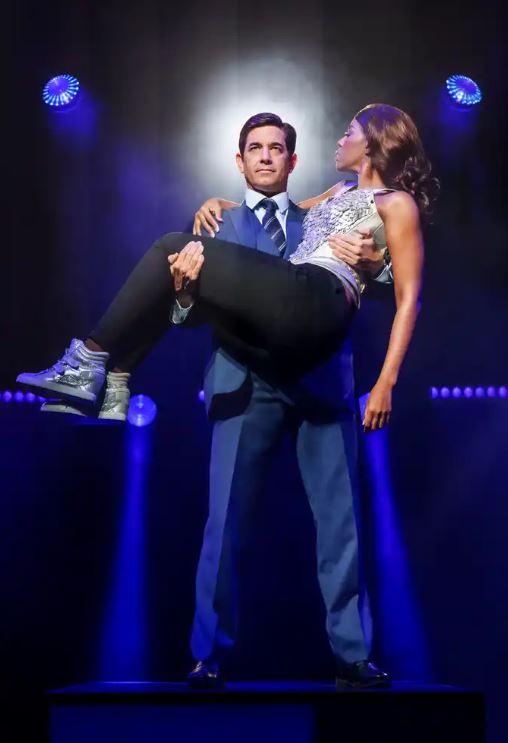
Last night’s performance of The Bodyguard at New Wimbledon Theatre arrived carrying a considerable weight of expectation. Any review of this story inevitably risks drifting toward comparisons with Whitney Houston and Kevin Costner, whose performances in the original film have become culturally iconic. Their portrayals remain etched in popular memory, and the soundtrack in particular has achieved legendary status. The challenge, therefore, is to judge the stage adaptation on its own theatrical merits rather than through the lens of cinematic nostalgia. Encouragingly, this production makes that task far easier than expected. Through subtle narrative adjustments, performances that forge their own interpretations, dynamic staging and an unwavering commitment to high-energy spectacle, it confidently establishes an identity distinct from its film predecessor.
Central to that success is Sidonie Smith’s sensational turn as Rachel Marron. From her first entrance she commands the stage, fully inhabiting the global pop superstar with poise, authority and complete conviction. Vocally, she is superb — delivering the show’s biggest numbers with soaring power while retaining emotional depth in its quieter moments. Smith captures both the glamour and vulnerability of Rachel, presenting not merely a diva, but a woman navigating fear, fame and complicated family ties. Her performance pulses with energy throughout, anchoring the production with star quality worthy of the character she portrays.
Opposite her, Adam Garcia offers a more restrained interpretation of Frank Farmer. As the stoic and watchful bodyguard, he brings credible physicality and a guarded intensity befitting a former Secret Service agent. His measured delivery and contained presence serve the role well. Where the portrayal feels less fully realised is in the romantic development between Frank and Rachel. Their emotional connection never entirely catches fire, though this may reflect the script’s pacing as much as performance choices; moving at lightning pace the production does not dwell long on their evolving intimacy, making the transition from professional distance to romance feel somewhat forced.
If the production has a true emotional core, however, it lies in Sasha Monique’s riveting performance as Nicki Marron. As the talented sister living perpetually in Rachel’s shadow, Monique delivers a portrayal brimming with layered emotion. She skilfully balances resentment, longing and fierce familial love, bringing nuance and authenticity to every scene. Her vocal performances are breathtaking — rich, passionate and tinged with aching vulnerability. In many ways, Nicki becomes the production’s beating heart, her internal conflict lending depth and poignancy to the narrative.
Supporting these performances are production values which refuse to allow the energy to dip. Scene changes are swift and seamless: one moment we are in the kitchen of Marron’s Beverly Hills mansion, the next we are transported to a full-scale concert arena, complete with dramatic lighting shifts and rapid on-stage costume transformations, akin to those of a live concert. The slick choreography of set and staging maintains momentum throughout, deftly balancing intimate domestic moments with the spectacle and exhilaration of live performance.
Taken as a whole, this touring production delivers exactly what audiences come for: soaring vocals, gripping drama and a slick, high-impact theatrical spectacle. While the central romance may not quite reach the emotional crescendo it strives for, the depth, energy and conviction of the performances — particularly from Smith and Monique — elevate the evening beyond mere entertainment. The result is a production that is not only exhilarating, but genuinely moving, leaving a lasting emotional resonance long after the final note fades.
At the curtain call, the audience rose as one, cheering, clapping and joyfully singing along to the rousing finale, transforming the theatre into a concert arena once again. As the curtain fell, there was a palpable reluctance to let the evening end. Heading homeward, one couldn’t help but consider returning for a second visit — and if tickets remain, it would be wise to secure them. It’s one moment in time that will linger long in the memory.
David Stephens, February 2026
Photography by Paul Coltas


 Mark Aspen