
Cut to the Chase
The Comedy of Errors
by William Shakespeare
YAT at the Coward Studio, Hampton Hill Theatre until 12th April
Review by Steve Mackrell
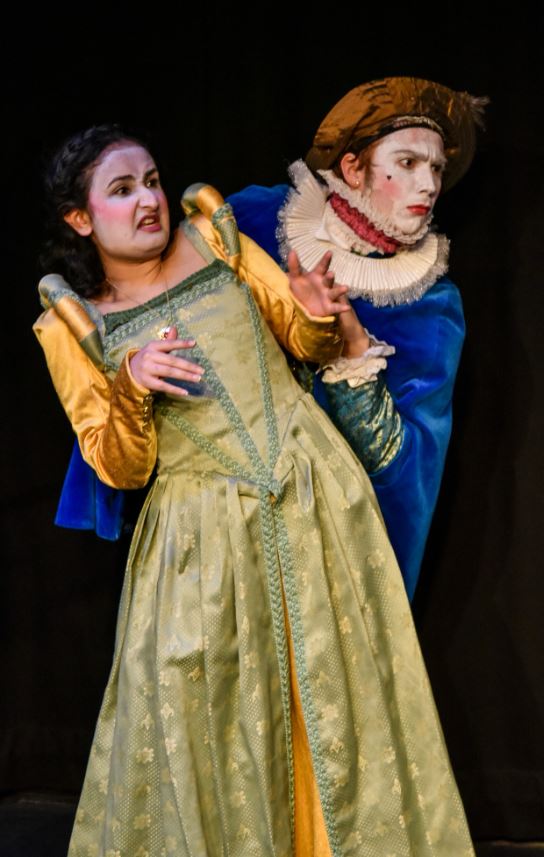
Here’s a whirlwind of a production, full of youthful vigour and vitality which ensures Shakespeare’s masterpiece of mistaken identity is both brash and raucous for modern audiences. Larger than life, and full of comic invention, this is a mesmerising and engrossing production of The Comedy of Errors by YAT (Youth Action Theatre) in the studio at Hampton Hill Theatre.
One of Shakespeare’s earlier plays, from 1594, this is simply a farcical play without any of the profundity of his later plays. It’s an implausible tale of two sets of identical twins separated at birth in a shipwreck. Eventually they are inadvertently reunited when the long-lost father of one pair faces execution. Identities are mistaken, events are swapped and anarchy reigns in what is a delightfully silly play.
Read more…Do WE Not Bleed?
The Merchant of Venice 1936
by William Shakespeare, adapted by Brigid Larmour and Tracy-Ann Oberman
Trafalgar Theatre Productions, the Royal Shakespeare Company et al at Richmond Theatre until 12th April, then on tour
Review by Gill Martin
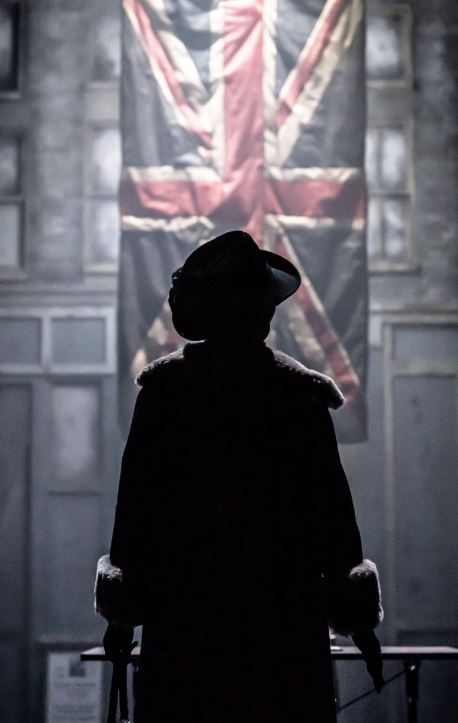
With the world in the grip of race hate, anti-Semitism and economic convulsions, the setting of The Merchant of Venice in the mean East London streets of Oswald Moseley’s marching fascist Black Shirts 1936 is horribly timely.
Shakespeare’s classic erupts onto the stage after two West End sell-outs to hold audiences at Richmond Theatre gasping for breath with its power.
This is theatre at its best. Challenging. Gripping. Thought provoking. And with acting of the highest calibre.
Read more…Bold Dance of Grief and Revelry
WAKE
by Jennifer Jennings and Phillip McMahon
Thisispopbaby at the Peacock Theatre, Holborn until 5th April, then at Factory International’s Aviva Studios, Manchester until 21st April
Review by Susan Furnell

WAKE hits the Peacock Theatre with raw Irish energy where mourning and celebration clash, and unseen people are seen and unvoiced emotions are released. A black woman poet opens the show, and on the stage below her, is a funeral scene — mourners gathered with umbrellas, a man singing he’s stretched out on a grave — while a singer’s wail sets the tone. This isn’t your typical wake; it’s a vibrant explosion of life that unfolds under sharp lighting and large sun which slowly changes magnificent colours from sunset to sunrise to mark the march of time of the all-night wake.
Read more…Screwed Up
Just Between Ourselves
by Alan Ayckbourn
London Classic Theatre at the Theatre Royal, Windsor until 5th April, then on tour until 12th July
Review by Gill Martin

Dennis’s Mini car has had a breakdown, his wife Vera is about to. He is totally unaware of his wife’s state of mind. Dennis fettles and fiddles, Vera fluffs and frets, and his live-in mother Marjorie fusses and finds fault.
Dennis’s neighbour Neil is equally blithely indifferent to his wife’s feelings. Could he buy the Mini as a surprise pressie? But Pam, his wife has enough problems without a clapped-our car. While Neil haggles, Pam niggles. But birthday “celebrations” are imminent.
Read more…Otherworldly
Turandot
by Giacomo Puccini, libretto by Giuseppe Adami and Renato Simoni
Instant Opera at Normansfield Theatre, Teddington until 30th March
Review by Brent Muirhouse
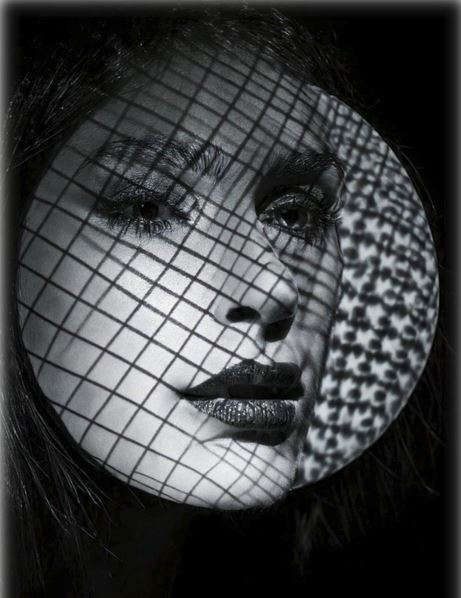
Perhaps to make distinct this version of Turandot, an opera performed seemingly since the year dot, Instant Opera’s production at the Normansfield Theatre sought to capture these themes within a striking dystopian future, set in 2184 in the Asimovian-sounding ‘Eastern Hemisphere Central Sector 52/08 – 93/54’. This premise initially grabbed the audience as a promise of a bold re-imagining that, while not fundamentally altering the traditional narrative, added a distinct visual texture to the performance. Indeed, if the audience wasn’t drawn in by this, they almost certainly were when taking their seats as half the theatre was filled with a forty-strong orchestra, under the adept direction of Alice Farnham, and a cast of a similar size.
Read more…Them As Pinched It, Done Her In
My Fair Lady
by Alan Jay Lerner and Frederick Loewe
Questors Productions at the Judi Dench Playhouse, Ealing, until 5th April
Review by Andrew Lawston

“All I want is a room somewhere,” Eliza Doolittle famously sings at the start of Lerner and Loewe’s My Fair Lady, but this is no reflection on the resources, creativity and energy poured into this production in the Judi Dench Playhouse at Questors, as a full cast and ensemble whirl through almost three hours of set and costume changes, accompanied by a full live band.
With a production as well-known and beloved as My Fair Lady, there is nowhere for performers to hide, and more than a few audience members this evening could be seen singing along quietly with the most familiar musical numbers. But Michelle Spencer’s lavish production sees a confident cast take on the show with great energy and gusto.
Read more…You Will Be Found
Dear Evan Hansen
music and lyrics by Benj Pasek and Justin Paul, book by Steven Levenson
Nottingham Playhouse Productions at the New Wimbledon Theatre until 29th March, then on tour until 5th July
Review by Thea Diamond
Trigger alert: themes of mental health, bullying, drug use and suicide.
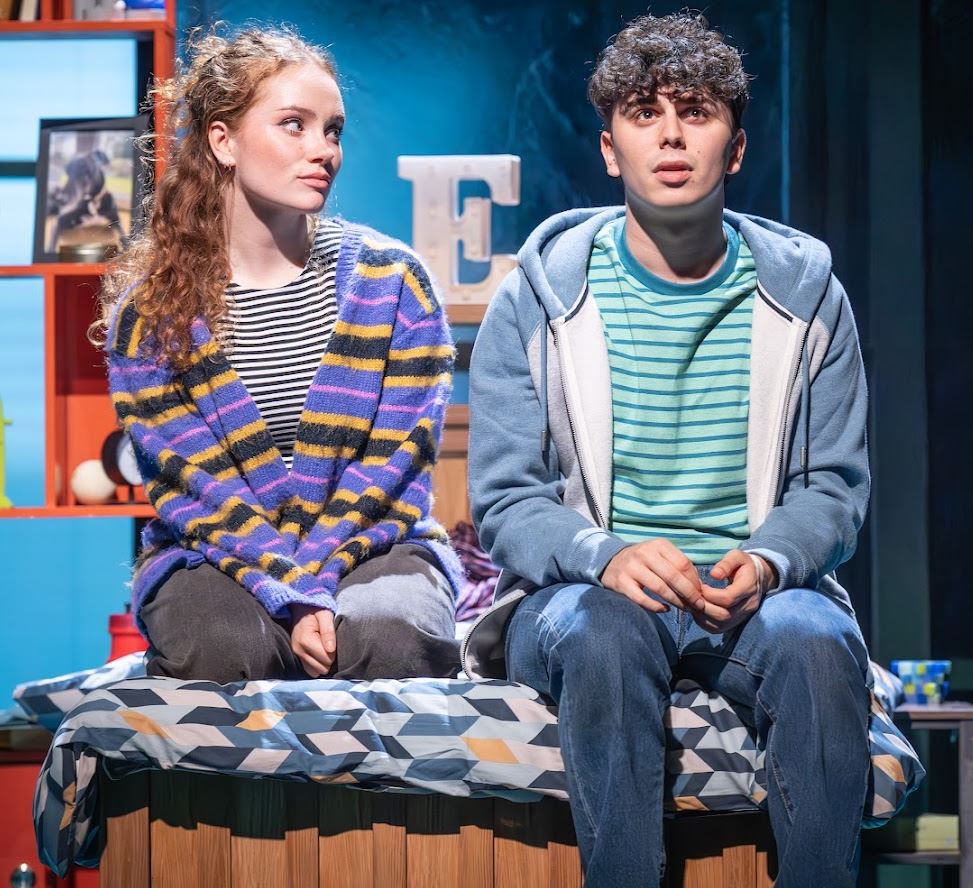
Having previous Broadway and West End runs, and being the recipient of multiple awards, this musical will not disappoint. Pasek and Paul, the award winning duet behind the Greatest Showman, provide the lyrics and music and have produced yet more stand out anthems, making many of their songs staples of modern musical theatre. Under Adam Penford’s direction, this new production started it’s tour in Nottingham in September, and will visit multiple UK and Ireland theatres before cumulating in Edinburgh in July. The 2 hours 40-minutes fly by, as each and every actor gives a fantastic performance, completely becoming their character and portraying extremely believable and engrossing characterisations.
Read more…Fine Singing Framed by Flowers
Madama Butterfly
by Giacomo Puccini, libretto by Luigi Illica and Guiseppe Giacosa
Sembla and Opera International for Ellen Kent Productions with the Ukranian Opera and Ballet Theatre Kyiv at Richmond Theatre 26thMarch and on tour until 14thMay
Review by Patrick Shorrock

With the Arts Council cutting grants to opera companies left, right, and centre, a big thank you to Ellen Kent Productions for trying to fill the gap. This production of Madama Butterfly is conventional and decorative rather than probing or radical, but has two very fine singers in the lead. There is no doubting that this is an increasingly strange piece nowadays. In some ways it is all about the clash of cultures – young Geisha, Butterfly wants a permanent American marriage while Naval Lt Pinkerton is after a temporary Japanese one, as he has a bride waiting for him at home. Whilst its critique of American imperialism – Pinkerton has very little by way of redeeming features – is quite effective, it views Japanese culture through an Italian orientalist lens that appropriates and prettifies and arguably blurs the contrast between American and Japanese
Read more…Snow Match
La Bohème
by Giacomo Puccini, libretto by Luigi Illica and Giuseppe Giacosa
Sembla and Opera International for Ellen Kent Productions with the Ukrainian Opera and Ballet Theatre Kyiv at Richmond Theatre until 25th March, then on tour until 14th May
Review by Eleanor Lewis

Ladies! Looking for a man? Try hanging about outside his attic room at night, claiming your candle has gone out. Guaranteed results and far less time-consuming than dating apps. Not that dating apps were an option in 1830s Paris where poverty and extremely limited options occupied the daily lives of very many people, but that is where we find the familiar characters of Puccini’s La Bohème in Senbla and Opera International’s production of that work at Richmond this week.
The story of La Bohème is well known. A happy quartet of friends and artists, Rodolfo a poet, Colline a philosopher, Marcello a painter and Schaunard a musician, live from day to day personifying the concept of ‘poor but happy’, until the sweet, beautiful but ultimately consumptive Mimi encounters Rodolfo during her search for some means of lighting a candle, and Love with a capital ‘L’ ensues, together with much merriment and gentle bohemian anarchy in the heart of Paris (which, in an appropriately ‘pourquoi pas?’ spirit, seems to have acquired an early Eiffel Tower).
Read more…Many a Slip
Accidental Death of an Anarchist
by Dario Fo and Franca Ramé, adapted by Tom Basden
Putney Theatre Company at the Putney Arts Theatre until 29th March
Review by Polly Davies
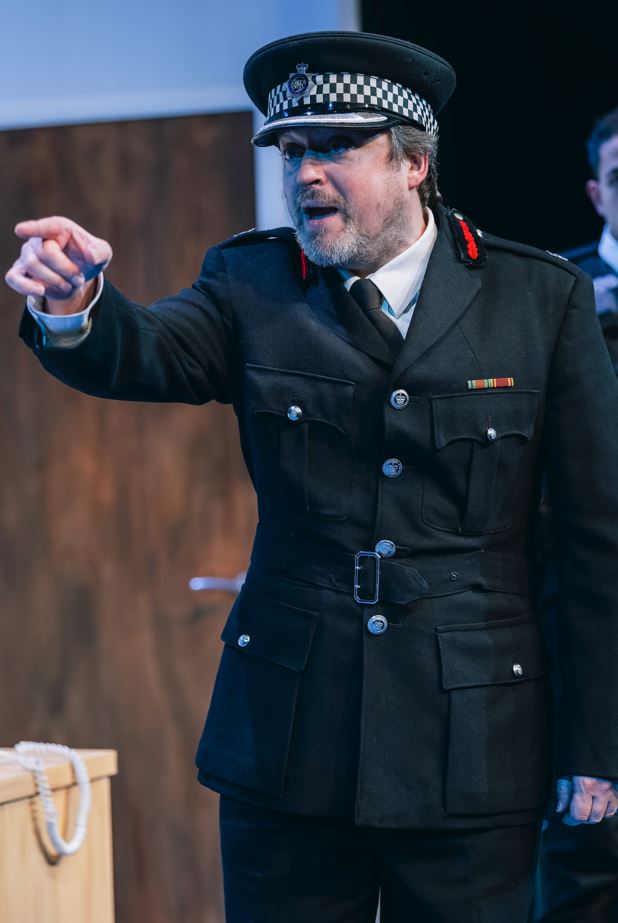
Dario Fo’s multi-layered play makes a bold swansong. But for an astute director like Barney Hart Dyke Accidental Death of an Anarchist presented the ideal culmination of his much-acclaimed tenure as Artistic Co-Director of Putney Theatre Company, a post he has held with his wife Cait, together a driving force for the company’s recent diverse and successful seasons. However, it also was an opportunity to nurture the growing talent of Owen Thomas-James, as his assistant director, who is making his directorial company debut taking up the tough choice of a farce. However, Barney Hart Dyke has a wealth of experience in directing farce, a genre where slick movement and laughter must be finely balanced.
In the event, there is a lot of laughter, and plenty of slick moves, for Tom Everatt’s energetic central character is clearly inspired by Dario Fo’s own oeuvre. The Nobel prize-winning author was known as both a successful satirist and as a comic. As an early adopter of the agit-prop style theatre, in his own performances he successfully combined political satire, physical comedy and mime. And this play offers a full hand of all these skills alongside some swiftly executed role changes.
Read more…
 Mark Aspen