
Skill and Top Tones
The Pirates of Penzance
by W.S. Gilbert and Sir Arthur Sullivan
The English National Opera at the London Coliseum until 21st February
Review by Brent Muirhouse

It may have been a chilly December evening outside to shiver my bones, but inside it was me timbers a-shivering as the Coliseum, alive with colour and chaos, and the English National Opera brought the nautical nonsensical Pirates of Penzance to tread these hallowed boards.
Far from the perils of walking the plank, Gilbert and Sullivan’s tale was a genuinely buoyant pantomime of vivacity, of absurdity, and of life. Much like the so-called “topsy-turvydom” extolled in the programme notes, the production leaned wholeheartedly into the comic incongruities of Gilbert’s writing, delivering a high-energy romp that was as dazzling visually as it was musically enthralling, balancing an almost festive frivolity with musical mastery.
Read more…Social Climbing
Jack and the Beanstalk
by Loz Keal
Teddington Theatre Club at Hampton Hill Theatre until 8th December
Review by Thea Diamond
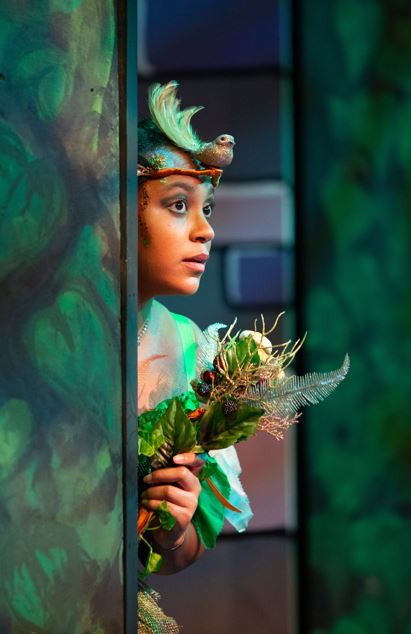
The festive season has well and truly arrived on the southside of Richmond upon Thames. On Thursday, we had the Teddington Christmas Lights Up; on Friday, the Hampton Hill Christmas Parade; on Sunday, the Hampton Village Christmas Event, and sandwiched between, the opening of TTC’s traditional family pantomime. And what a traditional, not to be missed panto director Josh Clarke has delivered!
We were treated to all the time-honoured ingredients, including booing at the baddies; the scary bear in the woods scene, and we even had ‘If I were not upon the stage’, the first time this seasoned panto critic has witnessed this fun and anarchic routine in an amateur production. And well done … you guys completely smashed it (figuratively, I might add, not literally)!
Read more…Nut Shatter
Carlos Acosta’s Nutcracker in Havana
by Pyotr Ilyich Tchaikovsky, arranged by Pepe Gavilondo Peón, further augmented by Yasel Muñoz
Norwich Theatre and Valid Productions for Acosta Danza at Richmond Theatre until 27th November, then on tour until 28th January
Review by Mark Aspen
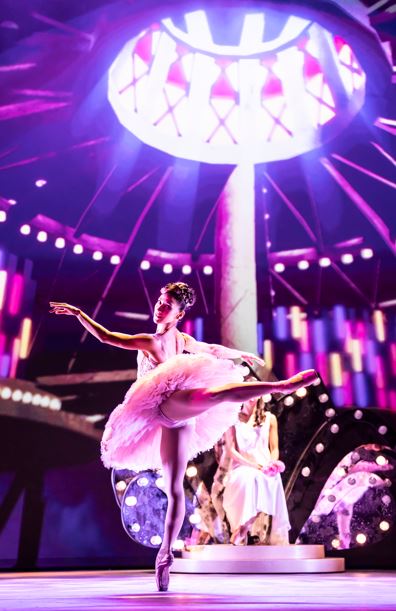
A December outing to the see much-loved Nutcracker is much a part of Christmas as mince pies and brandy butter. White tutu-ed ballerinas, white snow, Sugar Plum fairies all spring to mind, and the sounds of a full orchestra’s soaring but hummable music are Christmas ear-worms. That’s Tchaikovsky’s The Nutcracker, yes?
Now, bring in that doyen of the ballet world, Carlos Acosta CBE, matured in The Royal Ballet, and one can expect a superb chocolate-box traditional ballet, yes?
NO! Carlos Acosta brings in his native Cuba to the confection, where waltzes can dissolve into congas, ballet shoes can be over-shod with wooden flip-flops, and those soaring strings play alongside claves and saxophones. The purist might expect a mash-up.
Read more…Humbug Humalong
What the Dickens?
by Clare Norburn
The Telling at The OSO Arts Centre, Barnes until 30th November, then on tour until 8th December
Review by Brent Muirhouse
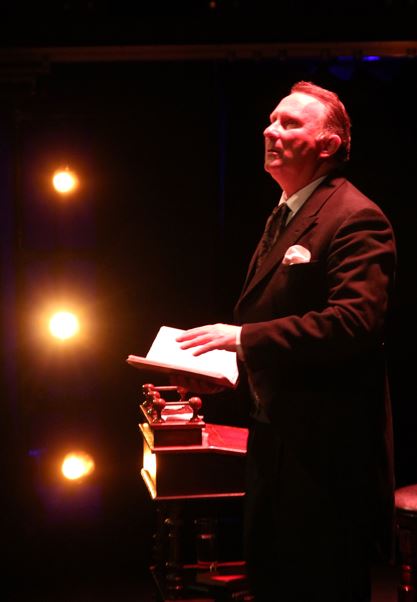
What The Dickens? begins in the shadowy ambiance of a sparse stage at the OSO Arts Centre on a cold London night, appropriately evoking a ripple of the timeless setting of A Christmas Carol, in this theatre on the banks of Barnes Pond. Clive Hayward’s Charles Dickens steps forward, marching to his spot, ostensibly to deliver a reading of his festive classic. However, it soon becomes clear that the audience is not simply in for a methodical retelling of Ebenezer Scrooge’s redemption, since Dickens finds himself written into the role of protagonist, as the performance delves into his personal story – whether he consents to it or not. Clare Norburn’s play then exists as a sort of meta narrative arc reserved more commonly for dystopian science fiction. For the sake of a pun, if it were a century later, it would be Philip K. Dickens.
Two Weddings and No Funeral
Filumena
by Eduardo de Filippo, adapted by Keith Waterhouse and Willis Hall
Bill Kenwright and Theatre Royal Windsor at Richmond Theatre until 23rd November
Review by Mark Aspen
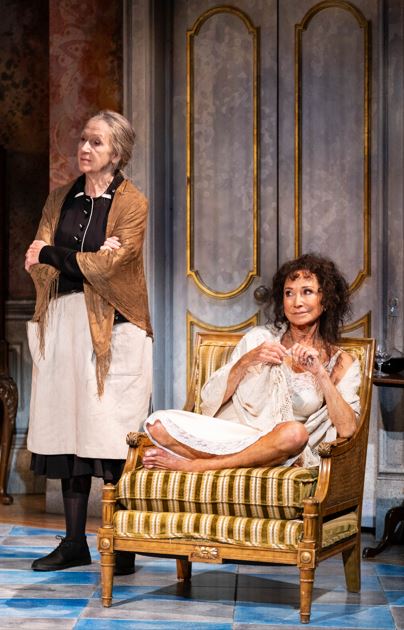
Comeuppance, nice old-fashioned word. When Filumena opens with the revelation that the wealthy Domenico Soriano has been artfully tricked by his live-in mistress of 35-years, one might think that here is a straightforward comedy about an arrogant man’s comeuppance. But no, the comedy is laced with pathos, as it cleverly probes the potency and quirks of lasting relationships, the strength of maternal love, and the sanctity of human life.
Filumena is a clever and stylish work of art, brilliantly written, brilliantly acted and brilliantly presented. Director Sean Mathias has used all his established skills to package a beautiful jewel-box of a comedy.
Read more…Just the Job
The Elixir of Love
by Gaetano Donizetti libretto by Felice Romani
English National Opera at the London Coliseum until 5th December
Review by Patrick Shorrock

Donizetti’s opera has “undemanding” running right through every bar like a stick of rock, and is pretty well guaranteed to give an audience a good time. In some ways this is rather strange, as it’s got some potentially unappealing characters: a stupid and naïve tenor, a rather heartless soprano, a baritone who is far too pleased with himself, and con-man of a bass. But Donizetti’s music miraculously brings these stock characters to life and makes them charming and sympathetic.
Read more…My Truth
1984
by George Orwell, adapted by Ryan Craig
Theatre Royal Bath Productions at Richmond Theatre until 16th November, then tour continues until 23rd November
Review by Mark Aspen
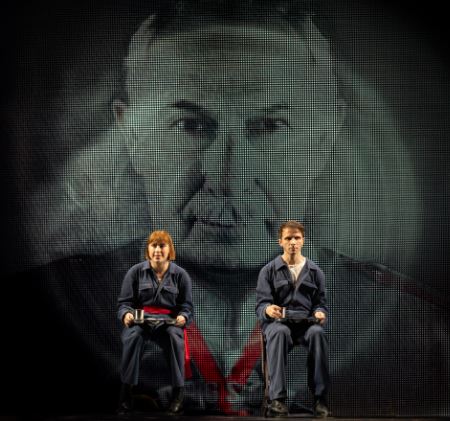
On the motorway driving down from Manchester over the weekend, a message pinged up on my dashboard, “Driver Alert! Take a break”. This may be a benign example, but it’s a little scary to think that the car you drive is spying on you. But this led to a train of thought: as we move to a cashless society, the plastic in our wallets watches us; then our mobile phones know where we are; and moreover, every street bristles with surveillance cameras, not just the motorway. What a gift this is to any repressive government that may force itself on a country!
But then again, there is the even greater danger of a gradual creep towards a Big-Brother totalitarianism. Surveillance is one thing, but we already have thought-crimes, historical negation and doubletalk, even in a democratic country like Britain, where freedom of expression is under threat. And more people work for big government, directly or indirectly, than for the private sector that creates the wherewithal for our everyday lives.
It is therefore very timely that Ryan Craig’s adaptation of George Orwell’s cautionary tale, his last novel, the dystopian Nineteen Eighty-Four, should be on national tour as a stage play, 1984.
Read more…Bard’s Heart
Shakespeare in Love
by Marc Norman and Tom Stoppard, adapted for the stage by Lee Hall
Putney Theatre Company at the Putney Arts Theatre until 16th November
Review by Polly Davies
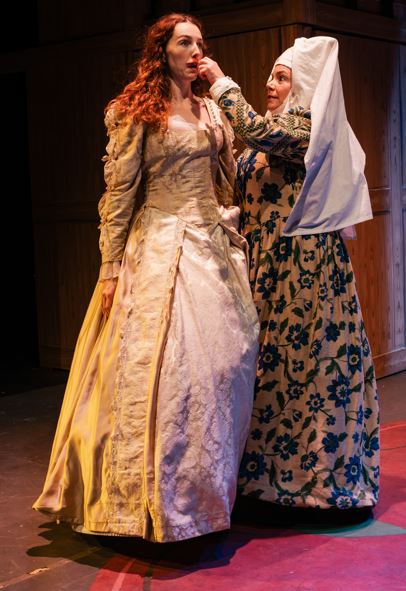
They say that London is a town made up of villages, and the crowd that filled the theatre on the opening night of Shakespeare in Love really did feel like a community coming together to support this ambitious production. And they were not disappointed. This is a rollicking comedy, beautifully played and very entertaining. It easily fulfils directors’ Jodi Rilot and Barney Hart Dyke’s intention to provide a fun evening away from the onset of winter with its dull days and dark nights.
Read more…Practise to Deceive
Spider’s Web
by Agatha Christie
Q2 Productions at the National Archives, Kew until 9th November
Review by Heather Moulson

A first visit to the Kew Archives reveals an impressive auditorium with a roomy area as an open stage. Spider’s Web gives a rare chance to see one of Christies’ comedy thrillers that carries both suspense and witty dialogue.
The authentic thirties set, designed by Harriet Muir (who also designing the period-precise costumes) and Bob Gingell, is an archetypical country house, with effective bookshelves and the obligatory welcoming fireplace.
Read more…Beverley Ministers
Abigail’s Party
by Mike Leigh
Northern Stage, RTK et al at the Rose Theatre, Kingston until 16th November
Review by Steve Mackrell

What is there left to say? Here’s an established play that’s stood the test of time, been analysed, dissected, criticised and praised. Seeing it again is like visiting an old friend, nostalgic, familiar and fun. After countless revivals over many years, another version of Abigail’s Party has arrived, this time at Kingston’s Rose Theatre. Originally devised and directed by Mike Leigh, and developed through improvisation, the play originally opened at the Hampstead Theatre in 1977.
For those new to the play, there is always the excitement and curiosity of seeing a production for the first time – a journey into the unknown. Conversely, for those who know the play, the journey is somewhat different. It becomes more a question of how the play is presented, how it’s aged and how, or if, it’s been re-interpreted by the director. Happily, with a fresh vision from a young director, the play has aged graciously and continues to deliver a rich mix of comedy and irony.
Read more…
 Mark Aspen