
A Midsummer Night’s Dream
Soft Enchantment
A Midsummer Night’s Dream
by Benjamin Britten, libretto by Benjamin Britten and Peter Pears after William Shakespeare
Glyndebourne Productions at Glyndebourne Festival Theatre until 29th October
Review by Susan Furnell

The lights threw us into near-pitch darkness for what seemed like an eternity; not a sound was heard from the audience. Then a moon appeared somewhere above the stage, and lighting slowly amplified, revealing through mist the magical forest, bathed in an eerie purple glow, swaying with the opening cello glissandi, the sounds of another world entirely: the fairy world of Oberon and Titania.
Peter Hall’s enchanted forest and indeed the whole production, revived by Lynne Hockney the original choreographer, still casts its spell forty years on. I’d never seen it before and was utterly captivated.
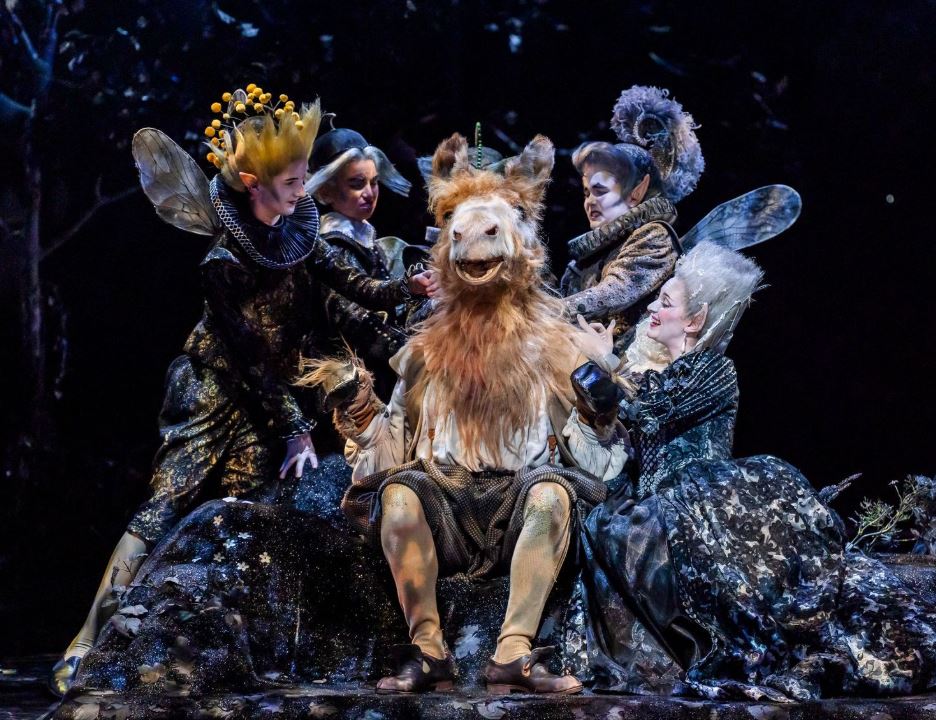
My confession: until this summer I had avoided this opera, since it’s based on one of my least-loved Shakespeare plays, so often hammed up into unfunny slapstick. A production earlier this year persuaded me of the brilliance of Britten’s marriage with Shakespeare — with its judicious cuts and psychological edge and evocative music — but even then I felt I was spectating the fairy world. By contrast, at Glyndebourne I was inside Hall’s world from the moment the moon appeared: as immersive as the world one enters for four days of a great Ring Cycle.
Perhaps the most striking feature of this revival was the absence of the usual slapstick, replaced by restraint and sensitivity, creating a sense of enchantment from beginning to end. The trombones played with restraint and feeling, giving only the faintest hint of humour and allowing it to glow rather than clatter. In hindsight, Britten writes subtext better than overt jokes: it’s funnier and far more moving when we listen for what lies beneath.
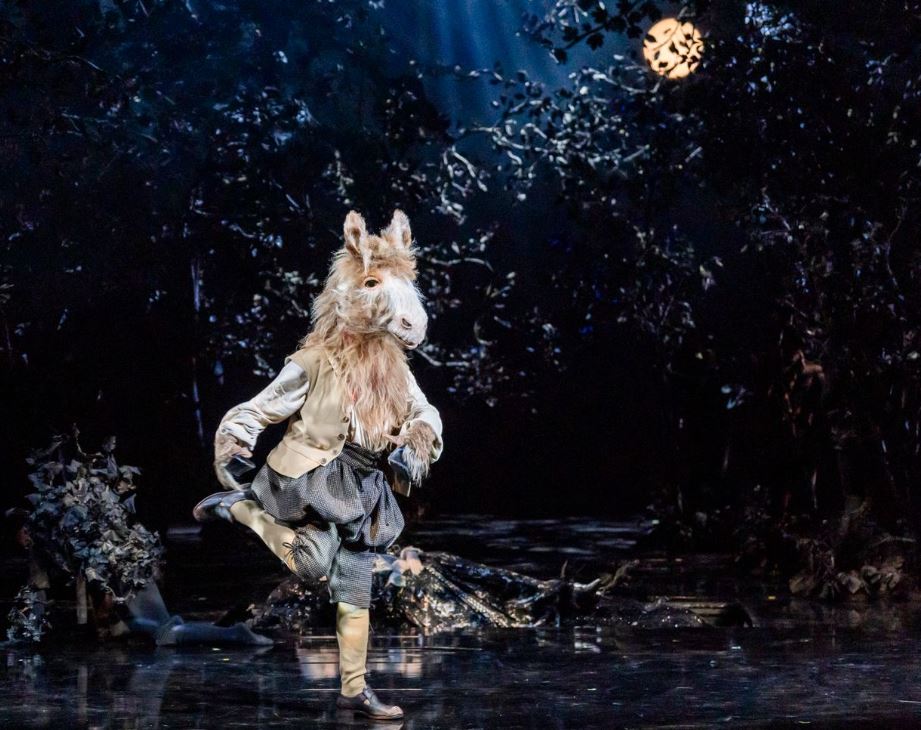
When Joshua Bloom’s Bottom metamorphosed into an ass after Puck’s potion, he became not a grotesque pantomime creature but a soft, endearing animal with twitching ears and fur you wanted to stroke. You want to hug him, and scratch behind his ears. Bloom’s sonorously warm baritone, elegant movement and flashes of shyness made this a glorious reinterpretation of Bottom. Like a musical heroine falling for a disfigured hero, Titania’s temporary infatuation with this gentle creature felt logical, sweet and entirely plausible — a genuine suspension of disbelief.
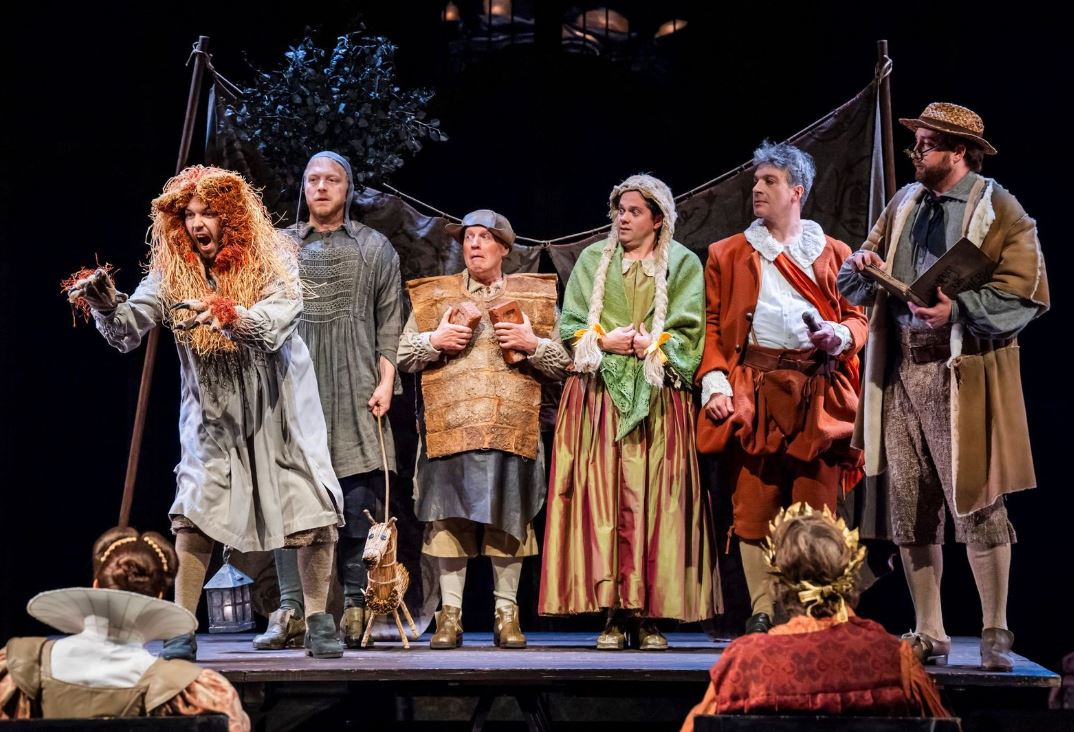
The Mechanicals, led by Michael Ronan’s dryly sympathetic Quince (another wonderful rounded voice, such a treat), struck a perfect balance of understatement and sincerity. Their Pyramus and Thisbe scene was genuinely funny, helped by James Way’s touching Flute and an easy ensemble rhythm. Even the Wall — a role I have loathed since being made to play it aged eleven — was cute and funny in its cuteness.

Among the lovers, Robert Lewis (Lysander), Stephanie Wake-Edwards (Hermia), Samuel Dale Johnson (Demetrius) and Alexandra Lowe (Helena) delivered a cohesive, emotionally charged quartet. Their Act Three ensemble — not Britten’s most memorable melody — came alive through dramatic conviction, their lines alternately overlapping competitively and blending to balance the competition.
If anything faltered, it was the boy elves. Their pint-sizeness (the actors must have been very young) added to the magic and their movement was agile and their appearance uncanny — those elaborate wigs and delicate prosthetics turning them into fantastical woodland sprites — but their spoken delivery was often shouted rather than shaped. Still, in Act Three, a pure, floating treble redeemed the imbalance with sudden magic.
Under Kerrie Baigent, the Glyndebourne Sinfonia played with luminous precision. The cellos became the fairy world itself. Flutes and celesta glistened, harp rippled like moonlight on water, and the string writing — often deliberately raw or “ugly” — was allowed its honest edge. Britten’s score thrives on the tension between beauty and abrasion, and here music and drama meshed perfectly: moments of dissonance became emotional as well as sonic shocks. Baigent’s pacing was flexible but never indulgent; the orchestra breathed with the singers, the fairy textures weightless yet exact.

Nils Wanderer’s Oberon was a study in poise and control. His countertenor glowed with unearthly calm; vibrato was sparingly used, and tone frequently pointed inward in suspended messa di voce phrases that seemed to breathe. His timbre shifted like light through leaves — sometimes flute-like, then string-like, sometimes catching the glockenspiel or celesta’s cool glitter. Jennifer France’s Tytania matched brilliance with clarity, her agile coloratura precise yet playful. Together they embodied the uneasy marriage of power and seduction at the opera’s heart. More might have been made of this in a contemporary staging, (along with the potential for homo overtones of Oberon and the Indian boy echoing Britten’s own sexual persuasion), but it was a relief not to have this sermonised and instead to be transported into an enchanting fantasy that is still making me smile the next day as I think about it.
Clare Presland, in a short notice a cast change as Hippolyta, brought elegance and authority, her warm mezzo anchoring the Athenian court with quiet strength.
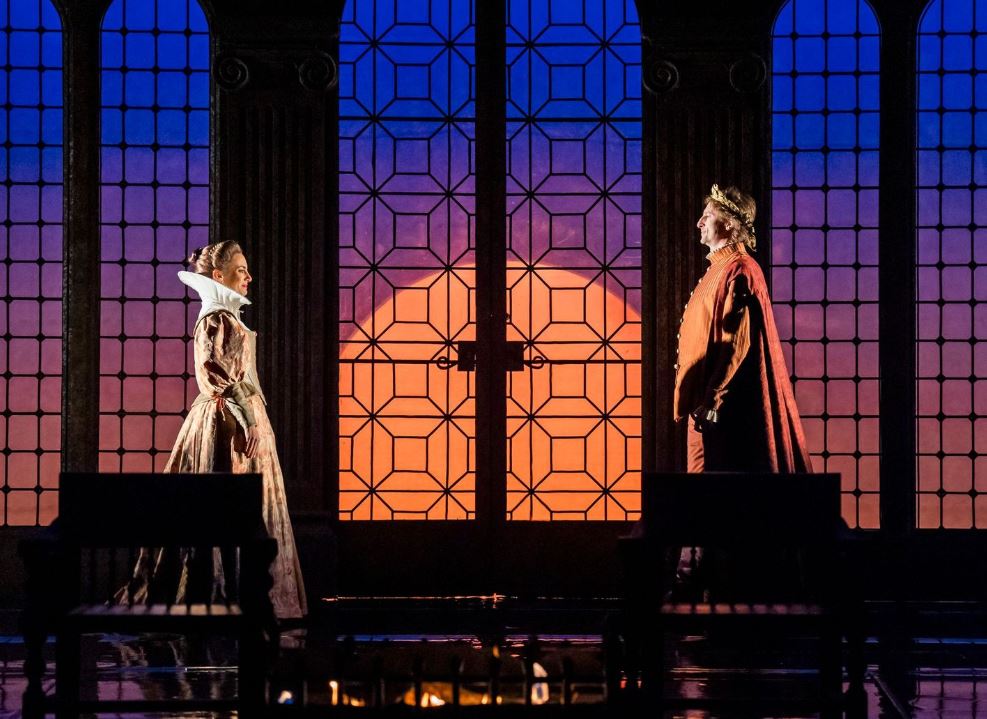
The marriage of Shakespeare and Britten remains poignant. Britten kept much of Shakespeare’s text intact, allowing the words’ natural music to guide his composition. The result is an opera where sound and speech interlock , and where beauty and ugliness, love and control, illusion and reality continually blur. Beneath the glitter runs unease: Oberon’s manipulation of Titania, Theseus’s command over Hermia, Britten’s own fascination with innocence and power. Hall’s vision, and its careful revival, show how reinterpreting Britten through softness and subtext restores the opera’s enchantment.
Glyndebourne’s Dream still entrances audiences with a forest that breathes, a score that glows, and performances that balance heart and strangeness. Under Baigent’s lucid conducting and Lynne Hockney’s sensitive revival direction, Hall’s vision lives again — an opera that, like the wood itself, renews its life each time the moonlight returns.
It’s only a pity the boys — especially Puck — could have been more convincing. Surely this must be a dream role for a talented young actor?
Susan Furnell, October 2025
Photography by Tristram Kenton © Glyndebourne Productions Ltd.

 Mark Aspen
Dear Susan
I too was enchanted by this production of Britten’s A Midsummer Night’s Dream (which we saw at Glyndebourne last Sunday).
I want to take exception however with what you say about the group of boys who play the fairies. First of all, they SING – it is only Puck who has an entirely speaking role. Second the boy who played Puck was entirely convincing – especially when he was bravely gliding high above the stage on his swing. This *is* a dream role and the young actor who played Puck last Sunday is incredibly talented.
Kind regards, Bob Young, 14 October 2025
Dear Susan
I too was enchanted by this production of Britten’s A Midsummer Night’s Dream (which we saw at Glyndebourne last Sunday).
I want to take exception however with what you say about the group of boys who play the fairies. First of all, they SING – it is only Puck who has an entirely speaking role. Second the boy who played Puck was entirely convincing – especially when he was bravely gliding high above the stage on his swing. This *is* a dream role and the young actor who played Puck last Sunday is incredibly talented.
Kind regards, Bob Young, 14 October 2025