
Carmen
Enjoyable Drama – But Time For a Change?
Carmen
by Georges Bizet, libretto by Henri Meilhac and Ludovic Halevy, translated Christopher Cowell
The English National Opera at the London Coliseum until 14th October
Review by Michael Rowlands

I always try to chat to the person next to me when I am out alone and my neighbour, on this evening, had never been to an opera before. It had been recommended by a friend, who had seen a previous revival of Carmen. I envied her seeing this magnificent opera for the first time. We chuckled over the warning that there was male nudity, as it says in the programme, “a symbolic addition representing raw masculinity, vulnerability and death” at the beginning of Act Three. In the event, we needn’t have worried, as he was barely visible in the dark gloom, and it was as unshocking as the end of Act One of Hair. Smoking and sex was not too much of a problem either.
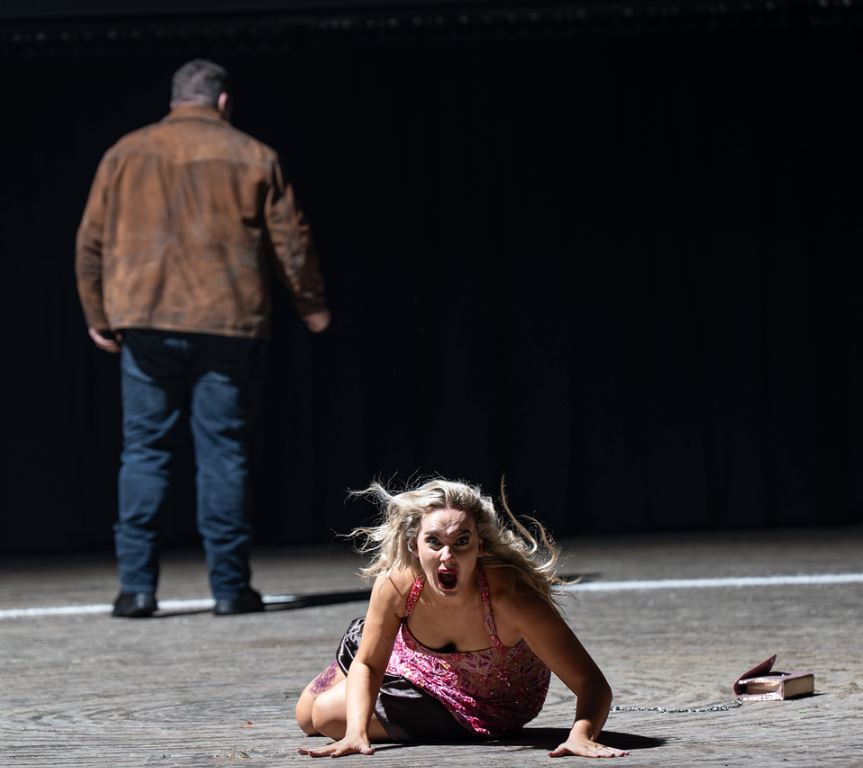
This is the fourth revival of a production by Calixto Bieito that began its life in 2012 with ENO, but it was originally seen in Spain in 1999. It has a certain dated quality, in spite of Bieito’s radical concept which concentrates on the dramatic psychological action by doing away with all the scenery, replacing it with a black cloth surrounding the rear of the stage. Masculinity was in evidence with the some very fit soldiers and gypsy smugglers who played up to their stage testosterone levels, so setting the scene for a men abusing women concept. I enjoyed their antics which livened the performance.
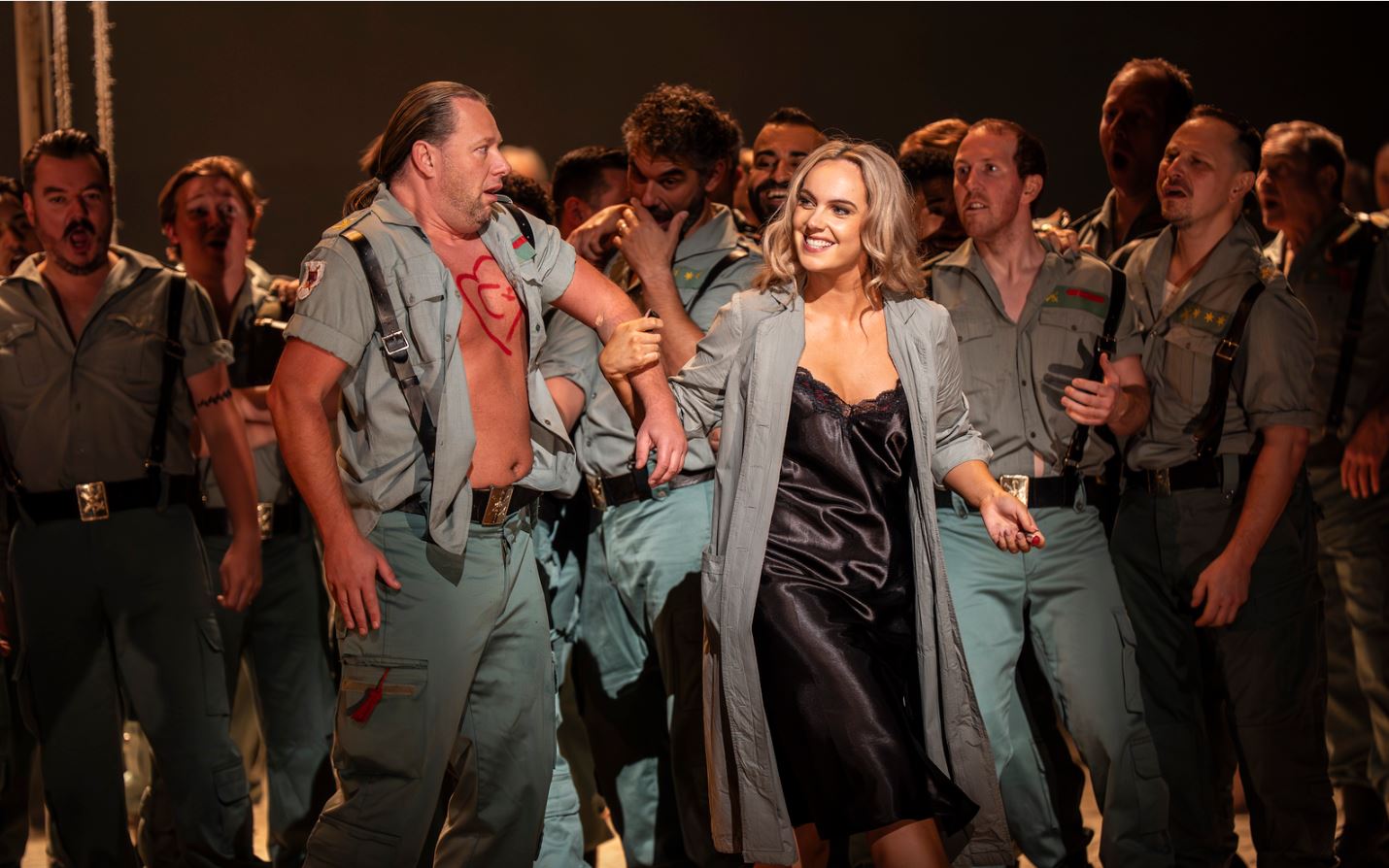
I mentioned to my companion that this opera is the beginning of realism and the closer to real life it becomes, then more dramatic it can be – this production was possibly set in Franco’s Spain, although the Spanish references were sparse; a telèphono box and a large hoarding of a black bull silhouette. Carmen is a pivotal opera, ostensibly an opera comique, (i.e music with words) in French, but more accurately an Italian opera, produced by Bizet from his experiences in Italy having won the Prix de Rome and so it is beginning of verismo.
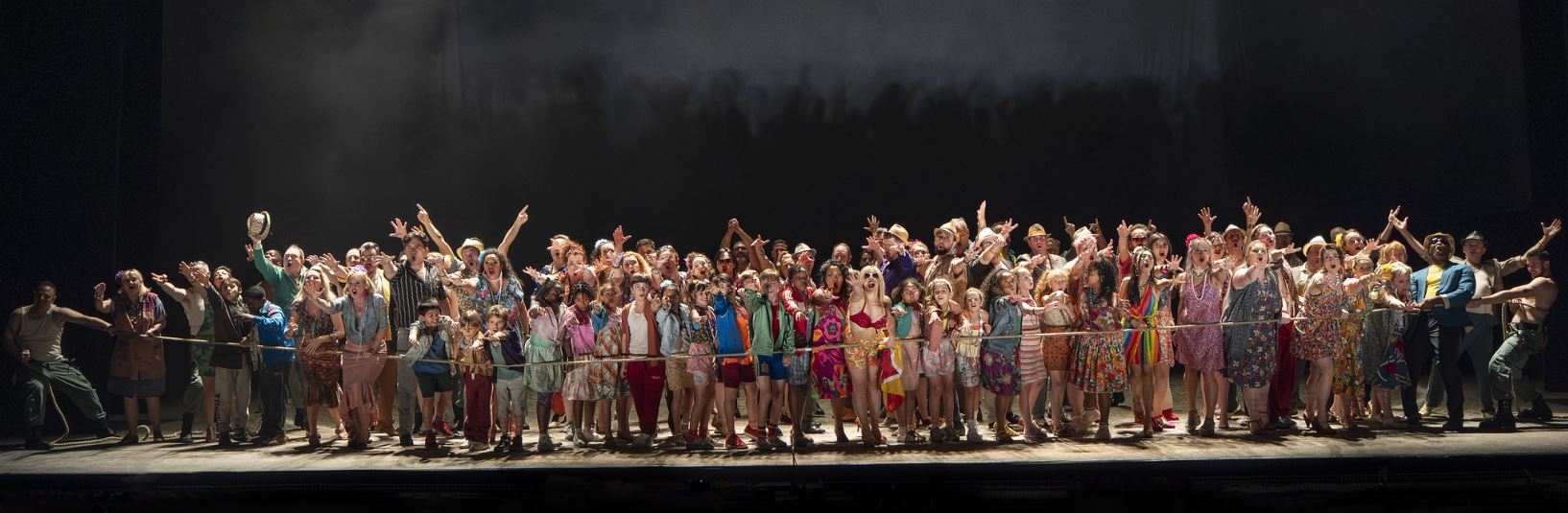
At the interval, I asked her what she thought. She liked the surtitles, so she could understand the libretto, but she hadn’t noticed the strong Irish accent from Niamh O’Sullivan singing Carmen. She perceptively asked, “Why are there children?” (Excellent singing and acting from the Marlborough Primary School Children’s Chorus.) Bizet was aware that cigarette factory workers were all female and that they were crèches to look after the children, so I think this is why he included them, but they also to provide more variety and realism to the drama. Children’s chorus were rare until this period (1870), although Tannhauser (1845) comes to mind, but little else.
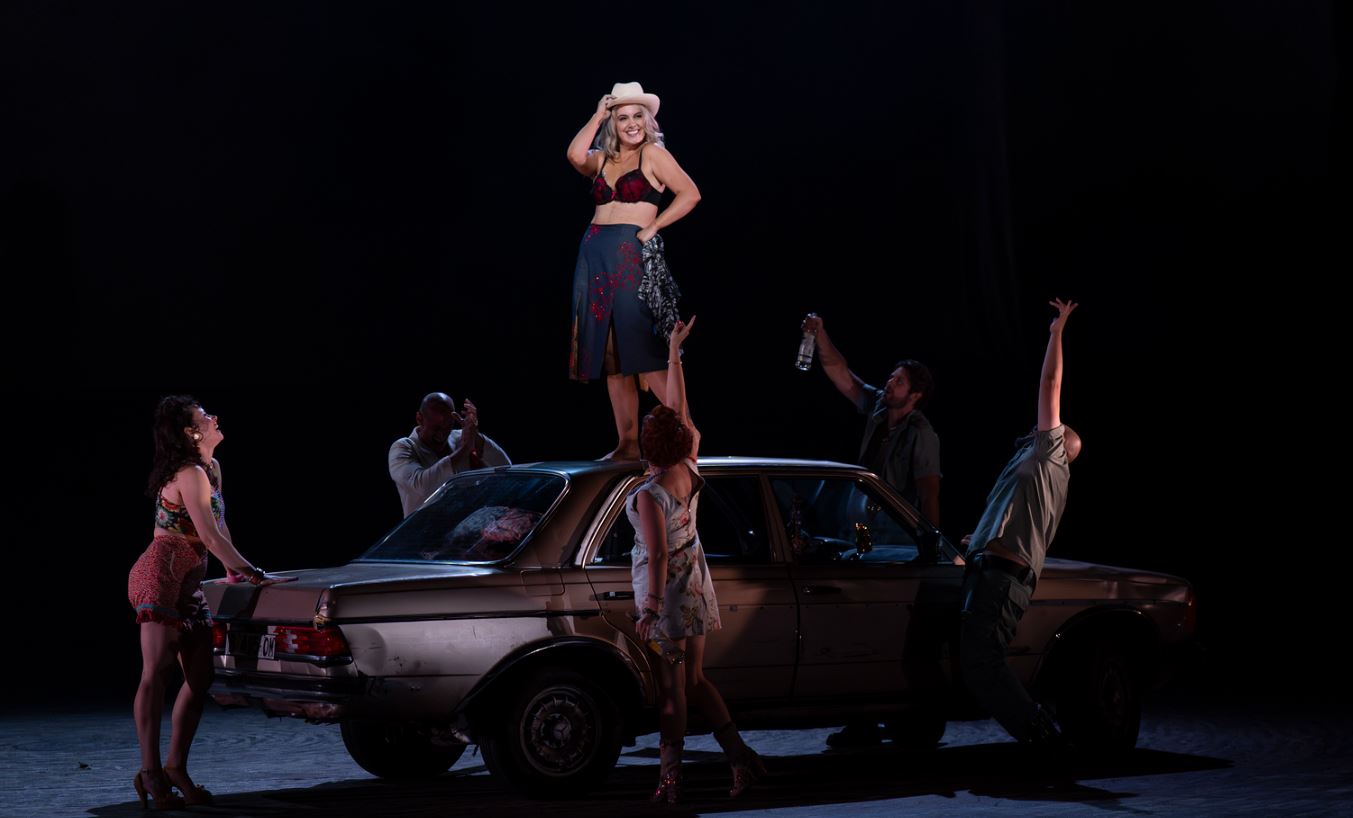
Then she asked, “Can you explain what’s it about?” This was neither ill observed, nor unintelligent, as Bieito had removed the settings, so it was effectively without scenery and consequently left her adrift as to the plot. I explained that the reason why so many were smoking was that it was at a cigarette factory, although not represented. The smugglers’ bar was a group of old Mercedes cars with bottles of whisky and cigarettes being moved around ; however, no car door avoided being slammed, or bonnet slapped as the stage actors revved things up.
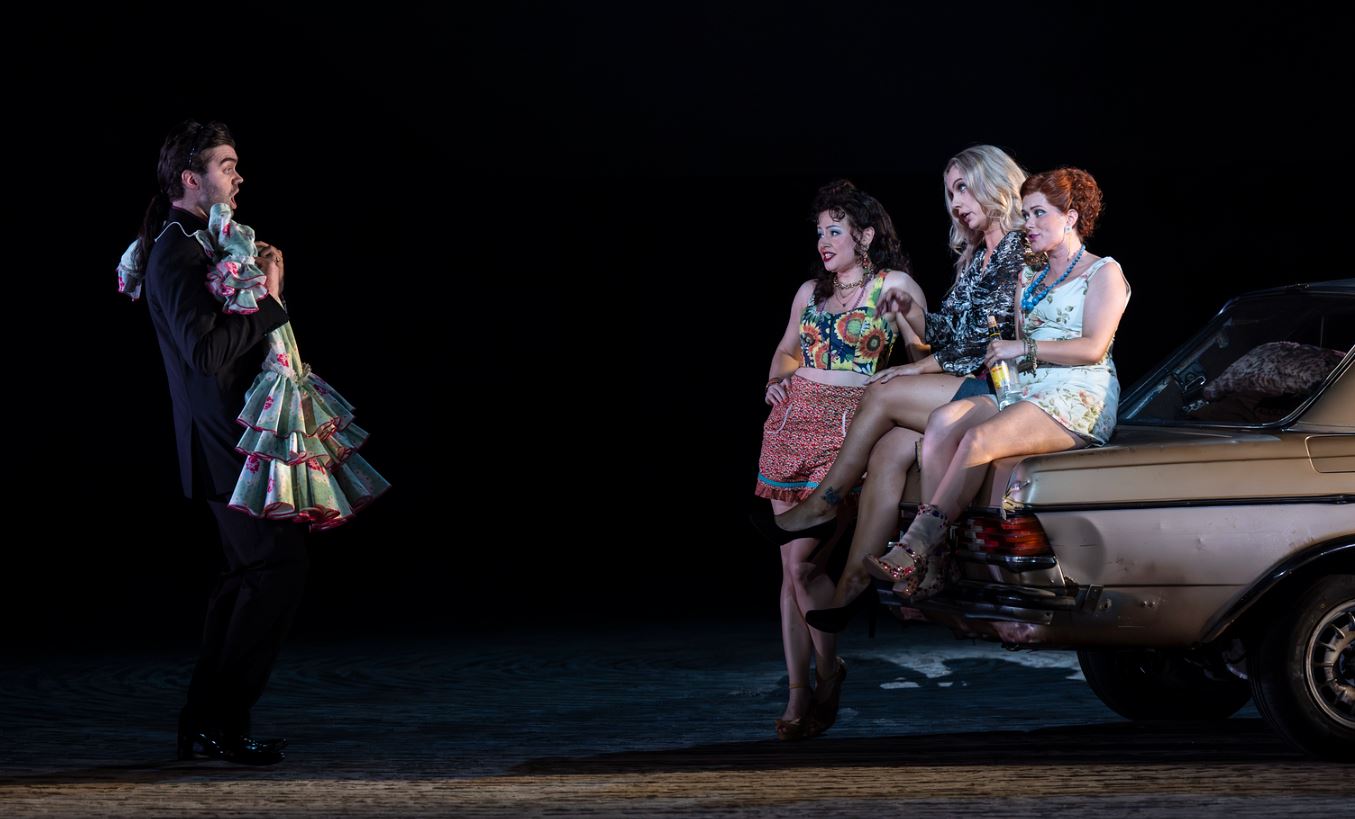
Carmen is more than just about jealousy, it’s about the nature of attachment and loss. John Findon singing Don Jose was variable in power and delivery. Jose is a damaged man, too close to his mother (in this production not visibly infatuated), who uses Carmen as an escape from his responsibility, but cannot cope with the thought of losing her, ending in murder. Carmen, also damaged by poor parenting (as illustrated by Mercedes’ child Livia Ciriaci being emotionally neglected, then spoilt with presents) has no stable attachment as an adult and she is repeated attracted to the wrong sort of man, who treats her badly. This opera is also about loss. How do we cope with rejection? To Don Jose its jealousy, to Carmen, it’s always another man. A feminist icon, sexually free, and maybe, strong-willed, but her fate is predestined by her upbringing, for disaster. This is well illustrated by the lively depiction of the tarot card scene. Mercedes (Sian Griffith), Frasquita (Harriet Eyley) and Morales (Jolyon Loy) stole the show with their excellent portrayals and lifted the atmosphere.
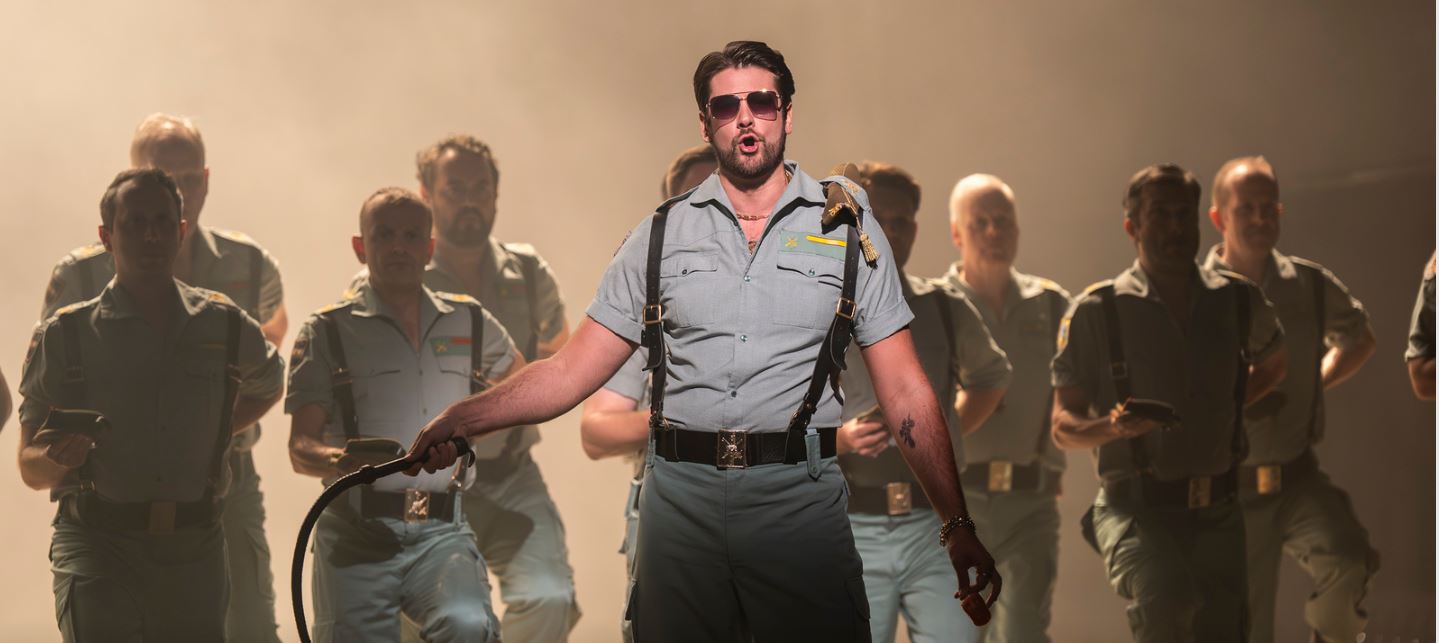
The conductor Clelia Cafiero started with a frenetic pace then lapsed into a utilitarian interpretation; however, she ably supported the singers. Micaela Ava Dodd appeared to be most believable character, as the connection between Carmen and Don Jose was visibly cold – I wondered if the intimacy coach had been too hard at work. Niamh O’Sullivan came across as less than fiery but confident in the lower registers, but less so in the higher. She looked the part of Carmen, but the lack of spirit was evident. As Escamillo Cory McGee was again more rounded in lower notes and coped with the superstar status well.
This production, in 2024/5, has set itself against two new productions; at Covent Garden by a hyperrealist Damiano Michieletto, and Glyndebourne by Diane Palus (with asylum seekers as “contraband” and a strangulation at the end), and both with the “Carmen of the moment”, Aigul Akhmetshina, so its stiff competition. Against such heavyweights, then this production lacks a lot, but it’s a very enjoyable, entertaining, meaningful, if dated, production. At the end, I asked the lady next to me if she would come again, yes, she’s had had an excellent evening, and she would definitely come again. That’s how ENO used to build an audience.
I can’t help thinking aloud, if it is not the Emperor’s New Clothes, that with the current wholesale reorganisation, financial emasculation and relocation of the ENO, that the sacred cow of the English language performances should be slaughtered. This performance would have definitely been enhanced by being sung in French. Having heard Reininkulta (Das Rheingold) in Finnish, and La Traviata in Lithuanian, I’m pretty certain that opera is not improved by local languages. Surtitles have been a world wide success since being introduced in Toronto in 1983, making any opera intelligible to everyone, so maybe it’s time for a racial change.
Michael Rowlands, October 2025
Photography by Ellie Kurttz


Trackbacks & Pingbacks