
Don Quixote
Tilting with Flair
Don Quixote
by Carlos Acosta after Marius Petipa, music by Ludwig Minkus
Birmingham Royal Ballet at The Sadler’s Wells, Islington until 25th April
Review by Ravenna Vale
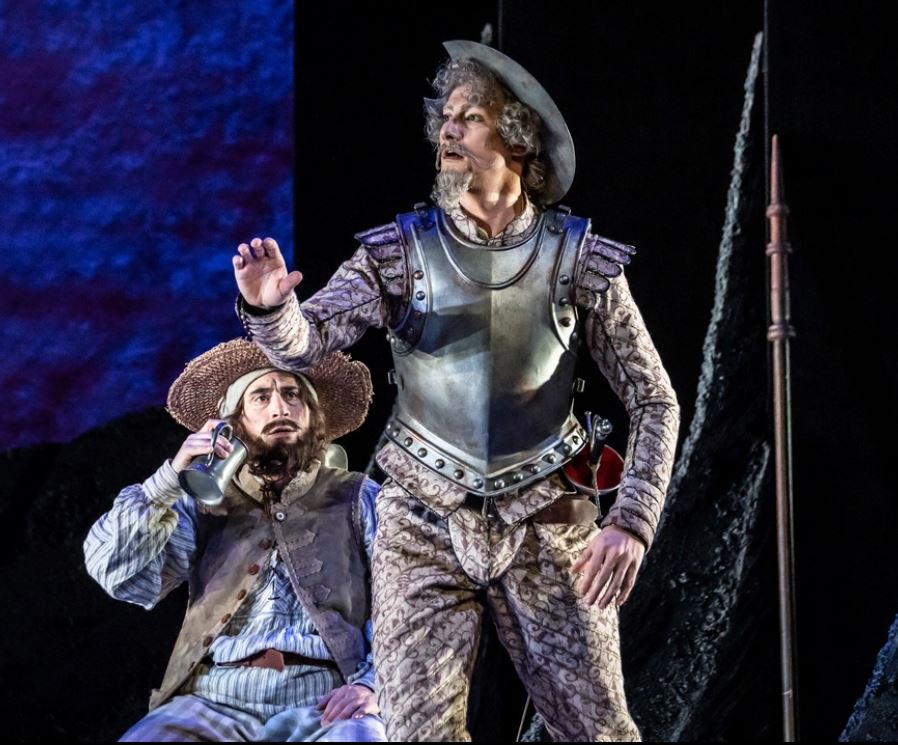
Birmingham Royal Ballet’s Don Quixote, under the direction and choreography of Carlos Acosta, is nothing short of a visual and musical feast, an evening where classical ballet tradition meets theatrical brilliance with irresistible flair. This production does not merely revive a beloved classic; it reimagines it with intelligence, warmth, and a palpable sense of joy that radiates from stage to audience.
From the very first moments in the bustling morning market scene, the production announces its ambition. The town square is alive, bursting with movement, colour, and detail. The ensemble here deserves particular praise. Their energy is electric, their precision razor sharp, yet nothing feels mechanical. Every dancer contributes to the illusion of a living, breathing Spanish village. It is one of those rare moments in ballet where the corps de ballet does not simply support the action, they are the action.
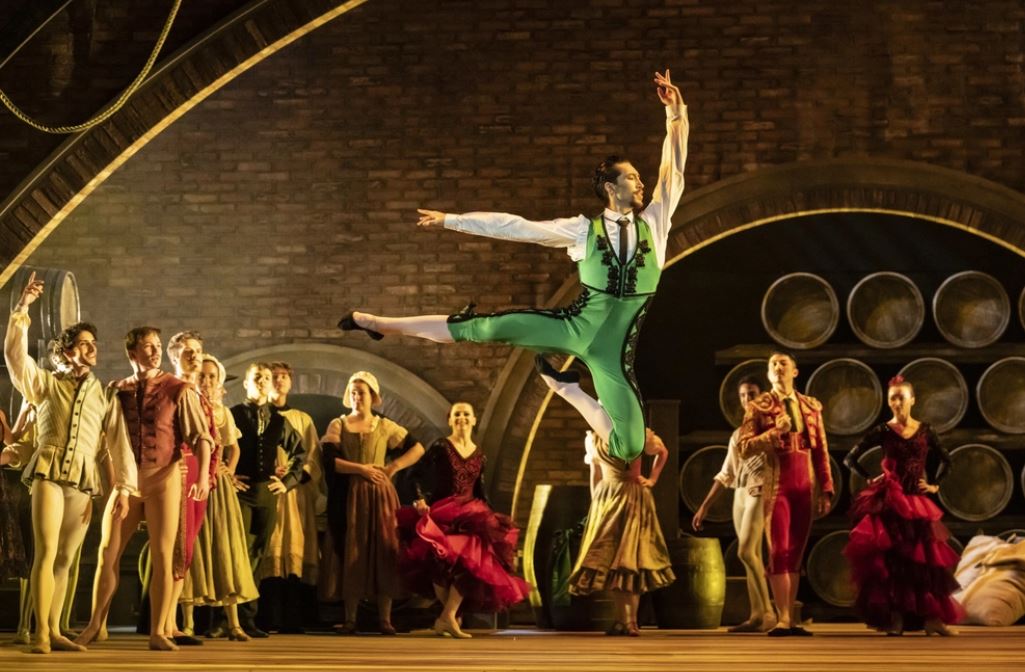
Much of this immersive power stems from the breathtaking set and costume design by Tim Hatley. His work is precise, deeply considered, beautifully crafted and utterly transportive. The architecture of the sets, constructed with exceptional craftsmanship, frames the dancers beautifully while never overwhelming them, and the painterly quality of the backdrops lends a richness that feels almost cinematic. In Act II, the shift into the dreamscape is especially arresting. The gauze and delicately painted vine work create a layered, ethereal environment. The famous dryad scene beneath the willow tree is handled with exquisite sensitivity, soft, otherworldly, and hauntingly serene. The use of texture and translucency here is masterful, allowing the choreography to feel suspended in time.
The costumes, also by Tim Hatley, are quite simply among the finest seen on stage in recent years. They strike a perfect balance between opulence and functionality, vivid without being gaudy, detailed without distracting from movement. Each costume feels tailored not just to the character, but to the choreography itself. They move as beautifully as the dancers wearing them, reinforcing Hatley’s remarkable eye for both artistry and practicality.
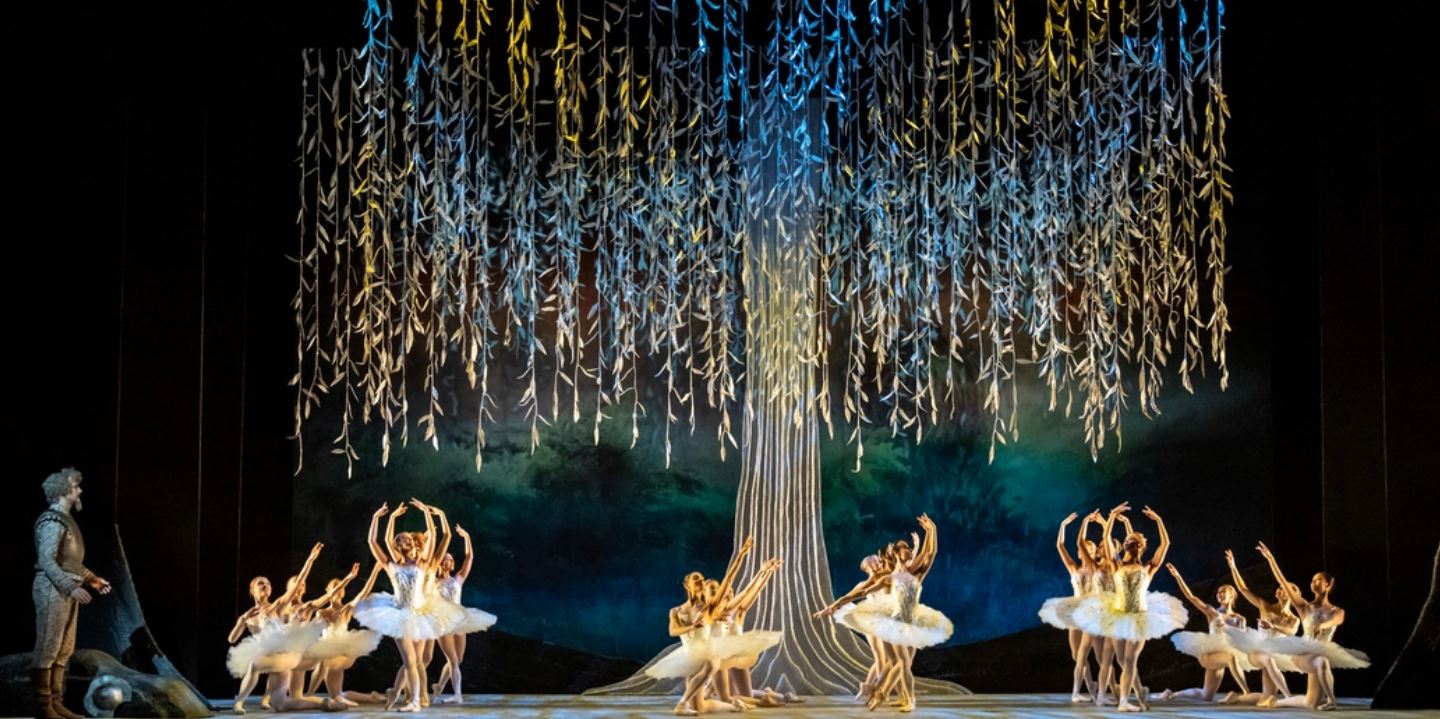
The lighting design works in seamless harmony with Hatley’s vision. The cyclorama in particular deserves special mention, its shifting hues creating sunsets and atmospheric backdrops that are nothing short of magical. The transitions between scenes are fluid and intriguing, enhancing the narrative without ever drawing attention away from it. It is lighting as storytelling, subtle, intelligent, and deeply effective.
Musically, Hans Vercauteren’s re-orchestration of the score is a triumph. It breathes new life into familiar themes, adding clarity and richness while preserving the memory of the original. The orchestra feels tightly integrated with the dancers, elevating key moments, especially in the marriage scene, where music and movement combine in a jubilant crescendo.
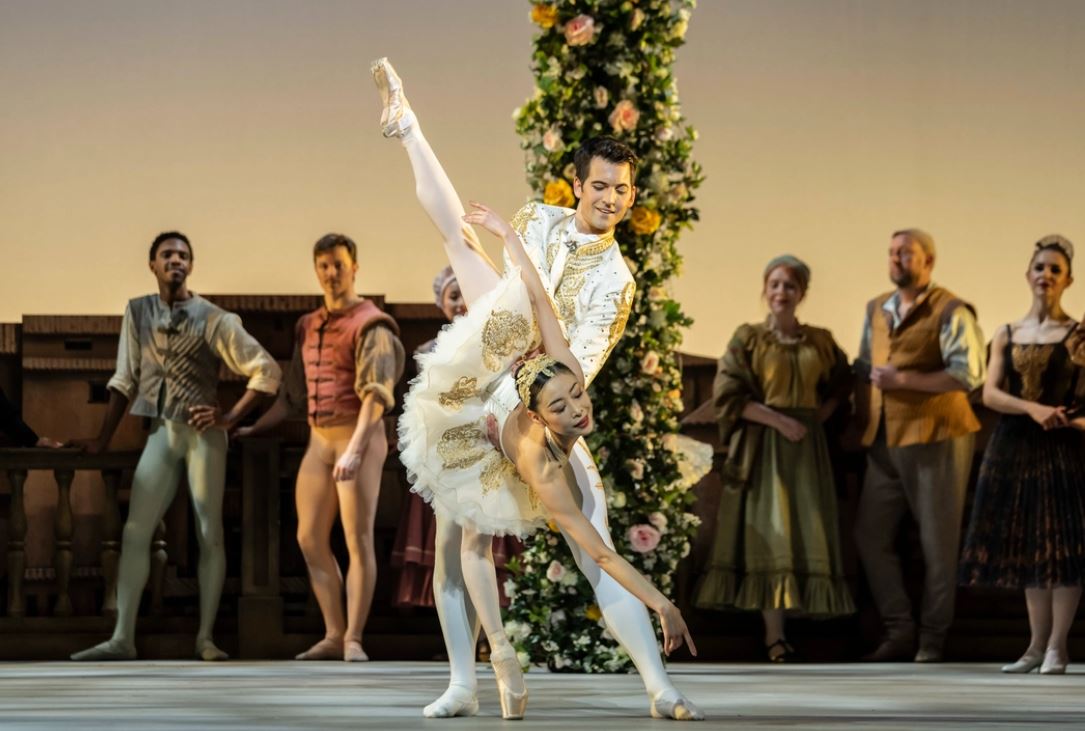
At the heart of the production are its principal performers, each bringing a distinct and compelling presence. Momoko Hirata’s Kitri is a revelation of sparkling elegance, but more than that, she inhabits the role with a quicksilver intelligence and a finely tuned sense of musical phrasing. Her dancing flickers with wit and precision, each turn and extension shaped with crystalline clarity, while her characterisation captures Kitri’s mischievous independence and irresistible charm. She does not simply dance the steps, she converses with them, teasing the audience and her fellow performers alike with a playful authority that feels entirely her own.
Mathias Dingman’s Basilio matches her with a performance of striking vitality and power, grounded in a physical assurance that never tips into excess. His jumps have an expansive, buoyant quality, and his partnering is both secure and daring, allowing moments of virtuosity to unfold with thrilling ease. Yet it is his charisma that lingers. He shapes Basilio not just as a swaggering barber but as a figure of warmth and sincerity, his bravado softened by an undercurrent of genuine affection that gives the role the perfect emotional balance.
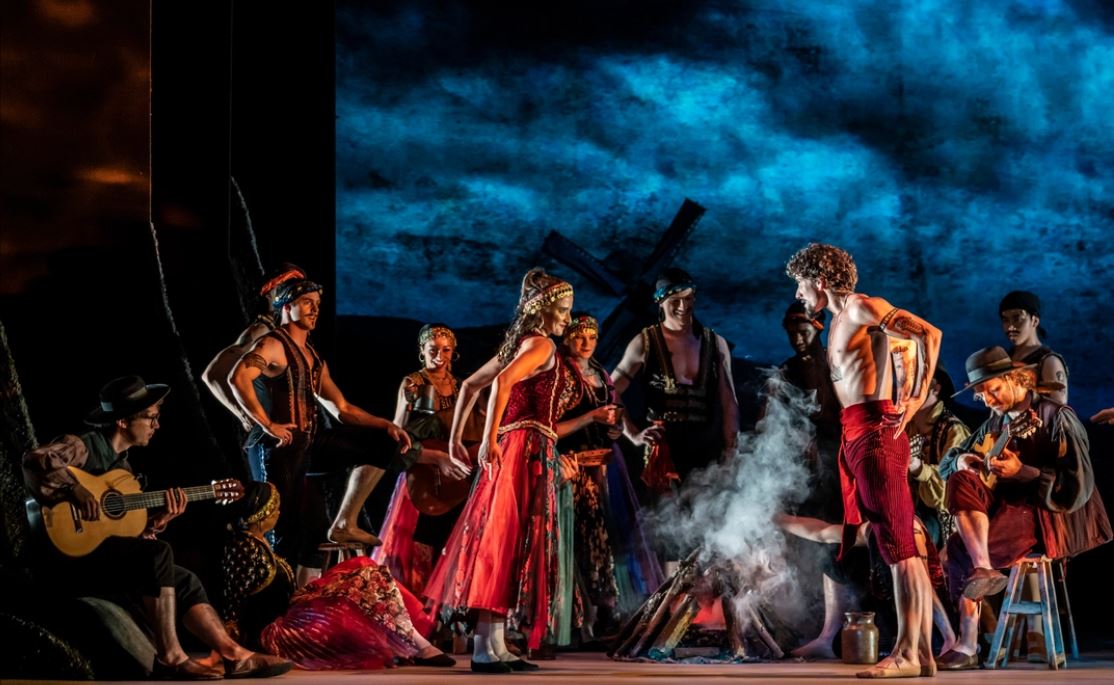
Tzu-Chao Chou’s Amor offers a beautifully judged contrast within the dream scene, a figure at once light-hearted and authoritative. There is humour in the articulation of the role, a playful sharpness in the movements, yet beneath this lies a core of strength that anchors the entire sequence. His presence guides the eye through the choreography, lending structure and clarity to the ethereal world around him while maintaining an engaging sense of personality.
The dream scene itself is a highlight of the evening, poised, luminous, and exquisitely structured. It contrasts beautifully with the earthy exuberance of the town scenes, showcasing the company’s vast range. Meanwhile, the final marriage scene is pure celebration, an explosion of colour, rhythm, and technical brilliance that leaves the audience exhilarated.
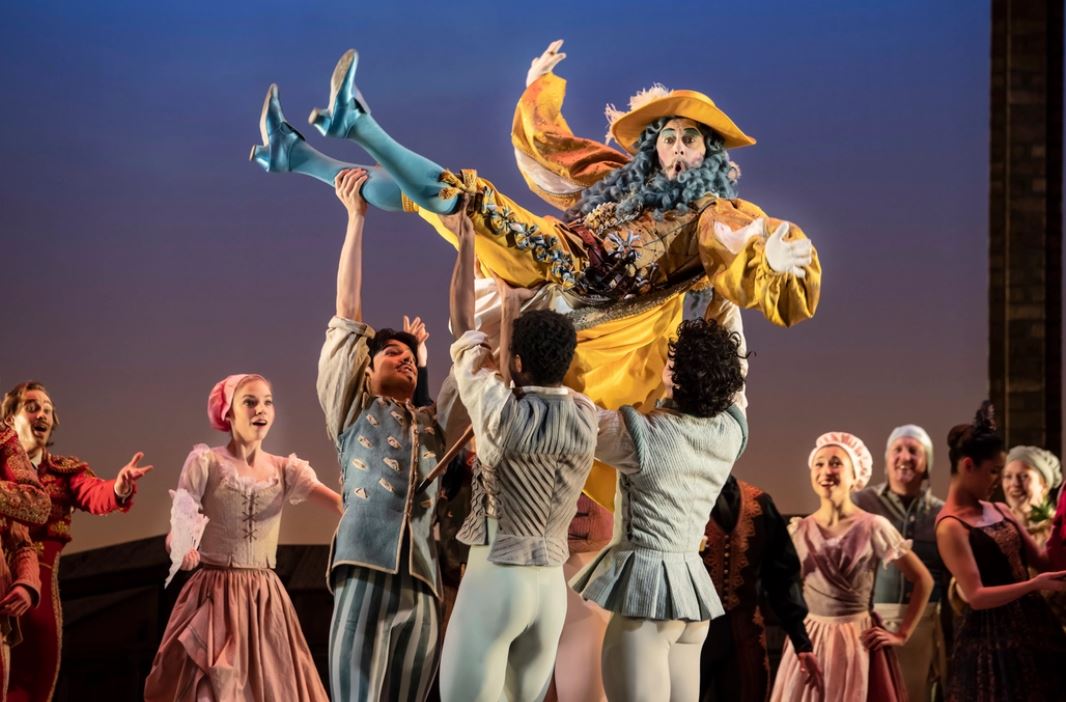
Even the smaller roles shine. Matthew Bates, as a troublesome village boy, injects moments of playful virtuosity that delight the audience, his quick footwork, tricks, and irrepressible energy adding flashes of spontaneity to the larger ensemble scenes. Florence Lane brings grace and quiet radiance to her various supporting roles, her refined and calm stage presence offering a subtle counterbalance to the surrounding exuberance, demonstrating the depth of talent within the company.
Ultimately, Don Quixote is a production that understands spectacle but never at the expense of substance. Carlos Acosta’s assured direction and choreography creates a thoughtful, vibrant work, that is crafted with extraordinary care. A triumph of design, performance, and musicality, this is truly ballet at its most joyful and most intelligent.
Ravenna Vale, April 2026
Photography by Johan Persson ©


