
Infernal Nonsense = Jolly Good Evening
H.M.S. Pinafore
by Arthur Sullivan, words by W.S. Gilbert
English National Opera at the London Coliseum until 7th February 2026
Review by Patrick Shorrock

This ship-shape revival of what Major General Stanley in The Pirates of Penzance called ‘infernal nonsense’ sails triumphantly back into the Coliseum to be welcomed enthusiastically by a delighted audience. It’s a perfect Christmas treat. Nothing very demanding. Lavish sets and costumes by takis that equal Julian Clary’s Palladium panto shows in their colourful splendour. Generally excellent performers (including someone from the telly). And stuffed with great comic gags. (Over stuffed perhaps? No, never! What, never? Well, hardly ever!)
Read more…Fresh From the Oven
A Christmas Carol
by Charles Dickens, adapted by Beth Flintoff
ReadingRep Company at the Reading Rep Theatre until 3rdJanuary 2026
Review by Sam Martin

Reading Rep’s latest festive offering, Beth Flintoff’s re-imagining of A Christmas Carol, is a joyous reminder of why this company has become synonymous with bold, heartfelt reinventions of classic tales. Here Dickens’s familiar morality story is transplanted into the beating heart of Reading’s industrial past: Huntley and Palmer’s biscuit factory. It is a choice that proves both quaint and quietly brilliant. Local references ripple warmly through the script, doubling the audience’s sense of belonging and making the story feel as though it has risen, fresh from the oven, out of Reading’s own history.
Read more…Artistry For Advent
Messiah
by George Frideric Handel, libretto by Charles Jennens
Glyndebourne Productions at Glyndebourne Festival Theatre until 14th December
Review by Mark Aspen
Advent Sunday this year is unwontedly sunny, so what could be more appropriate a day to see Glyndebourne’s Messiah, with its uplifting message of wonderful things to come. As a message even more needed in these present days when all news seems to teeter on despair, Messiah speaks loudly of hope, an advent of peace and redemption. Maybe this is why Handel’s masterpiece remains so enduringly popular and why even the most agnostic could not fail to be touched by it. Messiah has a powerful aura of hope and a sense of joy.

Joy is Handel’s musical stock-in-trade, that Baroque style that just bubbles along, and it is palpable in Glyndebourne’s heartwarming concert production. It is a resplendent mixture of urgency, contemplation and reflection. The sense of urgency was no doubt conceived by Handel’s manic impetus to create this massive and majestic work within an obsessive three and a half weeks of continuous labour. This production succeeds in just restraining that urgency enough to allow the poetry of the words and their meaning to be savoured.
Read more…Retro Dreamscape
Hansel and Gretel
by Hannah Lobley
Teddington Theatre Club at the Hampton Hill Theatre until 6th December
Review by Brent Muirhouse

Pantomime, by its very nature, is fun. Many pantos lean heavily on stories most of the audience have known since childhood, and follow a plot that is expected, decorated with a few moments of more updated candy-cane comedy and titters o’ tinsel. Few tend to open with ten minutes in which one wonders quite sincerely what on earth is going on, like Teddington Theatre Company’s production of Hansel and Gretel at the Hampton Hill Theatre.
Read more…Messiah as Drama
Messiah
by George Frideric Handel, libretto by Charles Jennens
Merry Opera Company at St Luke’s Church, Eltham Park and on tour until 6th December
Review by Patrick Shorrock

Performances of Handel’s Messiah at this time of year are as ubiquitous as pantomimes. But Messiah doesn’t stop at Jesus’s birth – but goes on to recount his death and resurrection – and is probably more suitable for Easter than Christmas. But if it’s performed in the build up to Holy Week, it tends to get crowded out by the Bach Passions, which I suppose it why Advent performances of Messiah have become almost a tradition.
Attempts to stage Handel’s oratorios where the text is dramatic – Semele, Theodora, Jephtha, Saul – are quite common now. What is rarer is deciding to stage Messiah, which is a reflective rather than a dramatic piece – even if the events it alludes to are nothing less than the redemption of all creation – where the text consists entirely of quotations from scripture. That said, English National Opera did it in 2009 and the Merry Opera Company are doing it now, and Wild Arts will be doing it next month.
Read more…Bottled Out
East of Adelaide
by Julia Thurston
Threedumb Theatre at Arches Lane Theatre, Battersea Power Station until 6thDecember
Review by Denis Valentine

Threedumb Theatre and its writer Julia Thurston are back after their last award-winning piece Paved with Gold and Ashes, with East Of Adelaide. With a personal touch and generational link to Thurston, the story tries to uncover and look into the lifetimes of three women in the mid 1800s and how a relationship with one man, Henry Bottle, affected their lives.
Read more…Go Bump in the Night
The Woman in Black
by Susan Hill, adapted for the stage by Stephen Mallatratt
PW Productions at Richmond Theatre until 29thNovember, then on tour until 26thApril 2026
Review by Heather Moulson
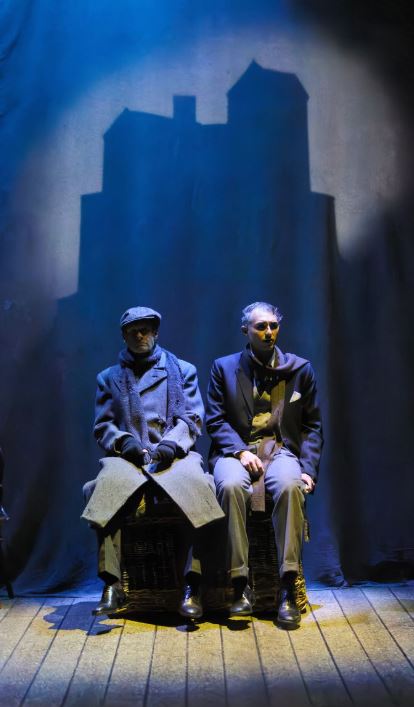
The audience at Richmond Theatre is filled with trepidation and auditorium filled with a sea of school uniforms, as the curtain goes up on a misleadingly barren sloping set and a theatre props hamper. The reticent Arthur Kipps begins to read out from his diary about a traumatic and life-changing experience. His co-star, The Actor, is determined to bring out the underlying horror lurking behind the flat delivery and succeeds with unforgettable results.
Read more…Bonkers or Go Bananas
Partenope
by George Frideric Handel, libretto by Silvio Stampiglia
The English National Opera at the London Coliseum until 6th December 2025
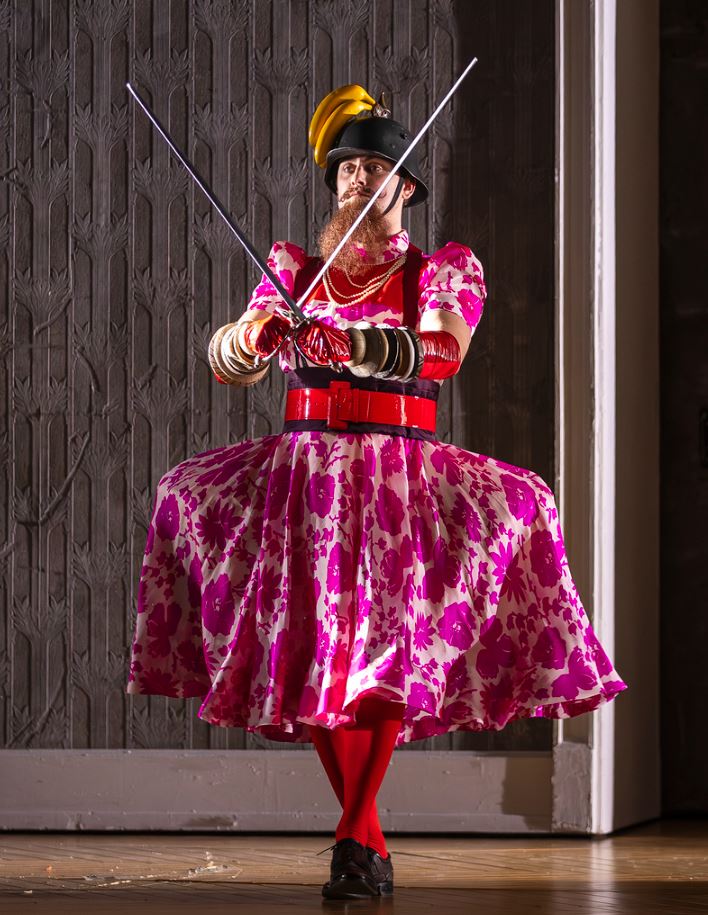
I was expecting this revival of Partenope to be joyful and uplifting, and it did not disappoint. A co-production between the ENO and Opera Australia, under the direction of Christopher Alden, this is a modernist, surreal performance that repeatedly takes us to the absurd and back again in the company of some impressive vocal and musical talent.
Sometimes described as an operatic ‘rom-com’, Partenope was composed by Handel to Silvio Stampiglia’s Italian libretto originally written in 1699. This version has been updated and translated into English by Amanda Holden (not that one), and it is a very contemporary adaptation. Modern slang, some sly references, and occasional use of the ‘f bomb’ bring laughs from the audience throughout.
Read more…Cow on a Shot Thin Roof
Possum Trot
by Kathy Rucker
Kevin Nolan at The Theatre at the Tabard, Chiswick until 29thNovember
Review by Andrew Lawston
A flickering “Bud Light” sign, plain wooden walls, a string of fairy lights, and half a dozen bottles behind the bar. It’s a wonderfully detailed set, and we could be in any 1970s America diner as Kathy Rucker’s new play Possum Trot opens.

Dennis Hopper might have drunk a beer there in Easy Rider, or Lieutenant Columbo could be sitting at the bar eating a bowl of chili. But within minutes, a young girl talks about having long Covid, and her potential career as a social media content creator, and we realise that this play is set in the modern day, or as close as makes no difference. The contrast between the set and the dialogue conveys that this diner is in desperate need of renovation, and implies a group of characters clinging to the past.
Read more…Who Dares
Bomber’s Moon
byWilliam Ivory
Teddington Theatre Club at The Noël Coward Studio at the Hampton Hill Theatre until 15th November
Review by Heather Moulson
Written by Made in Dagenham author, William Ivory, Bomber’s Moon is a significant play to put on on Armistice Day, and eighty years since the end of the Second World War.

In an apt studio design by director Wesley Henderson Roe, the avenue set has the authenticity of a detailed living area. Surrounded by bookcases, obsolete cameras, and other personal possessions, and with a working kitchen area, it nicely creates an atmosphere of a housebound elderly man in a residential care home.
However he is one who had had a powerful past. He is Jimmy, who had been a rear gunner in a bombing crew during the Second World War.
Read more…
 Mark Aspen