
Smashing It
Teechers
by John Godber
Teddington Theatre Club, Hampton Hill Theatre, until 29th January
Review by Gill Martin
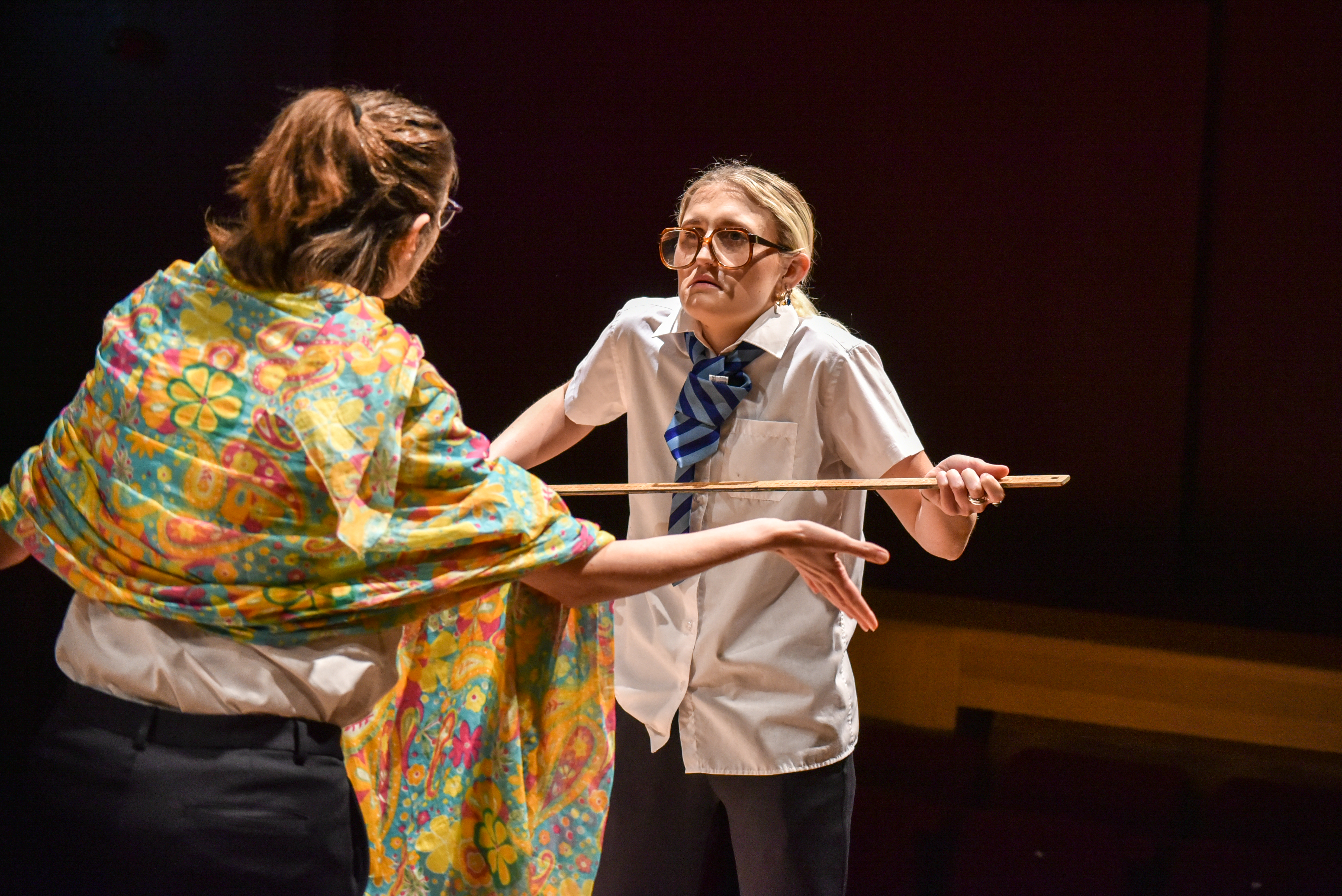
Three young actors. Countless characters. One stage. A theatre in the round.
Teddington Theatre Company smashes it!
Teechers, a comic play by John Godber, could have been the inspiration for Derry Girls and The Inbetweeners. It was first performed in 1987 but scores top marks for resonating with current issues. It seems particularly relevant post-Covid when so many children have had their education severely disrupted, and when the gap between privileged and struggling schools has widened.
This frantic play within a play depicts three pupils, Gail, Hobby and Salty, along with their newly qualified drama teacher Mr Nixon, attempting to navigate a tortured journey through school life, social policy, bureaucracy, teenage crushes and thuggish bullies.
The trio dominate the stage to address the audience directly: ‘All we want you to do is use your imagination, because there’s only three of us and we all have to play different characters … and narrators, so you’ll have to concentrate!’
Read more…Worth All the Tea in China
Aladdin
by Jackie Howting
Edmundians at Cheray Hall, Whitton until 29th January
Review by Celia Bard
So good to see a full auditorium and it is good to see the Edmundians back in action after a two year break due to Covid. Mind you this production was still not free from the viciousness of this nasty little virus, leading to last minute replacements because of forced isolation. However, true to the spirit of panto and the enthusiasm and talent of this drama society, press night performance of Aladdin proceeded smoothly. The audience consisted of people of all ages and did not need much encouragement to participate: “Oh Yes, they were!”
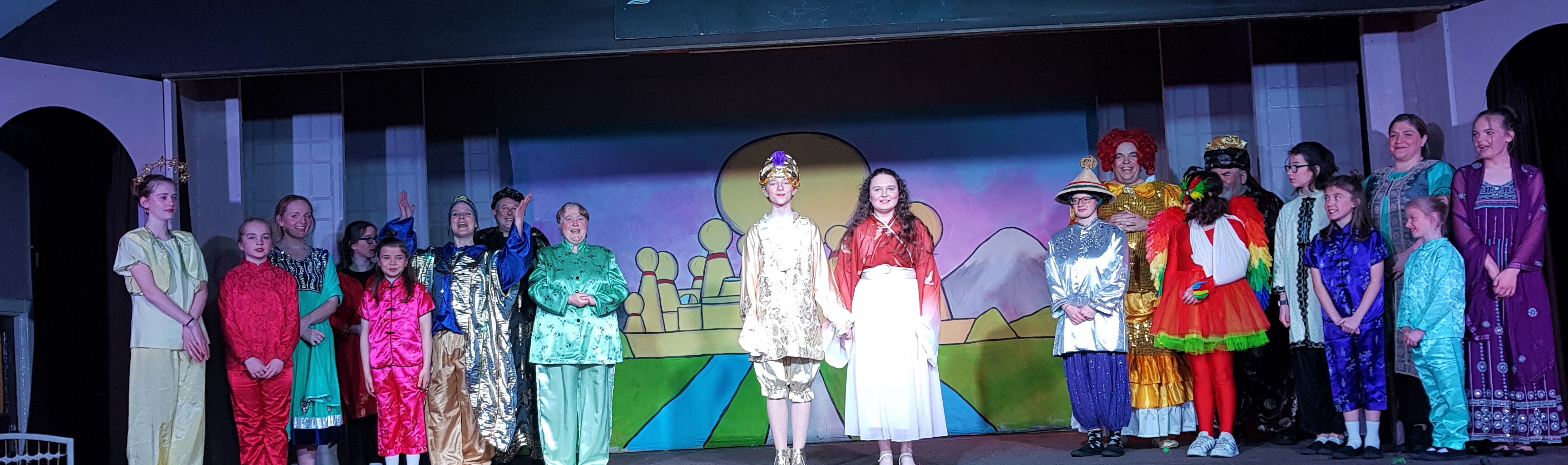
The panto was performed in traditional mode with a much appreciated topical twist. Atypical was the opening scene that opened on a mountain ski resort, a nod, no doubt, to the Beijing Winter Olympics, although I was later informed that the writer had also recently spent some time in Austria, and was able to bring her experience into this production.
Read more…Classy Openings
Red Door Poets II
Red Door Poets, Chelsea, On-Line, 23rd January
Review by Heather Moulson

Knocking and waiting outside that rather smart front door in Chelsea is rather unenviable in January when the temperature is knocking on zero. How much more comfortable to do so from home, where we can wait in spirit, or rather in screen images and voices.
With sixty plus attendees, we were all looked forward to knocking on the Red Door for another hour of poetry with the first presentation of 2022 from this accomplished group of strong prolific poets.
Red Door Poets II opened with musician Chris Hardy from Little Machine (who supports the wonderful Roger McGough) making a slick introduction before the door quite literally opened. And what did we see? We saw a sea of talent.
Read more…Ourselves, or Our Stars?
Dear Brutus
by J. M. Barrie
Questors Theatre at The Studio, Ealing until 29th January
Review by Nick Swyft
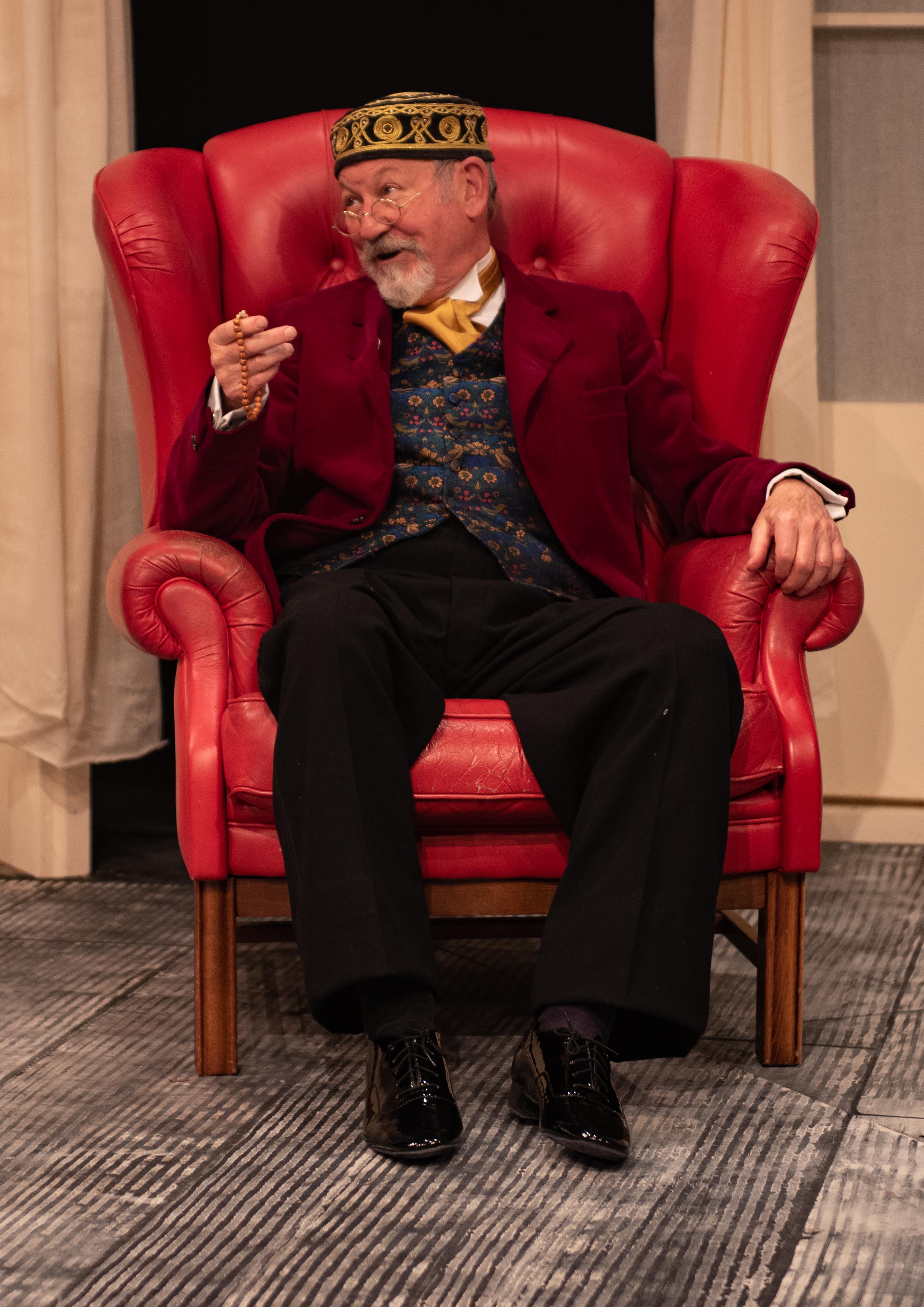
‘The fault, dear Brutus, is in ourselves, not in our stars.’ This is the keystone of Dear Brutus, by J.M. Barrie. A group of people have been invited to a country house on midsummer’s eve by the mysterious Lob. In Act One, we learn about the ‘faults in themselves’ and how these have led each to the current state of their lives. Magic as an elemental force doesn’t try to fix things. It shows them how things would have been different if they had chosen an alternative path.
But who is Lob? Is he trying to help or hurt them, or is he merely stirring the pot for his own pleasure? His Butler Jim Matey (Simon Higginson), certainly feels that he is using it to keep him trapped, and advises the others ‘not to go into the wood’. There isn’t a wood within twelve miles of the place, but of course this is a magic wood that only appears on midsummer’s eve. Since nearly all the characters are in some way disappointed with their lives, it is clear that when the wood does appear, following the butler’s advice is the last thing on their minds.
Read more…Bohème Bounces Back
La bohème: Preview
Instant Opera at Normansfield Theatre, Teddington from 28th – 30th January 2022
Preview: Opera critic Thomas Forsythe discusses Instant Opera’s forthcoming production of Puccini’s La bohème with its Artistic Director Nicholas George
TF: Good evening, Nick. I hear there is some exciting news: one of the cast of La Bohème has just become a father (for the first time), a fortnight before opening night.
NG: Good evening, Thomas. Yes, wonderful news and a tonic to the entire cast in these challenging, tough times. Between you and me, I already have the new arrival down as a potential member of the Instant Opera Chorus… If he can sing half as good as his father, we’ll be well served!
TF: That’s marvellous news, and just in time for a double celebration, as Instant Opera’s own “new baby” is due at the end of January, a second generation La bohème, reviving the successful 2019 production. Can we expect a clear family resemblance between the two productions?
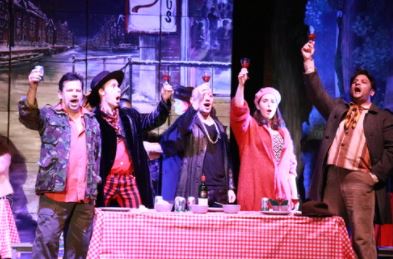
NG: Completely. It’s a carbon copy of the original production, which sold out weeks before the opening night back in 2019 and was enthusiastically received. We may add one or two surprises here and there, but what is also exciting is the fabulous cast of new singers that have joined some of the original cast – the audiences are in for a treat!
TF: Instant Opera’s La bohème is set in 1970’s Amsterdam, not as envisioned by Puccini and his librettists, set in Paris in 1830. Why the change of location? Will the atmosphere be different?

Lyricism by Lamplight
Raymonda
by Tamara Rojo after Marius Petipa, music by Alexander Glazunov
English National Ballet at the London Coliseum until 23rd January,
World Premiere production.
Review by Mark Aspen
The Crimean War in the mid-1850s is now best known for the charge of the Light Brigade. By why should it be known for an act of heroism that proved futile? Probably because this war first saw both honest open reporting and the advent of war photography, with the appointment of Roger Fenton as the first official war photographer.

Fenton’s photographs are one of many inspirations for Tamara Rojo’s new honest and open choreography for Raymonda and the setting for its sublime World Premiere production. Indeed designer Antony McDonald’s set is a series of tilted photo frames and the colour palette variations on the sepia of early photographs, muted and richly mellow. All is atmospherically enhanced by Mark Henderson’s lighting designs. Moreover, we have an on-stage photographer of the period (Giorgio Garrett) who re-dances the last move as his shutter clicks. This works surprisingly well, since, as with all ballets, there are episodes and set-pieces, and these shout to be captured on photographic plates. Somehow this makes the narrative more immediate, real and impelling.
Read more…Subliminal Messages?
Dark Sublime
by Michael Dennis
Progress Company at Progress Theatre, Reading until 22nd January
Review by Nick Swyft

How many young gay men would take the trouble to track down Jacqueline Pearce, who played Servalan in the 80’s science fiction series Blakes 7? Actually, probably quite a lot, and if you are one of those, this play is definitely for you. Read Dark Sublime for Blakes 7, and you’re there.

It is about the relationship of one such fan with his idol. The actor in question, in the world of the play, is Marianne Hogg (Melanie Sherwood) who played the evil Ragana in the series Dark Sublime. It is, however, more about Marianne and her issues, than it is about the fan, Oli (Dean Stephenson). Marianne lives with a female companion, Kate (Ali Carroll), and their unstable relationship provides a brooding backdrop to the action, which Oli inadvertently draws out.
Read more…A Lion in Winter
The Lion, the Witch and the Wardrobe
music and lyrics by Irita Kutchmy, based on the novel by C.S. Lewis
Step on Stage Productions, Youth Theatre at Hampton Hill Theatre until 15th January
Review by Andrew Lawston

The Lion, The Witch and the Wardrobe is a great choice for youth theatre. Aside from the enduring popularity of CS Lewis’s original novel, the central four characters are children, and many of the supporting cast are talking animals or mythical creatures. The story can be told in a big-budget Hollywood production, but with the book’s emphasis on the characterisation of the four Pevensey children, it’s equally possible to envisage a tiny fringe adaptation with a cast of half a dozen. Or, indeed, Irita Kutchmy’s musical version, as we’re seeing tonight at Hampton Hill Theatre.

From the opening ensemble number, the eponymous The Lion, The Witch and the Wardrobe, however, it’s clear that Step On Stage Productions are committed to a huge undertaking. The song sees most of the numerous young cast on stage as evacuees being waved off to the countryside by parents. Laden with suitably scuffed suitcases and gas mask boxes, the large ensemble sings with gusto, before the action switches to the Professor’s house, with its staircase, landing, and of course the eponymous wardrobe. The Professor is played by Nils Collin, who looks marvellously comfortable in his country house, pipe in his hand, relaxed and thoughtful. He later also operates Aslan and provides the lion’s voice, in a contrastingly energetic but equally compelling performance.
Read more…Going For It 100%
Alice in Wonderland
by the PTC Writing Team from the story by Lewis Carroll
Putney Theatre Company at the Putney Arts Theatre until 8th January
Review by Denis Valentine

Alice in Wonderland is a newly written and produced play-musical by the Putney Theatre Company and offers an interesting, and at times innovate, take on the delivery of the classic story.
With a big ensemble cast there are many strong performances which really bring to mind the classic elements and recognisable character traits that one might hope to see when going to Wonderland. Frances James offers a very likeable Alice and hits all the right notes as our confused but strong-willed protagonist.
Read more…Fresh Pot of Mad Party Tea
Alice Bounces Back
Putney Theatre Company at Putney Arts Theatre, until 8th January
Thomas Forsythe investigates
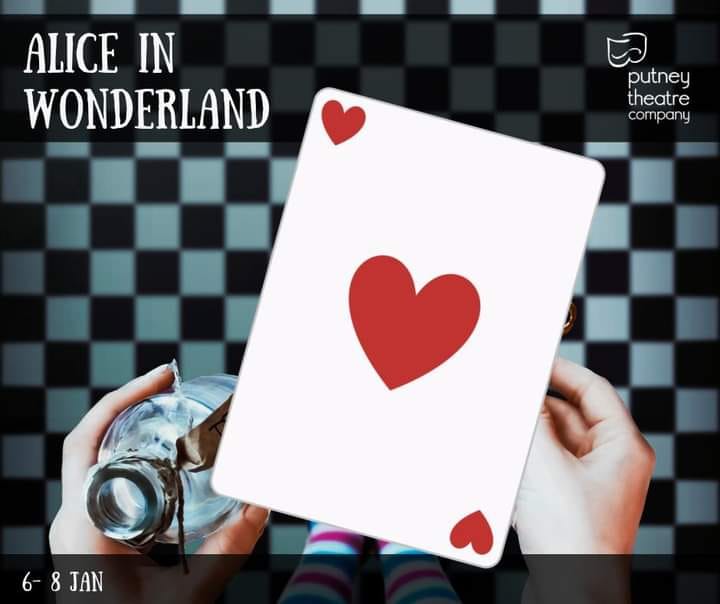
“You mean you can’t take less. It’s very easy to take more than nothing.” So says The Mad Hatter in Alice in Wonderland.
Putney Theatre Company has almost taken this as its motto for the company of its own Alice in Wonderland, a musical version of Lewis Carroll’s much loved enigmatic story, written by the PTC Writing Team.
By mid-December, excitement was at its peak as the Putney Arts Theatre’s resident company, Putney Theatre Company, was ready to journey with Alice and with everyone’s favourite wacky, weird and wondrous characters, on a rumbustious, rousing and rowdy ride through Wonderland.
Read more…

 Mark Aspen