
Roller Coaster Romance
Sleepless, A Musical Romance
by Michael Burdette, Music and Lyrics by Robert Scott and Brendan Cull
WPT at Troubadour Theatre, Wembley Park, until 27th September
Review by Stephen Leslie
It was with sense of curiosity and some trepidation that I set out on my first trip back to the theatre since everything closed in March (including my own show Annie Jr, which as producer I had nurtured right through to the dress rehearsal).
I had the pleasure of being part of the socially-distanced audience for Sleepless, A Musical Romance, a new musical which was playing the Troubadour Theatre in Wembley Park, a shiny new venue I’d not previously visited. It had in fact not been open many months before lockdown hit. The Troubadour Theatre, with its up to 2,000-seat auditorium as well as bars and restaurant was built on the site of the former Fountain Studios television complex, which had live broadcast many well-known TV shows, such as Who Wants to be a Millionaire, and more recently, The X Factor and Britain’s Got Talent.
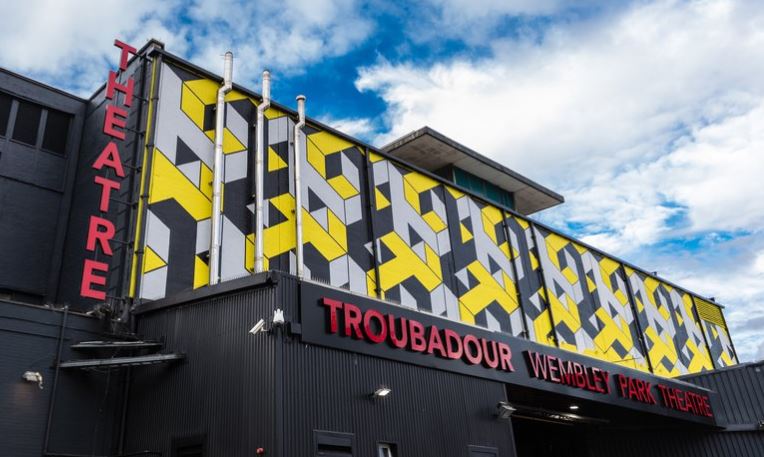
Sleepless, new show based on the 1993 movie, Sleepless in Seattle starring Tom Hanks and Meg Ryan, had been due to open in March, almost at the same time as our own Dramacube production of Annie Jr. but was put on hold when the UK went into lockdown.
Read more…Summer’s Apples
Roxy Dots
West Green Opera at West Green House, Hartley Wintney, 20th September
Review by Mark Aspen
John Keats wrote his famous Ode to Autumn on 19th September 1819. He could have been writing about the scene in Hartley Wintney 201 years and a day later, when the “maturing sun” of a gorgeous late summer day conspired with early autumn “to bend with apples the moss’d cottage-trees” in West Green’s beautiful gardens.

How appropriate then that our noontime treat by the Roxy Dots included the 1942 wartime hit Don’t Sit Under the Apple Tree (With Anyone Else but Me) and the beautiful mood piece I’ll Be With You in Apple Blossom Time.
Although this gig started with Roll out the Barrel, we certainly were not in a pub, but in the more gentile surroundings of the grounds of West Green House, home in the Green Theatre, where for two decades West Green House Opera has been presenting fully staged summer operas. The house has had quite an exciting history. Having been built by the controversial Georgian military commander General Henry Hawley, it has been home to a number of prominent people, including as the dower house of the Duchess of Wellington. As the home of Lord Alistair McAlpine, a well-known advisor to Margaret Thatcher, it attracted the attention of the IRA, who bombed it in 1990, destroying the front façade and much of the neo-classical garden statuary that Lord McAlpine had commissioned from architect Sir Quinlan Terry.
Read more…Tranquillity Sought
SEND In the Clowns
by Suzy Rigg
Review by Heather Moulson
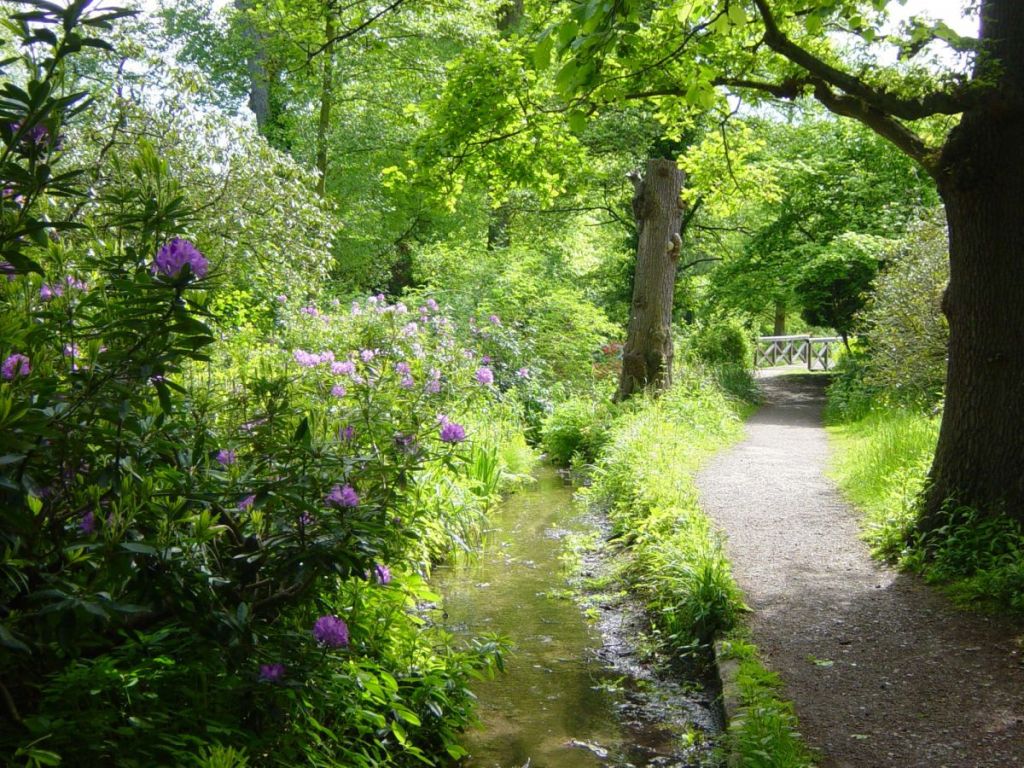
With its Silver Birch Glade, Fisher’s Pond, King’s River Garden and Willow Plantation, the woodland walk created in 1925 from two Georgian plantations, now much loved as the Waterhouse Woodland Garden, forms a tranquil retreat. Could then then be a better place to discover a new work focussing on those for whom tranquillity is a luxury, rarely achieved.
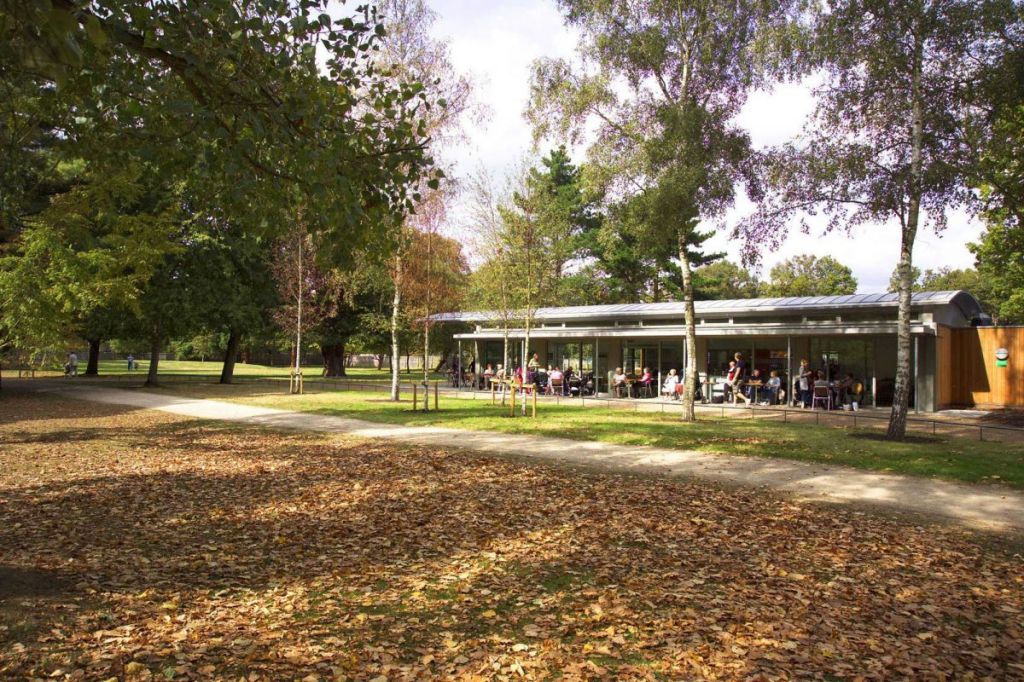
Within the garden is the Pheasantry, highly popular as a meeting place for those with young children, so it was very pertinent that this was the venue chosen introduce a book by the prolific writer and poet Suzy Rigg on the subject of autism.
Read more…Parlour Games
Playing Jane
by Rosina Filippi
Amanda Root Company at Landmark Arts Centre, 4th and 5th September
Review by Erica White
What a huge pleasure it was to enter the Landmark Arts Centre in anticipation of seeing live theatre after being starved of culture during the pandemic of 2020. LAC opened its doors for the second time this summer. Firstly to host three weekends of a well organised and socially distanced Fine Art and Sculpture exhibition. Secondly, as a fund raising event, to offer local resident and actor, Amanda Root, the opportunity of producing a work recently rediscovered at the British Museum and republished in 2019.
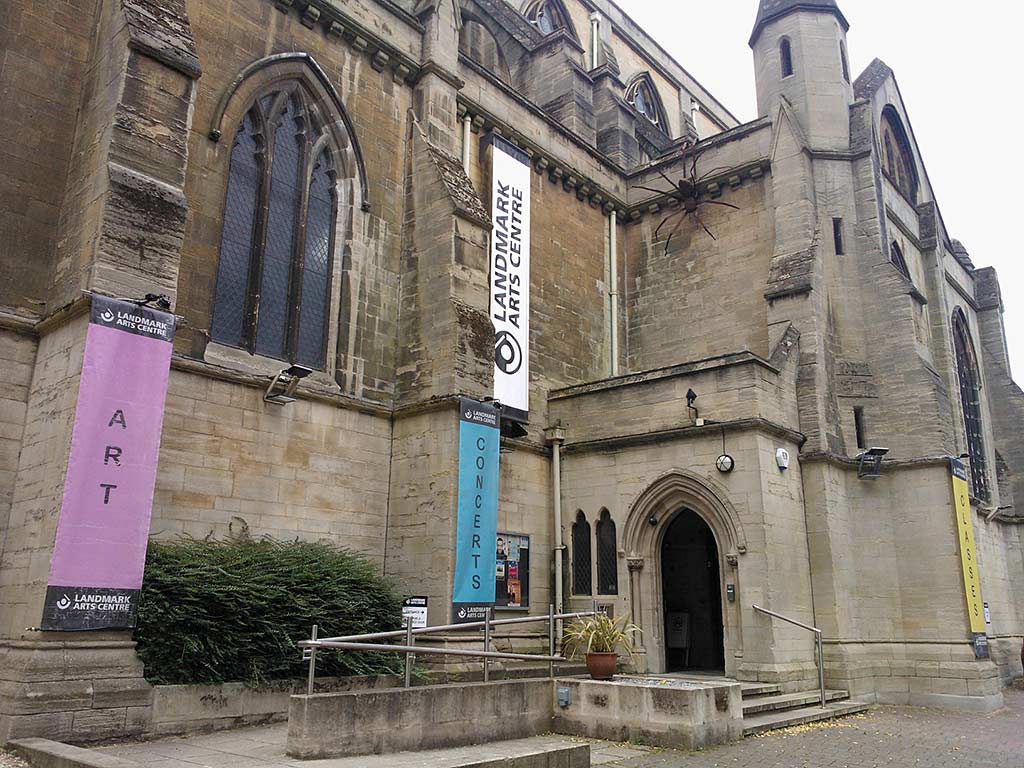
This was a collection of parlour plays put together by Rosina Filippi (1866-1930) who was an actress, director and feminist. She was the first person to dramatise Jane Austen. She was an actress, director and feminist so it is not surprising that she was drawn to Austen’s works, especially to the strong female characters Austen created. Filippi eschewed the proscenium arch and stage, preferring minimal props and furniture so that her playlets could take place in drawing rooms.
Read more…Eating Up Life
A Feast in Time of Plague: a Morality Tale
Reflection by Mark Aspen
Throw open the bunker lid and step cautiously out! Being of a certain age, it is only over the last couple of weeks that your theatre critic has ventured into the real world as lockdown has been eased. Does one see a world of fearful caution? Does one heck! Few trips around the Richmond area and further afield, plus two intrepid safaris into central London have shown caution is being thrown to the wind. Many seem to think that the worldwide pandemic has flown off across the Atlantic, whilst others just have an inshallah mentality.
My straw poll locally estimates that only about 4% wear facemasks outdoors. The one-way pedestrian system over Richmond Bridge is largely ignored, and the pre-lockdown take-over of the pavements by cyclists has itself become an epidemic, now augmented by electric scooters. On warm evenings, Twickenham Green has become an alcohol and urine soaked rave location. These are a few examples.
However, not wishing to cultivate a GOM image, we must throw aside the Grumpy bit and say that there have been moments of welcome kindness: those young people who smilingly step aside to maintain the two metres, the lady at Waterloo Station proffering hand sanitiser, the restaurant staff going out of their way to make sure that your table is far from the coughing crowd’s ignoble strife (whilst still having a riverside view).

Which brings me to Pushkin. In the early days of lockdown, I reflected that his play Mozart and Salieri could be an allegory for the way that these unusual times distort people’s views and actions. I left hanging the thought for reflection that another of his short plays, A Feast in Time of Plague, is a play pointedly prescient in 2020.
Caliban’s Lament
by Anne Warrington
Critique by Quentin Weiver
The whole is more than the sum of its parts. Now here is an adage worth hanging on to when considering William Shakespeare’s most enigmatic, and arguably his best, play The Tempest. Dig deeper and a corollary emerges when examining the play’s two most enigmatic protagonist, Prospero and Caliban, that intellect is more than a sum of knowledge. Anne Warrington has done just that in her poem, Caliban’s Lament.

What is more galling than the Wiki-genius with a smart phone! You may know your subject back to front; you may have earnt your living for decades on an application of its skills; you may even have an Oxbridge professorship on this very subject, or a Noble Prize come to that; but along comes the Wiki-genius. You will recognise him: he probably wears a baseball hat (which reduces his IQ by 50%) and possibly wears it back-to-front (which reduces it by a further 50%). However, in his pocket he has access to what he considers to be unassailable facts, “facts” from the Internet. A few taps on the smart phone and out comes the pseudo-trump card to lay on your subject. No one has told him that knowledge is far more than a collection of facts, just as a wall is more than a collection of bricks.
Read more…Clipped Swans Fly
Swan Upping
Retrospective by Mark Aspen
Coronavirus has claimed another victim: the annual royal tradition of Swan Upping on the River Thames. For the first time since the 12th century the full ceremony has been cancelled this year. Normally for five days at the end of July the river between Abingdon in Oxfordshire and Sunbury-on-Thames buzzes with excitement as crowds watch the river’s population of mute swans being marked and a census undertaken on behalf of the Queen.
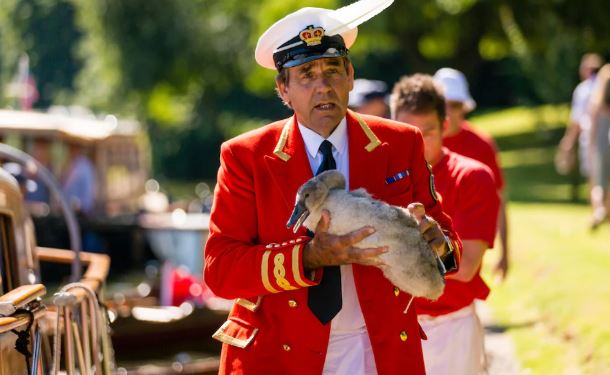
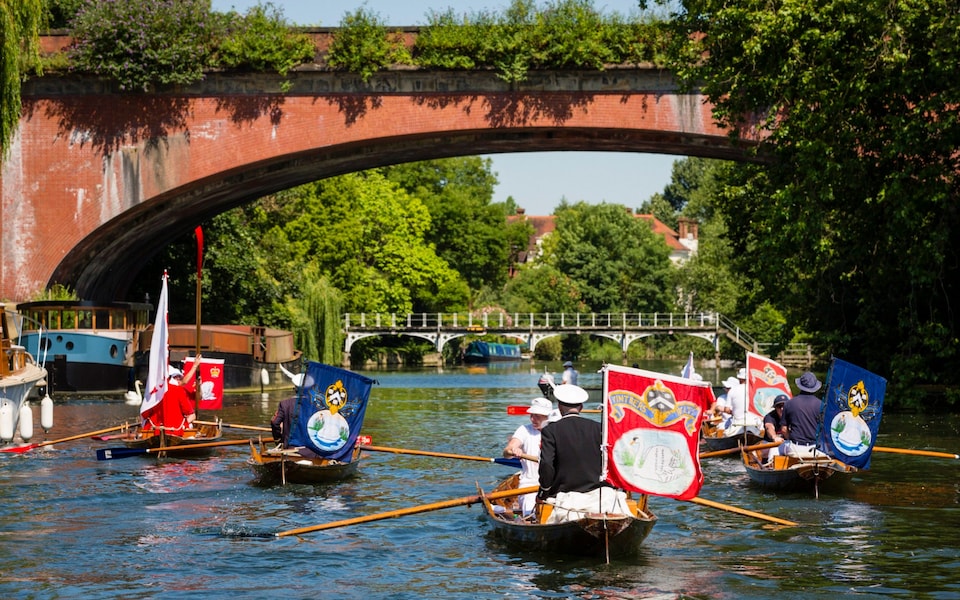
The Crown has sovereign ownership of all the swans. However, for the past four hundred years, rights over swans have been granted by the monarch. The only bodies currently exercising these such rights are two livery companies of the City of London. Nowadays, ownership of swans in the Thames is shared equally among the Crown, the Vintners’ Company and the Dyers’ Company. The event is carried out from traditional rowing skiffs under the supervision of Royal Swan Uppers wearing scarlet uniforms, who weigh and measure cygnets and check on the swans’ welfare, along with swan uppers from the livery companies. The cygnets are ringed to denote whether they belong to the Vintners or the Dyers, whilst Crown birds are left unmarked. Previously marking used to by clipping nicks from the edge of the beaks of Vintners’ and Dyers’ Companies’ birds.
A mile or so downstream in the London Borough Richmond upon Thames, Swans have had their wings clipped this year as a result of the Covid-19 outbreak … … The Swan Awards are Arts Richmond’s local “Oscars” for the best in the non-commercial theatre within the Borough. Normally the season runs from September to July, but this year’s coronavirus restrictions brought the Swans down from the sky in mid-March. Read more…
Wilde About You
Wilde Weekend
Teddington Theatre Club, zoomed until 28th June, then on-line on YouTube.
Overview by Mark Aspen
Only the very few see the sad sight of an empty auditorium in our locked-down theatres, thousands of theatre-makers itch to put a show on stage, while hundreds of theatre junkies yearn for their fix of real theatre.
Real theatre is a living breathing, three dimensional creature, in which the audience feeds off the stage and the stage feeds off of the audience. When real theatre is reduced to a screen it becomes merely a pale imitation of itself. But needs must and we have all become accustomed over the past few months of seeing our favourite theatres boiled down to the small world of on-line entertainment. The bigger the theatre the bigger the reduction, of course. Nevertheless, I have found myself hooked every evening on seeing Covent Garden, the National Theatre, or the London Coliseum squeezed into the small screen … and have enjoyed it (as second best).
But what about our smaller local community theatres, the non-commercial theatre? Read more…
What Money Cannot Buy
A Florentine Tragedy
by Oscar Wilde
Teddington Theatre Club, zoomed until 28th June, then on-line on YouTube
Review by Quentin Weiver
During that brief interlude in Oscar Wilde’s life when his mind was preoccupied with the gathering storm clouds of criminal charges, his prolific writing output was directed away for his trademark acerbity towards more reflective subject-matter. A few months in 1894 when the impending prison sentence was almost inevitable, saw the creation of La Sainte Courtisane, his masterpiece Salome, and the languorous poem The Sphinx. As another quirk that year he experimented with early seventeenth century styles and started a blank verse drama, A Florentine Tragedy, whose style smacks of Shakespeare but whose plot is scarily Jacobean.
One might speculate that Wilde may have been harking back to a period in history when his precarious predicament would not have been a matter for the courts of law, for during and after his incarceration in Reading Gaol for gross indecency in 1895-97 he never completed the work. It remained unfinished at his early death from syphilic meningitis in November 1900, but the extant fragment of the manuscript was published in 1908. Read more…
Spirituality and Sensuality in Equilibrium
La Sainte Courtisane
by Oscar Wilde
Teddington Theatre Club, zoomed until 28th June, then on-line on YouTube
Review by Thomas Forsythe
There was a short time in Oscar Wilde’s life that his writing embraced the spiritual. Two plays in particular, Salome and La Sainte Courtisane, concern Christian subjects. Both were written in 1894, ironically the year before his conviction for gross indecency. If there were a burgeoning faith for Wilde, his experiences in Reading Gaol seems to have extinguished it. Nevertheless, Salome remains his masterpiece, free from the destructive cynicism otherwise typical of Wilde. Who knows, La Sainte Courtisane may have eclipsed it … had it ever been finished. Read more…

 Mark Aspen