
La Bohème
Death Us Do Part
La Bohème
by Giacomo Puccini, libretto by Luigi Illica and Giuseppe Giacosa
The Grange Festival at The Grange, Northington, Alresford until 11th July
Review by Mark Aspen
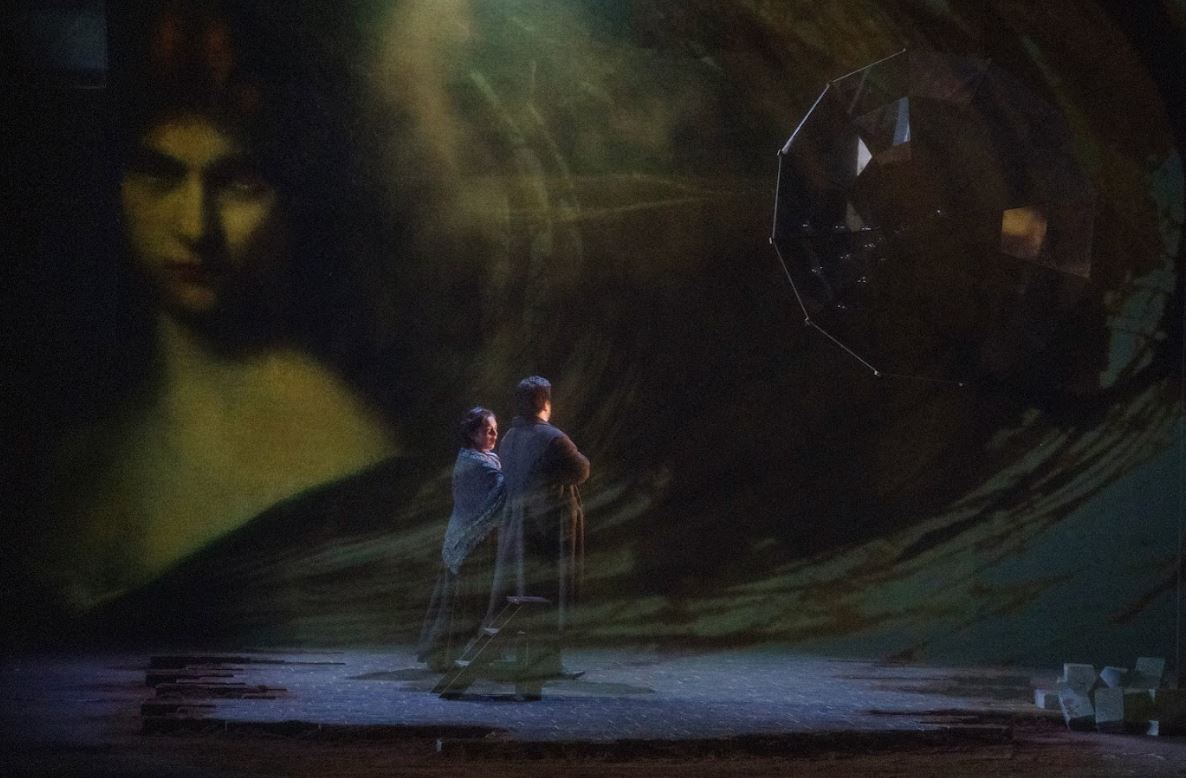
La Bohème has something of an impressionist feel about it, with its poetical hints at time, place and way of life. It’s premiere in Turin in 1896 was at a time when in France the likes of Monet, Sisley and Pissarro were making their mark in the art world. In this revival production of French director, David Geselson’s La Bohème, other artists make an entirely different impression. Delacroix, Goya and even Turner are dragooned in to make points about French politics of the Nineteenth Century. We see projected images that seem totally irrelevant. The subject of Delacroix’s Massacre at Chios is in Greece, Goya’s The Third of May in Madrid, and Turner’s The Slave Ship is in the Atlantic Ocean!
Surely, La Bohème, Puccini’s sine qua non tear-jerker, is a romantic tragedy, not a political polemic. Although Puccini set the opera at the end of 1830, the year of the July Revolution, in which the restored King Charles X was forced to abdicate, the setting merely indicates a time of shortage and of instability. (At one point in the opera, the impoverished bohemian friends pay mock homage to the image on the only coin they possess, the image of the new constitutional monarch Louis Philippe, the “Citizen King” the last scion in attempts to restore the monarchy . . . but that is all.)
La Bohème is about the folly of youth, about the strength of love, and about friendship in adversity. The reasoning behind this attempt to shoe-horn it into a political message is totally opaque, and gets in the way of the story-telling and the beauty of the piece. Happily, though, it is decidedly more than redeemed by superlative vocal and instrumental music.
Grange Festival’s La Bohème garners a generous audience response for its principal singers and its orchestra performance, and rightly so.
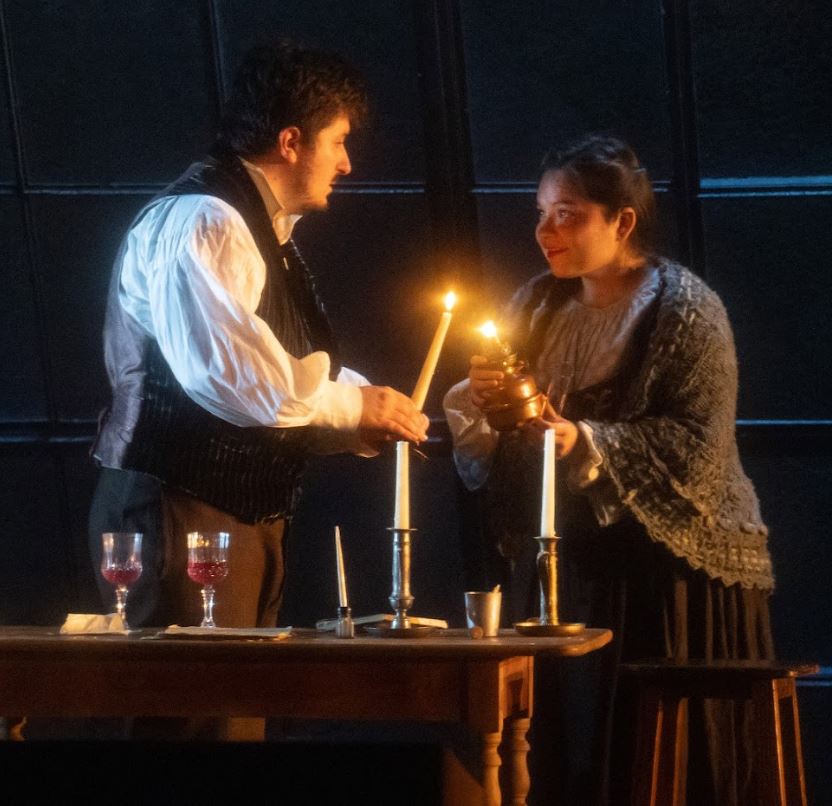
Making his UK and European debut, American tenor Luke Norvell is immediately impressive as the penniless poet, Rodolfo. The lyricism in his voice is apparent right from the get-go, but there is a captivating freshness in his approach. In the opening Act, when the lonely and lovely Mimì arrives at Rodolfo’s garret lodgings seeking help, his tenderness is touching and palpable. Norvell’s rendition of the Che gelida manina (the well-known “Your tiny hand is frozen”) is totally engaging. Chilean soprano Isabela Díaz is also striking as Mimì, and even when she first introduces herself. Mi chiamano Mimì, her aria starts, and Diáz’s interpretation, as she goes on to explain she is an embroiderer but likes making artificial spring flowers is truly affecting. Díaz sings with a sweetness that is imbued with emotion. We know that Mimì is terminally ill and will never see the spring again. In her very next words, she says her real name is Lucia (light) and her story is short. Díaz’s performance is full of expression, but nevertheless she does seem to be in the slipstream of Norvell.
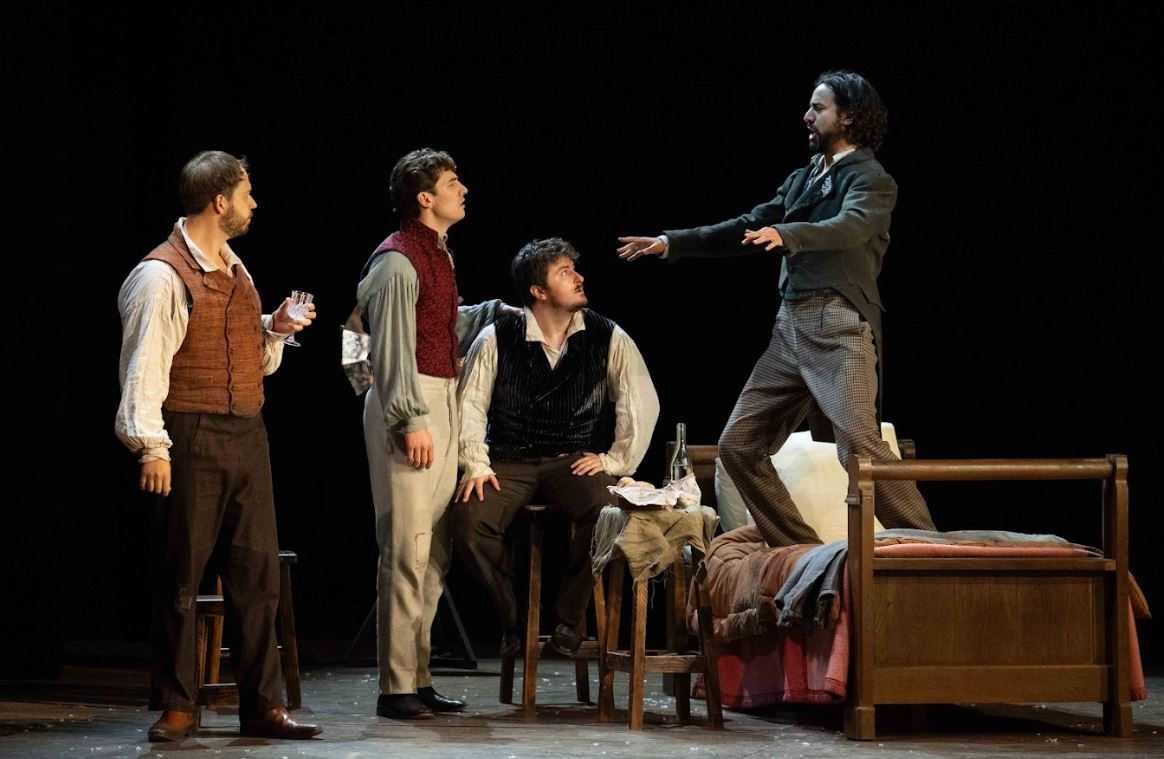
This scene is played behind a gauze, which chimes well with the impressionist feel of Puccini’s music and with the source of the libretto in Henri Murger’s 1851 mood piece, Scènes de la Vie de Bohème. It perhaps doesn’t work quite as well with the rest of Act One, which introduces the four student friends, poet Rodolfo and Marcello the artist, Colline the philosopher, and Schaunard the musician, freezing on Christmas eve, making the most of a bad thing by symbolically and light-heartedly burning Rodolfo’s play. The Act also includes the crafty dismissing of their rent-collecting landlord, Benoît. Yet this Act, for the most part, only uses the stage right half of the stage.
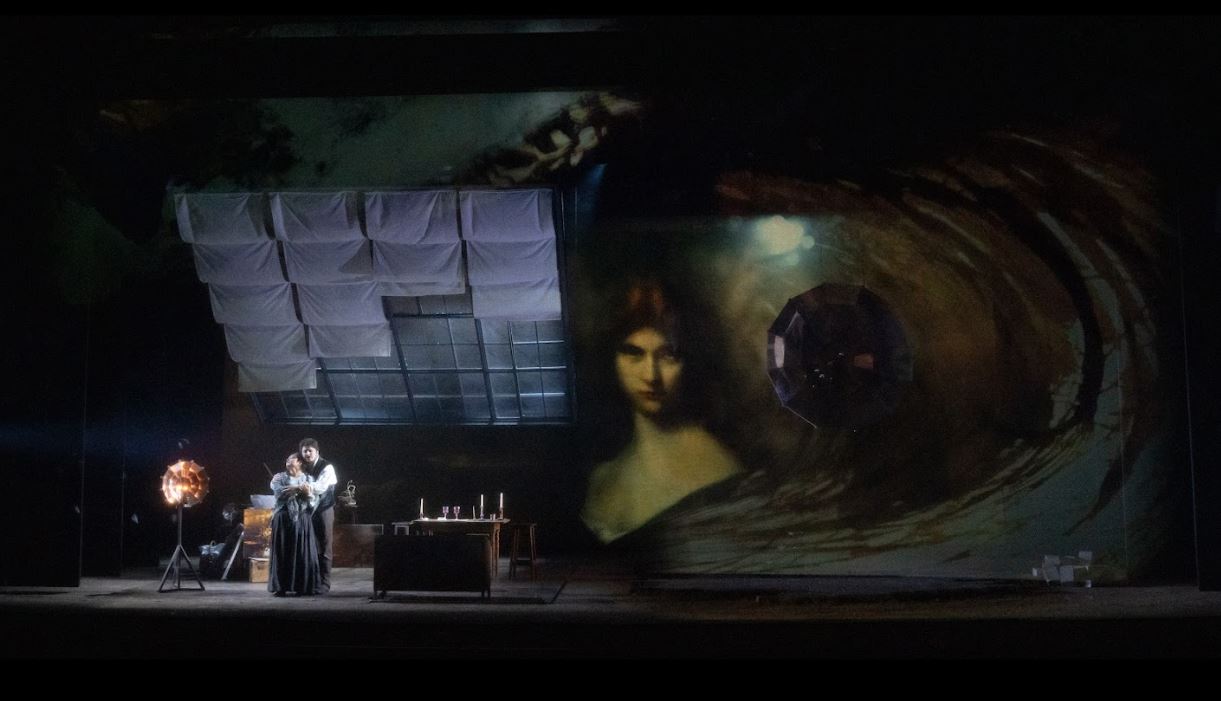
Designer, Lisa Navarro creates the opening Act, which is the friend’s shared garret, as a multi-paned glass roofed area. A tipping pane becomes the very awkward entrance and exit for all the characters, thus stressing the idea of a confined space, but doesn’t even the meanest garret have a door of some sort? The stage left half becomes the canvas for some very clever lighting and video designs by Jérémie Papin and Jérémie Sheidler. These include evocations of darkness to light using a magnifying candle reflector, which also transmogrifies a huge ice or snow flake into the sun. Mainly though, the gauze is used for projections of Delacroix’s The Massacre at Chios (or is it Marcello’s?) and snippets of poems of Lamartine, Hugo, Baudelaire, Verlaine, Rimbaud, and Mallarmé, in English translations, all revolutionary stuff. It is all very imposing, but very distracting.
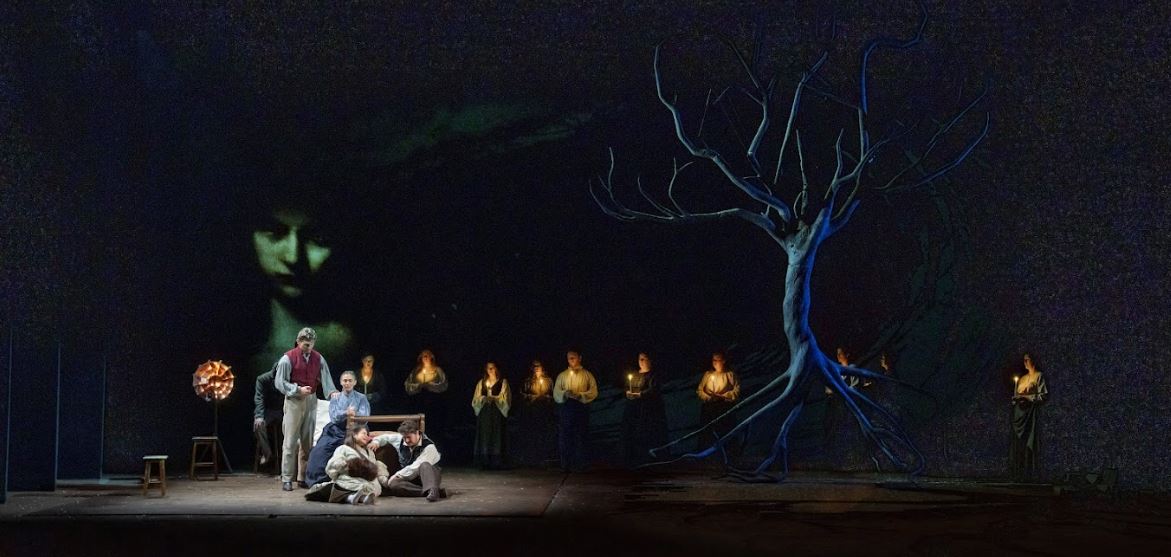
Navarro and Papin really come into their own, though, in using the same gauze technique in Act Three, outside a country inn at a winter’s dawn, complete with falling snow. Yes, it’s really cold, and one can feel the bleakness of Mimì’s desperate chance at reconciliation. The set has a huge tree, standing in its winter bareness right down to its roots.
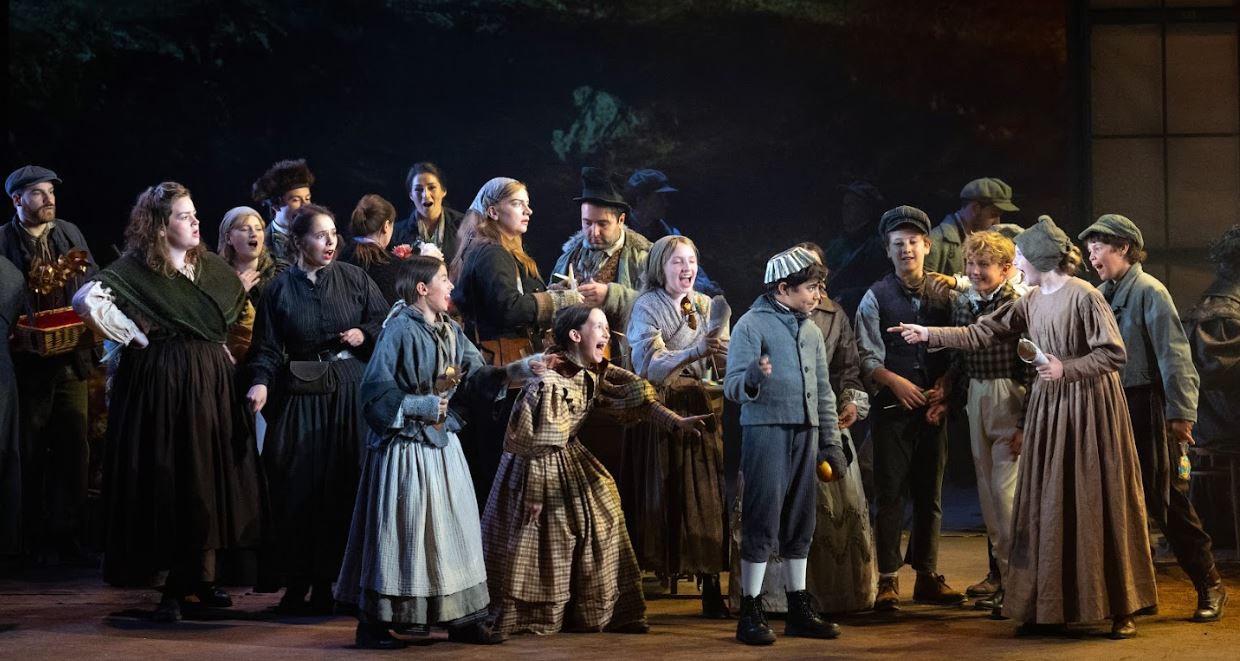
In contrast the Act at Café Momus jumps with life. The scenes here provide a cornucopia for William Vann’s Grange Festival Chorus, who are on great form. An even spread of ranges across two dozen animated singers, they bubble and teem with life. Parpignol, the colourful toy seller, comes down from the gallery, and the chorus is augmented by local children. Also having a field day is costume designer Benjamin Moreau and his team at the Grange led by Beth Qualter Buncall.
Café Momus is where the other companions first meet Mimì, unfortunately at a time of some tension for Marcello and his one-time love Musetta. We initially see Marcello as quite cynical, a reaction to losing Musetta, but he turns out to be the most rounded of the friends. Patrick Dow’s Marcello is variously tetchy or empathetic, according to Marcello’s situation. He is the spark that can ignite the others, the foil for the humour and grounded emotional lynchpin of the group. It is he who ultimately convinces Rodolfo of the strength of Mimi’s love.
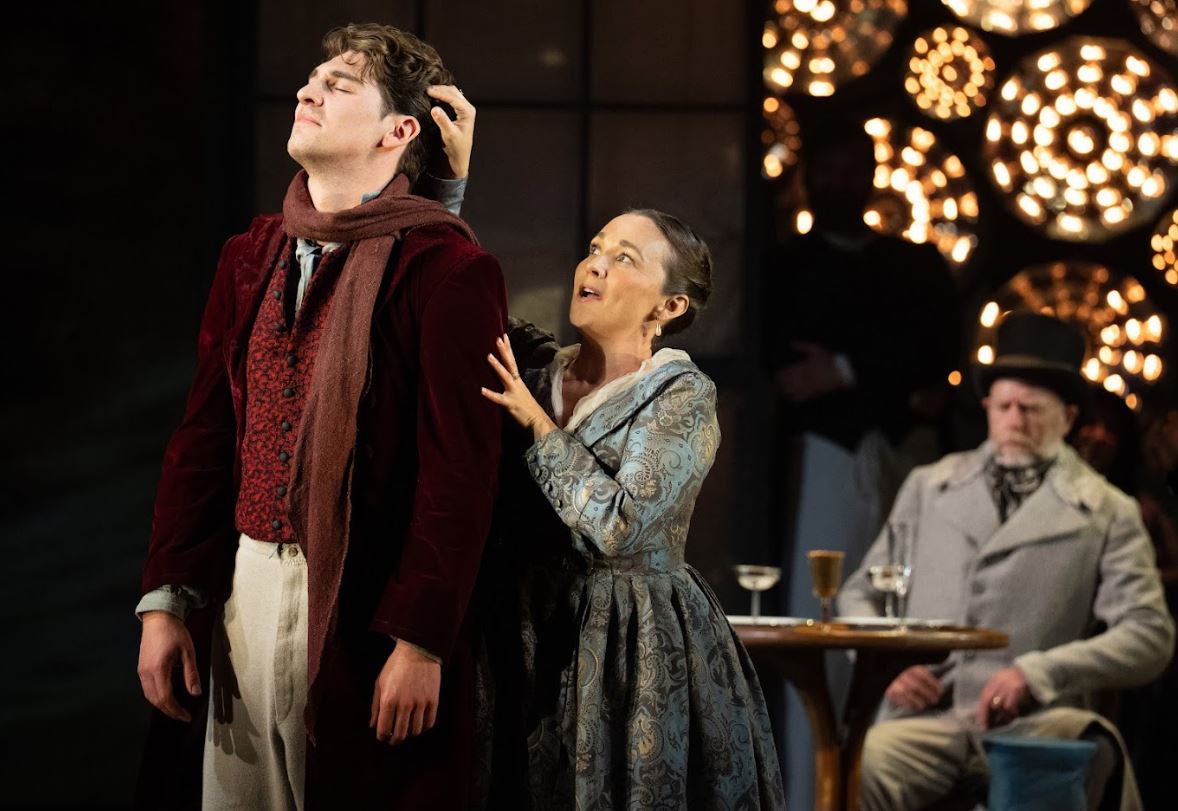
Musetta is perhaps the character who takes the longest emotional journey. We first see her spitting and spiteful, bored with being the kept woman of the wealthy Alcindoro, a high-ranking government official, smashing restaurant plates that smell of fish, and demanding her pinching shoe-leather be immediately remedied. Acclaimed Welsh soprano Rhian Lois portrays a sassy Musetta. She makes quite an impact in the Café Momus scene, with Musetta’s waltz, Quando me’n vo, “When I go along”, Musetta basking in her seductive power to wind Alcindoro round her finger whilst trying to regain Marcello’s attentions. And seductive it is, winding in all around her. Yet it is Musetta who softens the ultimate tragedy with supportive humour, and she is the strong anchor to them all at the end.
Mopping up the character parts of the randy geriatrics, Benoît and Alcindoro, and somewhat under-utilised, is bass-baritone William Dazeley, who brings a wealth of experience to flesh out their ailing frames and fire up their embers of passion.
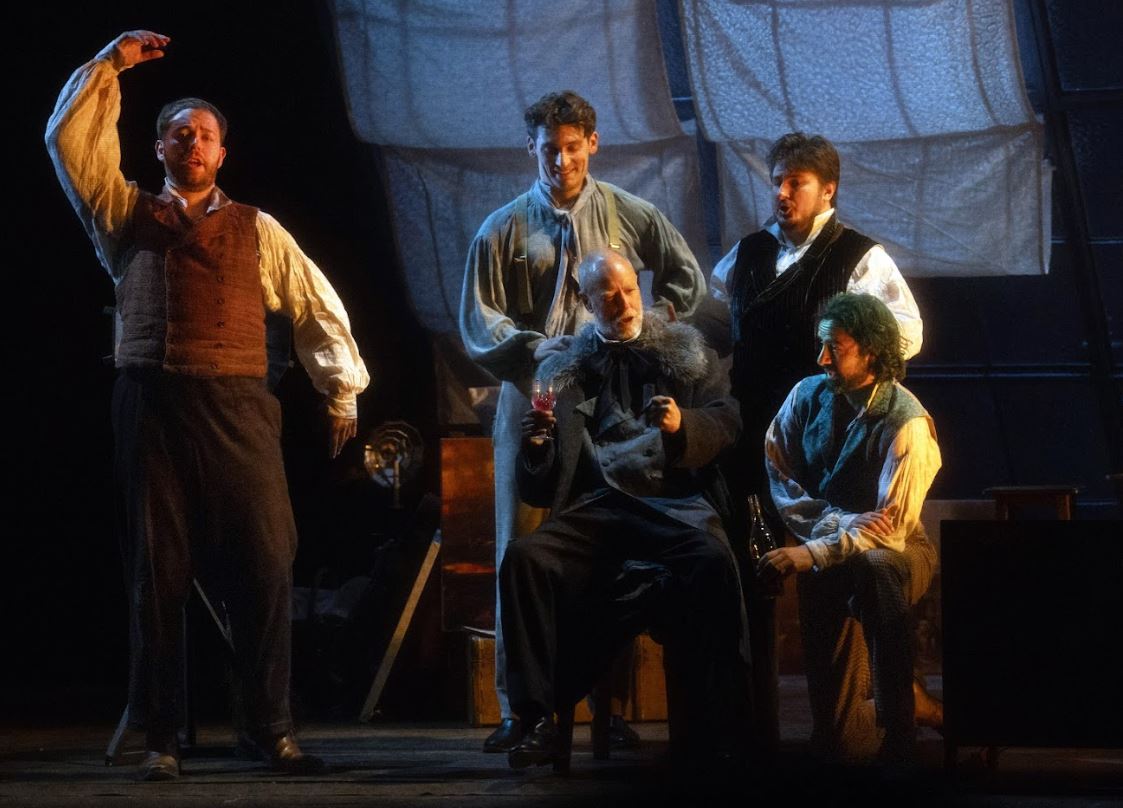
Schaunard is the chums’ saviour and showman, who rescues their Christmas Eve fast with wine, food, tobacco and bonhomie. Ever the raconteur, he tells them how his musical skills are used by an English gentleman to comfort his dying parrot, a tall tale totally ignored. Baritone Dan D’Souza plays the exuberant Schaunard, and has great fun with the part.
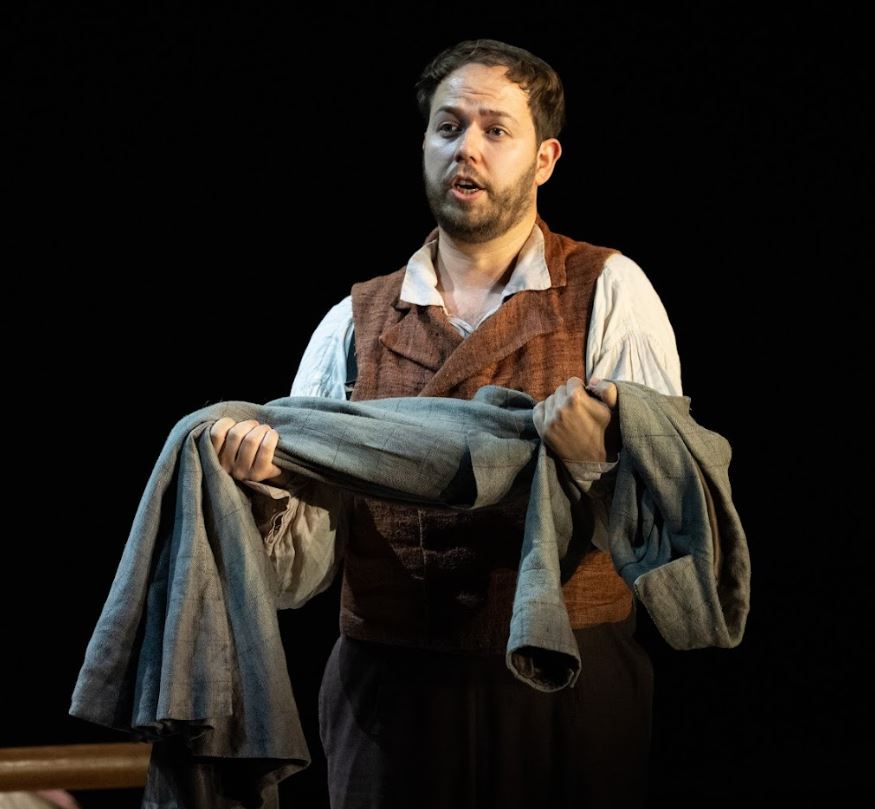
The philosopher Colline has a generosity of heart, and Jamie Woollard has measure of his character. Colline’s vecchia zimarra, “Old coat” is a gem of a bass aria. His overcoat, an old friend and all he possesses, he decides to pawn to buy medicine for the dying Mimì. Woollard gives a very moving rendition, but one feels he could push the pathos even further.
And pathos is the keyword for the final Act, where horseplay amongst the friends comes to a sudden halt as Musetta arrives with the doomed Mimì, who is in her dying hour. This stark contrast springboards the emotional impact of the story’s tragic denouement. Here the staging picks up the theme of light, Lucia being Mimì’s real name, and candles reappear, held by shadowy background figures, to be gently snuffed out as the notes fade and her life slips away.
Richard Farnes conducts the Bournemouth Symphony Orchestra with animated vigour, finding many musical nuances and, importantly, those turning points of silence which enhance a plot-line such as La Bohème’’s. The music is lush, and its energy seems to carry the performers, although occasionally risks inundating them.
Geselson’s production of La Bohème premiered last Christmas in Nancy, and revival director Peter Relton takes it onto a somewhat smaller stage at The Grange, and with English surtitles by Kenneth Chalmers.
What we have is really three shows, a sumptuous opera, an installation of intriguing images and well-known works of art, and a history lesson on French revolutionary politics. It’s a pity that they fit together so awkwardly. Nevertheless, the opera wins and shines through. There is still the romance, the beauty and the tragedy of La Bohème. The production packs an emotional punch that has us all weeping along with the friends of poor Mimì.
Mark Aspen, June 2026
Photography by Richard Hubert Smith


