
Archduke
Martyr Doom
Archduke
by Rajiv Joseph
The Royal Court Theatre and Brian and Dayna Lee at the Royal Court Theatre, Chelsea until 25th July
Review by Harry Zimmerman
It is a seminal moment in modern European history. On 28th June 1914, Archduke Franz Ferdinand of Austria, heir presumptive to the Austro-Hungarian throne, and his wife, Sophie, Duchess of Hohenberg, were assassinated by Bosnian Serb student Gavrilo Princip. They were shot at close range while being driven through Sarajevo, the provincial capital of Bosnia and Herzegovina, formally annexed by Austria-Hungary in 1908. It was this act that set in train a series of political and diplomatic events which culminated in the beginning of World War One.
This is the landscape upon which Rajiv Joseph’s intriguing and thought-provoking play, Archduke takes place.
What is taught in history books about World War I usually references Gavrilo Princip as the spark that ignited the “war to end all wars.” Princip and other nationalist-anarchist Bosnian Serbs, devoted to the cause of freeing Serbia from the Austro-Hungarian empire, succeeded in their assassination attempts after making mistakes that nearly botched their mission.
However, what might have happened if they hadn’t succeeded in their murderous mission? What is the human dimension which lies beneath the binary facts of the assassination? How well do we really understand the motives and desires which drove these young assassins to their date with destiny? Was it predetermined?
Archduke offers us a new evaluation on the “What If” question beloved by historians, in an entertaining exploration of the many and varied forces playing on the minds and fortunes of three young men at a time of wide political foment and their own personal trials and tribulations. It is quite a heady brew.
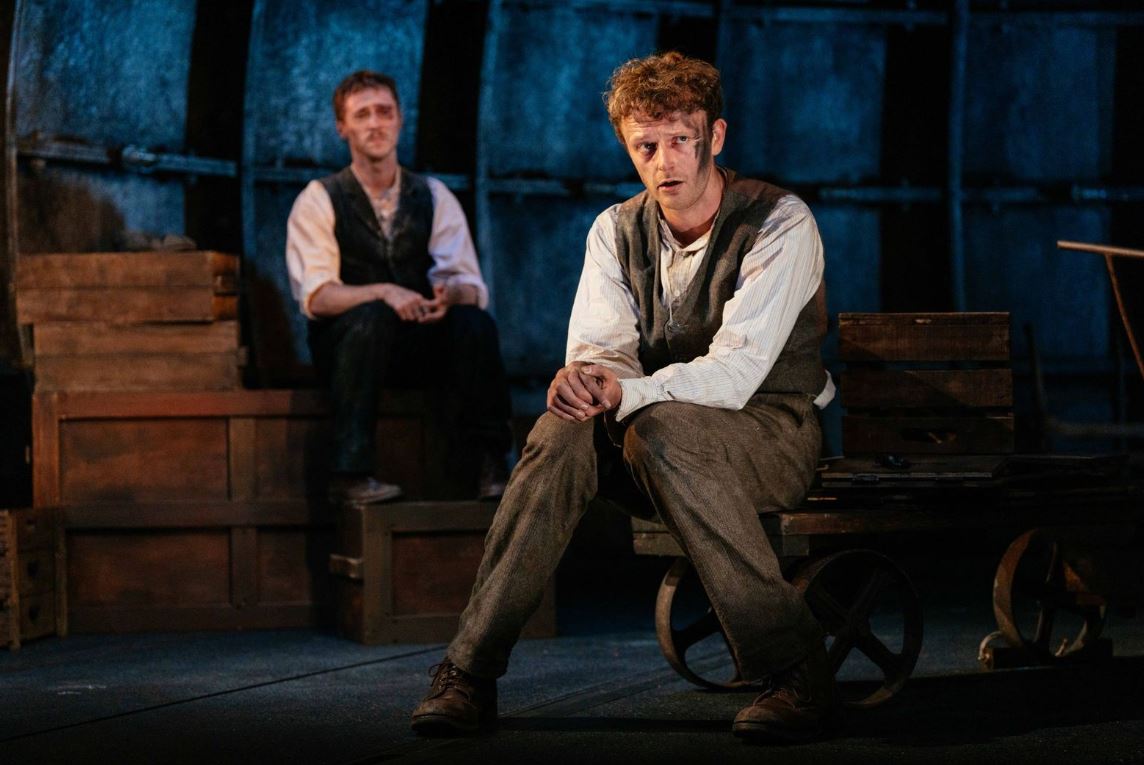
Two teenagers, Gavrilo and Nedeljko, meet in a disused warehouse where a doctor has sent them to meet someone who will apparently help them find meaning in their lives. Both are consumptive and penniless. They discuss suicide until Trifko joins them and dangles before them the prospect of allying with “The Captain,” Dragutin Dimitrijevic, nicknamed “Apis” a man steeped in the Serbian nationalist cause who through the force of his personality makes a speciality of recruiting young men to further his own aims and ambitions.
The three young men are not historically burdened nationalist fighters. Poverty, tuberculosis, lack of education, and ever-present hunger make them ready for exploitation and manipulation. They are three young men, characterised by an innocent ingenuousness, who, despite the horrendous hand which fate has dealt them, retain a naïve enthusiasm to experience life for themselves: a job, a relationship, a future, a more hopeful health prognosis. As such, they form a blank canvas upon which the wily enthusiasms of Captain “Apis,” promising them eternal fame and glory, and (more prosaically and immediately), food and clothing, persuade them to become martyrs to the glorious cause.
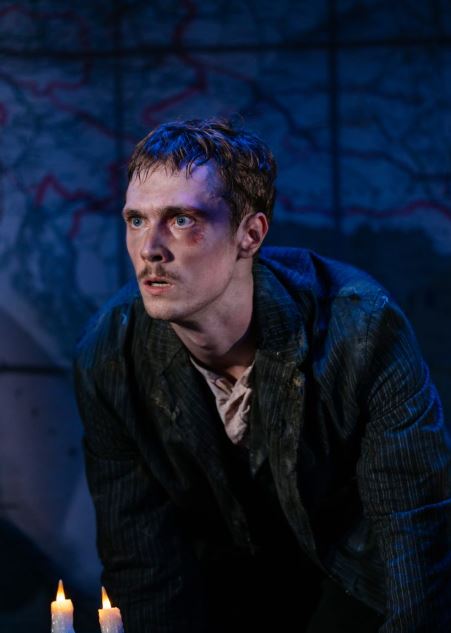
Stanley Morgan, (Gavrilo), Chris Walley (Nedeljko) and Abraham Popoola (Trifko), as the three young would-be assassins are always highly watchable and deliver nuanced performances of the highest quality. They bicker, argue, fight yet become ever more closer as the plot progresses, finding a shared bond in their quieter, more reflective moments, especially when sharing their ambitions, hopes and fears. There is a restless energy, occasional boyish swagger laced with anxiety, uncertainty and a desire to experience life. Together, they exemplify the uneasy mixture of idealism and desperation that drives the narrative forward.
There is an immense amount of humour, some of it very dark indeed, in much of the snappy dialogue which fizzes along. This is occasionally powerfully juxtaposed with an exquisite sadness evinced by the realisation of the hopelessness of their current position. What have they got to lose? Why not become immortal as heroic martyrs?
This is a very effective piece of ensemble playing which forms the very heart of the play.
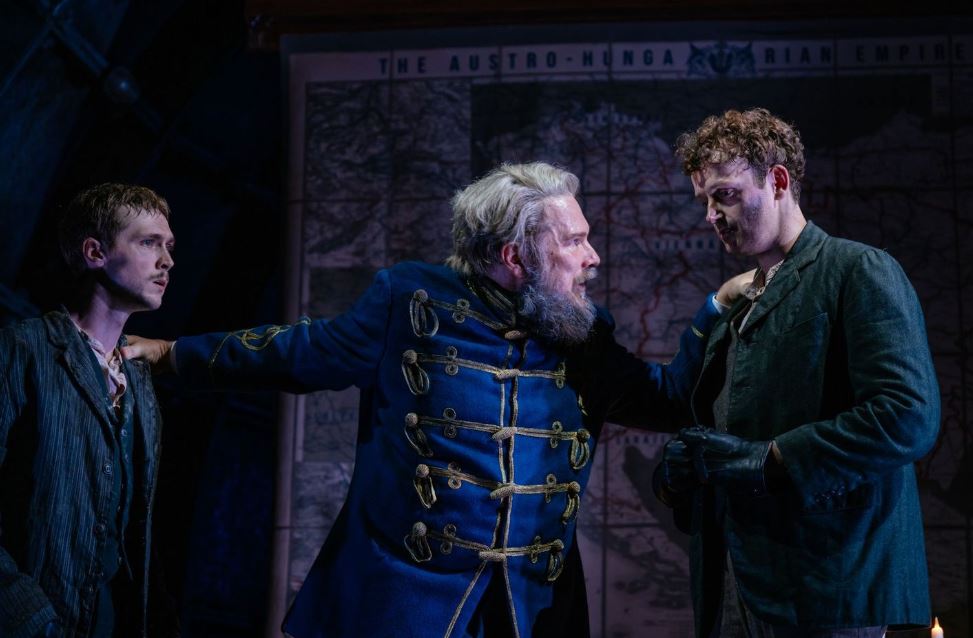
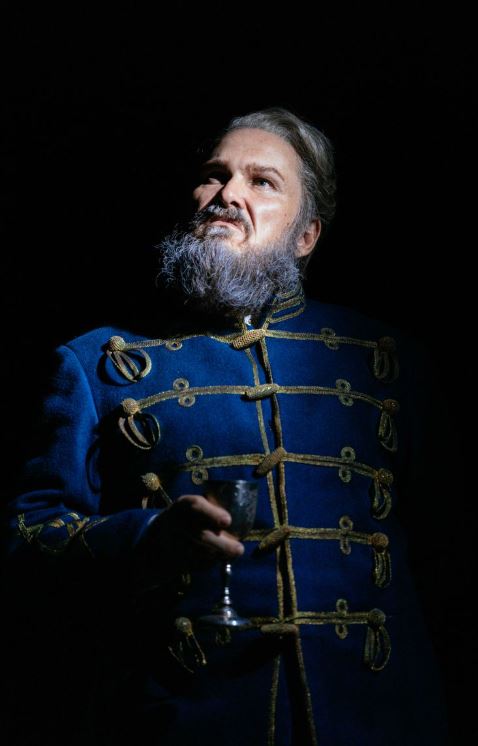
Marc Wootton, as “Apis,” is a compelling, mercurial yet rather unstable character, oscillating between a no-holds-barred bludgeoning evocation of utterly pitiless, authoritarian political conviction, and a more human, almost paternalistic, figure, capable of affectionate pity for the boys he is sending to Sarajevo.
Apis is part Sergeant Major, part pompous professor with a dash of an excitable Brian Blessed in full sail, his bubbling unpredictability adding tension, humour and menace in equal measure.
Janice Connolly’s Sladjana is a warmly comic, maternal figure whose instinct is, at all times, to protect the boys. This takes her into somewhat darker, edgier waters at the beginning of the second act, when she appears with a sackful of necessities for the boys’ journey to Sarajevo together with words of wisdom. Yet, her sardonic humour is never far from the surface. Certainly, it is likely that the audience will never look at cherries in brandy in quite the same way again….
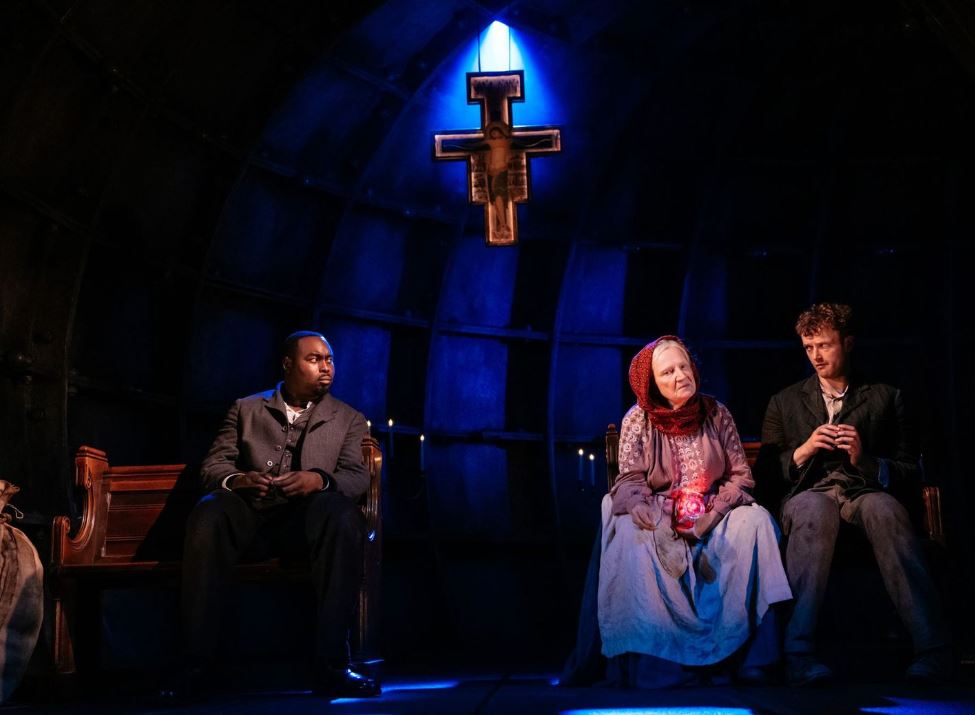
As the train rattles towards Sarajevo, the would-be assassins are wide eyed with astonishment at the clothes they have been given to wear and the luxuriousness of their railway berth; a glimpse into a world of opulence that they have never known before. Whilst hurtling towards their destiny, their minds revert back to the issues of confusion and sense of socio-economic and emotional dislocation which characterised their early exchanges. There is a deep piquancy to their discussions on what they have never known, experiences they have never had. Is the lure of glorious martyrdom stronger than the potentiality of opportunities in this life?
It is clear that the three boys are having second thoughts. But is the die already cast?
Archduke is an ambitious attempt to humanise key historical events; to try to understand the humanity behind the actuality. It seeks to balance large themes of destiny, revolution and ambition with no less powerful human impulses such as compassion, loyalty, friendship, empathy and generosity of spirit.
Assassins are not idealistic robotic murderers, they are human beings, with all of the frailties, doubts and foibles which are shared by all. Gavrilo Princip and his colleagues are not hardened killers but are merely a ragtag group of dreamers and hopers, swept up in forces beyond their control. The more needy they are, emotionally, physically, and psychologically, the more susceptible they become to outside forces.
There are some deeper philosophical issues explored in Archduke, especially a consideration of the dangers implicit in the credulity of disadvantaged young men encountering persuasive older mentors with their own agenda, blinding them to logic and offering a pathway to acceptance, recognition, perhaps even immortality. The relevance of this morality tale to our current times is ever present, but not explicitly explored or taken to any specific conclusion. The audience is left to join the dots here, and this may cause frustration for some.
Yet, Archduke succeeds in raising such questions via the delivery of an entertaining and inventive dark comedy, which is consistently entertaining, sometimes captivating and occasionally achingly poignant.
At the end of the play, Gavrilo muses, “Maybe the world don’t have to end at all. We can just get off the train … It would be nice to be forgotten.”
This is not a play that will easily be forgotten by those who see it.
Harry Zimmerman, June 2026
Photography by Helen Murray


