
Speculations
Perhaps, Perhaps, Perhaps
Speculations On the Unexplained Deaths of Several American Icons
by Torben Betts
Wild Yak Productions at the Marylebone Theatre until 17th January 2027
Review by Patrick Shorrock
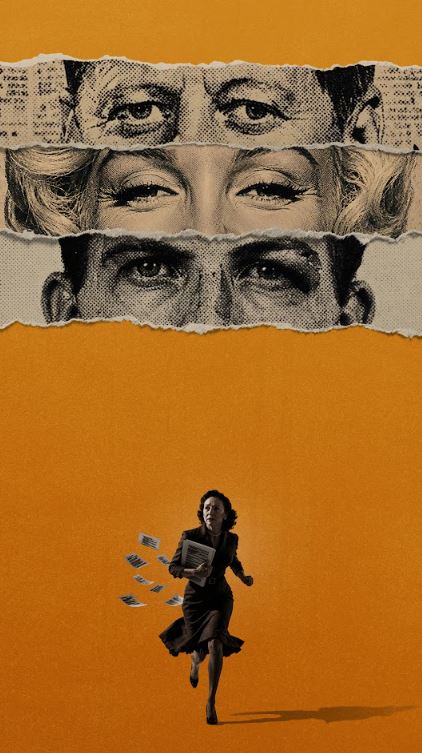
Torben Betts’ new play covers very well-trodden ground with the deaths of Marilyn Monroe and John F Kennedy. Whether journalist Dorothy Kilgallen, Lee Harvey Oswald, and Robert F Kennedy also have icon status, as implied by the title – several suggests more than three – is less clear. It’s an interesting and well-constructed piece, even if it doesn’t contain very many shocks and surprises, and its approach is low key and nuanced rather than full-on melodramatic.
It presents three long conversations, regularly moving between them, which maintain the dramatic pace. It is aided by Lee Newby’s brilliant set with its three revolves, which enable rapid transitions from Dorothy Killgallen’s study-sitting room, to Marilyn Monroe’s bedroom, to a New Orleans bar where mobster Carlos Marcello is plying Lee Harvey Oswald with whiskey.
The first conversation in 1965 is between Dorothy, preoccupied with her investigations into the deaths of Marilyn and JFK, and her new babysitter Flo (the only fictional character). Flo is young, black, and keen to get into journalism and make a difference, without realising the dangers or the moral dilemmas. Unaware of the dark side to the Kennedys, she is very much a supporter of Robert whom she considers the nearest there is to a good guy.
The second conversation takes place three years earlier between Robert and Marilyn in her bedroom, where their relationship is on its last legs. Maxed out on paranoia, Robert realises that it would ruin his career if his adulterous affair became publicly known. Marilyn is increasingly unable to disguise her awareness of his inadequacies as a man, lover, and politician, and oblivious to the dangers of showing him that she has seen through him. Natalie Dunne doesn’t waste any energy on trying to impersonate Marilyn, but instead superbly conveys her feelings of fear, anger and frustration, as she tries to break free of this powerful slimeball. Her reactions all seem entirely reasonable responses to an impossible situation. Whilst this is a refreshingly feminist take, it does seem to ignore the damage that patriarchy at its most abusive inflicts. These include making its victims so lacking in confidence and so dysfunctional that they become unable to argue their case convincingly. The only thing dysfunctional about this well-adjusted and focussed Marilyn is that she involved herself with Robert at all. Jolyon Coy’s Robert is astonishingly weak and insipid, but this seems to be exactly what the writer intends: patriarchy and privilege enable even an inadequate like Robert Kennedy to be a political contender and a danger to women.
The third conversation is between Lee Harvey Oswald and Mafia boss Carlos Marcello, who has it in for the Kennedys and plays on Lee’s support for Cuba. It shows how easy it is for a cunning older man (Ferdy Roberts, low on outward malevolence) to corrupt an innocent all-American boy (Joseph Potter).
In many ways, it’s the first conversation that is most interesting but also the least convincing. It starts off with Dorothy as the privileged unconscious racist who doesn’t even invite Flo to sit down and take her coat off while she finishes typing. In a rapid gear change, Dorothy suddenly takes an interest in her new babysitter – it is almost an afterthought when Flo is eventually introduced to the child she is meant to be babysitting – and starts to act as a slightly patronising mentor to Flo’s fledgling young journalist. Dorothy also educates her about the murky reality of the Kennedys, although Flo points out the bleakness of the assumption that there are no electable politicians to trust and no grounds for hope. Racism and Martin Luther King – whose assassination is three years after this conversation –are mentioned perfunctorily but this play’s focus is really on the white people. Later Dorothy shares her fears about the threatening calls she is receiving and displays her vulnerability (including the failure of her own marriage), although these changes in her behaviour to Flo don’t entirely add up. There are similar inconsistencies with Flo (winningly played by Gloria Obianyo) who is sometimes naïve but also cunning, with an eye on the main chance.
There are fascinating parallels between Marilyn and the less well-known Dorothy. They both endanger themselves by possessing information that will expose corrupt powerful men. Janie Dee provides an elegant and low-key Dorothy, well able to present a polished façade – this is someone well used to dealing with the rich, powerful, and famous – but gives finely tuned glimpses of fear, uncertainty and vulnerability.
The play receives a slick and well-engineered production from Trevor Nunn, along with bouts of menace. Dorothy doesn’t bother with ice in her vodka – is this laziness or an incipient alcohol problem?
Both the play and the set are equally well engineered and it’s all very plausible. And that is really the problem. You often end up nodding your head at the points being made, such as the way that people want reassurance from the media (as they weren’t called then) and can’t handle the murky truth. It all seems very obvious, sensible, and appropriately nuanced, and doesn’t commit the error of trying to make glib points about today. But Speculations does very little to shake an audience’s preconceptions. And then you come back to the question of whether there is actually any evidence for any of this. If it is just speculation, how well founded is it? There is plenty to think about here even if it doesn’t seem to be saying anything very new.
In short, good but not brilliant. Not a must-see, but worth seeing.
Patrick Shorrock, November 2026
Photography by Pamela Raith


