
The Hired Man
20th Century Boy
The Hired Man
book by Melvyn Bragg, music and lyrics by Howard Goodall
Luck Penny Theatre at St James’s Church, Hampton Hill until 7th November
Review by Andrew Lawston
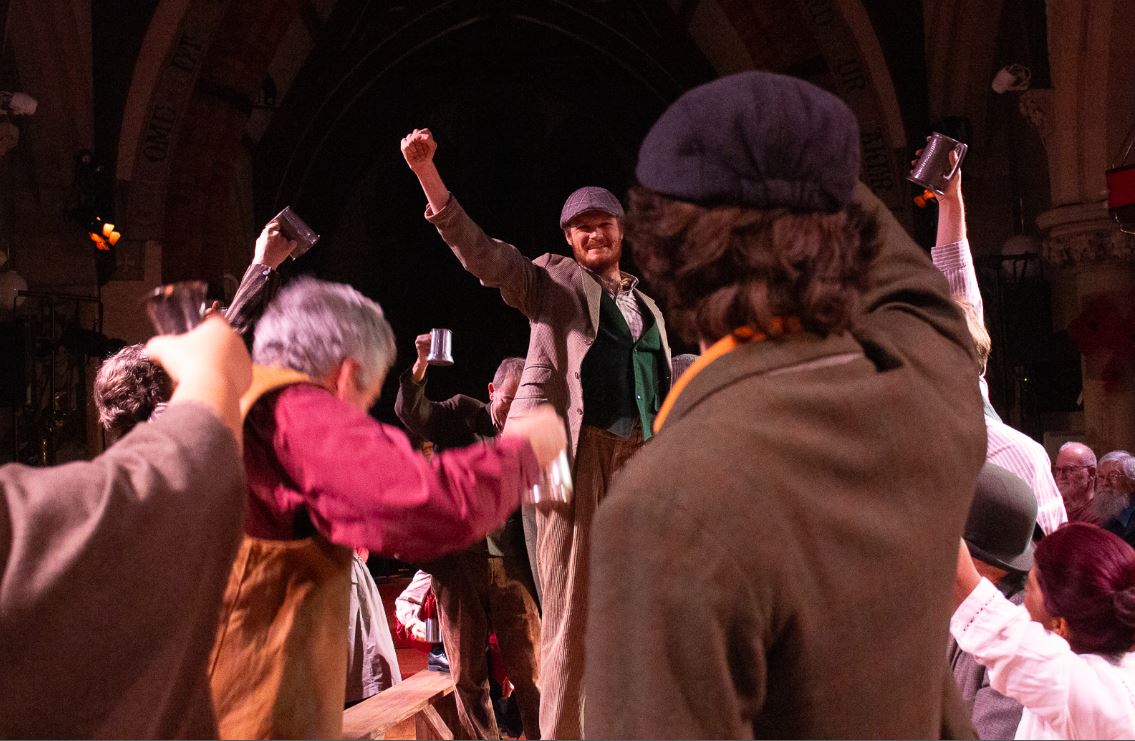
Back in 1984, prolific composer Howard Goodall teamed up with the equally prolific broadcaster and author Melvyn Bragg, to create an award-winning musical adaptation of Bragg’s 1969 novel The Hired Man, a dramatised account of the life of his grandfather in early 20th century Cumbria. Now, Luck Penny Theatre has mounted an impressively ambitious revival.
For one week only, St James’s Church in Hampton Hill has been transformed into a theatrical space, complete with a thrust stage down the aisle, tiered seating, and a bar which is, brilliantly, selling beers from Jennings Brewery, “the taste of West Cumbria”. Their Cumberland Ale is a personal favourite so this was a welcome refreshment as well as a stroke of marketing genius. The production is also supported by the Royal British Legion, and poppies decorate the church, foreshadowing the darker turn of the show’s second act.
John Tallentire is the eponymous “hired man”, a farm labourer working for shillings in the rural community of Crossbridge to support his young wife Emily, and later his children May and Harry. John’s life is consumed by his work, and Emily has a fling with a local man, Jackson Pennington.
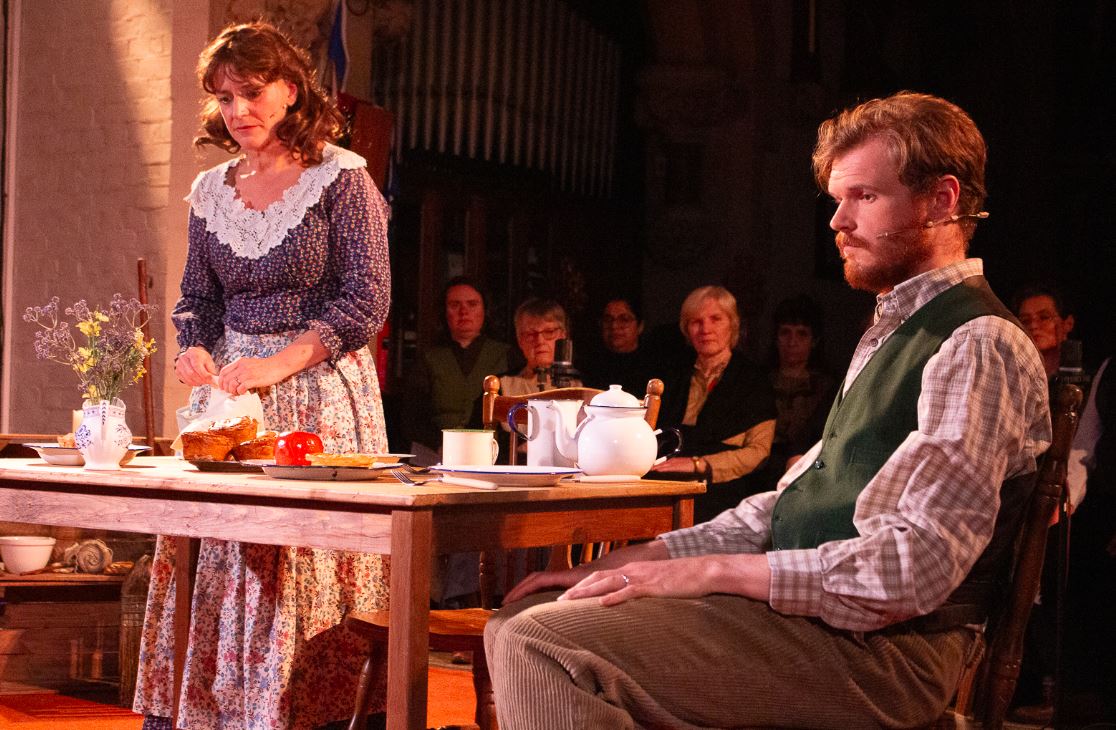
While the first act establishes these characters in a fairly condensed part of their lives, the second act spans a far greater span of time, including, inevitably, the First World War and its aftermath. We see John and Emily enter middle age and beyond.
Goodall and Bragg have worked hard to condense a broad novel into two and a half hours of musical theatre, and the second act in particular whips through the early 20th century at a dizzying pace, lingering only over the sequences during the First World War.
As a result, Nigel Cole’s direction is fast-paced and taut, the large ensemble cast whirling around the stage moving the simple set of wooden benches, crates and chairs to create inns, farms, and the “hiring ring” where labourers negotiate with prospective employers.
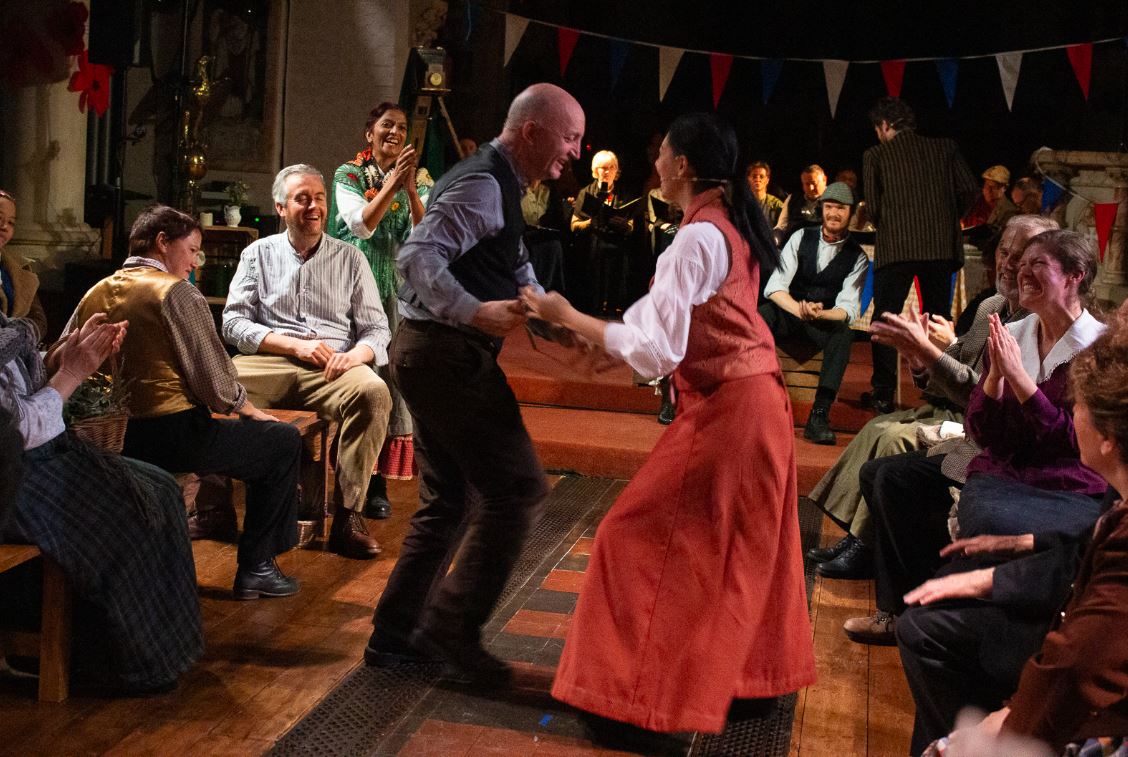
Gita Singham Willis, as Movement Director, boosts this pace with frenetic choreography while boosting the numbers of the ensemble herself. And Musical Director Nic Luker is given the task of filling St James’s Church with Goodall’s music. With a six piece band, a large cast, and a full choir, the production triumphs through sheer volume, and the modestly-sized band achieves a full orchestral sound in some of the bigger numbers.
Alan O’Connor makes great use of lighting to direct the audience’s attention during domestic scenes, while breaking out the effects and filters for the wartime sequences, disguising the simple staging. It’s at these moments that a deeply personal story expands into its historical context, with powerful results.
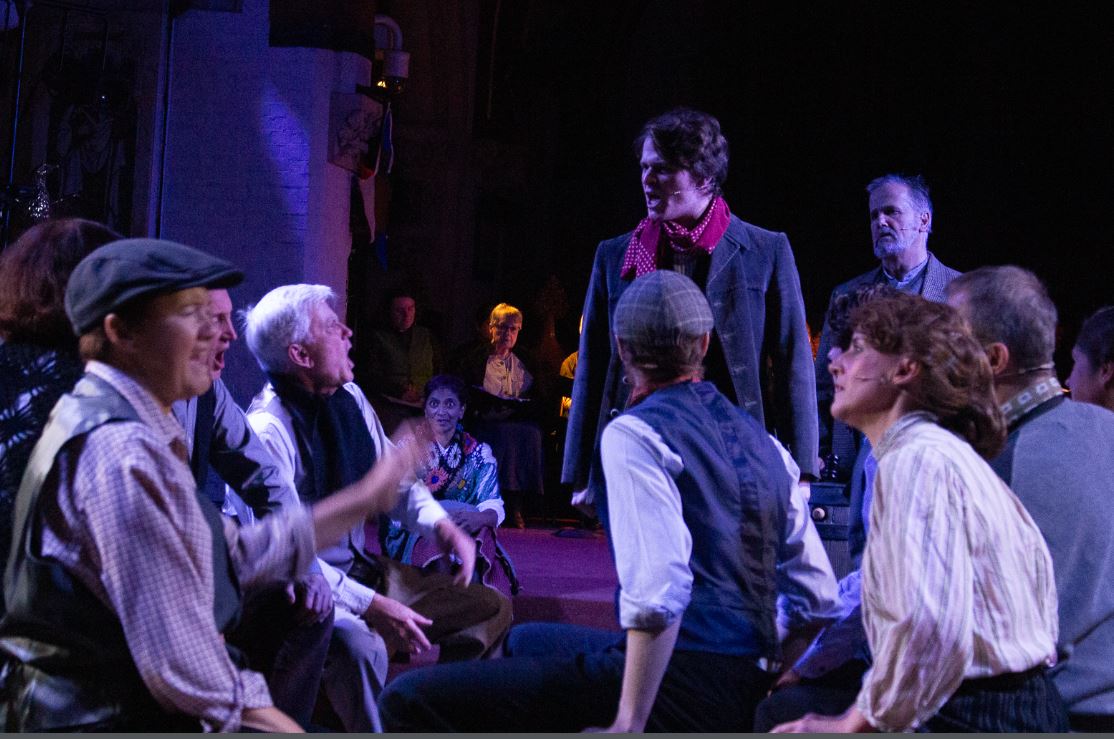
The overall effect is a full West End musical extravaganza inside a community church. The cast are uniformly strong singers, with Jacob Taylor and Clair Jardella leading the cast with great gusto as John and Emily Tallentire. They also boast some of the best Cumbrian accents among the cast. Joe Black plays John’s roguish brother Isaac with relish, and is rewarded with a strong character arc as the story develops. Meanwhile, Daniel Powell was glorious as the socialist firebrand Seth, John’s other brother. The three siblings contrast with each other strikingly, but their chemistry makes them a convincing family unit.
Jackson Pennington is the closest The Hired Man has to a villain, the rakish son of John’s employer who has an affair with Emily, but who genuinely adores her. Amin Houta pulls off a complex character with panache, and he seemed to be an audience favourite.
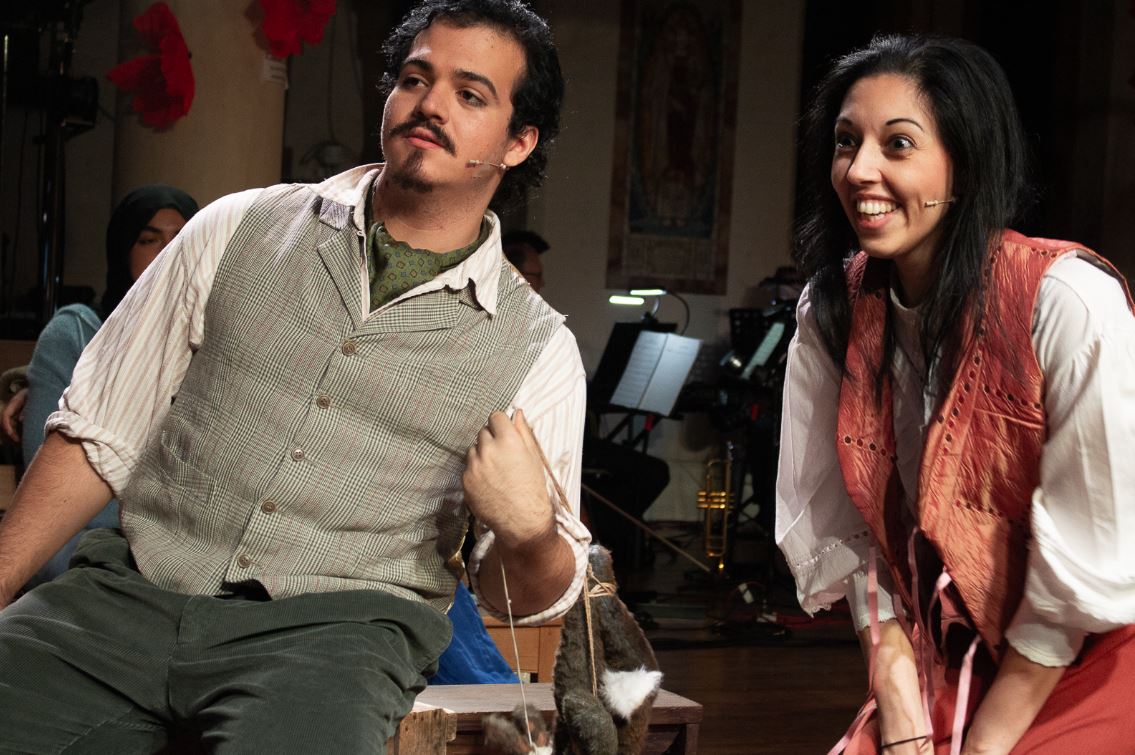
Meanwhile, Jasmine Lord-D’Souza was absolutely delightful as Sally Edmondson, a young girl with her eye on Jackson. Her duet with Emily, “Who Will You Marry Then” was a particular highlight of the show, with two great voices, a catchy folk-infused tune, and playful lyrics.
Rachael Rajah shines throughout the second half as May Tallentire, Emily and John’s spirited daughter, while Stanley Clement is quietly compelling as the earnest Harry Tallentire. We see less of Harry, so it was great that he doubled up as villager Joe Sharp in the first act.
The Hired Man is a triumph, an ambitious production full of talented musicians, singers, and actors, that makes the most of its grandiose venue, filling St James’s church with rich melodies and soaring choruses. It’s a story of family life that resonates with contemporary life despite being set over a century in the past, and the audience were clearly deeply moved, with many moving outside after the final bow to “get some fresh air” and wipe away a few tears.
Andrew Lawston, November 2026
Photography by Louise Ellard Turnbull


