
Whisky Galore
Spirit of Christmas Past
Whisky Galore
by Compton Mackenzie, adapted for the stage by Philip Goulding
Richmond Shakespeare Society at the Mary Wallace Theatre, Twickenham until 16th December
Review by Steve Mackrell
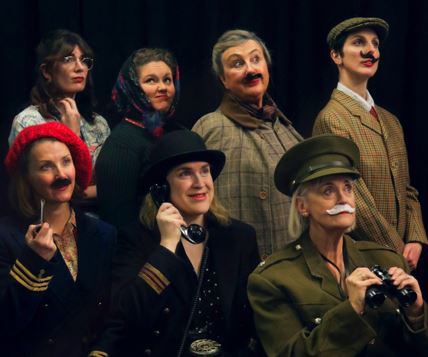
The initial thought on going to see a play adapted from a classic novel and based on the concept of actors playing the parts of other actors, was trepidation, given the challenges involved. But that was the challenge faced by Richmond Shakespeare Society in their festive production of Whisky Galore, adapted for the stage by Philip Goulding, and based on the well-loved novel by Compton Mackenzie.
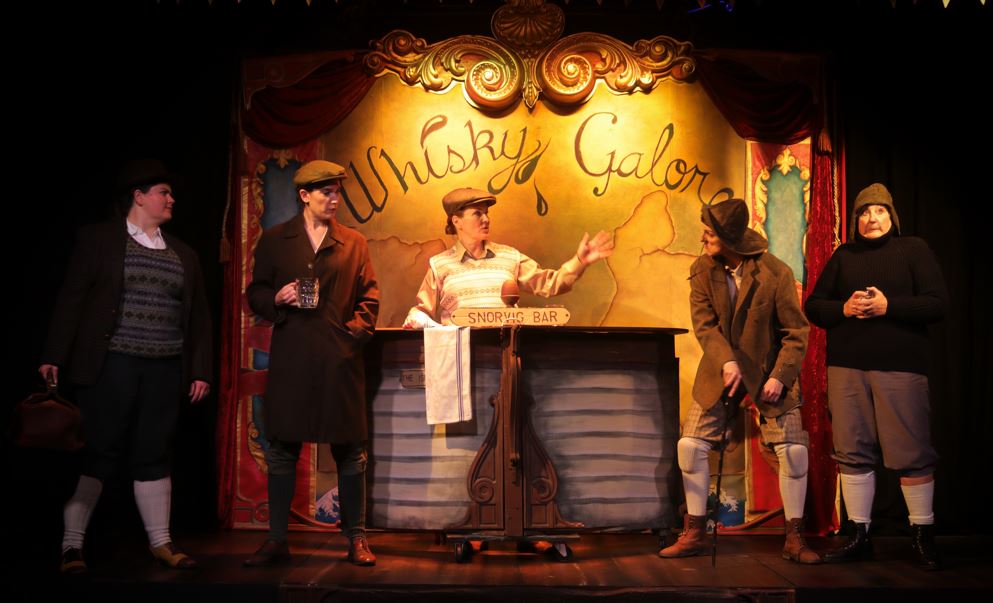
The premise of the play is that a group of female actors, the Pallas Players, are touring the country in the 1950’s with a stage version of the celebrated Scottish novel, set during the Second World War. So, we are in “play within a play” territory, with much larger-than-life stylised acting and, being intentionally written for an all-female cast, involving much cross-dressing and manly poses. The play opens with a rousing, inspirational and jolly hockey-sticks introduction from the Player’s “actor manager” before the band of female players leap into their stage production of Whisky Galore.
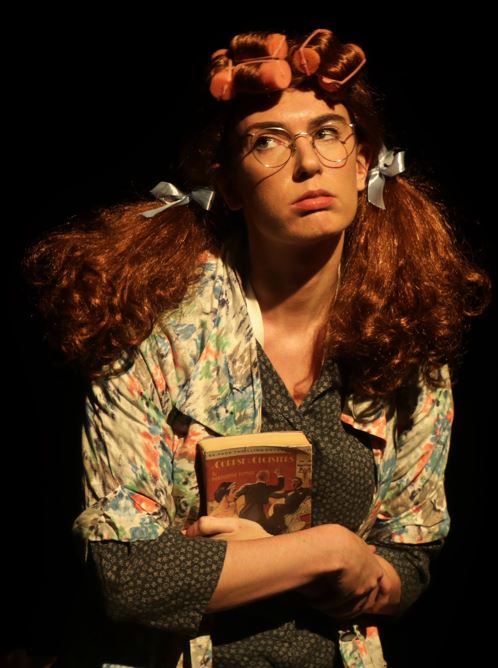
What we then have is the basis for a whimsical farce based on a perception of what acting was like seventy years ago in a provincial touring production – over-enthusiastic actors playing a range of overdrawn cardboard caricatures. This is physical theatre, and a difficult feat to pull off successfully, but the hard-working cast never flagged in their non-stop energy and their dogged pursuit of laughter.
This was an ensemble piece involving seven female actors playing, between them, thirty different male and female characters. The actors involved, Louise Elliker, Charlotte Horobin, Heloise Plumley, Josie Teale, Denise Tomlinson, Lily Tomlinson and Caroline Whillans, combined well as a team under the direction of Fiona Poole and assisted by Anna Piggott. The numerous entrances and exits, and countless quick changes, were well-drilled and meticulously timed. On occasion, however, there was an unfortunate tendency for the actors to stand in straight lines across the stage. Clearly, the narrow width of the Mary Wallace stage can present restrictions with large casts, but perhaps more use could have been made of the upstage dais. Having said that, the small auditorium of the Mary Wallace was well-suited to creating the cosy atmosphere typical for such a small-scale touring production of the day.
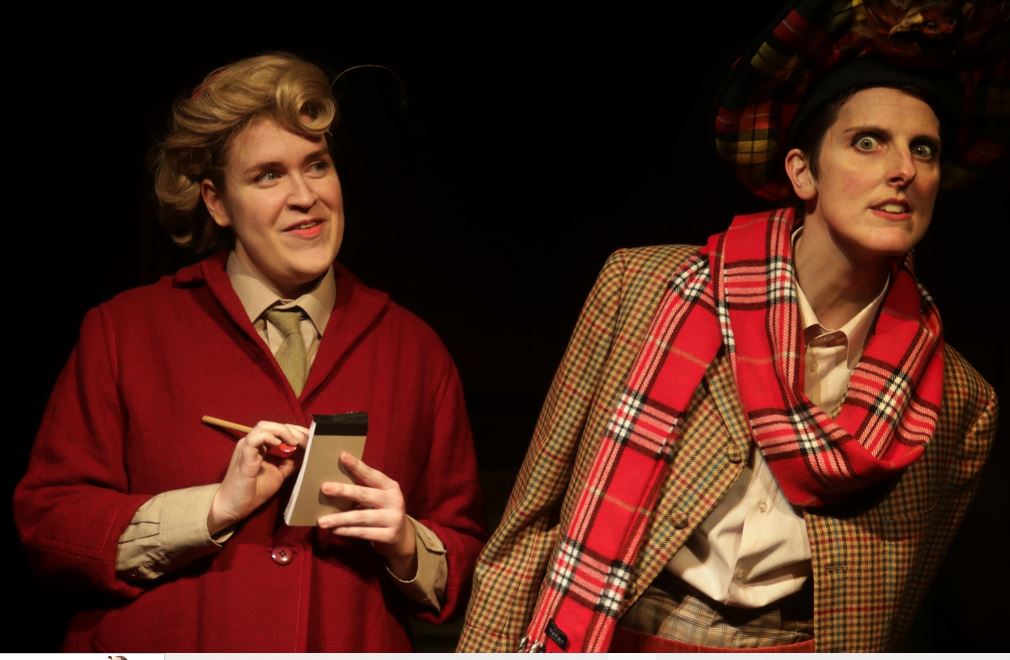
Being an ensemble production, with actors reliant on each other, this was a production of equals – although unfortunately not all the Scottish accents were equal. However, the most eye-catching performance was delivered by Heloise Plumley, playing a vast array of oddball male and female characters. With her facial contortions, continually darting eyes and limbs in perpetual motion, she commanded the stage whenever she appeared, and her character of the tweed merchant Mr. Brown was particularly comical.
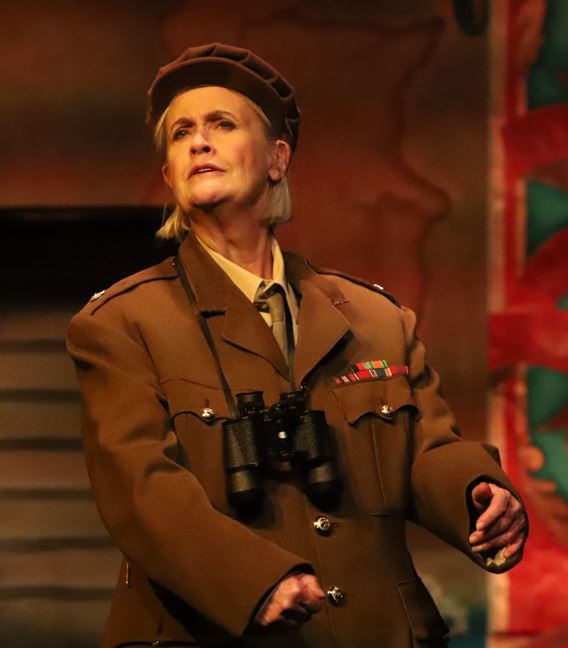
Also very enjoyable was Lily Tomlinson’s performance and her caricature of the Sergeant Major was especially well-observed as she captured his pompous jauntiness and flirty manner. Caroline Whillans also gave an authoritative performance, first as the earnest but pompous actor-manager of the Pallas Players, with proud boasts of successful dates in “Whitehaven and Goole”. Secondly, in the play within the play, she played the narrator with appropriate over-enthusiasm and the part of a very amusing Catholic priest, Father McAllister. Also worthy of mention were the farcical interlopers of two rather human dogs and four equally human sheep bringing great amusement to the audience.
Added to some excellent character acting was the technical support – the projections of the ship, firstly sailing-then sinking-then finally breaking in half – created by Marc Pearce was simple but amusing. Costumes, by John Gilbert, were plentiful, colourful, funny and sometimes deliberately ill-fitting – he also had to dig deep into his bottomless bag of false beards and wigs. Jacob Taylor also contributed a recorded Scottish ballad with his finely rendered singing which again added to the atmosphere of the time. Posters and articles from the period were also hung from the walls of the auditorium and foyer giving a nice nostalgic touch.
So, what not to like? Well, firstly, the concept of the play itself. By Act Two the novelty of the production and its presentation was beginning to wear a bit thin. Also, the transition from novel to stage can create pitfalls, especially when there’s an over-abundance of characters. Having so many parts played by so few actors, while giving rise to comedy, also brings difficulties in following the plot and understanding exactly who’s who. Also, some of the farcical elements were somewhat dated – such as the miming of the rowing boat and the miming of the car drive with the two actors passing the steering wheel to each other. Some elements of farce were also overplayed such as over-exaggerated facial reactions to situations – and the deliberate “forgetfulness” to remove an item of clothing on re-entry from a previous scene following a quick change.
The script also had a feeling of being out-dated. A rich treasure trove of humour can be found in the novels of Compton Mackenzie through conflicts such as Protestant-Catholic or English-Scottish or even the shock-horror drama of a Scottish whisky and beer shortage. Lines such as “even an Englishman would look ridiculous in those breeches” were, indeed, quite amusing, but such lines were few and far between. Indeed, come the second act, tedium was beginning to settle in and the scene where the actors, using torches to “search” through the auditorium, was both unfunny and distracting.
Nonetheless, the redeeming aspect of the evening was watching an energetic and lively cast playing so many different roles and, being an all-female cast, always funniest when portraying male characters. Finally, the ultimate litmus test, at the end the audience gave a rousing reception to the hard-working cast who really got into the spirit of the evening.
Steve Mackrell, December 2023
Photography by Pete Messum


