
The Maids
Role Play
The Maids
by Jean Genet, translation by Martin Crimp
Reading Rep and Jermyn Street Theatre Productions at the Reading Rep Theatre
Review by Sam Martin

Annie Kershaw’s direction of The Maids at Reading Rep, in co-production with Jermyn Street Theatre, brings Jean Genet’s classic 1947 play into stark focus with remarkable intensity. Translated by Martin Crimp, the play dives deep into the complexities of identity, power, and social oppression, capturing a raw and sometimes uncomfortable examination of servitude, resentment, and the destructive power of role-playing. The intimate space of the Reading Rep alongside the narrow and sometimes claustrophobic set makes for an unflinching view into the psychological games played by the characters, leaving the audience to grapple with their conflicting feelings of pity, discomfort, and fascination.
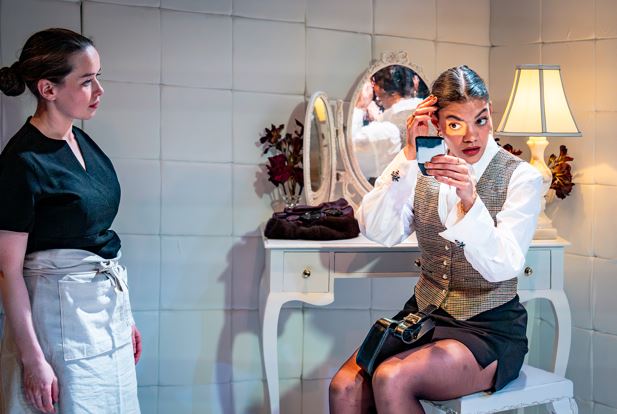
At the heart of the production are the maids, Solange (Anna Popplewell) and Claire (Charlie Oscar), who engage in elaborate role-playing exercises as they imagine killing their Mistress (Carla Harrison-Hodge), while in reality performing demeaning tasks in her service. The tension between fantasy and reality is a fundamental theme, and Kershaw makes excellent use of the small, stark stage to highlight the psychological labyrinth in which the characters are trapped.
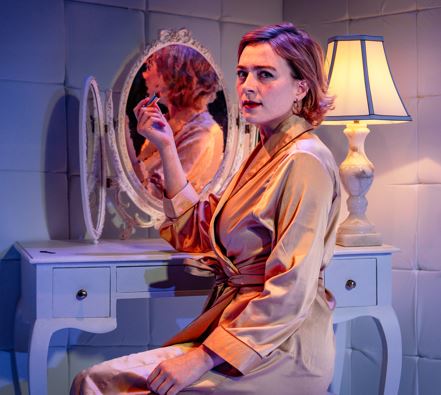
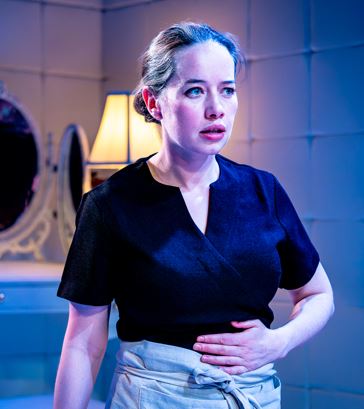
The chemistry between the three cast members is exceptional, with each performer embracing the complexity of their roles with depth. Popplewell’s portrayal of Solange is a masterclass in controlled rage and repressed emotion. She lets her hatred for her employer simmer just below the surface, never allowing it to boil over, but instead maintaining an air of palpable tension throughout. Popplewell’s nuanced performance adds layers of psychological complexity, making Solange both sympathetic and terrifying in equal measure. The sense of her character being imprisoned within the confines of her role as maid is powerful, with Popplewell’s delicate balance between vulnerability and bitterness captivating the audience.
Carla Harrison-Hodge, as the Mistress, brings a calculated air of hauteur to the stage. She embodies the coldness of the upper classes, standing as an emblem of privilege and authority, though we see the cracks beneath this facade. At times, she teeters on the edge of caricature, but in doing so, she effectively highlights the absurdity and cruelty inherent in the class structure that the play critiques. Her attempts to console her employees is comical as she overcompensates for her demanding nature; the audience, however, senses the tense atmosphere of the maids’ hatred as it seeps through the conversation.
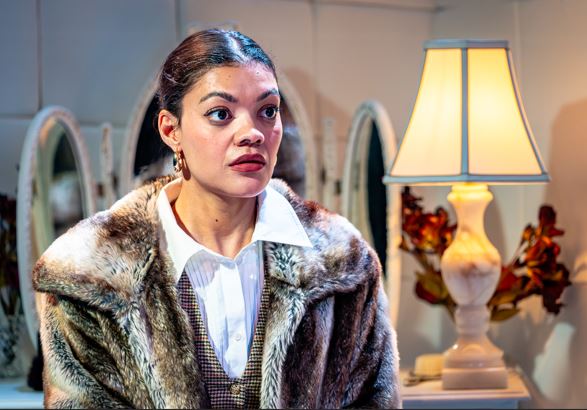
It is Charlie Oscar’s portrayal of Claire that stands out in this production. Claire is a character filled with contradictions – she is both pitiful and comical, tender yet ruthless, and Oscar navigates these complexities with impressive skill. Drawing on the audience’s sympathy, Oscar’s Claire portrays the vulnerability of someone trapped in a role, desperately trying to assert some form of power in a world where she is constantly humiliated. Yet, she finds moments of levity in her mimicry of the Mistress, which adds a peculiar layer of humour that serves to highlight the tragicomic nature of the play. It is in these moments that Oscar’s performance shines most brightly – her ability to elicit laughter while evoking a deep sense of pathos is nothing short of remarkable.
The set design by Cat Fuller is striking in its simplicity. A predominantly white stage creates an almost sterile environment, echoing the clinical nature of the Mistress’s world and her emotional detachment from the maids. The blankness of the space contrasts sharply with the dark red flowers that adorn it, filling the room with a deep, almost oppressive sense of foreboding. The flowers, which subtly bleed into the world of the maids, reflect their internal anger and resentment, as well as their longing for something more than the lives they lead in the shadow of their employer. It is an aesthetic choice that serves the play’s themes of emotional confinement and repressed desires, while also heightening the sense of isolation that all three characters feel in their own ways.
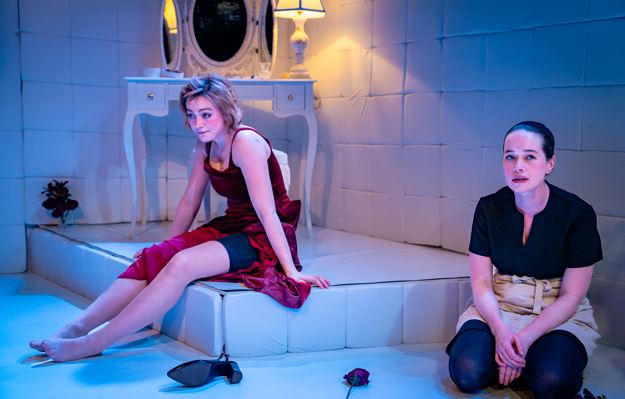
Kershaw makes intelligent use of the intimate space, ensuring that the tension between the characters is palpable throughout. The constant shifting between moments of almost absurdist humour and moments of heartbreaking despair creates an uncomfortable atmosphere that forces the audience to reckon with the complexities of the characters’ relationships. Kershaw masterfully navigates the power dynamics at play, creating a production that feels both claustrophobic and all-consuming.
This production of The Maids is a delight in both direction and performance. Kershaw has crafted a show that is as compelling as it is uncomfortable, forcing the audience to confront the darkness that lurks in the corners of the human psyche. It is an intense, thought-provoking examination of power, identity and repression, and is another brilliant production for Kershaw and the team.
Sam Martin, January 2025
Photography by Steve Gregson


Trackbacks & Pingbacks