
Love’s Labour’s Lost and Much Ado about Nothing
Double Trouble
Love’s Labour’s Lost and Much Ado about Nothing
by William Shakespeare, adapted by Tom Littler
Orange Tree Theatre and Guildford Shakespeare Company at Thomas’s College, Richmond until 22ndAugust
Review by Patrick Shorrock
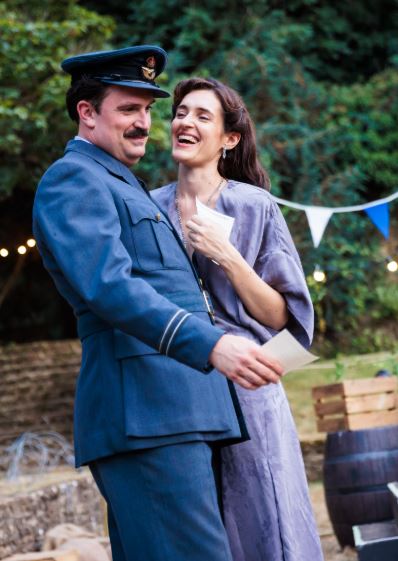
Tom Littler has had the audacious idea of turning Love’s Labour’s Lost into a prequel of Much Ado about Nothing and putting both plays on as a single piece. As he concedes, this requires a degree of what he engagingly refers to as ‘stitching’, as well as renaming of some of the characters (successfully with Berowne – Benedick and Rosaline – Beatrice, but less so with some of the others).
Love’s Labour’s Lost is a strange play that starts off frivolous and witty with four potential sets of lovers. Even though the men are supposed to have sworn off women in favour of academic study for a year, they pair off relatively easily with the women. But the play ends with them all agreeing to something like a trial separation that requires the men revert to their studies for a further year. This downbeat ending does seem to beg for some further development and resolution. So, it’s a far from bad idea to give Beatrice and Benedick some back story, especially as Berowne and Rosaline are similarly sparing lovers.
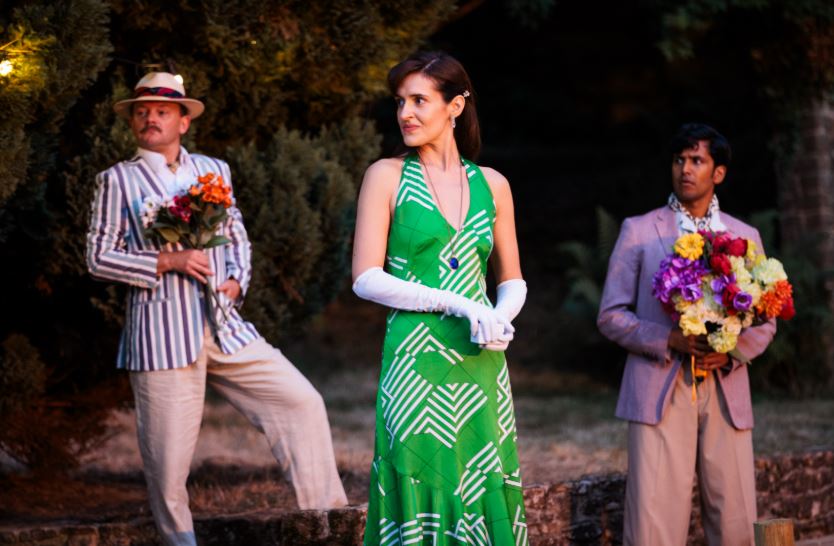
Littler has the Second World War intervene between the two plays and that is where the problems start. Would these people, for all that most of them exist in a privileged bubble, really have been so oblivious about the storm clouds gathering over Europe at the end of Love’s Labour’s Lost? Would they not be older, wiser, and more visibly damaged than they are at the start of Much Ado? And some of the joins don’t really work, as the rather bolshy Princess of France turns into the much calmer Leonata (not Leonato) Governor of Messina, who, not surprisingly, doesn’t seem to have any past history with the Prince of Navarre. John Longaville in the first play becomes villain bastard Don John in the second. Yes, people can change for the worse in six years, but in a proper sequel we would know rather more about why.

And Much Ado remains problematic in its own right, as Claudio’s brutal rejection of Hero at the altar should leave the comedy broken beyond all repair, and its resolution remains completely unbelievable. Even after Littler’s adept pruning, there are too many unfunny ‘funny’ turns from Constable Dull – Dogberry, Nathaniel the Curate, and Holofernes. Congratulations to the cast for despatching these as swiftly as possible and squeezing what comic milk there was from a very dry udder (Shakespeare needs to take the blame for this). The aristocratic patronising of the rustics’ show put on for their benefit leaves an even nastier note than when this happens in a Midsummer Night’s Dream, even though the show is much worse than Pyramus and Thisbe.
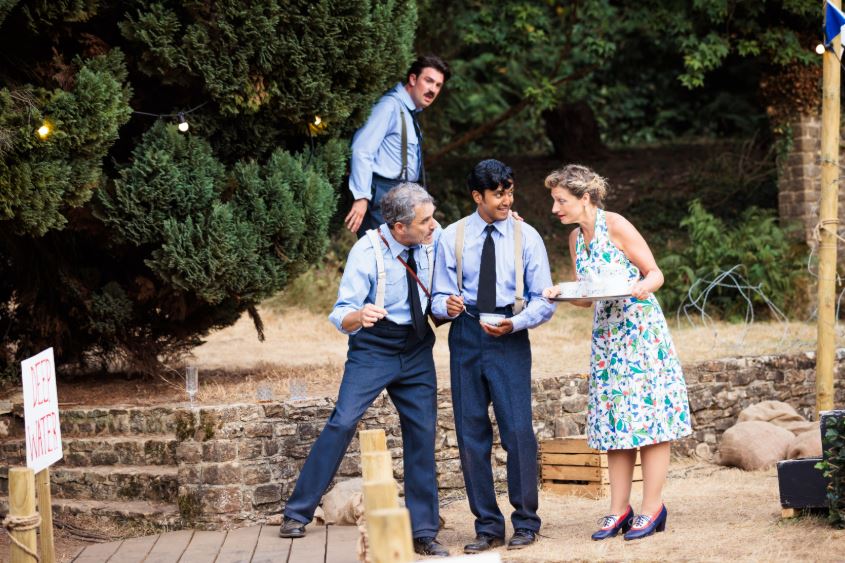
But that is enough carping about what is still a joyous evening, even if it didn’t quite have the brilliance of Littler’s reworking of Sheridan’s The Rivals. The gardens of Thomas’s College, Richmond in high summer, as they move from full-on sunshine to twilight are an utterly entrancing setting. Both plays are done with bags of charm, much aided by Matthew Floyd Jones’s music and Neil Irish’s witty sets and lavish costumes (the latter co-designed by Anett Black).

Owen Oakeshott is an older than usual Prince of Navarre – Don Pedro who also plays the pedant Holofernes and manages the difficult feat of conveying verbosity whilst delivering his lines with clarity and despatch. Sarah Gobran has plenty of stylish presence but doesn’t entirely manage to cover up the gap between the very different roles of Princess of France and Leonatus governor of Messina, who is now Leonata. James Sheldon plays Benedick – Berowne as something of a fatuous plonker with the gift of the gab, but Phoebe Pryce’s sparky Beatrice surely deserved better. Jöelle Brabban plays the young lad Moth with great style as well as the jilted Hero – Katharine: they might have been different people. Chirag Benedict Lobo did what he could be with the unplayable Claudio – Dumaine but rather overdid things as Nathaniel the Curate.
Patrick Shorrock, August 2026
Photography by Harry Elletson


