
The Boom Band
The Eel Pie Club,
The Cabbage Patch, Twickenham 15th June
Review by Cliff Tapstand.
It’s very rare to find a renowned performer in one form of entertainment playing a leading role in another totally different and unrelated pursuit. But, there we were, at The Eel Pie Club greeting The Boom Band, who were making their first appearance at the venue with former Surrey and England Cricketer, Mark Butcher playing lead guitar. But the surprise didn’t stop there. Most groups have one lead guitarist, some will have two and very infrequently there may be three, but, The Boom Band have four, and every one of them highly talented musicians. To complete the front line of the stage there was a stand-in bass player. But, this was no ordinary stand-in, his name is Malcolm Bruce, son of the late, great Jack Bruce of “supergroup”, Cream. The full line up was completed by Paddy Milner on keyboards and Wayne Proctor on drums.

Photographs by Pat Stancliffe
It’s easy to think that four guitarists on stage at the same time could get a bit competitive, or even confusing, but nothing could be further from the truth. It’s obvious from the moment they walk on stage that they enjoy playing together and are having just as good a time as their audience. Their play list for the gig was drawn almost entirely from their excellent album, The Moon Goes Boom: Live in London, which is a well balanced mix of their own compositions and blues standards.
The Four Guitarists
First up on the playlist was Terraplane Blues, a song by the American blues legend, Robert Johnson. We’re then into the first two album tracks, Diamonds in the Rust, and Under the Skin. Next up is Junko Partner, a song written by Bob Shad, and first released by James Waynes in 1951, later to be covered by The Clash, Dr. John and many others. Some great keyboard playing on this by Paddy Milner, twice winner of the Best Keyboard Player in The British Blues Award. Two more ‘home produced’ songs, Moonshine and Red Eye of the Devil follow, Before, Get Outta My Life Woman, first recorded by Lee Dorsey in the early 1920’s and subsequently covered by Gerry Garcia and The Grateful Dead, and The Byrds. Monty’s Theme is next, an instrumental that really shows the musical skills of this talented outfit. Space doesn’t allow me to cover every song, but both When You Come Home, and Can’t Find My Way Home are well worth a mention, the latter written by Steve Windward and released during the short life of “superband” Blind Faith. The penultimate song returns to the blues with Lightnin’ Slim’s, Rooster Blues, before a rousing final ‘anthem’ We can Work Together, with plenty of audience participation, all of whom, I’m sure, hope it won’t be too long before The Boom Band are back at The Eel Pie again.
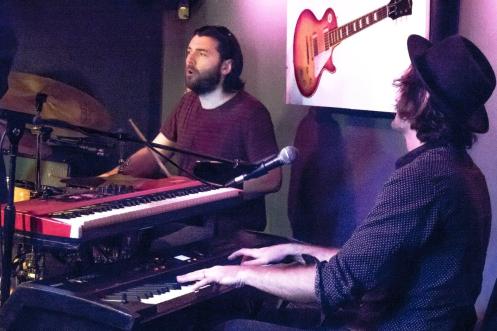
Wayne Proctor and Paddy Milner
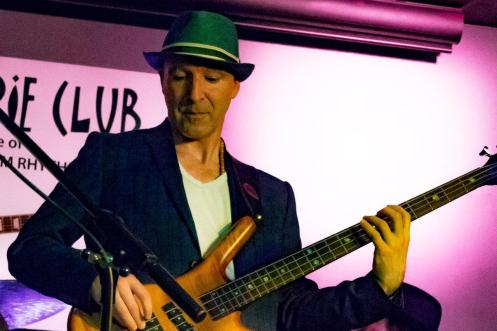
Malcolm Bruce
A little more about the band: Matt Taylor played in The Snowy White Blues Project, and the late Long John Baldry said he was the best guitarist he ever shared a stage with! Jon Amor was a founder member of The Hoax, one of the top rhythm ‘n’ blues bands in the country. Marcus Bonfanti, toured with and opened shows for Robert Cray, Chuck Berry, Jack Bruce, Beth Hart and many others. Paddy Milner, founder member of Ronnie Scott’s Blues explosion, played for years with Jack Bruce and is Sir Tom Jones piano player of choice.
Mark Butcher hit 8 centuries playing for England, the highest being 173 not out against Australia at Leeds in 2001. He hit just the one 6, but he and the band hit us all for 6 at this gig.
Cliff Tapstand
June 2017
Photography by Pat Stancliffe
Carmen
by Georges Bizet, libretto Henri Meilhac and Ludovic Halévy
Grange Festival at The Grange, Hampshire until 8th July
Review by Mark Aspen
Spitting and stabbings and incendiary sex-drives were not the sort of thing that one could entertain one’s proverbial maiden aunts with in 1875, even in Paris, and the first Parisian audiences had to at least pretend that they didn’t like it. So poor Georges Bizet may have died thinking that Carmen had flopped and that it was the least popular of his works, but history has shown it to be the world’s most popular and most performed opera.
With its hummable tunes and bold colourful characters, Carmen has also become a popular opera in the sniffy sense of “pop op”. However, that mould of the pastiche is well and truly smashed with The Grange Festival’s current production of Bizet’s Andalusian sizzler. Here is a production that has depth, that has sinew and that has veracity. This is the only production of Carmen that has moved me to really feel for the characters and genuinely to care about their plight.
The plot of Carmen is driven by two themes: jealousy, which here doesn’t just bubble under the surface, but rushes along in an overwhelming torrent; and of course, that sex-drive, which in this production motors at full revs with twin turbos. However, what is firmly established is that it is the women who take the driving seat. The opening scene in the square in Seville has the soldiers harassing the innocent Micaëla in a darkly menacing way. She is only rescued from the threatening “gang-bang”, by the changing of the guard and the subsequent shift-change at the nearby tobacco factory, when the tobacco girls show them who really call the shots. The softened soldiers sing “les paroles d’amour”, but the girls tell them “peut-être demain”. Then they call for Carmen. “L’amour est un oiseau rebelle …”, the famous habanera, establishes Carmen, for whom it would be an understatement to say that she is her own woman.
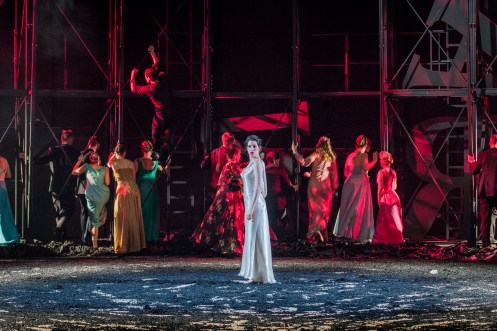
The Grange Festival has created the world of Carmen (in the only just refurbished theatre building at The Grange) as a beautifully simple visual metaphor, initially seen as an empty stage backed by an immense cyclorama of quilted silk, reminiscent of birds’ wings, onto which projected images of various birds emerge and dissolve in the different moods of “l’oiseau rebelle”. These images, created by acclaimed video designer, Dick Straker, enhance the atmospheric lighting of established opera lighting designer, Peter Mumford, and form part of an integrated fluid set design by the versatile Joanna Parker. The set re-creates itself openly between acts using a series of trucked angled platforms brought on by the chorus to become variously the tobacco factory, Lillas Pasta’s blue-light clubrooms, the mountains or the Seville bullfighting arena. Parker has collaborated with director Annabel Arden in the movement chorography, which again is integrated into the design such that surging groups: factory shifts, platoons of soldiers, arguing mobs, bands of brigands or bullfight spectators become part of the setting and of the music.
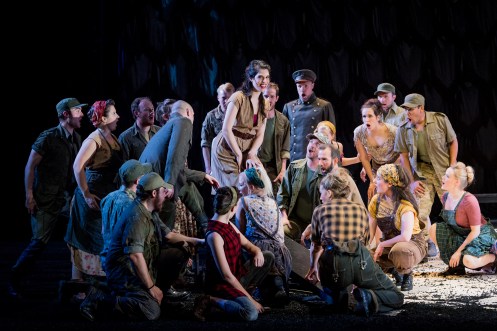
The concept of integration is taken up by The Grange Festival Chorus, its ensemble engaging the multi-layered musical perspective effortlessly into the opera. The Bournemouth Symphony Orchestra, under conductor Jean Luc Tingaud is musically faultless and take Bizet’s score with the energetic attack that it deserves, whilst still savouring all of the lyrical nuances of the piece. (Remarkably, Tingaud studied at the Paris Conservatoire under Manuel Rosenthal, then of advanced years, who in turn had worked with some of the original artists from Carmen’s 1875 Paris premiere.) Whilst Carmen is popularly famous for its forte passages, BSO greatly enhance the lyrical passages and, at the beginning of Act III, bring the flute soloist onto the stage for the crystal clear Prelude, which interweaves a harp accompaniment and clarinet response: beautiful.
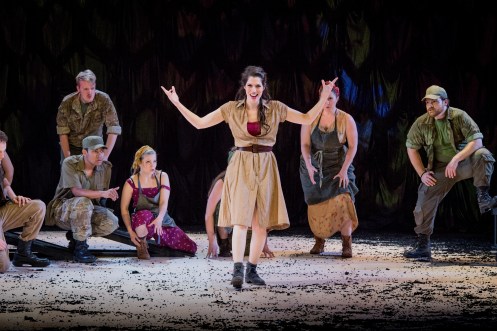
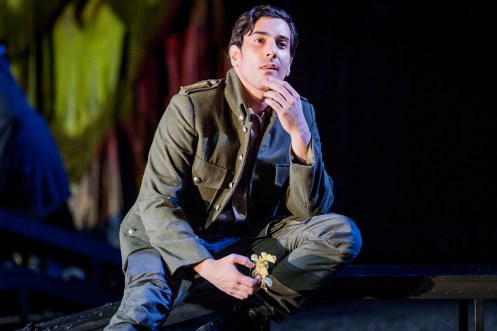
However, Carmen’s fire is sparked by its eponymous free-spirted anti-heroine. Carmen flits through the interstices of society with a vixen-like agility, sharp, sensual, seductive, but skilful, shrewd and perceptive. Israeli mezzo-soprano Na’ama Goldman excels as Carmen, her luscious velvety voice speaking in fiery song for the character, and inhabiting Carmen’s restless soul. Carmen sings “toujours l’amour”, but her conflicting impulsive instinct, “je veux être libree” is the cause of the downfall of the hapless Don José, who becomes obsessively infatuated with Carmen. American-Italian tenor Leonardo Capalbo is totally convincing in this role, a man hopelessly smitten in spite of his own better council, and that of Micaëla his child-hood sweetheart. Carmen dances her habanera, which presciently finishes “prends garde á toi”, throws the flower and José is irredeemably snared. Capalbo’s rendering of José’s response, “la fleur que tu m’avais jetée’” is reflective and lyrical. But as José slides down a spiral of total enthrallment, Capalbo shifts his tone into the realm of the dramatic tenor, exploring José’s anguish and conflicting emotions.
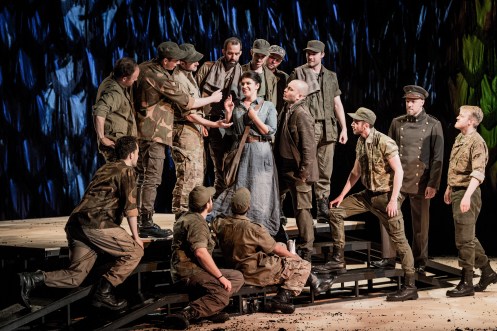
Silly man, we say, he should have stayed with Micaëla, his sweetheart from back home in Navarre, who truly loves him and has sought him out to bring a messages from his ailing mother, coming vicariously with “un baiser de ma mère”. Shelley Jackson, much acclaimed internationally as in the USA, gives a beautiful portrayal of Micaëla, of her sweet innocence and her devotion. Jackson sings with great charm and grace bringing all the skills of the lyrical soprano to the role. We are frequently led to glimpse Micaëla as a Madonna, embodying both young virgin and mother. (Indeed costume co-designer Ilona Karas drapes her in Madonna blue.)
The toreador, Escamillo, glorious but arrogant, courageous but full of bravado, needs a singer with great aplomb, and Phillip Rhodes is impressive in this role. The well-known Toreador’s song is delivered with great attack and Rhodes effortlessly fills the full range of the baritone voice demanded by the piece.
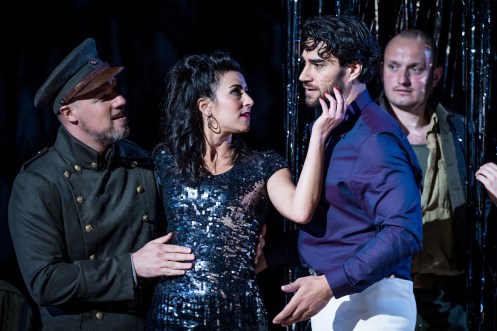
Sopranos Marianne Croux and Filipa van Eck are very spirited as Carmen’s companions Frasquita and Mercédès and are a joy to watch. In Act II, Lillas Pasta’s becomes a glitzy late twentieth century nightclub, complete with silver slit-drape and roll-along glitter-balls, which make a stylish sparkling setting for Frasquita and Mercédès to perform with Carmen, and here we also see Croux and van Eck’s dancing skills. The smugglers, Le Dancaire and le Remendado appear, played by Tiago Matos and Christophe Poncet de Solages as a pair of wide-boys. Mutually supportive, they catch just that right amount of vaudeville humour, and with Frasquita and Mercédès they form a well-differentiated foursome. Together they explode with ensemble energy for the quintet,”nous avons en tête une affaire”.
The lowest registers are in fine hands with Russian-American bass Grigory Soloviov as Captain of the Guard, Zuniga, acted as slow on the uptake, whilst sung with rich resonance.
The Grange Festival’s Carmen is undoubtedly an outstanding production, but for this reviewer has one irritating flaw. Bizet’s score with Meilhac and Halévy’s libretto has much spoken dialogue which is often cut. Here, having cut most of the dialogue and some recitative, it is replaced by an extraneous commentary, delivered by two narrators, La Commère and Le Compère (the gossip and her crony?). They explain what is happening, seemingly for any six-year olds who may be watching. They are forever pulling the focus and breaking the musical continuity and emotional momentum. (The nadir comes with a mimed description of the bull-fighting arena. Draw out a circle, ah, it’s a ring; flap a cloak, ah, it’s for bull-fighting; bring in a plate of oranges, ah, it’s in Seville … geddit?). All the production’s exemplary acting and dancing, the beautiful singing and Bizet’s brilliantly crafted music speak for themselves. Why not let them speak?
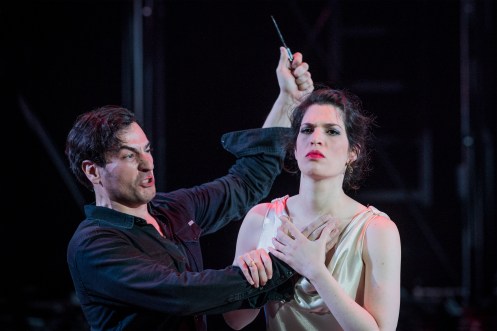
Nevertheless, this is a Carmen that is truly exceptional. It puts aside the superficial of a rollicking good story to probe its darker depths, and examine the powerful human emotions, the irresistible strength of the animal sensuality that is Carmen, and her allure, an allure that gathers all around in her thrall. This is an allure that leaves Don José pitifully consumed and helplessly deluded, a fatal delusion that leads the opera to its climactic conclusion.
Mark Aspen
June 2017
Photographs by Robert Workman
The English Heart
by Matthew Campling
Etcetera Theatre, Camden, until 2nd July
Review by Eleanor Lewis
Actors are great. It’s probably fair to say that even now, when most people think of actors they tend not to focus on the thankless work in fringe theatre that underpins the wide and varied performing arts scene in this city that we tend to take for granted. No-one pays great attention to the particular skills required to bring new work convincingly to life in a tiny theatre over a Camden pub on one of the hottest days of the year and after the fourth major national tragedy in three months. The fact that actors, playwrights and producers continue to produce and perform with only the most basic facilities, is something greatly to be valued in these trying times.
Trying times, specifically Brexit, being the subject of Matthew Campling’s latest play, The English Heart. Shortly after the 2016 Referendum, in Lincolnshire, married couple Marie and Jake sell the family farm that Marie grew up on to Andre, a mildly mysterious character back from South Africa, nursing a broken heart and developing an aversion to close relationships of any kind. Marie and Jake don’t like talking about Brexit to the point of fingers in ears and tuneless singing whenever the subject is mentioned, but they do want to enjoy themselves … separately, with Andre. Both begin secret sexual relationships with him and these proceed splendidly – in fact Marie hasn’t had sex this great for quite some time – until Andre begins to resent their neediness, and ultimately their liaisons are revealed. At which point a small apocalypse occurs and husband Jake attempts to shoot himself.
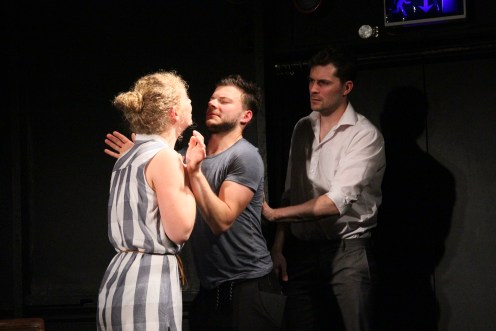 The analogy is clear if you want it: Britain throws in its lot with the EU and enjoys the bounty therefrom for quite a while until things begin to get a little less simple and demands and responsibilities seem to overtake the advantages. Jake, Marie and Andre find their own solution to their European union of dangerous liaisons and the play (which, according to the press release, was being written right up to the fallout from the latest election), takes the three characters forward in possibly the only way from the impasse they find themselves in, spoilers preventing further elaboration.
This work is more than an animated metaphor though and classier than a dramatized illustration of the state we’re all now in. The three characters and their interactions are believable and well-played by the actors, and their creator ultimately treats them with kindness. They are weak and funny, but dignified. Once humiliated by their failings, their strengths bring them together to rescue the situation.


Husband Jake, the most challenging of the three roles, is a boy-man struggling with his true gay identity, over-excited once he embraces it and then extremely vulnerable. Not the easiest character journey to convey convincingly, but managed to good effect with a very efficient performance from Jake Williams. Marie (Anya Williams) embraces the relationship with Andre behind her husband’s back but reacts with a self-righteous indignation, that she’s oblivious to, to the revelation that Andre is also pandering to her husband’s needs. Andrew Jardine plays Andre as a morose, directionless character, cash rich but emotionally void. All three are deluded in some way, all three draw you into their deluded worlds but make you want to forgive them.

The work as it was performed would have benefited greatly from just a little bit more of a suggested set, it would have brought another worthwhile dimension to the piece. It’s clear that the possibilities for set design, or even construction, within the small confines of the Etcetera are limited, but I think there is potential for more than mainly moving chairs around.
The English Heart is funny (though it’s probably funnier on a non-press night in a more relaxed atmosphere) but there is a comforting feeling of vindication about it too. You feel for its creator and his characters the kind of private sympathy you felt for the teacher when you were ten and your class was told off for collective misbehaviour that you were involved in, and quite enjoyed, but knew would end in tears. Matthew Campling’s work is new to this reviewer, but I will seek out more of it.
Eleanor Lewis
June 2017
Photography by Matthew House
Jane Eyre
from the novel by Charlotte Brontë, devised for the stage by the company
National Theatre and Bristol Old Vic Co-production at the Richmond Theatre, until 17th June
Review by Melissa Syversen
On my bookshelf, you will find several beautiful hardback editions of literary classics from the Western cannon. Alongside my copies of Crime and Punishment, Frankenstein and Wuthering Heights you’ll find a particularly lovely, leather-bound edition of Charlotte Brontë’s Jane Eyre. All masterful works of literature. All collectively giving me the side-eye for not having read them yet. The guilt is real, I tell you. Now, having seen the National Theatre-Bristol Old Vic co-production currently touring the nation, the guilt has tipped over that fine line and turned into outright shame.
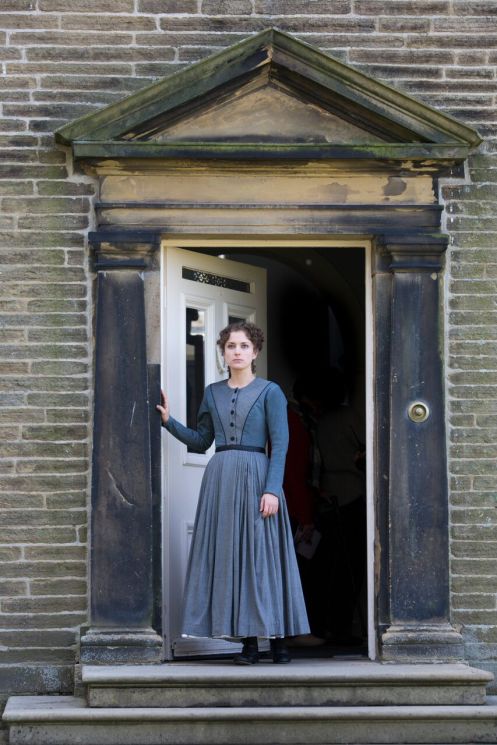
Though, of course, I am very familiar with the story of Jane Eyre. How can one not be, with all the countless adaptations for film, TV and theatre over the years? The BBC alone have multiple adaptations available, finding it mandatory it seems, to put out a new version almost every decade since the 1950s. (I am quite partial to the Timothy Dalton 1983 version myself.) You can’t really blame them. The story of Jane Eyre was ahead of its time and, since its publication in 1847, it has continued to resonate with people over the world. Hers is a story of overcoming emotional, physical and moral hardships from a young age, fighting to retain her own sense of self, her independence and her passionate, intelligent spirit.
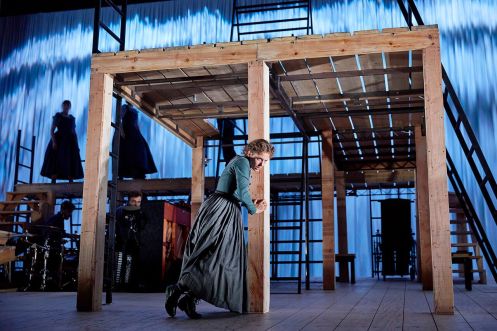
Director Sally Cookson and dramaturg (Yes, a dramaturg!) Mike Akers have rightly decided to focus wholly in on Jane in this production. It is easy to get lost in the infamous love story between her and Mr Rochester. Their story is indeed a large part of Jane and her journey but it isn’t the main event. The casting structure of the ten-part ensemble reflects this. Every member doubles at least two roles, be it as different major and minor characters or as musicians and vocalists with the exception for Nadia Clifford. As our strong-willed heroine, Jane, Clifford never leaves the stage and she portrays Jane with a fiery sense of agency throughout.
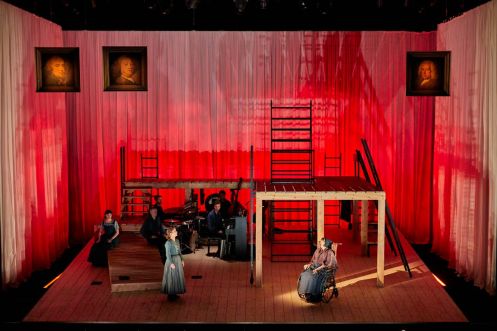
This production was originally devised by its original company at the Bristol Old Vic in 2014 as a two-part piece. When it transferred to the National Theatre, it was worked down to one 210-minute play. Know this: this production of Jane Eyre is not your average piece of period drama. We are not trapped in cramped gothic castles or bound by excessive period costumes. Just as the qualities of the wild birds Jane so admires, there is a sense of freedom and air to this production, silly as that may sound. I can’t remember the last time I’ve seen the phrase ‘less is more’ so aptly put to work. The set, designed by Michael Vale, is a simple wooden structure of three levels with different black ladders spread around. Around the playing space hangs white curtains. Within this frame, there is an impressive flexibility for everyone to create and play using levels, choreography, music and sound. And I must say the lighting design by Aideen Malone is particularly exceptional. This production is as striking in its simplicity as it is in its beauty. I really can’t heap enough praises upon the entire production team.
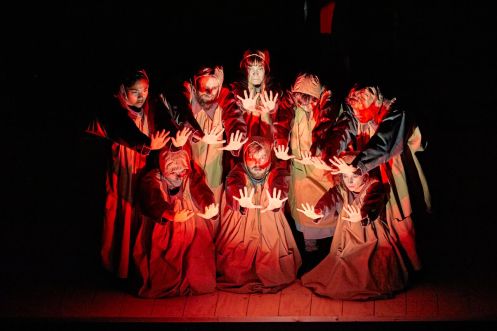
And of course, then there is the ensemble. Although the touring version that I saw at Richmond Theatre does not feature the original cast, I was struck by the strong sense of unity between the actors. Director Sally Cookson has guided her cast splendidly. Together they have found wonderfully imaginative and often playful ways of moving the action forward, utilising movement, breath and voice. I have already mentioned Nadia Clifford and her solid performance as Jane. Equally good is Tim Delap as Mr Rochester. Delap has tapped more into Mr Rochester’s eccentric side than other actors I have seen earlier and honestly the man is all the better for it. In a quite surprising way it helps bring out the hurt behind the man’s domineering exterior and it make his emotional connection to Jane all the more potent and moving. The entire ensemble is strong and together they bring to life the large gallery of people flowing in and out of Jane’s life. But, I think for those of us who have seen the show will agree: the one role will remain in the audiences’ memory is Paul Mundell as Pilot, Mr Rochester’s trusted hound. I am not even joking, he steals every scene he is in.
You can tell that this production of Jane Eyre is a labour of love for those who created it. It really is one of the most visually stunning pieces of theatre I have ever seen. Even if you have seen every BBC series or film adaptation of Jane Eyre, you will never have seen her story told like this. If you love Jane Eyre or just even just beautiful and inventive theatre, I would urge you to see this production. You will not be disappointed.
Melissa Syversen
June 2017
Photography by Ellie Kurttz and Brinkhoff Mögenburg
Attempts on Her Life
by Martin Crimp
YAT at Coward Studio, Hampton Hill Theatre, 7th to 9th June
Review by Georgia Renwick
ALTERNATIVE TITLE: Love it or hate it, you’ll want to talk about it – Attempts on Her Life
I never fail to be impressed by YAT’s choice of material and from where I’m sitting, this is their most challenging, daring and confrontational production yet. In her production notes young director Lucy Hanneghan describes the play as theatrical “Marmite”, “you may love it, you may hate it, but either way you’ll definitely want to talk about it”. So which camp do I fall into? She was right in that there is certainly a lot to talk about and it is undoubtedly a strong and impassioned production, but a “love” or “hate” response is not so easily settled upon.
Martin Crimp’s play debuted at The Royal Court in 1997, to a mixed reaction. “Is it even a play?” was a question readily up for debate among the critics, by both those who loved it and those on the other side of the Marmite debate. Attempts on Her Life has no cast list, no stage directions, and conventional “acts” and “scenes” are substituted with seventeen short “scenarios”, each with their own titles. Well, sixteen titled and one “Untitled”, to be exact, although you could reasonably argue that “Untitled” is a conscious title in itself.
The elusiveness of a title, of defining what is and is not there is the central theme that forms the invisible spine of the scenarios. Crimp presents us with graphic imagery: genocide, violence, suicide, pornography, terrorism – the short warning on the back of the programme of “adult themes and content” is rather an understatement – but invites us to question, what are we really seeing? What is outside our field of view? What is shown and what is hidden from us? The end of the twentieth century saw the eye of the media being scrutinised in a new way, and twenty years on in this age of “fake news” and the news feed “bubble”, a piece of theatre questioning its bias – whether you call it a play or not – couldn’t be more pertinent.
With no cast list, the play’s lines are free to be divided as the director sees fit among as many actors as they choose to cast, unrestricted by age or gender; a “director’s dream” Hanneghan calls it in her notes. In the wrong hands, its lack of prescription could easily turn it into a directionless mess, a director’s nightmare.
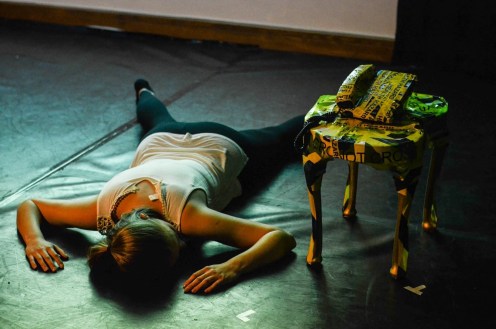
Hanneghan however proves herself more than capable of handling this challenging and mature text. As YAT are justifiably renowned for, the pace and energy never drop. Set is minimal, a few pieces of furniture wrapped in crime scene tape, with physical theatre and quick costume changes to convey the revolving door of scene changes. Each change is slick, everyone where they need to be when they need to be there, and the resulting pace is relentless.
Hannagan’s ensemble cast of twelve are well balanced throughout the eighty-minute piece, and each given their moment to show us what they’re made of. Each actor is faced with the challenge of multiroling, and every one of them handles it with aplomb.
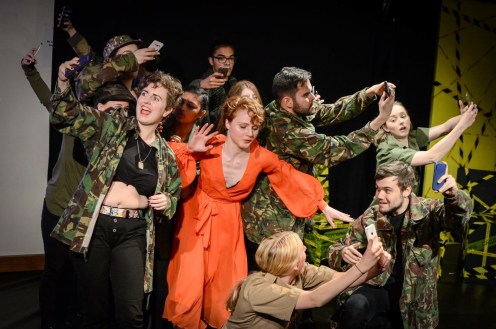
There is one central character in this characterless play, the “her” to which the title refers, but she remains elusive, described from the outside but never pinned down, which Hannegan reflects in her casting decisions. In one scene she is a lover, played with doe-like eyes by Emily Coates, in another a terrorist, played with devil-may-care attitude by Lena Kheroua, in yet another she is a car… “The sun gleams on the aerodynamic body. The aerodynamic body of the new Anny… now available in diesel“. Even the spelling and pronunciation of her name is not fixed (Anne, Annie, Anny, Anushka) and what is “attempted”, by her “on her life” or by Crimp in the context of this play is similarly never clearly defined. Hanneghan isn’t giving any hints either, “I’m not going to explain my interpretation… I’d like the audience to question what they are watching”, she revealed tantalisingly on the YAT Twitter feed, prior to the opening of the show, quite rightly leaving it ripe for audience conjecture. Was Annie a real character at all, or just a product of our – or the media’s – conjecture?
The cast of YAT proved in their performances that even without defined characters they could deliver memorable performances. Gracie Moss’s emotional performance was captivating, delivered with cries of fury and tears of rage, whilst another expressive actor was able to draws roars of laughter from the audience with nothing but a suggestive flick of the eyebrows and a balloon pump. Timmy King’s impressive accent work had him hailing convincingly from at least three different regions, whilst Freddie Haberfellner and Vilde Valerie performed with guts and gusto almost entirely in alternative languages, one of Crimp’s few production notes with Hanneghan was able to utilise to its full disorientating effect.
As if the continuous scene changes and role-swapping weren’t enough bedazzlement, scenes are punctuated by exemplary technicals. Deliberately over-stimulating video inserts form an appropriately arresting introduction. Well considered sound design is also used to heighten the head-spinning effect of the piece, with voice-overs, voicemail messages, pumping music and even a full-on musical number contributing to the chaotic sequence of events.
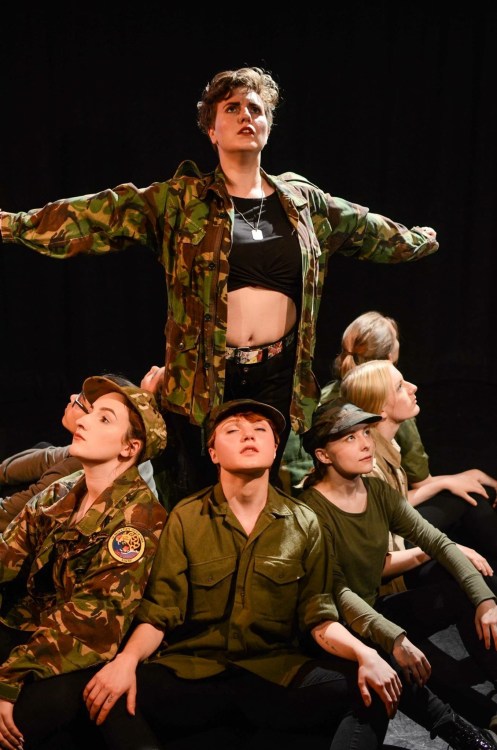
The intimacy of the Coward Studio at HHT suited the material and this technical articulation of it. In a space this intimate, the sound can envelope you, the video and visuals are “In-Yer-Face” – as the programme promises – there is nowhere to hide. At times this could be (although I respect that this was almost certainly deliberate) a little too over-stimulating and intense. A little more audience care would have been appropriate, given the inflammatory and potentially trigger-inducing nature of the material.
Although there are some outrageously funny moments, overall Attempts… makes for uncomfortable, even unpleasant viewing. I wonder at how many of those squirming in their seats around me were aware of what they were letting themselves in for! Why do we, whether by choice or unintentionally, go and sit through performances that make our toes curl? Performances that play out the ugliness of the world, that hold up the worst in our world for us to see in full and uncensored detail? Performances that get up in our faces, and point their metaphorical fingers directly at us?
Because, we think. And thinking leads to… well, that’s precisely the point. Who knows where? New thoughts, new ideas. By not pinning down the subject matter, Crimp has not limited the interpretive possibilities. This is what makes it such a gift to creative young directors like Hanneghan, who can shape the material any which way they see fit to speak to audiences now. She has excelled at making a production that is current, without being gimmicky.
So to return to the question of Marmite, of love or hate and the desire to talk about it. I love the daring of this production, because it exposes, my hate of the ugly truths I see within it, the unspoken truths that we as a society, twenty years on from the original, are still subject to. So in truth, I feel both love and hate in response. The interpretive possibilities however ascertain that no two audience members will see eye to eye, making this production something we don’t just want to but need to talk about.
Georgia Renwick
June 2017
Photography by Handwritten Photography.
The Boy in the Striped Pyjamas
by Daniel de Andrade
Northern Ballet at Richmond Theatre, 6th and 7th June
Review by Suzanne Louise Frost
Let me just start of by saying: I am very fond of David Nixon, the artistic director of Northern Ballet. When I was six years old, I made my very first steps on a professional stage as a gnome in Cinderella at the Deutsche Oper Berlin and David Nixon was the prince. He was our star male dancer of that decade in Berlin and I love the path his career has taken now, leading one of the most innovative companies in the UK, and one that has narrative ballet at the core of its philosophy. So I was very interested in seeing The Boy in the Striped Pyjamas. It is my firm believe that with good choreographers and great dancers there is no story that ballet couldn’t tell and no subject matter too big for this wordless art. But just because you can – does it mean you should?
The Boy in the Striped Pyjamas is a popular novel by Irish author John Boyne, later adapted into a successful Miramax film directed by Mark Herman. It explores the horrors of the Holocaust through a child’s perspective: nine-year-old German boy Bruno, son of a high ranking German commander, forming a friendship with an interned Jewish boy named Shmuel through the fence of Auschwitz-Birkenau concentration camp. In the UK, Matthew Bourne has become probably the most popular choreographer by successfully adapting films for the stage (such as Edward Scissorhands and most recently The Red Shoes) and inventing a very cinematic style of staging that makes for great story telling. But why David Nixon thought this film, of everything out there, would make a great ballet is a little bit bewildering. Unfortunately, it is very hard to overcome the whiff of bad taste around dancing Nazis. As a German, as a Berliner, from a city where every street corner bears some kind of memorial to our tremendous collective guilt, where every few steps you can trip over a “Stoplerstein” with the name of a Holocaust victim, seeing the infamous “Arbeit macht frei” sign from the gate of Auschwitz as a prop is a bit challenging. I am not saying that ballet can’t tackle serious subjects. Crystal Pite just had tremendous success with Flight Pattern, a phenomenally moving and harrowing ballet about the current refugee crisis. She does have a much more abstract approach though. I wonder if goose-stepping corps de ballet dancers should maybe best be left to the realm of The Producers -satire.
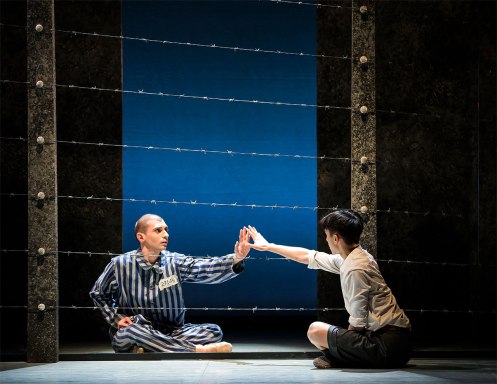
My mood changed towards the end of Act I, when the two boys finally meet in a very poetic scene through that transparent yet unbridgeable barbed wire fence, beautifully set off by very reduced, minimal stage design and lighting. The second act is altogether more dramatic with the action moving along at a fast pace: Bruno brings a secret stash of food to his new friend and, in an attempt to overcome the wall separating them, puts on one of the striped “pyjamas” (his naïve perception of the Auschwitz inmates’ uniform). The masquerade has fateful consequences…

The choreography, by long term Northern Ballet collaborator Daniel de Andrade is innovative and daring throughout with very interesting and unusual lifts, turns, slides and floor work. The childlike innocence of Bruno is characterized by playful cartwheels, rolls and euphoric jumps and Matthew Koon gives a flawless performance. The technical standard of the entire company is excellent and there are emotional moments, most notably from Hannah Bateman as a torn mother starting to grasp the horrors of her husband’s doing. Victoria Sibson as the grandmother shows humanity, caring for a hungry inmate serving at the dinner table and furiously condemning the violence the Nazi officers show towards him. But I felt that the characters are oversimplified and only Filippo di Vilio as Shmuel – riveted by hunger, fear is his eyes yet still full of childlike curiosity – manages to be more than one-dimensional.
I am aware the child’s perspective is the point of this particular story but is it the best way of tackling something as immense as the Holocaust? Is it a good idea displaying the “spirit of Adolf Hitler” as some sort of leather-clad dementor with a gas mask? In Boyne’s novel, Bruno mishears “Führer” as “fury”, therefore imagining him as a kind of evil spirit. I have a real issue with this. With all due respect, Auschwitz is in Poland and these kind of word games make no sense neither in German nor in the Polish language. I know this problem stems from the source material but it is also lazy research, when an entire character results from a clunky translation mistake. A dramaturge could have helped here.
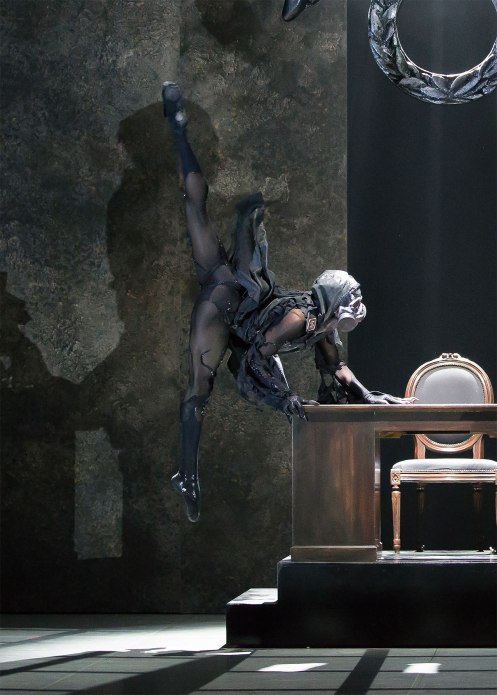
In the programme, Nixon states his wish to create a show for the very talented small male dancers in his company and The Boy in the Striped Pyjamas certainly works in that sense. The pas de deux between the two boys explore male friendship without any hint at the homoerotic, which is refreshing in a ballet context. But Nixon also mentions that he first thought about adapting Anne Frank’s diary and I almost wish they had gone with that. Anne Frank tells a coming of age story exploring emotions of fear, claustrophobia, sexual awakening and looming danger via the backdrop of the Holocaust. It would have avoided choreographing an actual going-into-the-gas-chamber dance sequence.
I wonder if my reaction is a bit too politically correct. At no point is this ballet actually offensive. But maybe a little ill-advised? Here is a company with a passion for storytelling, excellent dancers, skilful choreographers and the guts to make brave decisions. I wish I could have liked it more.
Suzanne Louise Frost
June 2017
Photographs courtesy of Northern Ballet  Emma Kauldhar
Poetry at the Adelaide
An Inauguration of Performance Poetry
Performance Poetry
at The Adelaide, Teddington 4th June
Review by Mark Aspen
Here’s a bit of prejudice: poets are consumptive young men with huge floppy bow-ties waning in garrets. No, no, no, we mean performance poets. Ah, they are shy lady librarians reciting quietly between the bookshelves … or are they musical Caribbeans? Oh, no, they are depressed Northern academics … or was it horny-handed farmers well-grounded with their livestock?
You see, until now it has been hard to tell, for poets in and around Teddington have kept themselves well hidden. Poetry has been one of the few art forms without a wide exposure hereabouts. That has now been redressed with the formation of Performance Poetry, an ad-hoc group formed at the initiative of Anne Warrington, a local RADA actress, and Bob Sheed, who has been running poetry workshops over a number of years. Sunday saw the inaugural meeting of Performance Poetry, in the convivial surroundings of The Adelaide at Teddington.

Poets are, we discovered, from diverse backgrounds and experiences. None, as far as we discovered are librarians, shy or otherwise, or farmers, horny-handed or otherwise. However, they had a wonderfully interesting and entertaining range of subjects and moods. Some were whimsical and nostalgic, some were romantic and philosophical, some were descriptive and very many were brilliantly humorous.
Some of the contributing poets included members of Bob Sheed’s The Luther Poets, a poetry working group. An inspiration-triggering technique that they used was to start with a key-word. So we had a number of poems on the themes, “outside”, “fashion” or “indecision”.


“Outside” inspired Heather (Montford)’s nostalgic recollections of children being free to play outside after the Second World War, Fran’s landscape portrait around Kingston, Pat’s Kew Gardens and (drawing from her experiences as a teacher) the perversity of young children who will find every excuse not to go outside into the playground, except when it is snowing. Graham took the outside theme to extremes, outer space in fact, musing on the beauty of space … but with a twist.
Children did feature in quite a few of the poems, Anne reflecting on how children can be unintentionally cruel. Bill, the church verger, whom they taunted as “the old geezer”, became warmly remembered after his death with the fond soubriquet, “Geezer Bill”. Her reflective mood continued in a duet with Bob, Duchess, about a grand elderly lady, now past her best in a nursing home, acted out by Anne, suitably clad in a moth-eaten fox-fur stole. Grandly passing orders to “her” gardener in confident aristocratic manner, we discover that, before the deprivations of dementia, she was in fact the landlady of The Duchess pub. It was a sad triumph of pathos.
And on the subject of pubs, Pat introduced a piece of protest nostalgia that elicited murmers of agreement. Why is it when a pub has had a name established for centuries, do new licencees feel the need to change it to something different (that everyone hates)? So a real traditional name is changed into a plastic pastiche of a “real” traditional name.

Bob combined two themes of “fashion” and “father” into a satirical poem: a description of the narrator’s father, a portrait sculptor who against his better judgement agrees to create a bust of Tony Blair, and chooses anthracite as his medium. Bob has quite a biting sense of humour, and in his retelling of the Humpty Dumpty nursery rhyme, has the fate of the hapless Humpty consequent upon his being a lover of the Queen.
Heather (Moulson) brought some well-studied realism to her trio of poems, the cynical verse, Beautician, whose work is only skin deep; Evelyn, a warm epitaph to a deceased friend; and Babysitter, which ironically reveals the subject’s true motives.
Heather (Montford), who is also an artist, put Black on her poetic easel, a study in monochrome, Rembrandt’s skilfully nuanced use of the colour, its association with negative concepts, but its real contribution to the palette as a colour of strength and positivity.
Melissa also had well studied poems on tragic, reflective and philosophical subjects. There was a study of the duties of a soldier in a war, “many keys but no deeds”; a piece considering the now dented armour of chivalry; and the absorptive poem, To Sir with Love.
By way of contrast, there was plenty of humour. Graham came back with verses describing how difficult it was to find rhymes for Tintoretto, a task that had exercised him during a visit to Venice. However the master of comic verse was Robin. First he had a dig at political correctness, with a story about a worker at the Civic Centre, who ticked all the boxes with Equal Opportunities legislation by being a deprived, multiple trans-gender … green Martian! Taking up the theme of “indecision”, Robin then hilariously described a husband and wife in the marital bedroom, preparing for a night out, a “bit of a do”, and the age-old problem of what to wear. Finally, his spooky verse had plenty of scary twists and turns, but was really gripping (where it hurts).
Using the unlikely vehicle of a haiku to reminder us that this inaugural meeting of Performance Poetry was taking place on Whit Sunday, Keith shared some thoughts about the perception of time. The awe that the Apostles must have felt in receiving the Spirit at Pentecost was undoubtedly in a moment when time stood still for them. Taking the idea of time standing still to the romanticism of lovers fearing his pain of separation, he read Louis McNiece’s poem Meeting Point in which “time was away and somewhere else” for two lovers in 1939 about to be separated by war. Keith was the only contributor to read a published poem, but then followed this with his own, Our Room at Noon, which was on a similar theme.
As Keith had pointed out, the contrasting consciousness of time is that of “how time flies when you are enjoying yourselves” and everyone agreed that the two hours of varied verse, rich rhyme and personal poetry vanished very quickly. (Helped a little with fare from The Adelaide.)
Mark Aspen
June 2017
Photography by Graham Harmes
Barnum
by Michael Stewart, and Cy Coleman
Twickenham Operatic Society at the Hampton Hill Theatre until 27th May
Review by Mary Stoakes
Barnum tells the life history of the great American impresario and circus owner in terms of musical theatre and in his programme notes, director Ian Stark, mentions the difficulties of staging such a ‘big top’ entertainment in the confines of the Hampton Hill Theatre.
This was a less lavish production than the one which TOpS mounted just twenty years ago but ingenious use of the stage resources and a hardworking cast brought the ‘greatest show on earth’ to renewed and exciting life in Hampton Hill. Stunning back projections were used to delineate the many different locations and a huge elephant’s eye and part head represented the appearance of Jumbo to great effect. Parades through the auditorium helped to further the circus illusion, as did the ‘bricklayers’ juggling routines as they built Barnum’s famous Museum. Scene changing was slick and kept to a minimum with the more intimate scenes being delineated by the use of carefully managed drapes and screens.

The musically accomplished band was placed at the rear of the stage, high above the action. This tended to upset the balance with the singers below, who had difficulty in projecting over some rather overpowering accompaniment, especially in the more reflective songs. With that criticism out of the way, the colourful big production numbers were very successful, played with great energy by the bands, both real and mimed. The brightly costumed chorus worked their socks off with some remarkable juggling and acrobatic skills (there was even a ‘fire eater’!) There were some exceptional song and dance routines in which all the cast sang, danced and even mimed with great precision, beautifully choreographed by Lacey Creed: especially effective were Come Follow the Band and the very different Black and White.
PT Barnum, the great impresario, was played with loads of charisma by Ben Roberts. Many years ago Michael Crawford laid down the benchmark performance but Ben managed to bring something of his own to the role. The ‘humbug’ was put over with just a hint of self-doubt and the more thoughtful aspects of the character were developed very believably throughout the show. The Colours of my Life was delightful and the patter in some of his other numbers was well delivered. We speculated as to how Ben would manage the fabled tight rope walking scene. In the event, the illusion was well maintained and Barnum safely negotiated his way along the ‘rope’

Ellie Barrett, a newcomer to TOpS, was the perfect foil for Barnum, as his sensible and hard-done-by wife, Chairy. This was a well-rounded and touching performance, full of character with good singing and excellent interaction with both her stage husband and the rest of the cast.
Another stand-out performance was that of Charlie Booker as ‘General’ Tom Thumb. The illusion of his stature was imaginatively realised by seating him initially on a huge chair and, in the solo number which followed, Charlie’s delightful personality and song and dance skills shone out. He also made a vibrant contribution to the ensemble routines.
As Jenny Lind, hired by Barnum to perform in America after her success in Europe, Cate Blackmore with her powerful soprano voice made an instant hit in her opening appearance. Unfortunately during her solo number she was rather let down by the amplification which tended to distort some of her notes and this reviewer felt the band were less supportive than they should have been! Nevertheless the singing was great, following the traditions of Twickenham Operatic Society, and she looked and acted delightfully as The Swedish Nightingale
Fiona Stark, reprising her role of twenty years ago, contributed a humorous cameo as Joice Heth, the Oldest Woman Alive, whom it was claimed by Barnum was George Washington’s nurse. Dan Doidge was in good form as the Ringmaster, presiding over the proceedings with great aplomb and doubling as James Bailey, who eventually joined Barnum to mastermind their world renowned circus. The smaller roles were all well characterised by members of the company who showed their versatility by joining the ensemble as tumblers, jugglers, clowns, aerialists, acrobats, dancers, gymnasts, strongmen, bricklayers, passers-by, museum patrons, beefeaters, Bridgeport Pageant Choir and bands of every size.

This was the ultimate ‘feel good’ show and once again TOpS loyal and enthusiastic following left Hampton Hill Theatre full of praise for Ian Stark’s most enjoyable production.
Mary Stoakes
May 2017
Photographs by Ace
This Was a Man
By Noël Coward
West End Premiere of a Controversial Masterpiece
Venture Wolf at Leicester Square Theatre until 28th May
Review by Mark Aspen
What are society’s values? This is the question that Noël Coward asks in his This Was a Man. Unfortunately for Coward, it was also the question that the Lord Chamberlain was also asking in 1926. In September of that year, Lord Cromer, as Lord Chamberlain, banned the play as it “involves an amount of adultery, cynically and light-heartedly treated, which makes the play more than dubious”. Sir Douglas Dawson, his Comptroller, added, “What better propaganda could the Soviet instigate? Every character in this play, presumably ladies and gentlemen, leads an adulterous life and glories in doing so”.
Of course, 1926 was the year of the General Strike and then was a fear of revolution in the air, so Coward’s satirising adulterous aristocrats might have been incendiary. It may well be that some people, aristocratic or otherwise, might have considered a moral duty pointless after the slaughter of the Great War, a few years earlier. However, it was barely three years previously that Cromer and Dawson had reluctantly passed Coward’s The Vortex for licencing, in spite of the play being about a married lady from the upper echelons of society who has a toy-boy and whose son is a cocaine addict.
This Was a Man is a play clearly rooted in its time, and there it lay for nearly nine decades until the Finborough Theatre resurrected it in 2014. It has never until now had a West End production.
Hence, Venture Wolf’s production, now running at the Leicester Square Theatre, is to be greatly admired for its ambitious enterprise in taking a three-fold risk: resurrecting the play, showing it in the West End, and setting it in a different period. But it is a Noël Coward, so what could go wrong?
Coward wrote many unperformed or unpublished play scripts, including nearly a dozen in 1918, the year that he was discharged from the army on medical grounds, so there may well be good reasons why these scripts, and that of This Was a Man, have gone unproduced. The scenes all seem to be truncated, and seems as if This Was a Man is really a sketch-book for other pieces, (Private Lives perhaps, produced in 1929).
Society portrait painter Edward Churt circle is a thirties-something martini and mah-jong glitterati for whom adultery is as much a social must as the season. His attractive wife Carol enjoys a series of passionate affairs while he turns a blind eye.
This Was a Man is certainly not the best Noël Coward script to work from, but director James Paul Taylor has made the daring choice of resetting it forward by nearly a half-century to the early seventies. Unfortunately, however, this opens up many weaknesses in the play and undermines what might have been an outstanding production. Trim-phones, tie-dye slash curtains and unkempt butlers neither fit with the louche, insouciant amoral atmosphere that the play demands or with its stylishly sparkling background of privilege. Crucially, seventies’ non-contact dancing does not work for the crucial dance-seduction scene.
In spite of that caveat, the performance of Daisy Porter in the central role of Carol Churt, the vampish femme fatale, picks up the character with gusto. Carol is described as “governed by sex” but, somewhat unfairly, “with no intellect to provide ballast”. Although she seems to regard every man who comes past as a potential new plaything, she is by no means as single-dimensioned character as the other protagonists imply. Porter sizzles in the role, sensual, incisive and with a subtlety of expression and just enough clipping of her vowels to smack of classic Coward. With flaming red hair and dangerous red lipstick, matching Carol’s flaming red passion and dangerous red ensnarement, there is something as feline an Art Deco 1920’s Cartier panther about Porter.

The feline nature comes spitting out in her interactions with Zoe St Merryn, her husband’s “close confidante” for whom “marriage is an overrated amusement”. Zoe has just returned from New York, where she has been recuperating after her divorce, and is currently living in Claridges, which she regards as “austere”. (Currently, in 2017, rooms are up to £2,220 per night: I just checked!) When Carol and Zoe have the claws out, catty understates it!
Bibi Lucille, pitches the character of Zoe as a foil to Carol, more resilient and flinty, playing the part with subtlety. (Incidentally, Lucille seems to be cornering the market in rediscoveries of famous playwrights, having recently acted in Shakespeare’s “lost” play Cardenio.) Zoe had been the scapegoat for her philandering husband in their divorce in order to protect his reputation. She regrets having taken a string of lovers in retaliation, but is now trying to rekindle the love of Edward. In many respects, she is a mirror to Carol.
In fact the various characters all seem to be holding up figurative mirrors to each other defects. Every one of them is nursing self-inflicted psychologic wounds, whilst keeping their real feelings well repressed, perhaps they don’t know what their real feelings are.

The melancholic Edward Churt, presumably the once-a-man of the play’s title, has had “all the vitality sucked out of him”. He believes himself to sophisticated and “civilised” by pretending to be indifferent to this wife’s quite open affairs. So, he supress his emotions and rationalises this attitude by taking the “modern” view that Carol is “not his property”. In fact he is stuck in a trap of his own making. Paul Vitty in this role, falls a little short in portraying the sense of sophisticated ennui demanded by Coward, and comes over more as depressed and impotent in his ability to act decisively, until it is all too late.
Enter Edward’s old school chum, Major Evelyn Bathurst, “Evie” to his friends, stiff upper lip, well starched, favourite adjective “splendid!”. Evie knows about his pal’s problems with his wife, and suggests that she should be “read the Riot Act”, and that he is the one to do it. What he doesn’t tell Edward, though, is the plan of action is to set a honey-trap in the form of a little tête-à-tête, an intimate dinner with Carol in his flat. We begin to suspect Evie’s motives, but, true to his plan, he does confront her when she steps up her practiced seduction routine: “You have the soul of a harlot”. But he is rebuffed with ridicule, then tears, then fainting. He is no match for Carol’s skilled manipulations, and eventually breaks down in tears … as she creeps into his bedroom. Tom Pyke growls away as Evie, postures and preens, but does not really convince as the polished military man with the brittle armour. One would expect him to be buffed-up to impeccable perfection, both literally and figuratively, and certainly know how to pronounce “subaltern” and “blackguard”. Evie may have feet of clay, but they wear mirror-finish boots.
Coward has badly served the five minor characters in the play, making them largely scene-setters. However, reference must be made to Blackwell, Evie’s manservant, and almost mute part, played by James Chadburn. Chadburn had Blackwell subtly eavesdropping on Carol and Evie’s intimacies, a slight nod, a hint of a raised eyebrow. It was just enough not to pull the focus from the main action.
In these intimacies, Carol defends her serial infidelities as a reaction against her husband’s indifference to her. Maybe it is a chicken and egg situation, but we do just begin to believe her. Coward’s writing often shows an incipient misogyny, that the woman is culpable every time: an archetypical Eve holds out the bitten apple to a poor defenceless Adam. But in This Was a Man, one feels some sympathy with Carol faced with the lot of emotionally incompetent oafs on the men’s side.
Just after writing This Was a Man, and having its performance licence refused, Coward had a nervous breakdown (on holiday in the Pacific!) and had been generally depressed about his work. One wonders if Edward Churt is a symbolic self-portrait and Carol is a representation of his thwarted writings.
Coward certainly takes the opportunity to take a side-swipe at the Lord Chamberlain’s censors. He has Edward suggest a trip to the theatre to see a play about a woman who takes a lover as young as her son, a play that the Church of England did not approve: clearly a reference to The Vortex. Later he suggests to Zoe that they go to see a “clean play, a love story without sex” because it will be easy to get tickets.
You see, there are some Coward witticisms but the humour in it seems hollow. Without Coward’s usual scintillating quips, there is not too much material to make the comedy zing. Add sophistry without sophistication, and a glitterati without glitter, the Venture Wolf company were on a hard call. It has used a low-budget vehicle to bring an almost-forgotten Coward to its West End premiere, and that is surely no mean achievement, for which the theatre world should be grateful.
Mark Aspen
May 2017
The Mikado
by W.S. Gilbert and A. Sullivan
Sasha Regan’s All-Male The Mikado
Regan De Wynter Productions at Richmond Theatre until 27th May
Review by Mark Aspen
Gilbert and Sullivan is fun! And The Mikado is probably G&S’s most fun piece. As a well-seasoned reviewer, I have seen many manifestations of it: local light operatic societies’ versions, Jonathan Miller’s acknowledged classic, even The Hot Mikado, but with Sasha Regan’s All-Male The Mikado the fun is turbo-charged.
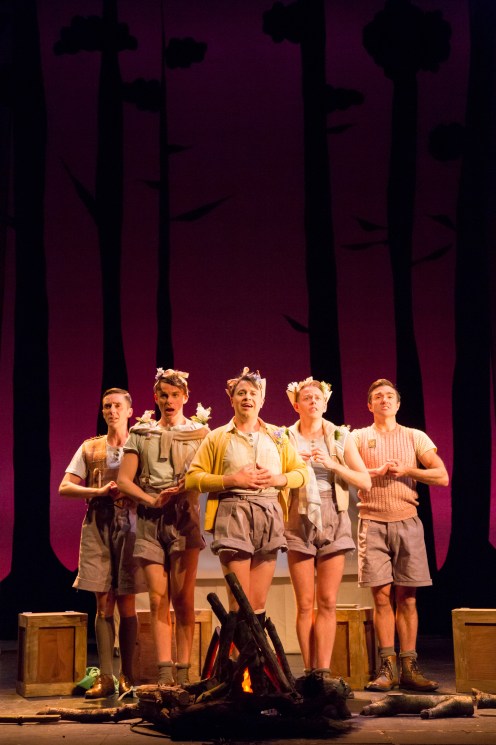
Director Sasha Regan’s inspiration for all-male productions of Gilbert and Sullivan has its spark in her own experiences of single-sex school cross-cast productions, and the awkward humour that can emerge. Her The Mikado, is set in the fifties, as a typical all-boys’ boarding school take a camping trip to the exotic land of Titipu … and immediately goes native. In spite of the obvious play on the idea of “camping”, this is not a Julian and Sandy Polari knockabout, but rather the gentle half-innocence of schoolboys squirming at the idea of dressing up as … girls!! In fact, the only real camp elements were three tents and a campfire, continuously smouldering downstage (the fire, not the tents – although there was a lot of smouldering going on in these).
Ryan Dawson Laight’s economic design strips off theatrical embellishments: the highly mobile tents are almost the only set, and there is not a single kimono in sight. However, these are set against Tim Deiling’s atmospherically lit cyc-cloth, a luminescent forest of leggy trees.


This economy of approach allows the characters to come to the fore, but relies heavily on the performers. And my, how this works: for here is a truly multi-talented cast. These boys can act, they can sing and they can dance.
A strong dance sequence opens the show, and Holly Hughes’ choreography is relevant and lyrical, nicely setting the scene.
The self-deprecating style, which adds to the humour, is obvious right from the overture, delivered on a solitary keyboard by tireless Musical Director Richard Baker. Maybe my ear was falling in with the style of the production, but was the piano sound tuned to a slightly high pitch? If so, it certainly foreshadowed the falsetto voices of the “female” characters. How can singers take their so voices high in their register for a whole evening? There is no change of key and they stay true to the characters. It is literally breath-taking.

But what about the “chap” chaps? Our wandering minstrel, the hapless Nanki-Poo, is played straight down the middle by Richard Munday, a strong resonant tenor, as a somewhat bemused suitor, wandering in on all these bizarre goings-on. However, the Lord High Everything Else, Pooh-Bah, vain, ambitious and hyper-mercenary, is given full-rein by the rich-voiced baritone Ross Finnie. (There was something about Finnie that reminded me of Alex Salmond, but it may just have been the Sottish accent and tatty tartan waistcoat.) Then, of course, the Lord High Executioner Ko-Ko (a role created by W.S. Gilbert for D’Oyle Carte’s star, George Grossmith), here played by the lithe-limbed David McKechnie as an omnipresent éminence grise, who nevertheless has to wrestle with the difficult notion that Lord High Executioners cannot cut off another person’s head, until they have cut off their own. Ko-Ko also has to wrestle with tongue-twisting patter songs, including the “Little List”. I was waiting for the conventional topical additions to those about whom he notes “they’d none of ’em be missed!”, but even in the midst of a general election campaign, there was alas none of the “none”. No doubt the producers are playing very safe here.

The “chaps” form a very strong contingent within a very strong ensemble company, but (and this is probably inevitable in a cross-cast production) it is the “girls” who steal the show. The arrival of the “Three Little Maids” is always awaited with anticipation, but here the more so with our “girls”, Pitti-Sing (Jamie Jukes) and Peep-Bo (Richard Russell Edwards), played subtlety enough with just a hint of femininity (and shorts slightly rolled up) and their sister, Yum-Yum, the love interest of the show. Alan Richardson is wonderful in this role, balancing the characterisation between sympathy and humour, without straying into caricature. Perhaps typifying his approach is Yum-Yum’s solo “The sun, whose rays are all ablaze”, delivered with beauty without losing the irony. All three “little maids” are remarkable in maintaining flawless falsetto, seemingly effortlessly, whilst preserving the integrity of their characters.
For a grand entrance, that of Katisha must be hard to beat: in tweeds, on a “sit-up-and-beg” bicycle, and wearing three (!) hats, one top of another, with one upside-down. This entrance though belies the impact of Alex Weatherhill’s outstanding portrayal of Katisha, which brings out the pathos and poignancy of the part. The singing of solos pieces, such as “The hour of gladness is dead and gone” and “Alone, and yet alive” are poetic. Nevertheless, the humour is never lost, the duet with Ko-Ko, the well-known “Tit Willow” laced a delicate lyricism through the broad fabric of fun.

The rather complicated plot of comical contradictions, overlaid by Gilbert’s still applicable satirical social comment, comes to an end with the deus ex machina, the Mikado himself. Bass, James Waud strides into this part with great stage presence as the pragmatic despot, summoning up as much benevolence as one can from one who looks forward to boiling miscreants in oil.
Sasha Regan, was awarded the Special Achievement Award at the “Offies” earlier this year for her contribution to musical theatre, her all-male G&S shows, conceived at her home base at the Union Theatre. Of the current tour of The Mikado, she says it “is going to be a great year – it’s beyond exciting”.
Regan pitches The Mikado just right: never plays for laughs where they would be misplaced, but lets the mirth rip where it is right; never parodies where lyricism is best; but never slams on the brakes when the turbo-charger kicks in the fun. Titipu will never be the same again.
Mark Aspen
May 2017


