
Susanna
Virtue Versus Violation
Susanna
by George Frideric Handel, libretto by Newburgh Hamilton and Moses Mendes
Richmond Opera at St. Mary’s University Theatre, Twickenham until 19th April
Review by Claire Alexander
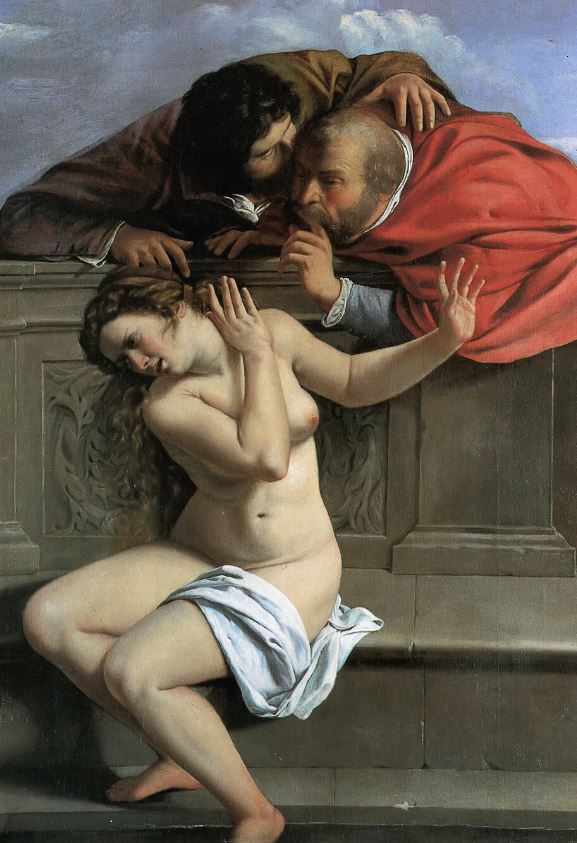
The plot of Handel’s opera, Susanna, most often performed as an oratorio, is simple enough. Set in Babylon and based upon stories in the book of Daniel, Susanna lives an honest and happy life with her clearly loving husband, Joachim. When Joachim has to go away to tend the sheep, Susanna is left alone and unsupported. Two elders from the village find her one day bathing alone in a stream and use this opportunity to profess their ‘love’ for her, assault her and then accuse her of infidelity. The community, swift to judge, sentence Susanna to death. But a young woman (Danielle – Daniel in the original) from the community has the courage to speak out against the false accusations. Susanna is saved, returns to Joachim’s welcoming arms and the true culprits receive their punishment. Forgive the cliché, but everyone lives happily ever after.
Although written in 1748 the theme is as familiar today as it was then: woman’s eternal fate at the hands of men. The circumstances may have changed but the message is the same. Sexual and relationship misdeeds are too often assumed to be the woman’s fault – by being too suggestive, too forward. It is too often assumed to be a woman’s responsibility to protect a man from the temptations of their charms.
For Richmond Opera, in a clever and thought-provoking rethinking of Susanna, director Patricia Gomez contrasts Susanna’s ancient story with the experience of two contemporary women. A ’pious’ woman, who seeks refuge from men, in a convent; and a ‘modern’ woman who endures a controlling relationship when she lets a man (whom she barely knows, we are led to believe) into her life. Gomez has sympathetically reallocated some of Susanna’s libretto to these women so that their experience is interestingly reflected against Susanna’s central story. This makes for a compelling and visual addition to the audience experience and understanding of the opera.
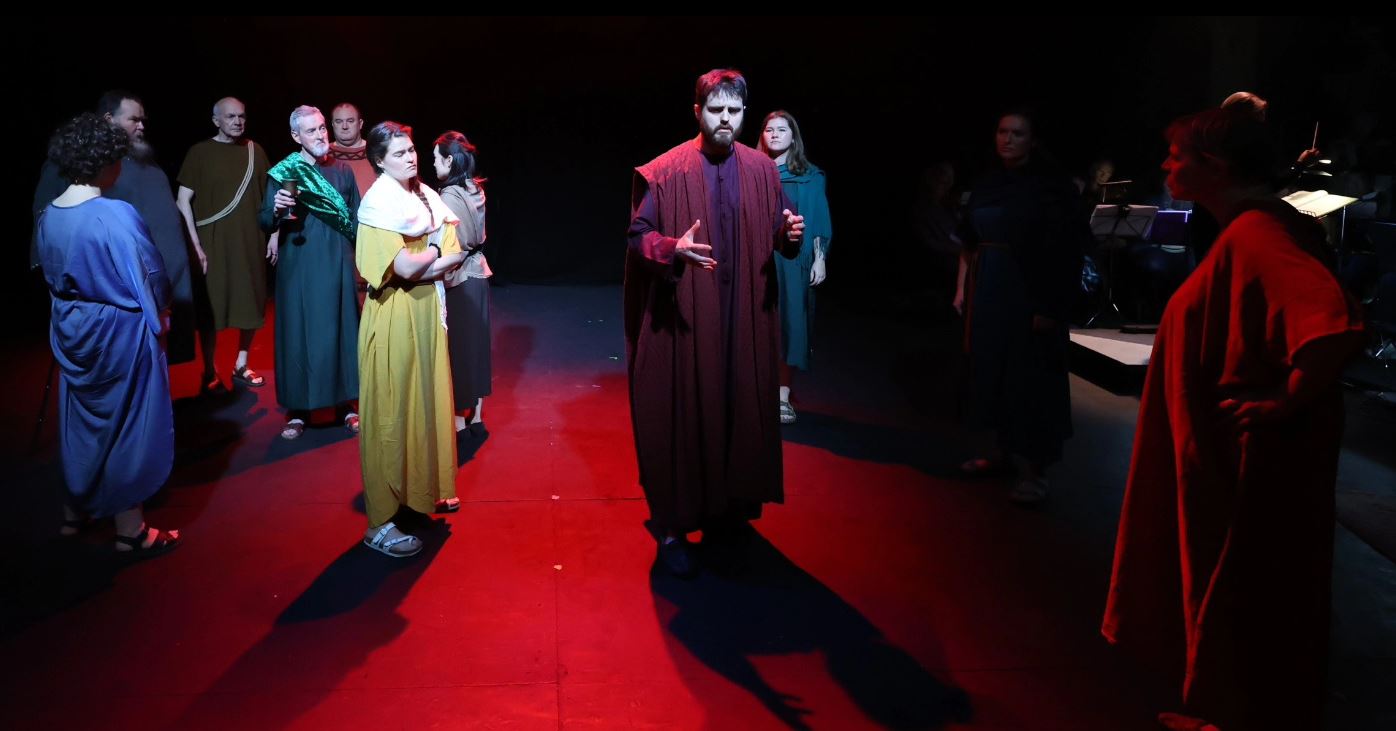
Richmond Opera’s production of Susanna is presented as a fully staged production and hereby lies the biggest challenge – not necessarily of their making I hasten to add! Oratorio is generally written as reported internal experience and there is relatively little direct interaction between the main protagonists. There are only brief duets between the singers; the chorus comments on the action rather than get directly involved; the drama is reported rather than felt. This creates quite a challenge to bring drama to the action because the singers are not really interacting with each other and in its very nature the music is, of itself, sometimes quite repetitive without overriding dramatic narrative or climax. This makes the performative work of the singers a real challenge to find and sustain the emotional drama. In this way I sometimes found a disconnect between the singing and the real sense of the drama of the piece. The music itself is complicated and as an oratorio would often be sung by singers using a score. This is a real challenge that needs to be addressed by any company undertaking a staged production of any oratorio.
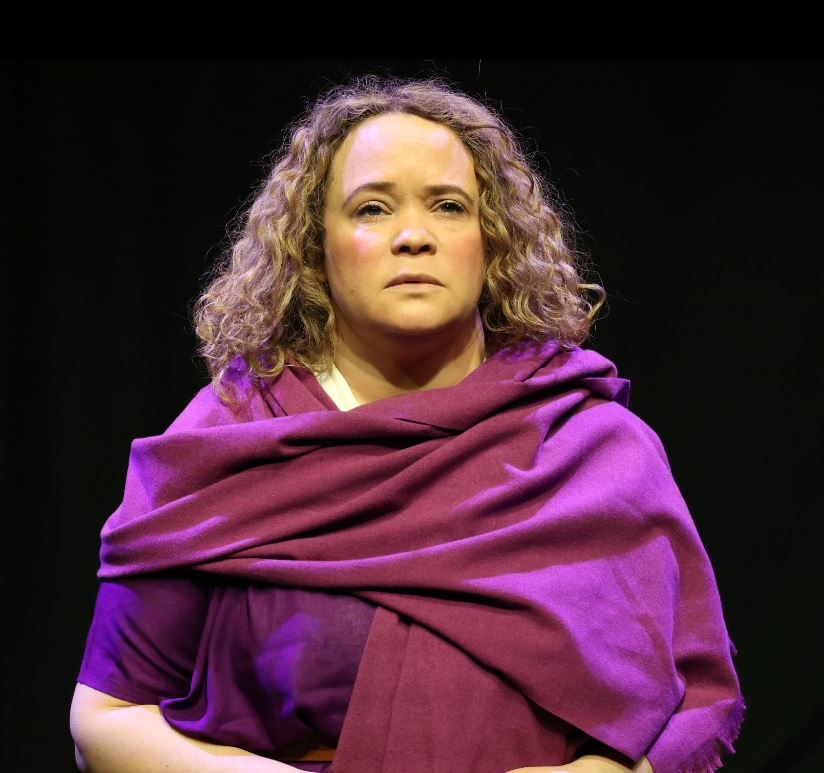
Richmond Opera made a fearless attempt at this – some parts worked better than others. I found the ‘modern’ woman’s scenes some of the most arresting where Erin Holmes was able to bring an honest and authentic emotion to the scenes of control and abuse from her partner, especially when at her lowest point when it is evident she has been physically abused. Naomi Kilby brought a vulnerable understated emotional expression, matched with a genuine musicality, to her performance in the title role. Fiametta Fuller Gale, as Joachim, sang her role securely with a beautiful rounded tone, but probably had the greatest challenge in visually and dramatically sustaining her affection for Susanna, especially over a long first scene. In the other roles everyone gives a musically committed performance – bringing this text to the stage certainly did not compromise the musicality even if at times there was a slight distance from the drama. Perhaps the chorus could have benefited from a few more voices and this may have helped bring them into the drama more, both visually and vocally.
The production is within a simple, minimal set. Patricia Gomez, as director and Simon Pike, as lighting designer, let the black box that is the basis of Twickenham’s St Mary’s University theatre do the work and did not overcomplicate. I particularly liked the effect of candles to represent Susanna’s ensnarement, capture and final redemption, subtly reflected in candles in the contemporary spaces too. Costumes, also credited to Patricia Gomez, were colourful but not distracting – the use of purple, so often associated with righteousness, for the three protagonist women at the end was a nice detail.
The small Baroque based orchestra, musically led by Lindsay Bramley as musical director, was well balanced with the singers and sympathetically placed part off-stage, part on-stage, which was successful as a way of integrating the music with the action.
This is Richmond Opera’s first production at St Mary’s University Theatre – an excellent, appropriate and more inclusive space than Normansfield where they have regularly previously performed. So, despite the demands of presenting oratorio fully staged, Richmond Opera largely succeeded. This production trusted in Handel’s music and style, but the addition of the experience of 20th and 21st Century women, and the visually clear, if basic, staging brought a valuable additional dimension to the production, bringing the story to life in an accessible and rewarding way to a modern audience. It might have benefited from a few careful cuts – at two and a half hours excluding one interval it is long. This might have helped sustain the level of drama with the music, but that said, it is a testament to its success, in the capable hands of its key creatives, that this production kept its pace and always maintained the interest including to an (albeit musical) thirteen year old, who was my companion!
Claire Alexander, April 2026
Photography by Jo Lo Photography, image by Artemisia Gentileschi


