
Maybe Soon
Virtual Seventh
Poetry Performance, On-Line, 9th May
Review by Thomas Forsythe
The merry merry month of May has cheered that eclectic band of poets, Poetry Performance, with the possibility that it may soon bring the chance of returning from the internet back to real-life three-dimensional encounters in The Adelaide, its Teddington home. Its latest on-line outing is inspired by the theme for the month, appropriately “May”.
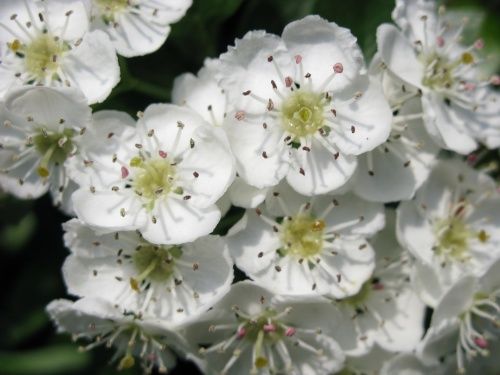
Where we once had saint’s days, we now have a “special” day it seems for everything. (Apparently today is World Lawnmower Day.) Clive Rowland, the Master of Ceremonies, reminded us (if we hithertofore even knew) that the day, the first Sunday in May, was World Laughter Day.
Picking up this point, there were quite a few poems with the light-hearted themes that mark this month. Robin Clarke’s May I is a love poem, for this is the season when “a young man’s fancy…” The young man’s seduction is hobbled by his shyness, but he carefully ask permission for each move. But then again, as he admits, these words were “… never said. / They were just floating in my head”. Fran Thurling’s one liner, “The Pink Cherry Blossom” speaks succinctly for the season. Jackie Howting’s thoughts went to May spent in Corfu with her A May Zing, so evocatively describing Greece in spring that you could almost hear the trizonia crickets singing and smell the oregano.
Read more…Le Mot Unjuste
Chantecoq and the Mystery of the Blue Train
by Arthur Bernède, translated by Andrew K. Lawston
Review by Matthew Grierson
For a great sleuth, a detail speaks volumes. In the world of Parisian detective M. Chantecoq, however, volumes are spoken about every last detail.
No part of The Mystery of the Blue Train arrives without being extensively prefaced, described, attested in dialogue and recapitulated, as though the various hands behind it – the detective himself, his fictional amanuensis, author Arthur Bernède and translator Andrew Lawston – each want to make sure they’ve had a say on the matter. Rather than being snappy or smart, the dialogue has the laboured quality of bad radio play, with characters patiently explaining to one another things they patently already know. When they’re avoiding that pitfall, they can’t resist elaborate periphrasis: as the detective instructs his factotum to remove a disguise, for instance, he tells him to “reclaim your normal physiognomy” rather than “take off your mask”.

You may not have heard of Chantecoq before, the concoction of prolific French writer Bernède in the 1920s. For those who are interested I won’t précis the fictional sleuth’s career here because his résumé is given out as frequently as a calling card in the course of this mystery. The real mystery is why we need a translation: there’s no shortage of golden-age crime already, and this one is a long way from the crispness of a Christie or wit of a Wallace.
Read more…Requiem
by Simone de Almeida

Simone De Almeida’s poem, Requiem won the category prize for Arts Richmond’s Young Writers competition 2019-20.
She was awarded the distinction of Senior Laureate at the Young Writers Festival 2020
On the edge of insanity-
Blind to the fragmentary quandaries,
Ice melting;
Yet we heat our frozen hearts-
Connected yet we fall apart.
Materialistic desires,
Empty promises and counterfeit smiles.
Hide and seek,
In the game of your lies.
Naïve, is that so?
Incompetent and inept?
We are the future-
But you cannot perceive it yet.
Losing sanity,
To find yourself.
As ever, disregard:
The history book on the shelf.
The last time –
Though we’ve heard it countless times.
Say we’ll be fine –
In the darkness of your silence.
Simone de Almeida, March 2020
Photography by Thomas Jacobson
Once in a Lifetime
The Arts Richmond Young Writers Festival
The Stage Company, at the Exchange Theatre, Twickenham, 28th March
A review by Simone De Almeida

Simone De Almeida is one of our younger reviewers. Now aged thirteen, she was awarded the distinction of Senior Laureate in Arts Richmond’s Young Writers Festival in 2020 for her poem, Requiem.
Here she reviews the 2021 Young Writers Festival
As a bright, white light illuminated the stage, I leant forward on the edge of my seat in anticipation, knowing already that what I was about to witness would be undoubtedly spectacular. The first category of finalists was that of Year 4 and under, and to say I was amazed by the quality of work would be an understatement. Each piece was so captivating, following truly unique storylines to create something so incredibly original. The plots were so imaginative, ranging from the story of an unlikely friendship between a snow wolf and a polar bear cub, to the tale of a puppy finding a loving home.
Over time, I have noticed that it can often be all too easy to become wrapped up in complexity, valuing writing by length and vocabulary, but the work of these talented young authors served as an all too welcome reminder that there is so much joy to be found in work that is truly inspired. Each piece was truly brought to life by the incredibly talented actors, who delivered each performance with such passion and enthusiasm; it was thrilling to watch.
The next category performed was years 5 and 6, and I was awestruck by the emotion conveyed in their pieces. They took such complex subjects such as autism, ADHD, and dyslexia, and moulded them into something so raw and beautiful. It was evident that each author wrote from the heart, as there was such passion in their work; they perfectly understood the power of their words, and harnessed this to create something really poignant and moving.
Read more…Last Word
Big Time
by Jonathan Holloway
Blue Fire Theatre, On-Line until 31st December
Review by Mark Aspen
St George’s Day, 23rd April is a day for patriotism. George of Lydda, a Roman soldier of Greek origin born in Cappadocia, remains a worthy symbol of valour and honour, venerated as a Patron Saint. St George is believed to have died on 23rd April 303 and, remarkably on the same day of the year, have at least three English kings, Wihtred, King of Kent in 725, Æthelred I, King of Wessex (brother of Alfred the Great) in 871 and Æthelred II “the Unready”, King of England in 1016. Moreover, 23rd April seems to be a popular day for the demise of poets, William Wordsworth of pleurisy in 1850, and Rupert Brooke in 1915 during the Great War, but the enemy was a tiny mosquito whose infected bite caused fatal sepsis.

However, it should go without saying that the most celebrated poet who died on St George’s Day is William Shakespeare. As an extra bonus, St George’s Day is traditionally also recognised as the day of his birth. Nevertheless, to die on this special day extends to other super-star writers not just those from this Sceptred Isle. Miguel de Cervantes, creator of Don Quixote, regarded as the first novel, whom the Spanish regard as their own Shakespeare, also died on 23rd April, and in the very same year as Shakespeare, 1616.
However, through a quirk of the calendar, 23rd April was not the same day for Cervantes and Shakespeare. It is this quirk that forms the nub of Jonathan Holloway’s radio play, Big Time, commissioned by the BBC in 2016, to mark the 400th anniversary of this occasion, and in which Simon Callow and Nicky Henson played Shakespeare and Cervantes.
David Garrick invented the word Bardolatry in 1749, but I am sure that Spaniards have a corresponding Cervantolatry, a word in Spanish for the same phenomenon. It may therefore seem odd that the Blue Fire Theatre Company has presented its excellent reworking of Big Time as part of its Famous People You’ve Never Heard Of podcast series.
Read more…Paths of Perception
Virtual Sixth
Poetry Performance, On-Line, 11th April
Review by Mark Aspen
(Part Two) Escapement Checked
Zulu spear to lime green handbag … now there’s eclecticism …
Since its followers have taken to the aether for their seleno-cyclic sharing of their poetry, Poetry Performance has each time chosen a theme. For its April virtual gathering the theme was “Spring”. When opening Part One of this review, I wondered whether our Teddington based poets would still have spring in their steps along such a well-trodden path of poesy. The vast majority of the Poetry Performance coterie went to the subject with voracious enthusiasm, turning stones and looking into all the nooks and crannies on this path. Most were positive about the season of rebirth, although there were some misgivings that spring “disturbs the equilibrium” (Judith Blakemore, Lockdown) and one (Ken Mason, The Spring) explored a winding side path adding a twist of homonymic horology. Thus Poetry Performance thoroughly saturated the theme of “Spring”.

Nevertheless, other themes are available … that lime green handbag for example. Heather Moulson has quite a knack in combining humour and nostalgia in her poems. In Handbag this was the first proper “grown-up” handbag, she had at eleven years old and, although she progressed onto a fashionable clutch bag in her teenage years, the smell of the leather in the early eponymous item stands the test of time. Her humour creates the foil for Heather Moulson’s metaphor for the reality of life.
Read more…Roget’s Revenge
Virtual Sixth
Poetry Performance, On-Line, 11th April
Review by Mark Aspen
(Part One) Spring Unwound
One of the important things that poetry can seek to achieve is to find new meaning. It could be argued that its job is to look more profoundly, or more expansively, or more askew and askance at the world of our perceptions and beyond. Among poetry’s many themes, are there any, we may ask, that have been saturated with perception?
Poetry Performance, the Teddington-based congregation of procreators and propagators of poetry think not. Its current series of on-line poetry readings usually has a theme, and for its April virtual gathering “Spring” was chosen as its, er, springboard for poetic creativity. Poetry Performance did not disappoint with four-fifths of its April offerings being on the theme of Spring, (one might add unusually so, as its chosen theme is often ignored). But, I hear you interject, haven’t all of our major poets and others, past and present, had a good crack at this subject? Nevertheless, why not, with its promise of new beginnings, all the kingdoms of flora and fauna being reborn, and of course the Resurrection at Easter, here is a glorious source of hope, something desperately needed in our straightened times.
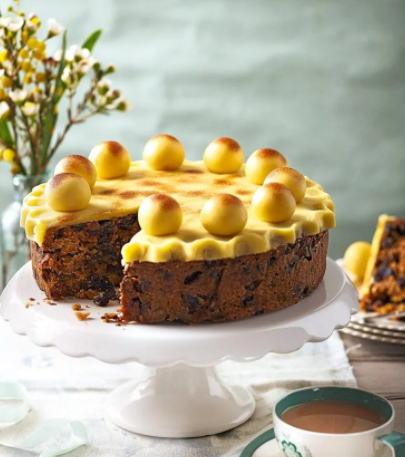
The writers of Poetry Performance have dug their pens into the rich mines of their inkpots, and with all the enthusiasm of children discovering a cache of chocolate eggs, have excavated more fat nuggets from their theme. (See how this abundance of spring generates metaphors as richly mixed as the ingredients of a simnel cake!)
Read more…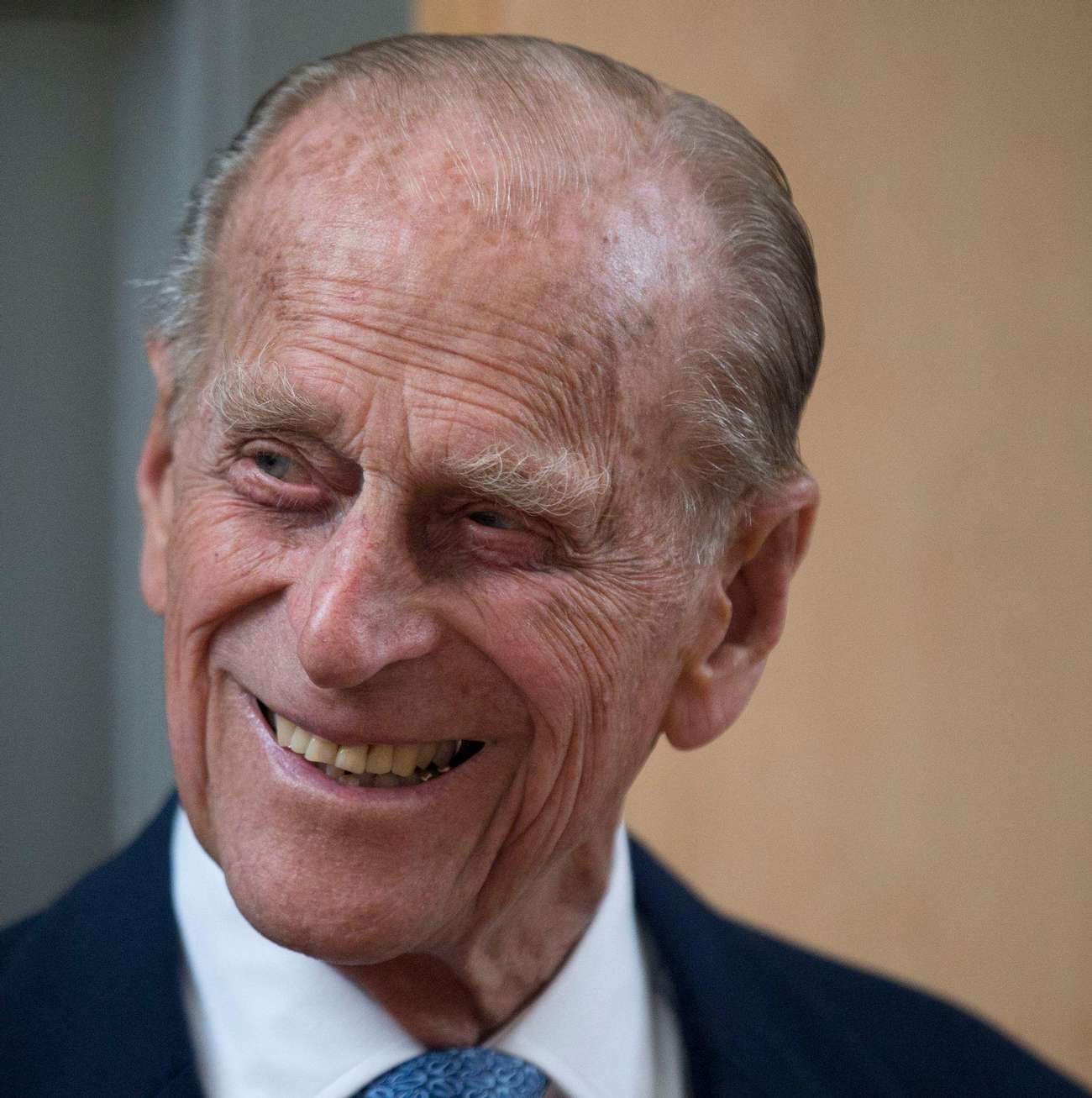
Prince Philip, Duke of Edinburgh 1921-2021
Photography by Allan Warren
Versatility, Variation and Verve
Camille Cole and Charlie Hugill
Live Lounge, OSO, on-line via YouTube from 31st March
Review by Vince Francis
Firstly, a confession. I was unable to watch the final webcast of OSO Live Lounge live. But that’s one of the advantages of this format; one can watch on “catch-up”, much like a favourite TV series. Camille Cole (vocals) and Charlie Hugill (piano and keyboard) had the honour of closing the series and, overall, did both themselves and the series credit. I hadn’t come across either artist before and was unable to find out much on-line, which, I think, probably aids objectivity. Camille is a versatile alto with wide-ranging musical tastes who also works with a band, whilst holding down a job in education. Keep spinning them plates, lady.

We were treated to an eclectic 24 song set, which ranged in styles from show tunes and film scores through to chart hits, with a soupçon of jazz standards to add to the flavour.
Read more…Easeful Tourist of the Voice
Joanna Harries and Ashley Beauchamp
Opera Live At Home, On-line from 30th March
Review by Heather Moulson
It was full of anticipation that I approached my first visit to Opera Live at Home, Helen Astrid’s successful current on-line series of recitals. I was eased in gently to this rich experience, and greeted with a gorgeous aria from The Marriage of Figaro, from gifted mezzo-soprano, Joanna Harries. Accompanied by the talented Ashley Beauchamp on the piano, this piece was Cherubino’s aria Voi che sapete, and it enfolded the audience with its warmth and enthusiasm. Personally I embraced it with joy, as this is my favourite Mozart opera.

Set in St Michaels and All Angels in Chiswick, a venue I know well, the pair drew us in and introduced themselves. Former opera singer, Helen Astrid was the slick and natural presenter, whose intelligence and knowledge of this art form rang clear. Ashley shared with us the taster that these arias were on his dream list.
We had an enticing programme before us of six arias, starting off with Mozart. Joanna Harries, having the advantage of being an extraordinarily versatile mezzo-soprano, explained to us she had her ‘trousers on’ to sing the first two arias, these being male characters.
Read more…
 Mark Aspen