
The Lover and A Slight Ache
Afternoon Delights
The Lover and A Slight Ache
by Harold Pinter
Questors Productions at the Questors Studio, Ealing, until 26th September
Review by Andrew Lawston
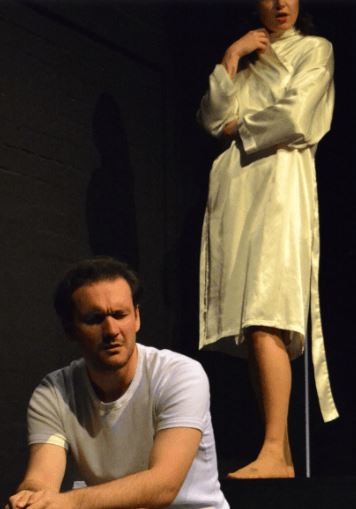
There’s an entry in Alan Bennett’s diaries where the BBC phone him to discuss how they ought to mark Harold Pinter’s fiftieth birthday, and after the call he thinks that he ought to have suggested a minute’s silence.
The “Pinter Pause” has become so widely recognised as one of the playwright’s techniques, that I’ve seen productions where parts of the audience start sniggering knowingly as soon as an actor stops to draw breath. Pinter himself said that directors should feel free to cut them.
All of which is to note that David Erdos’s new productions of Pinter’s one act plays The Lover, and A Slight Ache in the Questors Studio largely avoid the pauses, and sensibly proceed at a brisk pace, as though the director is mindful of the running time printed in the programme.
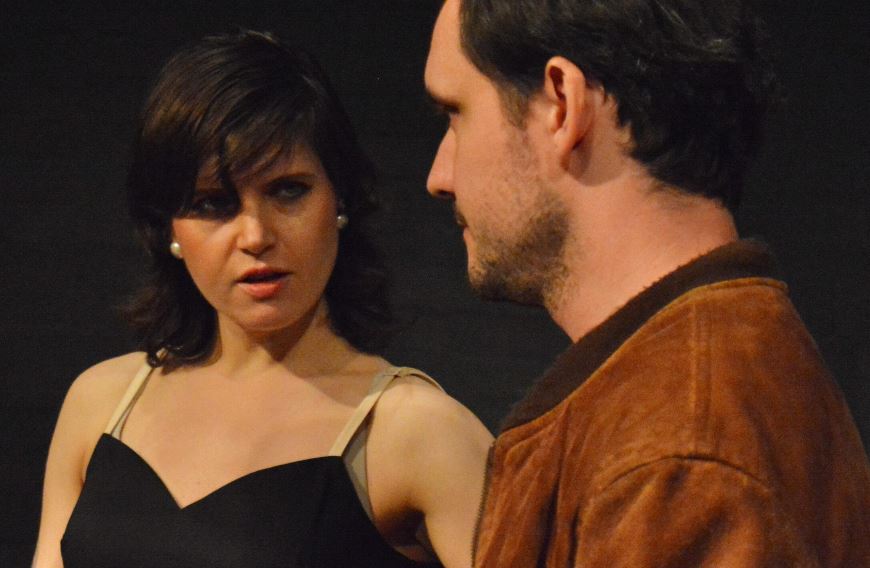
The two plays are both set in the homes of a married couple, and Carla Evans has designed an effective set for both, with bright white tape marking the boundaries of the family homes, and furniture which is adjusted between the two plays. The stark lines of tape draw attention to the shape of the room, and invite the audience to consider the possibility that we are watching two plays featuring the same married couple, at different stages in their lives.
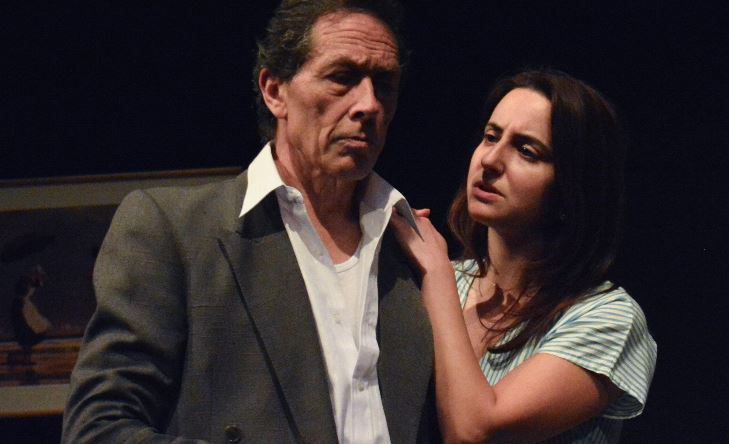
We saw Cast 1 in The Lover, in which an apparently repressed middle-class couple explore their identities by taking lovers. Harry Roebuck’s Richard takes on a range of personae, shifting character and accent effortlessly throughout, though often seeming to take little joy in his games. Catherine Luff’s Sarah is more stable as both Richard’s wife and his mistress, conveying a prowling sensuality that bubbles beneath the surface even when she is playing at being a faithful housewife.
A play that appears to open as a domestic comedy (“Is your lover coming this afternoon?” Richard remarks as he prepares to leave for work), soon acquires a tone of desperate menace as the couple’s adventures unfold, and emotions boil over. It’s a fascinating exploration of identity, and the complex desires that can lie beneath a façade of conformity.
The actors do a brilliant job of retaining the audience’s sympathies, despite some brutal language and unpleasant behaviour of the characters. The dynamic between Sarah and Richard appears to shift throughout the play and, while both have moments where they appear cold or unlikeable, the actors’ charisma and chemistry keep the audience onside throughout.
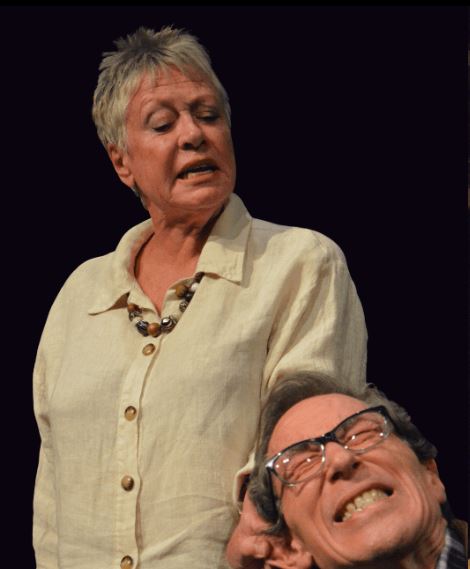
A Slight Ache shows an older couple Edward (a magnetic, nervy performance from David Hovatter) and Flora (an enigmatic Wendy Megeney, who remains faintly detached and sardonically amused throughout much of the play) on a fateful midsummer’s day. After killing a wasp that’s fallen in their marmalade, Edward becomes morbidly obsessed with an elderly matchseller who stands at the end of their garden.
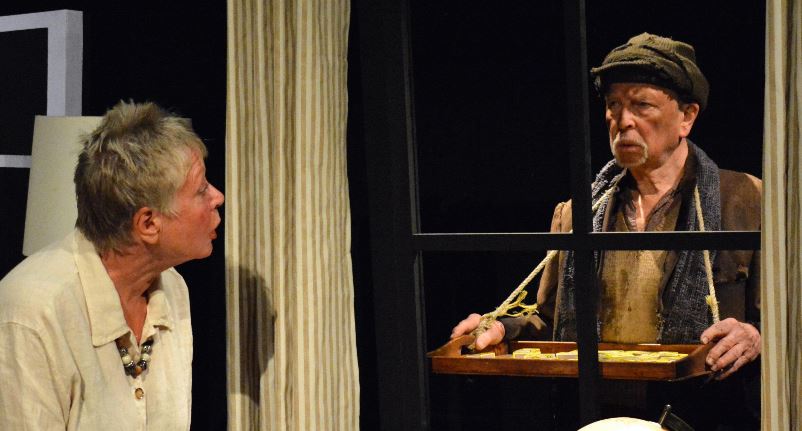
After a while, the matchseller is invited in, and Edward rants at him, sometimes friendly and cajoling, sometimes antagonistic and belligerent, while Flora largely watches the scene unfold. Edward seems to have a heightened dread of mortality, as he comments endlessly on the matchseller’s appearance, and his last vestiges of self-control are swept away when he touches the matchboxes and finds that they are damp and mouldy.
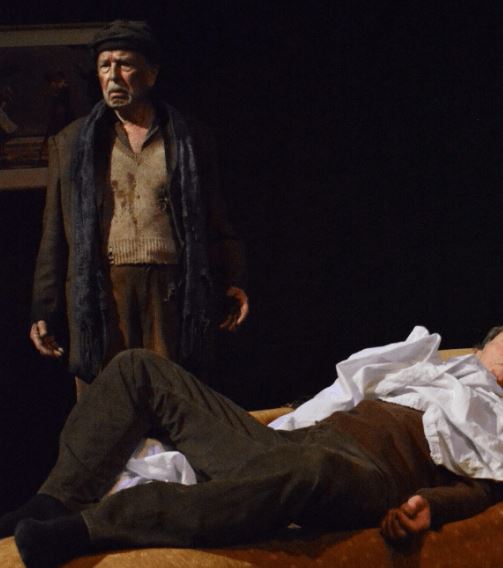
Megeney’s Flora takes over. Asserting herself as much more than the faintly despairing indulgent wife of a neurotic essayist, we learn of her past trauma, and her experience as a magistrate. Meanwhile, Ian Reid (who also has a cameo as a milkman in The Lover) gives a wonderful wordless performance as the matchseller, appearing bewildered, decrepit, or menacing as the play develops.
Andrew Whadcoat’s lighting is subtle throughout both plays, but his effects are more visible here, as the light waxes and wanes in apparent relation to the scene’s tone.
A Slight Ache’s ending is ambiguous, as is much of the play itself, and both plays are full of magnificent performances and are directed with pace and intelligence. Both are thought-provoking pieces which inspired much conversation among the audience as we left the studio.
Andrew Lawston, September 2026
Photography by Kat Brown


