
Angel’s Bone
Not Entertaining Angels
Angel’s Bone
by Du Yun, libretto by Royce Vavrek
English National Opera at the London Coliseum until 31st October
Review by Patrick Shorrock
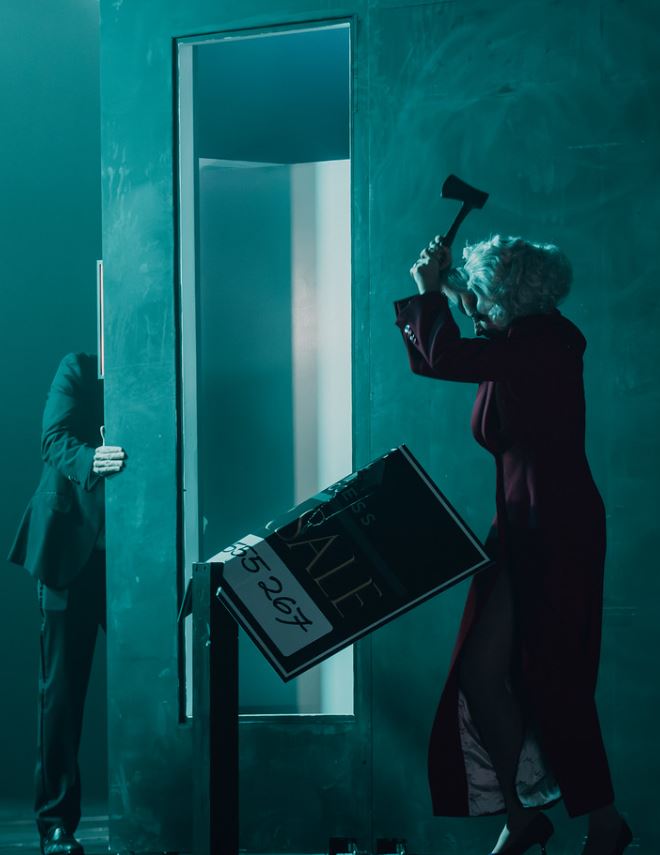
This was a rather downbeat launch to English National Opera’s new season. Composer Dun Yun and librettist Royce Vavrek decided on human trafficking as their subject, so this piece is never going to be great night out material.
Unfortunately, Du Yun and Vavrek had the idea that the victims of human trafficking should be two angels who have been injured when they fell to earth. This certainly gives rise to some resonant and disturbing images, as the angels are pruned of their wings and stripped of their feathers. But it comes at the cost of making the action remote from the awful reality of human trafficking. Implausibility is further enhanced by the references to “cash preferred” and “bounced cheques” (surely out of date even in 2017, when the piece had its New York premiere). Vavrek’s vague libretto disdains clarity, and the plot summary in the programme does not supply details of what takes place in the end.
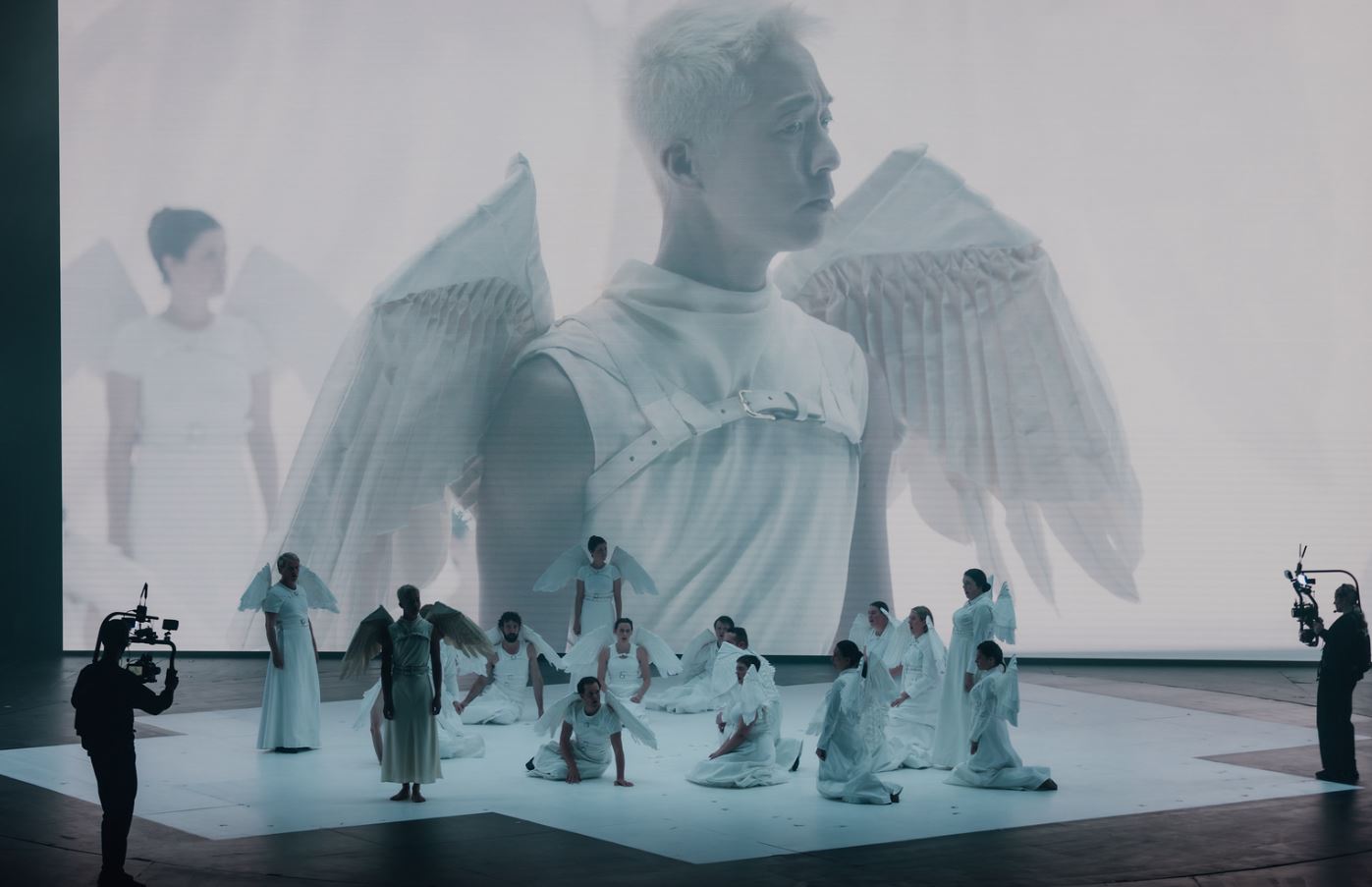
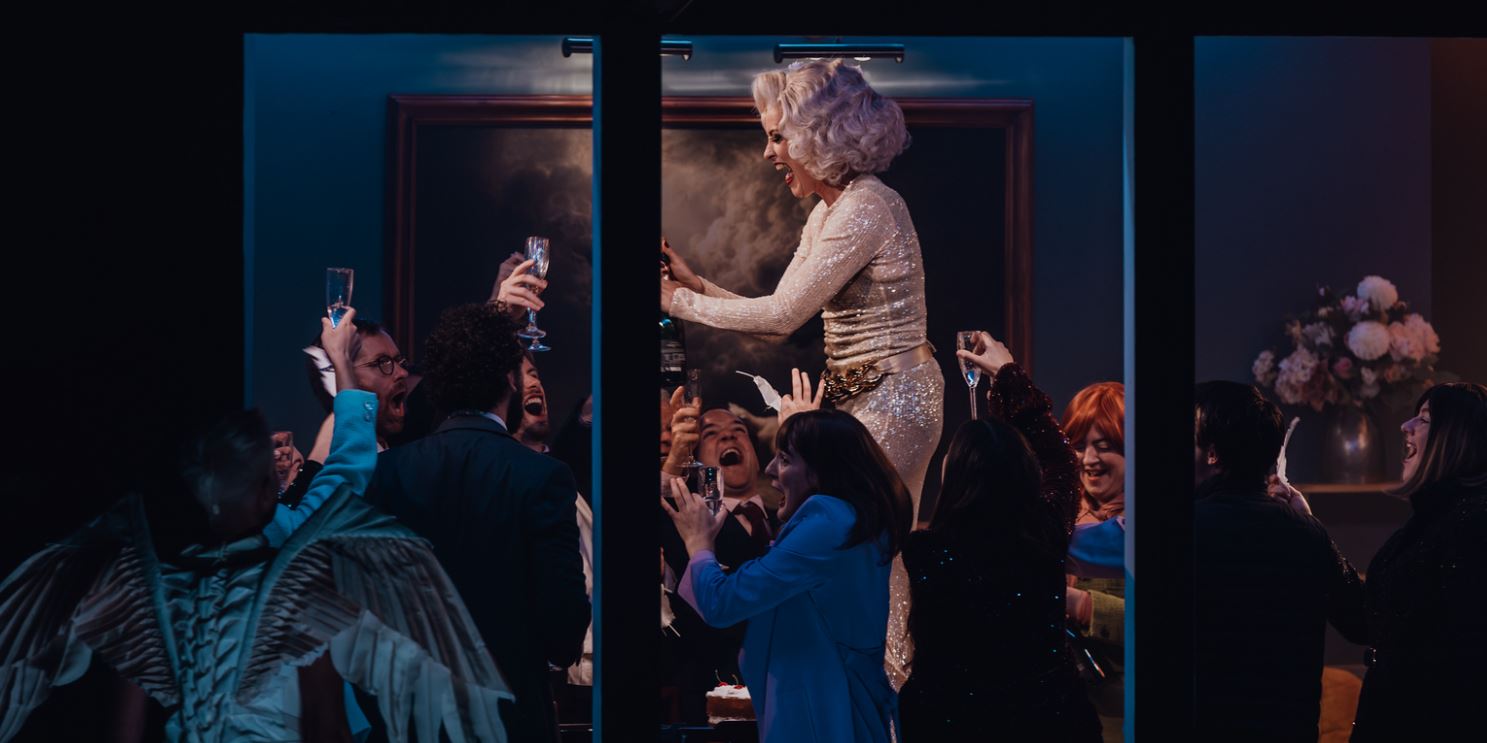
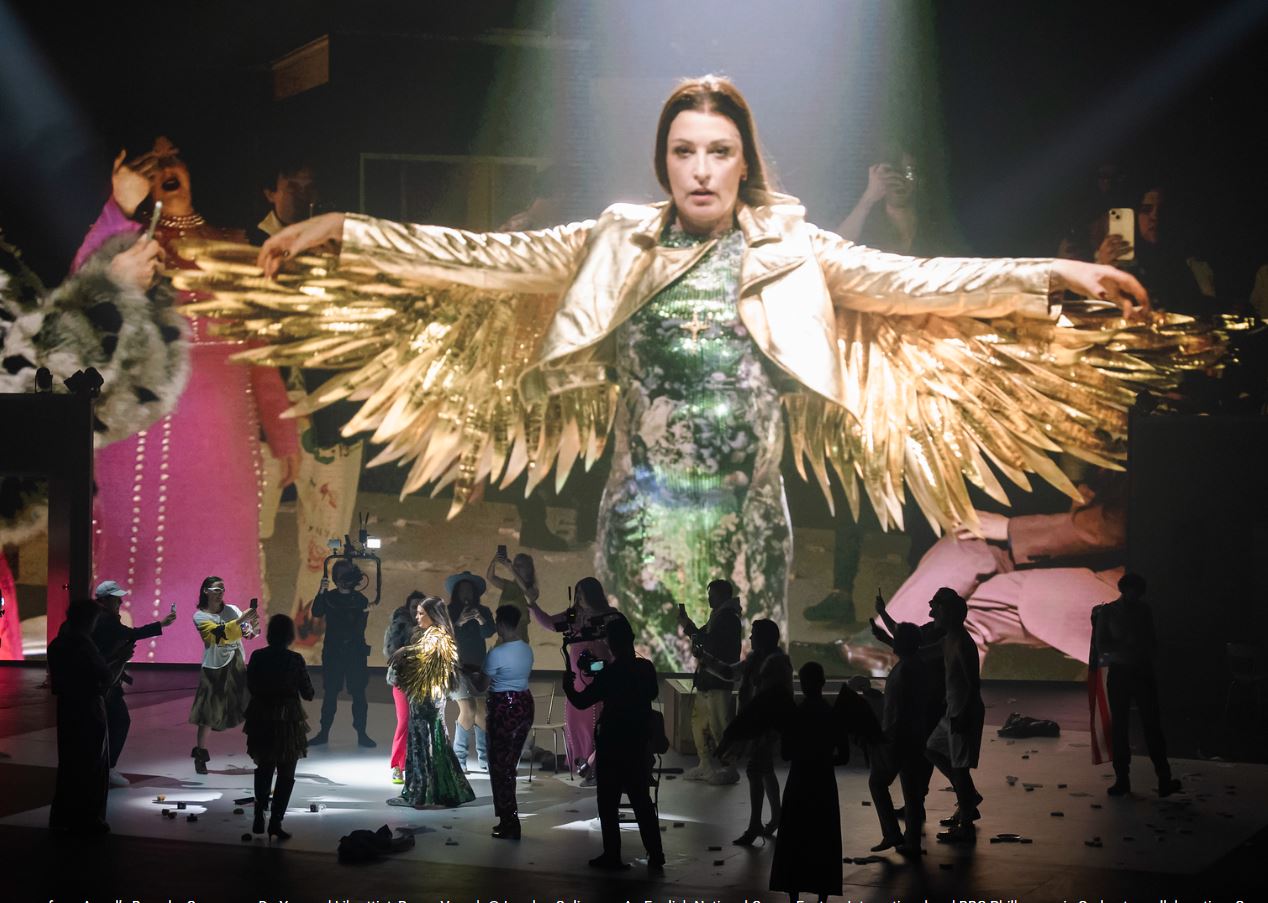
There seems to be a suggestion that Mr and Mrs X.E., who find the angels in their garden, imprison, and exploit them, somehow benefit financially from the feathers they tear from their wings, although this is far from clear. (Significantly the plot summary in the programme doesn’t even attempt to summarise later stages of the action.) Later the angels are used as sex objects by miscellaneous punters who shower the X.E.s with cash. This gives rise to some harrowing and disturbing scenes, which we see in close up on a vast screen. Nudity is artfully limited, but it is horribly clear that rape and violent sexual abuse are going on. The results are painful to watch (with music to match). Then Mrs X.E. announces publicly that she is pregnant by the male angel. The opera judders to a halt after an aria of triumph and defiance from her (Bjork meets Defying Gravity from Wicked) delivering a huge sense of anti-climax.
Du Yun’s music has its moments. There is an arresting start for unaccompanied chorus that sounds like increasingly dissonant Josquin. The Kantos Chamber Choir are impressive whilst not silencing questions about why ENO’s own chorus were absent. The composer’s magpie-like approach lacks overall coherence, despite conductor Baldur Brönniman’s best efforts and firm grip on the score. Du Yu’s willingness to embrace the more abrasive edges of pop music may encourage younger punters, but she combines them with generic modern opera declamation (as functional in its way as recitative from an earlier operatic age often is and often ungrateful for the voice). She puts a huge range of music into the blender, and the result is something without a very strong personality of its own. The angels have arias of lament and anger that are moving and effective. Mariam Wallentin and Mathew McKinney as the angels come from very different musical traditions (he more classical and she more soul or jazz) but are both most impressive at giving meaning as well as musical shape to their music. Keith Pun as another angel provides some rather musically bland commentary.
Opera is always going to be vulnerable to the accusation that it anaesthetises human suffering for the purposes of entertainment. This piece tries to avoid that charge by not being too entertaining. To be fair, the reality of slave trafficking for sexual purposes is almost certainly grimmer, more harrowing, and more tedious than anything that could be represented on stage. But what we see is so remote from real life that you end up feeling disconnected from it.
If it’s about the potential within all of us to exploit when we think we can get away with it, then we would need more detail about the situation of the lead characters. As it is, they are so ghastly that they don’t really convince as ordinary human beings. Rodney Earl Clarke’s vocal talents are rather wasted as Mr X.E., an initially half-hearted collaborator with his wife. Allison Cook convincingly surmounts the formidable vocal challenges of her role and goes easy on the shrillness. It’s not her fault that she is generally required to be in fishwife mode, except when Mrs X.E. feels sorry for herself. (The audience is unlikely to share that feeling).
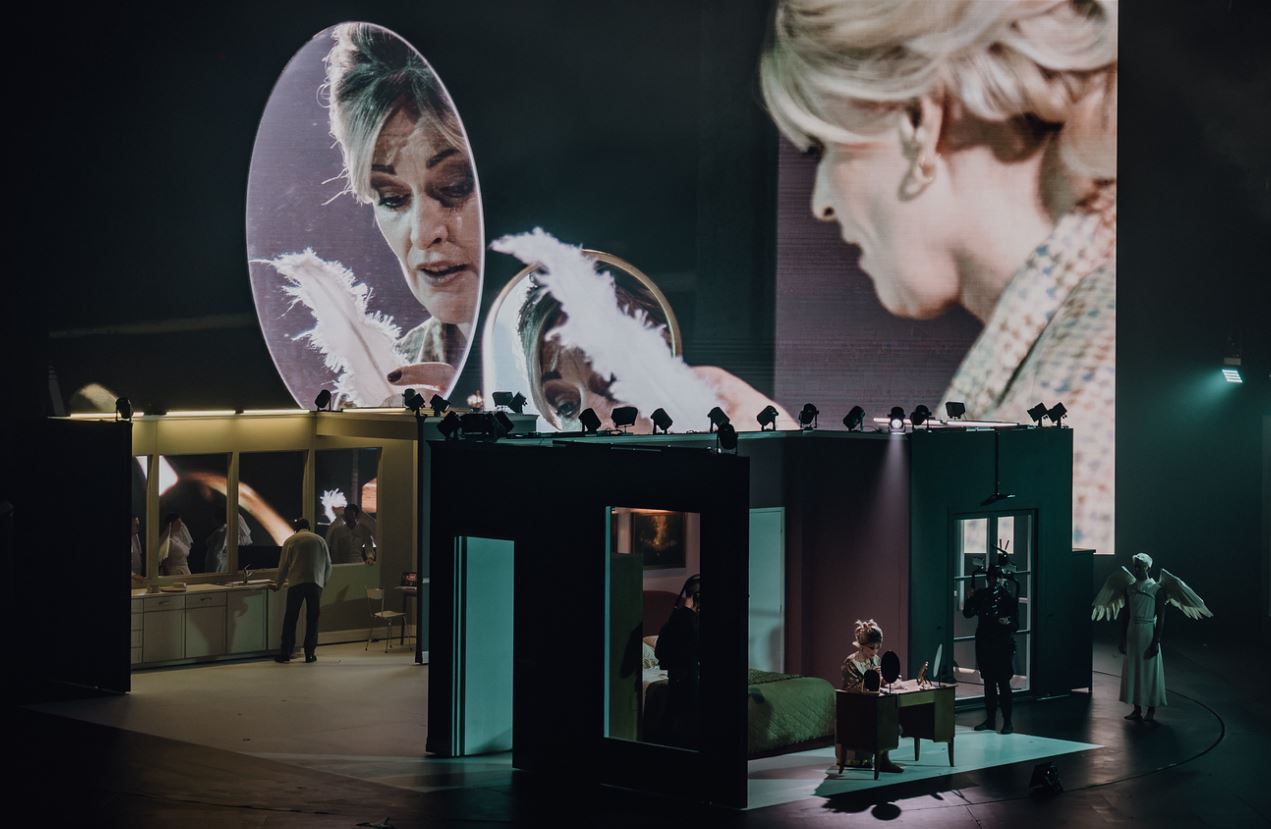
Marg Horwell’s set and costumes make for some arresting stage pictures, aided by Jack Knowles’s lighting and Ash J Woodward’s video designs. Kip Williams’s production is thrilling on a purely technical level and makes superb use of the Coliseum’s revolve to show us different rooms in the X.E.s’ house. It relies a lot on filmed close-ups magnified on a large screen. Whilst this does enable us to see more detail than you normally can, watching a screen increases the sense of detachment from what is happening on stage. But you have to look at the screen as the rotating set often blocks the stage action, with the result that your focus is pulled between stage, screen, and surtitles. Questions might be asked about the extent to which this is really an opera when some of the cast use microphones and you are watching video depictions of what is happening on stage – now something of a cliché at the theatre.
It’s impressively executed with all the panache, commitment, and technical excellence that we have come to expect from ENO, but overall is somehow rather disappointing.
Patrick Shorrock, October 2026
Photography by Nirah Sanghani and Tristram Kenton


