
The Marriage of Figaro
Affairs of Mate
The Marriage of Figaro
by Wolfgang Amadeus Mozart, libretto by Lorenzo Da Ponte after Pierre-Augustin Beaumarchais
Glyndebourne Productions at the Glyndebourne Festival Theatre until 7th November
Review by Michael Rowlands
One can’t help but think that if we have further summers as hot as the summer of 2026, then the “Autumn Season” will become the favourite for the audiences at Glyndebourne. In mid-October it was a perfect evening, mild and balmy, but it was also clear that the audience was thoroughly relaxed and enjoying themselves. Hardly a dinner jacket in sight, so all nice and informal, as the dress code is casual.
Marriage of Figaro was composed by Mozart in 1786 to a libretto by Lorenzo Da Ponte; it was based on a play by Beaumarchais, The Mad Day or The Marriage of Figaro. The play had been banned by Emperor Joseph II as being too subversive for Vienna, but with Da Ponte’s adaptation, it was passed by the Emperor, after the tirade against the Feudal Lords was removed in the last act, and replaced with the anguish of a faithless marriage.
The Marriage of Figaro has had a long connection to Glyndebourne, as it was the first ever opera performed at the (old) venue with George Christie’s wife performing in 1934, so it is a fitting opera to start the autumn season.
Almost everybody reading this review will have seen this opera, as it is the favourite of audiences and singers alike. It is put on frequently, and as part of the changes brought about by reduced Arts Council funding, it will help to promote the autumn festival season. It is a guaranteed crowd pleaser.
However, for those who have not seen this opera, it was revolutionary in its time both in its subject matter criticising the ruling class, and in the development of the genre. The ordered and regulated Age of Baroque was passing, and the Age of Enlightenment around the corner so breaking the mould, with the fall of the Bastille just three years away. It was a time, like our own, when society and Europe was on the cusp of great change, with an uncertain outcome when the old order is overthrown.
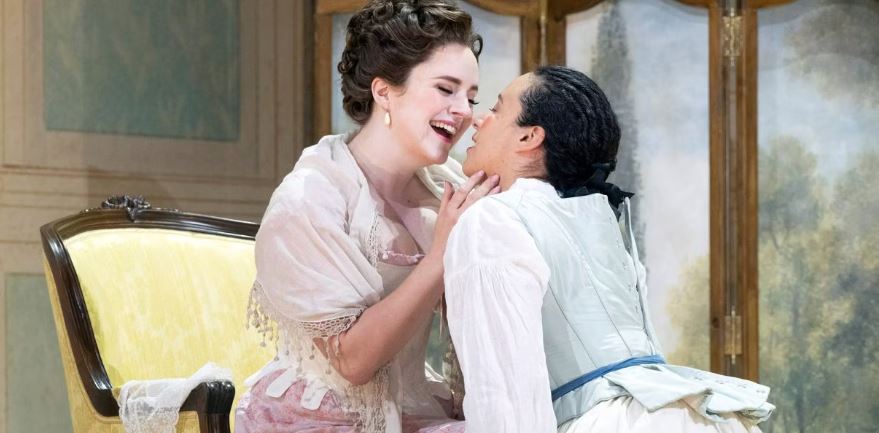
The subject matter is superficially about interpersonal relationships and marriage, which is seen through the eyes of the servants of the Count and his feudal right to take the bride for his own pleasure on the wedding day. This feudal anachronism is delightfully parodied and punctured through the opera buffa ridiculing some of the attitudes of the nobility. It is a great improvement on the somewhat crude and boorish previous production at the festival. The Opera takes place during the course of one day, as a reflection of the fickle nature of human emotions, so it precedes the format that occurs in the popular later operas of Tosca set in 1800 (17th June) or St John’s Day, (24th June) in Meistersinger von Nurnberg.
Further reasons for its enduring appeal is its understanding of forgiveness, the transcendental beauty of music, and kind reflections on human frailty.
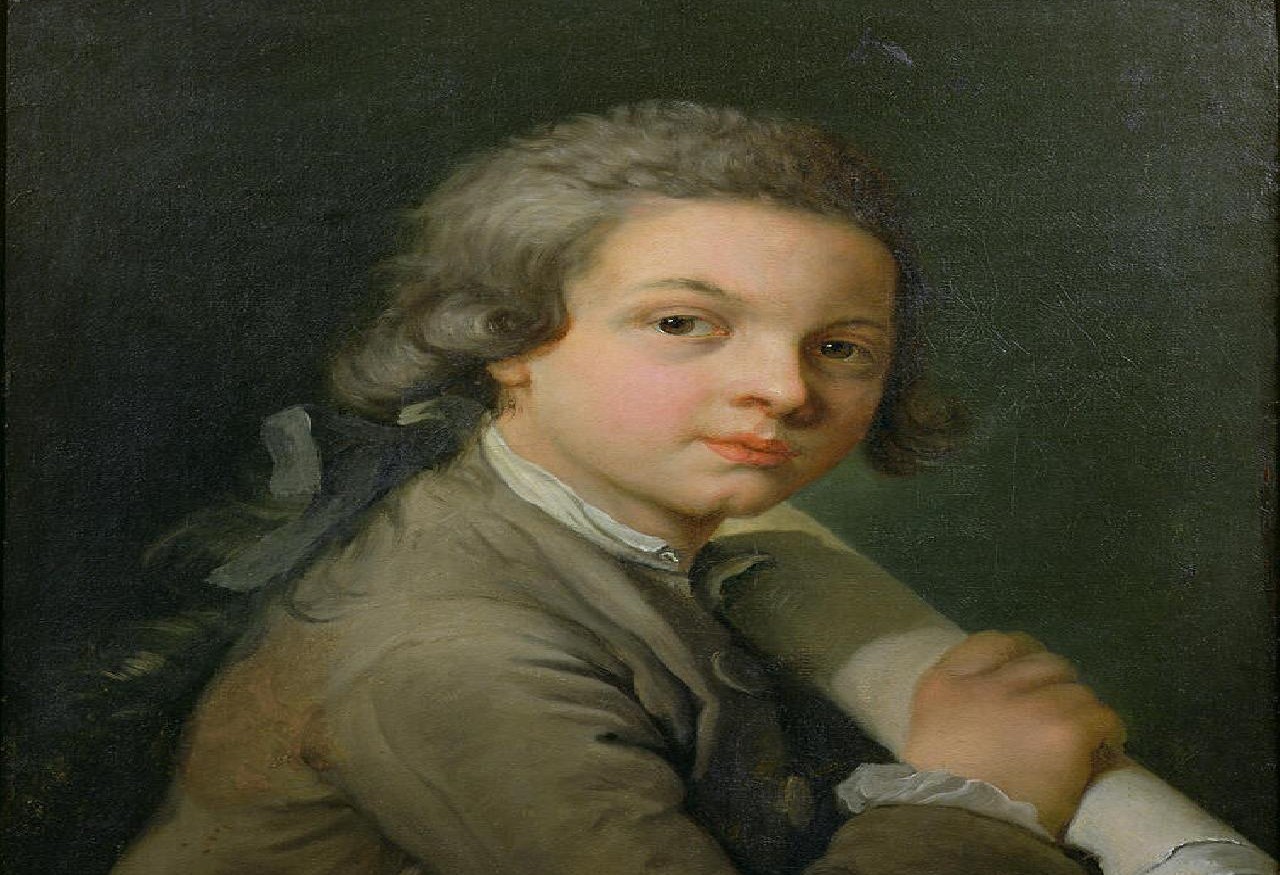
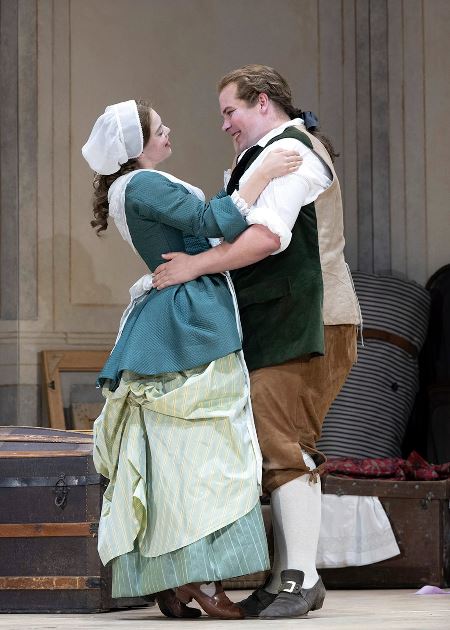
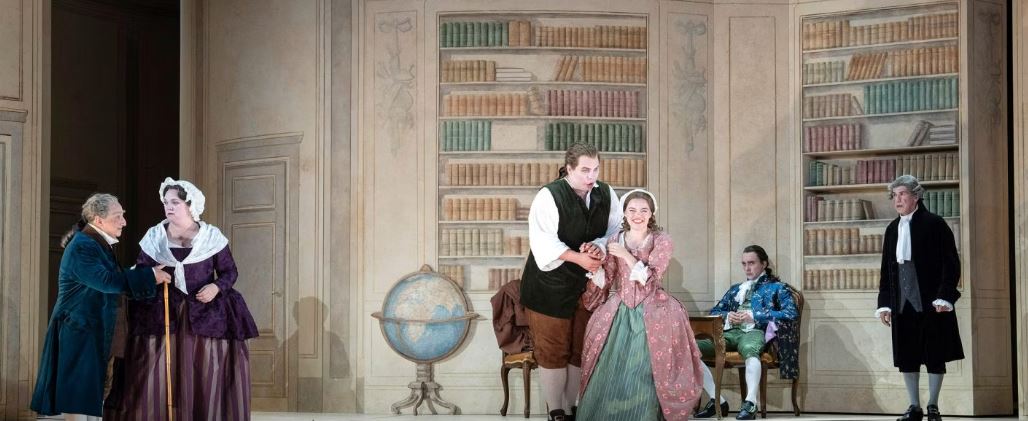
The staging by Mariame Clement has taken its theme from the rococo garden designer and watercolourist Louis Carrogis Carmontelle, who famously sketched the Mozart family when Wolfgang Mozart was touring Europe aged eight, with the young Mozart at the piano; and there is a wonderful oil painting of the young Mozart in the Organ Room at Glyndebourne, open for visitors, which is well worth visiting. Clement is collaborating with the set designer and artist Julia Hanson who has taken the mid-Eighteenth Century as the setting for the opera and it is a thankfully coherent and elegant pastel coloured set. It is combined with the easy to understand libretto, makes for an amusing and satisfying evening. It is almost worth the ticket price to see the period costumes which are in a 1760s Court Attire style, so probably contemporary with the early Mozart or the setting of the Beaumarchais. The Count’s silk coat and breeches (he memorably gets dressed coming out of his bath on stage!) and the silk dress for the Countess with her pannier, along with the other costumes, are exceptional. The opera has stock opera buffa characters such as a doddering music master (Max Mihofer) and a bombastic lawyer who, in this production, sneezes so hard his wig falls off, and Antonio the drunk gardener (Alexander Vassiliev), Barabrina’s uncle. All are also beautifully clothed but in a very old fashioned way for 1760’s as a reflection of their old ways of thinking. Figaro (Jasurbeck Khayclarov) and Susanna (Henna Mun) are more contemporaneously dressed showing their Age of Enlightened spirit coming through. The set is in pastel colours, which have been delightfully coordinated with the costumes by Julia Hansen to make a ravishing set. It is Eighteenth Century in style although not being slavish on period. The production has the essential items of pieces of scenery moved in and out on rollers, a swing, trees and plants cut out into silhouettes. The central core of the stage is taken up with a revolving set that allows multiple changes of scenery smoothly and rapidly, and which is also very much in period. The overall impression is well thought through production that is great on the eye.
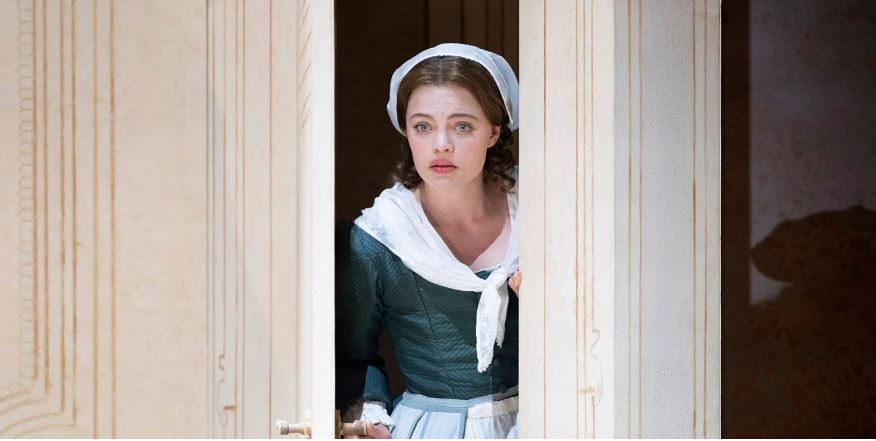
The cast have been rehearsed a complicated plot very well and after a few minutes settled down to show the non-verbal gags to good effect.
We had heard the conductor Bertie Baigent in Il turco earlier in the year at the Festival and he conducted this piece as he did the Rossini, at pace and with dedication, precision and verve. It kept the pace of the production on its toes without the orchestra feeling rushed or slurred. The singers were not at their best in the first half, but some Mozart magic must have occurred in the interval, as the second half was in a different league, with the stand out performance by Madeleine Boreham, as Countess Almaviva (who had performed Sister Rose in the stunning Dead Man Walking at ENO). She showed her power, versatility and sensitivity yet again.
Overall as an operatic experience, at a cost of a little over £70 for a stall seat, this is incredible value for money, and a bargain that should be grabbed with both hands.
The surtitle translation is contemporary and crystal clear which is a great boon for such a complicated plot. This is an opera for almost anyone to enjoy. Sir Rudolf Bing, famous director of the Metropolitan Opera, reputedly offered five dollars to any singer or audience member who could recall the plot correctly by heart, and our late Queen Elizabeth II, who had an expertise in horses rather than the Performing Arts, when asked by George Christie to return to Glyndebourne to see it a second time, reputedly said that “it’s the one about the pin”. He offered her Strauss’s Arabella instead!
Michael Rowlands, October 2026
Photography by Richard Hubert Smith


