
Easeful Tourist of the Voice
Joanna Harries and Ashley Beauchamp
Opera Live At Home, On-line from 30th March
Review by Heather Moulson
It was full of anticipation that I approached my first visit to Opera Live at Home, Helen Astrid’s successful current on-line series of recitals. I was eased in gently to this rich experience, and greeted with a gorgeous aria from The Marriage of Figaro, from gifted mezzo-soprano, Joanna Harries. Accompanied by the talented Ashley Beauchamp on the piano, this piece was Cherubino’s aria Voi che sapete, and it enfolded the audience with its warmth and enthusiasm. Personally I embraced it with joy, as this is my favourite Mozart opera.

Set in St Michaels and All Angels in Chiswick, a venue I know well, the pair drew us in and introduced themselves. Former opera singer, Helen Astrid was the slick and natural presenter, whose intelligence and knowledge of this art form rang clear. Ashley shared with us the taster that these arias were on his dream list.
We had an enticing programme before us of six arias, starting off with Mozart. Joanna Harries, having the advantage of being an extraordinarily versatile mezzo-soprano, explained to us she had her ‘trousers on’ to sing the first two arias, these being male characters.
Read more…One Boast Too Much
Celebration of L’œuf
Duck’s Egg Theatre Company at Nonsuch, Morden until 1st April
Review by Avril Sunisa
“April is the cruellest month”, said T.S. Eliot. Why? Because, inter alia, it is busy “mixing memory and desire”. How much cruller this year, then, as we hold out hope of coming out of lockdown and mixing the memory and desire of creating within the performing arts. Yet our theatres and concert halls remain closed pro tem: there but not quite.

It was however, with this sense of hope that I went in sparse glory to represent the critical press at the Duck’s Egg Theatre Company’s celebration of what the performing arts had achieved in the last year; that is up until the end of March. To maintain the fresh spontaneity of the piece, it was presented in the morning of the first day proxima. Its concision was such that it concluded just before noon. Hence I found myself, socially distanced at Nonsuch Park in Morden, the erstwhile deer park of Nonesuch Palace … which is not there anymore. Our appreciative group was slightly more than half-a-dozen short of the Rule of Six, so as to avoid close Covid contact.
Read more…Portal to Frank Insights
Red Door Poets
Red Door Poets, Chelsea, On-Line, 28th March
Review by Heather Moulson

We’re all resigned to Zoom now, and at first we found it soulless and somewhat lonely. However, I feel we’re a lot more comfortable with this concept now. I don’t stand to attention for it anymore! Now though Zoom has reconciled itself. Settling down on-line last night I was treated to an evening of wonderful poetry with the Red Door Poets. I felt relaxed and at ease as the session opened with some skilful guitar music from Chris Hardy.
I had had the joy of seeing him perform with Little Machine when they supported Roger McGough at the Landmark a couple of years ago. His gentle and skilled guitar playing eased us into the strong and detailed poetry ahead.
Introduced by the versatile and classy poet, Mary Mulholland, we were introduced to the first reader, Chris Hardy, who has a fourth collection Sunshine at the End of the World out now (published by Indigo Dreams). This insightful poet gave us three amazing pieces. His final poem recounted being a young boy cleaning people’s houses, and looking for gin when no-one was about: a firm and humorous look at human nature.
Read more…Out of the Mouths of Children
The Arts Richmond Young Writers Festival
The Stage Company, at the Exchange Theatre, Twickenham, 28th March
A review by Matthew Grierson
While many of us have spent the past year confined to quarters, the young writers of the borough have not let this limit their imaginations. In this afternoon’s performance of entries to Arts Richmond’s annual Young Writers Festival, the virtual audience is transported from Arctic to beach to forest by the well-crafted words of local schoolchildren. Each is brought to life in an economical staged reading with professional actors Cara Steele, AJ MacGillivray and Jo Shirley, under the direction of Keith Wait.

The show opens with a digitally conjured blizzard against the black-box set to suggest the wintry setting of Max Wilkinson’s The Polar Bear’s Mission. The story, with its war between bears and wolves, nods to Philip Pullman’s Northern Lights trilogy but clearly has its own mythology in mind. Like some of the later contributions, it seems to be an excerpt or prologue from a still-bigger world its young author has envisaged.
Read more…Little Gem of Empathy and Escape
Young Writers Festival 2020-21
Arts Richmond, publisher’s release on 28th March
Review by Thomas Forsythe
If we stand back and take a look at ourselves objectively, isn’t it clear that the pandemic has affected everyone’s state of mind? This is no less true for the younger members of our families.

Arts Richmond, the umbrella charity that promotes the arts in Richmond-upon-Thames, runs an annual competition to celebrate the many talented local writers who are still of school age. The current competition, which closed at the end of December, just before the second wave lockdown, attracted over 400 entries.
Having had opportunity to preview this year’s published work of the best of these young authors’ work, your reviewer notes that the mood has changed. Gone is the humour: tragedy reigns. The pieces are more introspective than previous years, and oddly many have a surrealistic feel. But then again, haven’t we all become more introspective, living in a world, undermined by coronavirus, that looks more surreal as the weeks go by.
The booklet, Young Writers Festival 2020-21, which is to be published during the last week of March, comprises twenty-six pieces of poetry and prose from the finalists, nominated by a panel of Judges. It is launched to coincide with the Festival itself, which takes place on 28th March at The Exchange theatre in Twickenham, when the pieces will be performed by the professional acting company, The Stage Company. This year the event is a joint venture between Arts Richmond and Exchange Twickenham (the theatre’s managing company, which is owned by St Mary’s University). Following the performance, the winners in each age category will be announced and a Junior and Senior Laureate appointed, in the presence of the Mayor of Richmond, Cllr Geoff Acton.
So what can we look forward to? What themes are tackled in the twenty-six published pieces? Well, coronavirus and Covid 19 feature significantly, as might be expected, and another world-wide, and world-altering, subject, that particularly exercises our young people, climate change.
Read more…Brightly Shining Imagery
Virtual Fifth
Poetry Performance, On-Line, 7th March
Review by Georgia Renwick
Cast your minds back to October for just a moment. You might recall the mounting fear of a second wave of the virus that has so altered our lives, might have felt despondent at the growing possibility of a winter spent indoors away from loved ones, or resigned to once again having freedoms we once took for granted, stripped back. Six months since Poetry Performance’s first foray into the online realm, it is where this staunch troop of Teddington poets remain, but the tantalising promise of lockdown lifting and a whiff of spring in the air lends a hopeful voice to this evening’s meeting.
In days gone by, as you will know if you have read previous reviews for virtual volumes One through to Four, these poets performing from their living rooms, would have been performing in person at The Adelaide pub, but they have settled into their new home on Zoom and the sense of community and comradery the group share is palpable. There is also no keeping some members from the opportunity to enjoy the work of their fellow poets with a glass of wine in hand, which I commend! There’s still always someone on mute, but such is the lie of the land on Zoom.
Virtual communities formed over the last year have been a lifeblood for many, and as evidenced by the volume of new writing shared this evening, a place for creativity to grow and flourish. Confidence, too, can bloom even on Zoom and whilst some members are long established, writing poetry since their teens, others are much newer to the craft and to the group. Regardless, everyone is welcome, and Heather Montford (tonight’s host) offers words of encouraging feedback and reflection to all brave enough to share. Tonight’s featured poet, Eddie Chauncy, also has a few pearls of wisdom to offer to budding poets in his insightful interview with Keith Wait; a treat sandwiched between the two acts.
Read more…Fantastic Frustration
Cart Noodle Show
by ShumGhostJohn
ShumGhostJohn, DARE Festival, Upstart Theatre, Shoreditch, On-line until 28th February
Review by Nick Swyft
Last night I went to the theatre in Shoreditch. Due to problems getting there, I didn’t have time to look around the gallery, go in the games room or have a drink in the lounge. Others were in there chatting about the Dare Festival. I hurried to the auditorium, an usher checked my ticket, and I sat down in my seat. I pressed the X key and the show started … by Zoom. You see, I was actually over fifty miles away at home. Watching a show on-line has become commonplace these last twelve months, but thanks to new technology I visited the theatre too!!
Putting on an effective show via Zoom is a tall order for any arts company. Better known for their highly innovative contemporary dance productions, ShumGhostJohn (a collaboration between the London based Hong Kong trio, Shum, Ghost and John) took on the challenge with creative gusto with their highly effective Cart Noodle Show, as part of the Dare Festival, hosted by the Shoreditch Theatre via Gather. *

We were asked if we had ever had Cart Noodle, and they didn’t mean those ghastly tubs of gunk, popular with students, the pot noodle. . No, we were introduced to the original Cart Noodle as it developed in the street markets of Hong Kong when it was served in metal trays.
Read more…Expressive and Charming
Milly Forrest
Opera Live At Home, On-line from 23rd February
Review by Claire Alexander
All live arts have been catastrophically hit by the enforced closure over almost a year now – not just depriving performers with their livelihoods and ability to share their talents, but audiences too of their passions and imaginations. I for one have particularly missed the spontaneity of live music. I admire how all creative artists have maintained their motivation, and practice during these troubled times. I have seen many many ways in which groups of artists have come together in innovative and inspiring ways to support each other and continue to entertain.

Opera Live at Home is no exception to this ingenuity. We were treated to an hour of arias by emerging soprano Milly Forrest, accompanied sympathetically by Ian Tindale on piano. She was singing from St Michaels and All Angels church in Chiswick – a church I know and blessed with great acoustics, broadcast on Zoom to a dedicated and appreciative audience. The evening’s compère was Helen Astrid, founder of Opera Live at Home
Read more…Marvellously Macaronic
Henry V, Scenes from Shakespearean Plays
by William Shakespeare
Teddington Theatre Club, zoomed until 14th June, then on-line on YouTube
Review by Mark Aspen
The English can’t speak French and the French can’t speak English. Patently untrue of course (well, except for some), but why let facts get in the way of fun, let alone in the way of a good story. Across twenty-odd miles of water, nos voisions français have always been the butt of (largely) good-humoured jokes, while the other side of the water, we biftecks are ribbed à point. Thus has it been for centuries, something not lost even on The Bard himself.
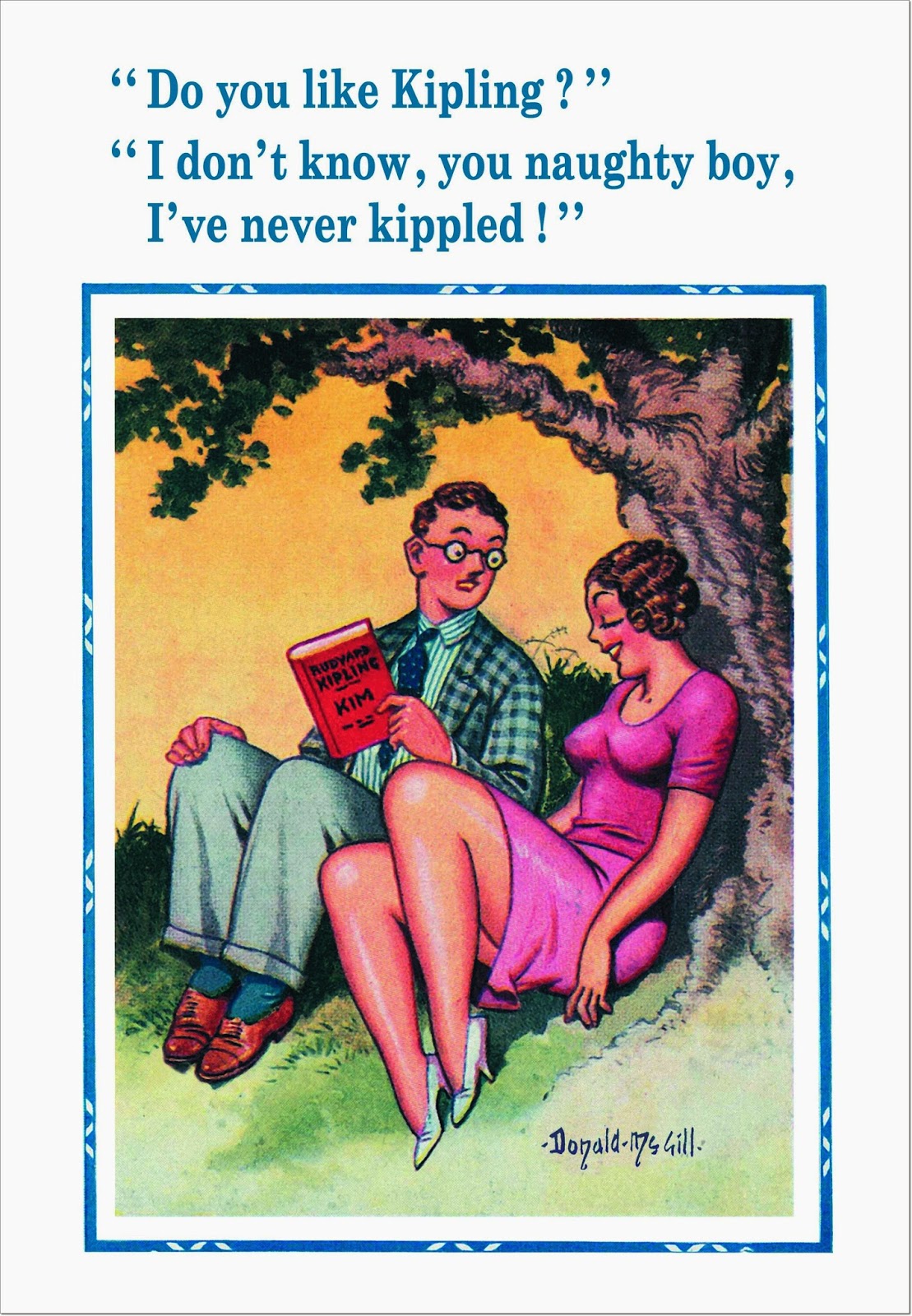
William Shakespeare wrote Henry V ostensibly to report or recall then pertinent history of almost two centuries earlier. As the culmination of Shakespeare’s sequence of English history plays it is epic, or as epic as can be within the constraints of the theatre, as the opening Chorus apologetically point out. As such, it had to appeal to everyone. So we have sublime poetry and knockabout ribaldry. It presents history to reflect the Zeitgeist of the politics of the day (whilst cleverly being a bit double-edged in this respect), which pleases the upper-classes. It has soaring poetry and patriotic oratory, which pleases the yeomanry. It has glamour and heroism, which pleases everybody. Then there are the groundlings; how does WS please them. Well, there are the earthly rustics, the soldiers, Pistol, Nim and Bardolph, who provide the comedy (and it must be said much of the pathos). Now, where does comedy lead? Where romance and love nudge up against lasciviousness and, dare we say … sex, there lies a rich ground for comedy. After all, Donald McGill sold 200 million saucy seaside postcards … and how many of us have “never Kippled”? However, an earlier master of the double-entendre was William Shakespeare.
Teddington Theatre Club’s latest two-day on-line marathon was What’s Love Got to Do with It?, presented over St Valentine’s weekend and designed to be “celebrating love in all its forms (or at least as many as we could think of and fit into two days)”. The event was designed as a lockdown return match for its Wilde Weekend bonanza back in June 2020. This is getting to be a deliciously bad habit.
Read more…No Panic, No Fuss, Just Warm and Leisurely
Stephan O’Goodson
Live Lounge, OSO, on-line via YouTube from 10th February
Review by Vince Francis

We have all been changed by the lockdowns and it could be argued that some aspects of that change might be for the better, such as moves toward more flexible working arrangements. What has also changed is the presentation of live performance and the usage of performance spaces. OSO Arts is to be saluted in this regard, transforming their auditorium into a ‘Crisis Kitchen’ and shifting the performances on-line (and, apparently, outside when that had been possible). It is into this on-line space that I was invited last night, to enjoy the performance of vocalist Stephan O’Goodson, accompanied by guitarist Paul Stead.
Read more…


