
Yesterday Was Another World
Food, Toys and Mock-a-Chino
Three Poems
by Heather Moulson
Mock-a-Chino

Inoffensive hot drinks in the
college refectory
leaving half of it while I flirted with you
then CoffeeMate with Maxwell House
became our thing
Maxpax only to be sneered at
Nescafe Gold took us to a new level
we had truly arrived –
only we hadn’t
You betrayed me for decaffeinated
making my own coffee bitter
sinister and hollow
I spat it out at your departing
back
But when coffee became frothed with
milk on every high street
I embraced it again
sipping huge cups while thinking of
what might have been
You became the skinny cappuccino
The Soya milk
And I found full fat comfort
Elsewhere
Food

Dinnertime was rabbit stew – tiny bones
sticking out the greasy stock –
and thickness of gravy, covering
fried liver.
Lamb hearts still beating, next to
mash potatoes.
Chops and chips were a treat,
rare as blancmange, or a bottle
of R Whites.
Then, no more proper dinners at 12 o’clock –
lunch became a tin of Happy Shopper soup.
While tea diminished to Earl Grey and
currant bread, and dinner became supper.
Mince cooked after work, in a pan,
Or a slab of gammon steak next to broccoli.
Never had ‘afters’ anymore – no rice pudding
out the oven, nor tinned peaches and
custard.
A can of Pils lager and ten fags were the sweetest
of substitutes.
The first meal on wedding present plates,
was curry from Bejams.
My kid’s post school meals were sausages and
pasta.
Hand-made gnocchi a dismal failure.
Traipsing along supermarket
aisles, for life-changing recipes.
Only to be ditched for Birds Eye and chips.
No more standing over hot fat, or multiple
roasting pans.
Nor the daily visit to the butchers, where
rabbits hung upside down.
I tell the children about Gran’s meals –
that was how she held the family
together.
They look at me and laugh.
Toys

Sindy sits on her horse,
Action Man waits for her in bed.
Plastic zoo animals marry each other.
Dog-eared board games have missing
dice.
I keep the silver dog, from the Monopoly
set.
I dream of owning felt tip pens –
the real classroom currency.
Gran sends my Teddy Bear comic
through the post.
And I’m getting a Beezer annual
for Christmas.
Why don’t you play with your Hot
Wheels, a proper toy? I say.
But he doesn’t hear me –
sitting there, transfixed by
the Playstation.
The Beano book on the floor,
stays unread.
Heather Moulson
May 2020
Photography by Dritan Alsela, Jilly Church and Brendan Silver
Culture and Sophistication, Neatly Packaged
Programmed to Receive
(Part One)
by Eleanor Lewis
Theatre programmes, a variety of uses:
• Finding out who that actually is that you’ve been staring at on stage and wondering “who is that?”
• Letting you know that there is, at least, an interval (which occasionally is something to live for).
• Providing interesting rehearsal shots to divert your attention from the phone screen of the woman in front of you.
• Leaving casually around the house for guests, neighbours and the man from Ocado to see and conclude that you are cultured and sophisticated.
Then again. A few years ago I inherited a lot of programmes from a relative and, this being lockdown, I’ve just got around to looking through them. My relative was an academic, he loved the theatre and he loved travelling, particularly to America so he spent a lot of time at the theatre both in the West End and on (and off) Broadway.
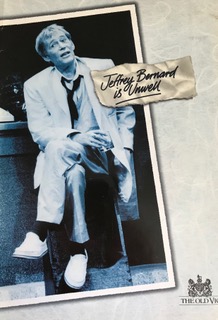 The programme collection runs from 1948 until 2000-ish. When he first discovered the theatre he discovered autographs too and it was these that I noticed. I’d recently gritted my teeth and recycled some of our own collection of programmes but it hadn’t been easy. You would have to drag the 1999 Old Vic programme for Jeffrey Bernard is Unwell starring Peter O’Toole from my cold, dead hands. Several others – the 2004 National production of The History Boys springs to mind – will only be disposed of during the house clearance when we finally shuffle off to bingo in the care home. So the idea of taking on another 100 or so of someone else’s collection wasn’t immediately attractive until I caught a glimpse of Dora Bryan’s clear signature across the front of something called The Lyric Revue (1951). Then others, in ageing ink but still legible, sometimes on the front, sometimes on the cast list page: Sarah Churchill, Sybil Thorndike, Donald Sinden, Richard Wattis and many more. And this is before we get to Sheila Sim, Richard Attenborough, Vivien Leigh, Laurence Olivier and Donald Wolfit but I’m getting ahead of myself.
Looking through the pile of brown-round-the-edges booklets, the autographs are just part of the whole experience, fifty years of theatregoing spills out of their pages. There are biographies of actors who went on to towering fame; programmes for first productions of plays that became major pieces of British Theatre; the advertising is fascinating and the Forthcoming Events are breathtaking. A 1953 production of Antony and Cleopatra at the Princes Theatre, Shaftesbury Ave, featured Michael Redgrave, Marius Goring, Donald Pleasance, Tony Britton, Peggy Ashcroft and Rachel Kempson. Forthcoming attractions then were: The Crazy Gang with Bud Flanagan; a “new musical” Paint Your Wagon, and London Laughs with Jimmy Edwards, Vera Lynn and Tommy Cooper.
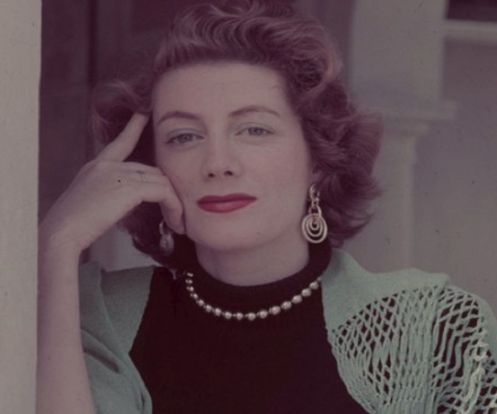
Sarah Churchill
Sarah Churchill appeared in House on the Sand (Roland Pertwee) at The Grand Theatre Blackpool in 1949 when she signed the programme. Sarah was Winston Churchill’s second daughter, she worked on photo reconnaissance during the war and was apparently quite good at it. She went on to have a successful acting career before marrying into the aristocracy. The back of this this flimsy, one sheet programme advertises a “magnificent dramatization” of Daphne du Maurier’s Rebecca as a forthcoming attraction.

Frankie Howerd
Forthcoming attractions in the 1963 programme for A Funny Thing Happened on the Way to the Forum at Manchester Opera House with Frankie Howerd, Jon Pertwee, Kenneth Connor, Linda Gray and Isla Blair were: Black Chiffon with Evelyn Laye, My Fair Lady, and the less well known but fabulously titled There’s a Yank Close Behind Me (about which Google knows nothing!) Yvonne Arnaud’s autograph appears on the programme for Dear Charles by Alan Melville at the New Theatre, St Martin’s Lane (now the Noël Coward). This programme also informs readers that the RADA annual reunion dance in aid of the theatre rebuilding fund will be held at the Lyceum, Strand. Tickets, including buffet, one guinea each.


A small, red, very straightforward programme provides information about a new play by Robert Bolt, A Man For All Seasons at the Globe Theatre in Shaftesbury Avenue (now the Gielgud). It is 1960 it stars Paul Scofield and Leo McKern and you must not miss West Side Story coming up at Her Majesty’s Theatre “with the New York cast”. Similarly there is a small orange and white programme for the English Stage Company’s production of The Entertainer at the Royal Court Theatre for the first time in 1957, starring Dorothy Tutin and Laurence Olivier, and directed by Tony Richardson. The programme contains a biography of John Osborne at the beginning of his career, “When he heard of the newly formed ESC in 1955 he sent the script of Look Back in Anger to them and within two weeks it was accepted. He joined the company as an actor in April 1956 and then appeared in Don Juan”.

Richmond’s Own Richard Attenborough
The signatures of Sheila Sim and Richard Attenborough appear on the front of the Manchester Opera House programme for The Mousetrap in October 1952, on its pre-West End tour.
My mind wanders off following Richard Attenborough’s career path: 10 Rillington Place, Oh! What a Lovely War, Ghandi to name but a few. And with Oh! What a Lovely War in mind, there is a 1963 Wyndhams Theatre programme for that very play including extracts from The Wipers Times (which Nick Newman and Ian Hislop recently turned into another play), and author’s notes from Charles Chilton.
Shortly after this I found Vivien Leigh and Laurence Olivier, and then Donald Wolfit. I am less than halfway through the pile, I think it’s time for an interval … …
Eleanor Lewis
May 2020
Photography by Peter Scarfe, Robert Vass and Frederick Prince
Cyclical Path to Peace
Colour VE Day
by Keith Wait
A Commemoration of VE Day 75, 8th May 2020
Critique by Celia Bard
Read the full poem Colour VE Day here.
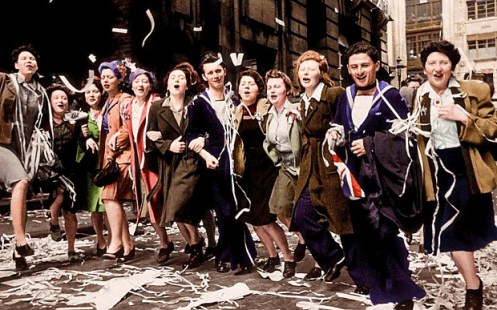
Colour VE Day is a thought provoking title, for it raises a question about the grammatical use of the word ‘colour’: is it a noun or a verb? The latter brings to mind an image of the many thousands of rainbow pictures that have been painted by children throughout the country, whereas the former summons up the image of VE Day bursting forth from the monochrome colour of the previous war years to the light and colour of VE Day and beyond.
Written in free verse, the writer of this poem is free of the tyrannical demands of the metric line, regular rhyme, and rhythm. However, this writer is no novice to poetic conventions and the techniques he employs allow readers to follow his thought processes from different perspectives though you have to unpick the trail of clues he leaves. The pace of the poem varies in keeping with its content and imagery. Many lines in the poem begin with a strongly stressed word. In other lines the stress is on the second word. This change of beat creates a specific flow of sound which musically is very pleasing.
The many references to the brightness and colour of the sky throughout the poem act as a poetic background to the many events referred to by the writer. In the first stanza the sky of platinum (75 years being a platinum anniversary) is a mirror reflecting a clear silvery sky, symbolising the colourful nature of VE Day and the end of a horrific war. This is juxtaposed with images of a fiery sun and red sky and the blood of men who lost their lives in war. The poet then makes mention of a ‘brother’s blood’. When first reading these lines, I wondered whether this was a mistake, anticipating the use of the plural. On reflection the use of the singular is perfect for it strongly personalises the death of a close member of the family. That brother is everybody’s brother.

Surrender Document Is Signed in Rheims, 8th May 1945
‘Early May’ begins the first line of the next stanza, a time when we tend to think of spring, blossom, and great weather. Not so for we are presented with an image of the dark sky before dawn against which the ruins of the city of Rheims is contrasted. The first morning rays of sunlight then break through symbolising a new beginning, as was in Rheims that the surrender document for the Second World War was signed. The third stanza is full of wonderful contrasts, descriptions, and images. The first two lines takes us into a fairy-tale world where we meet a beautiful Princess in disguise so that she can mingle with the people in her kingdom. This alludes to the time when Queen Elizabeth, then a princess, together with her sister escape the confines of Buckingham Palace in order to blend unnoticed with crowds of people celebrating VE Day in around the Palace. The detailed and colourful description of people in the crowd could with a little imagination be those that the two Princesses meet as they make their way through the streets back in 1945. Differences in social class are categorised by drinking preferences. The working classes drink ‘Watney’s stout’ in Victoria whilst the upper class savour champagne in Mayfair.
The fourth stanza startles us with its sudden and serious shift in mood. ‘Despots’ are alluded to; no name is mention but they are easily recognisable by their colours and country of origin. ‘The Corsican corporal’s pompous pride, bright blue’ alludes to Napoleon, whilst Hitler is known as ‘The Munich beer hall bully, scarlet, black’. I’m not sure about ‘The Brussels bureaucrat, a stealthy grey’? This conjures up an image of the present EU and Brussels bureaucrats. In the following stanza the poet describes a new ‘silent despot, unseen and new’. This, of course, is an allusion to COVID 19, the unseen enemy. Its presence made known only when the person it infects becomes ill or worse, dies. The reference to the Enigma machine used to break code during wartime contrasts sharply with the mysterious code and nature of the virus prevalent throughout the world of today.
The penultimate stanza takes us back to VE Day 2020 when rainbow images appear in the windows of many homes. ‘Flying flags’ appear, and mention is made of all those who died in the war and ‘for freedom’. These images emphasise the original purpose of VE Day, which was to celebrate the end of War. The last few lines of the final stanza, shorter in line length, denote another shift in time, once more we are in the presence of ‘bright colours’, thanking God and shouting “VE Day.” We have travelled full circle, starting where we began with the image of the ‘platinum mirror’ mentioned in the first stanza. It’s like being on a roller coaster, moving up and down while following a cyclical path, one that reflects the past, looks forward but also again looks back.
Many poetic phrases stand out. The description of ‘a gold and white palace’ conjures up a world of fantasy and fairy tales. The phrase ‘No Enigma machine / Decodes our invisible enigma’ brings the two wars in perspective. Particularly pleasing is the image about champagne: ‘Vintage Veuve Clicquot labelled in orange / Secret in cellars, dark since ’39 / Spurts sparkling silver to the evening sky’. ‘Spurts’ is onomatopoetic and sums up a visual image of popping corks and jets of precious champagne shooting up into the evening sky. The ’sparkling silver’ contrasts beautifully with ‘The shining black of Watney’s stout foams free’. There may be a notable difference in the characteristics of the two drinks but both are deliciously enticing.
Colour VE Day resonates strongly in the current climate. In 1945 people gathered in crowds, danced, and drank together, things we are now unable to do under social distancing. Who would have thought that in the VE Day of 1945? This is a great poem, made more powerful because of the current pandemic.
Celia Bard
May 2020
Colour VE Day
by Keith Wait
A commemoration of VE Day 75: 8th May 2020
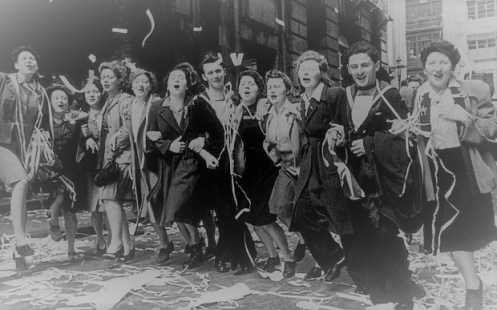
The sky, precious platinum mirror,
Silvers itself,
Reflects today’s sun, not fire of waging war,
Runs red as brother’s blood in ‘45
VE day
Early May
Not yet light, white rubble dust covers Rheims
A grim General puts pen to paper
Black on white
The sky’s leaden canopy shatters.
From a gold and white palace, two figures,
A future queen runs amongst the soldiers
They too are in khaki and olive drab
And walk down Whitehall with cheering crowds.
Men in grey trilbies, women in dowdy brown.
Now silk headscarves and contraband nylons
Once hidden in mahogany cupboards
Grace their cheering heads, red lips, dancing legs.
The shining black of Watney’s stout foams free
In Victoria’s pubs, while in Mayfair
Vintage Veuve Clicquot labelled in orange
Secreted in cellars, dark since ‘39
Spurts sparkling silver to the evening sky.
As searchlights become spotlights for the King
A steadfast symbol to the crowds below.
Despots love their colours.
The Corsican corporal’s pompous pride, bright blue,
The Munich beer hall bully, scarlet, black,
The Brussels bureaucrat a stealthy grey
Suffocating Europe with their colours
As their empires grow.
2020 vision sees no colour
To its silent despot, unseen and new.
Electron microscope, not eyes, can scan
Its colourless invisibility.
VE arc-lights, fire watch, needed colour
To see the coming enemy approach
However pale. No Enigma machine
Decodes our invisible enigma,
Suffocating lungs of prince and pauper,
Pulmonary pestilence.
But today’s the day to wave the rainbow,
Fly the flag, red, white and blue.
Remember loved ones lost
For freedom.
Wars continue, then as now, but today
Colour it bright,
Thank God,
And shout
“VE Day”,
Hurray,
The platinum mirror to all our past
When Europe was freed, and … in peace … was coloured.
Keith Wait
May 2020
Photography by Francis Coles
Relentless, Ruthless, Riveting
Grenade Genie
by Thomas McColl
Review by Heather Moulson
The second collection from innovative poet, Thomas McColl, Grenade Genie takes us on a surreal journey into four profound sections, with an abundance of intelligent and humorous observations from his twenty-five poems. There are also deep black connotations, and he is ruthless with his words: truly relentless but far from unwelcome, and very compulsive. He takes us straight through to the first section headed Cursed.
This intriguing roadway gives us the surreal, yet sympathetic, branch terrorism of No Longer Quite So Sure. A bus ride will never be the same. Followed by The Evil Eye, a father’s chilling advice to his son about Social Media, the desperate and gripping Carry My Eyes, and the contemporary horror of The Bunker highlights the real risks and vulnerability of a tower block.
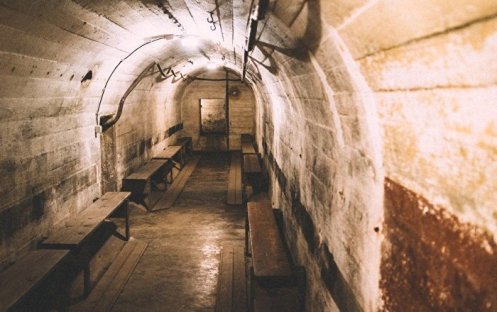
The Greatest Poem, with references and paranoid comparisons to TS Eliot, is laugh out loud material. Followed by the disturbing Grenade Genie, the title poem.
We leave that section and take a right into the next road which is Coerced. The self-doubting, bordering on paranoid Security Pass. Joined by Jackpot and Invisible Twin, full of innovative strong notions, Nightclubbing in Brum 1988 tells us a beautifully spaced and human story.
The situation remains human as we leave that section with Jan, Jen or Jean. Sharing the writer’s sheer discomfort, making us anxious to move on quickly!
We drive into the strong heading of Combative, and are welcomed by the wonderful, intelligent and witty Shopping with Perseus. An original take on the fashion victim involving the Greek Myth hero.
Common observations, things we don’t mean to ignore, are lit up by Socialist Workers on Oxford Street. Quite certain I will never take that endless street for granted again.
Then we are embraced with one of the highlights of the collection Statement by the Pedestrian Liberation Organisation. Wonderful wit, terror and vivid observations.
The Phoney War is tender, frightening and ends heart-wrenchingly. The image of the sobbing grandmother at the stove will stay with us.
Our journey takes us on to the last section, Corrupted, no less enticing than the other three chapters. Just One Comma Away is clever with meaning and punctuation, and Said Contents is true and sinister. Hooked is very chilling, but the last thing it leaves us is cold.
The Surgery I Go to Has a Two Headed Doctor is simply a great work of black humour. It is an enjoyable read, as it is with the First Kiss, despite its discomfort. However, Thomas McColl never promised us a smooth ride.
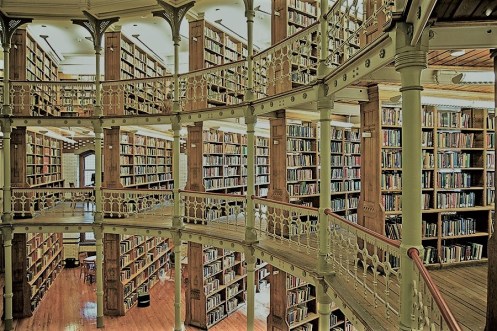
The climax of Literal Library is extraordinarily surreal, and profound. And like all of this collection, acute.
These poems travel flawlessly from the witty to the terrifying. Well worth the bus fare!
Can I go round again please?
Heather Moulson
May 2020
Grenade Genie
by Thomas McColl
Fly on the Wall Press, £8.99, 80 pp
ISBN 978-1-913211-13-4
Photography by BarnImages (© CC 2.0, Underground Bunker) and Christa Neu
Through the Gates of the Senses
The Smell of Purple
by Dónall Dempsey
Review by Heather Moulson
The latest collection from vibrant and prolific poet, Dónall Dempsey, gives us a hundred pages of insight into an emotional wallet of fatherhood. Yet it goes further than that, as we live our experiences through Tilly, the small child at the centre of this book’s core, and the poet’s ‘makeshift’ fatherhood. The sheer love for this magical child comes through strongly, but it’s never overtly sentimental. We are simply presented with human nature. These words are emotional Polaroids, with all their faded colours. Dónall sets off a daisy-chain of haiku’s growing organically into poems and vice versa.
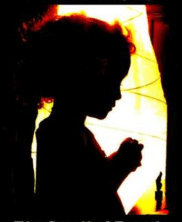
Nothing gets away unscathed and no stone is left unturned, with dolls being repaired, a father shaving, crayoned houses, an ice cube melting. Things we’ve tended to ignore or forget rise up and greet us again. For instance, the line of a rag doll weeping in Sticks makes uncomfortable but not unwelcome reading. The memory of being scared of a Jack-in-the-box makes us face our own childhood bêtes noires. It’s these references that turn this collection of poems into the strong and vivid picture it is.
We go on a detailed journey from Becoming Tilly, sharing the wonder of this child coming into the world, to real life. In tangible love in And the Sun Always Shines Magenta, Dónall takes on so many elements of nature, yet never once does this overshadow his devotion to Tilly. Being Adam in the Garden of Eden gives us such loving detail of animals and the magic of a farm.
Many Children Ago makes one misty-eyed sharing the sadness of a broken forgotten doll, while in Many Remembers Ago we are with Tilly from the child to a young woman – “her hand fallen from mine” would resound with the most hardened observers.
Makeshift Daddy cleverly unravels Tilly’s story. And we are swept along with the simplicity of As Above So Below, explaining the stars and moon to a child. The Rain’s Language makes slick reading, with a fascinating footnote. The witty haiku Weather Forecast, and the sheer painfulness of trying to dress a small child in Girl Squirrel resonate more than we’d like.

More Tea with Aunt Mabel borders on sitting room farce, and Granny gets involved too with Being Little, one of the elements that make these recollections far from insular.
There are poignant moments in Cuddle, taking Tilly to see her real Dad’s gravestone. And her interpretation of the father she will never know.
Tilly’s relationship with the cat – talking about cat things (Girl Talk) and that “Cats is people too!” (En Lakech!) – is warming, along with the intimacy of Ponds cream and contact lenses, that a family captures in Mummy Dyes Her Eyes.
Being Tilly opens such a picture of childhood, but it is not painted as idyllic. Despite wording these things so succinctly, our feet are kept on the ground. Word Bags and the Smell of Light are astonishingly vivid. These are things that seem obvious, and yet they’re not. And the wonderfully titled Stew of Déjà-vu was a stunning highlight.

A Fairy Tale of Rain is an image of soaked little girls metamorphosing into disdainful and embarrassed teenagers. Box of Memories – the grown girl now young woman who weeps over Tilly’s memories box. The observer wants to comfort her too.
If Paradise is Half as Nice is the sheer realisation that the little girl has actually grown up – a gradual dawning for most parents.
The last poem, Now I Hold You, travels from holding the newborn to comforting the heartbroken teenager. This cleverly comes full circle.
Such an insight into a father’s deep love. Thank you Dónall for taking us through these gates.
Heather Moulson
May 2020
The Smell of Purple
by Donall Dempsey
VOLE Books, £10, 107 pp
ISBN 978-1-913329-07-5
Photography by Dempsey Windle, Neal Obstat and David Kanigan
Lies, Damned Lies and Rumours
Mozart and Salieri, a Whodunit
Reflection by Mark Aspen
Michelangelo killed to gain the commission to paint the Sistine Chapel. Was this just an idle rumour? Some whispers at the Vatican at the time thought not.
The current global contagion has proved a breeding ground for idle (and not so idle) rumours that are spreading faster than Coronavirus itself. Some of the more ludicrous come from the whisper machines (“It is caused by 5G wireless networks.”), to what we should expect to be authoritarian sources (“Could we try injecting Dettol?”). A quick trawl of YouTube will yield dozens of conspiracy theories that could easily take in the more gullible.
These thoughts made me recall seeing, quite a few years ago, a short opera at Covent Garden, a production in the quirky old Linbury Studio in the basement of the Garden, long before the new posh state-of-the-art theatre opened in January last year. It was Rimsky-Korsakov’s Mozart and Salieri, which was a beautifully performed and strikingly staged piece of theatre.
 The libretto of Mozart and Salieri is based on a rumour that Antonio Salieri poisoned the younger Wolfgang Amadeus Mozart because of artistic rivalry, a rumour that was still doing the rounds over a century after Mozart’s death, when the opera premiered in the soon to be demolished Solodovnikov Theatre in Moscow early in December 1898. Set in Vienna, where Salieri basks in his acclaim as a composer, it is apart from a dumb and blind fiddler, a two-hander. Along comes the upstart Mozart, whom he sees as idle, but secretly he jealously admires Mozart’s work. At the end of the first scene of this one act opera, Salieri plans to poison Mozart and he invites him out to dinner. The second scene takes place at the inn where they have dinner. Mozart is, not atypically, agitated. He had been commissioned by a mysterious masked figure, clad in black, to write a requiem. Mozart knows that Salieri has been working on his opera Tarare with the polymath playwright Pierre Beaumarchais as his librettist. He believes (correctly in fact) that Beaumarchais is involved in espionage and all that went with it at the time, and asks if the rumour is true that Beaumarchais once assassinated someone with poison. Mozart is reassured that genius and murder do not go together, even as Salieri drips a potion into Mozart’s drink. As Mozart plays some of his Requiem on a harpsichord, Salieri weeps. Mozart starts to feel unwell and leaves the room, whilst Salieri recalls the rumours about Michelangelo. A genius can’t commit a crime, or can he?
Now, hold on a minute; doesn’t this plot all seem rather familiar? Many readers of Mark Aspen Reviews will have seen Peter Shaffer’s 1979 play, Amadeus, or at least Miloš Forman’s film, which followed five years later, and played even faster and looser with the facts than  the stage version. A recent production by Teddington Theatre Club was described in these pages as “sensitive and revealing”. The basics of the plot are the same as Rimsky-Korsakov’s opera, but in both stage and film versions Peter Shaffer tells the story from Salieri’s perspective, recalled three decades later from his demented death-bed. There is a larger cast than the opera, including the Viennese court and the women in their lives, more details that allow more intrigues of sexual and power-play. Both versions again play fast and loose with the facts and, although (rightly) receiving wide critical acclaim for their artistic excellence, both attracted the venom of historians and musicologists for succeeding in shredding the reputations of both Salieri and, to a much lesser extent, Mozart.
Where then did this, some might say libellous, twist come from, to be legitimised in theatrical works? The answer is from someone whom many consider to be the greatest Russian poet and playwright, Alexander Pushkin. Mozart and Salieri is his short verse drama, written in 1830, thirty years after Mozart’s death and merely five years after Salieri’s.
Pushkin’s Mozart and Salieri is clearly the prototype for Rimsky-Korsakov’s opera. The plot is almost identical and it has  the same economy of characters. In the original play however the blind fiddler appears in the first Scene and Mozart invites him into the room. The fiddler plays a poor rendition of voi che sapete, Cherubino’s aria from Mozart’s Le nozze di Figaro. It seems even a lowly busker knows Mozart’s works. Already though in a soliloquy before Mozart had arrived, Salieri has admitted to himself, “I am an envier. I envy; sorely. Profoundly now I envy.” Mozart is presented by Pushkin as much more equitable. Mozart says of Beaumarchais, “He was a genius, like you and me. While genius and evildoing are incompatibles. Is that not right?” immediately before drinking the poison.
These portrayals of Salieri, and by Shaffer, of Mozart are factual proven to be unfair and blatantly untrue. Contemporary documentary account show that, while there was some good-natured rivalry between them, Mozart and Salieri’s relationship was one of mutual respect and cooperation. Salieri often conducted Mozart’s work and was a music tutor to Mozart’s son, Franz. One authority has noted that “it may prove difficult to dissuade the public from the current Schafferian view of the composer as a divinely gifted drunken lout, pursued by a vengeful Salieri”. The chief music critic of the Sunday Times, speaking after the launch of the film railed against “myth-mongering”, baulking at the portrayal of Mozart as “two contradictory beings, sublime artist and fool”. Other factual distortions in Shaffer’s version is that Salieri was not celibate; quite to the contrary, he was married, had eight children and probably two or three mistresses. Moreover, Mozart’s Requiem Mass, in fact unfinished, was commissioned by Count Franz von Walsegg, not by an agent of Salieri disguised as the spirit of Mozart’s father Leopold.
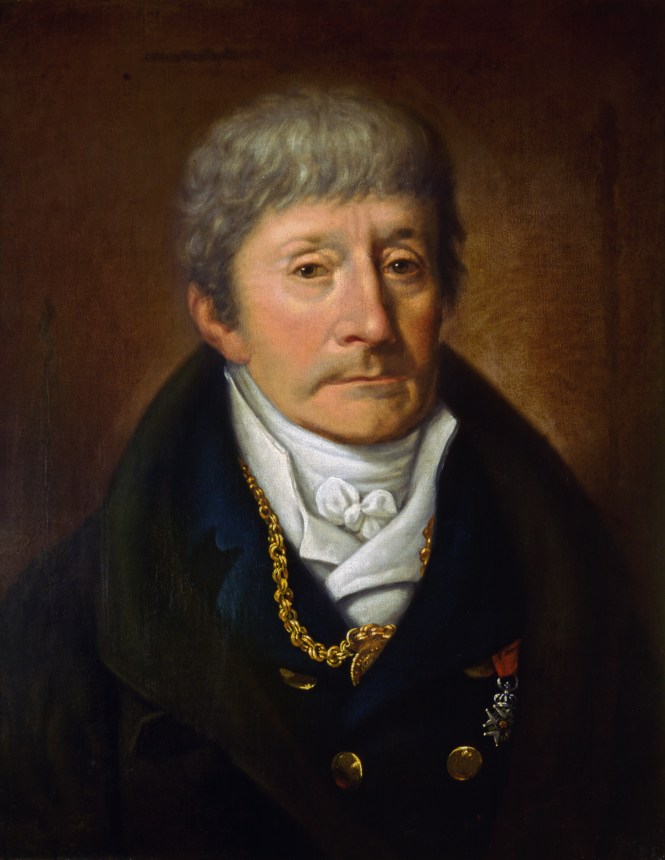
Take a look at the portrait of Salieri by Joseph Mähler. You will see the face of a modestly proud and kindly man, not a jealous monster. Equally, Johann della Croce’s famous portrait of Mozart shows a calm and intelligent face, not a petulant brat.

Why then the misinformation spawned by Pushkin and spilling over to Rimsky-Korsakov and Shaffer? I think the answer lies in the Russian political climate at the time. Pushkin’s plays were not performed contemporaneously in Russia. Even his famous Boris Godunov had to wait forty-one years to escape the clutches of the Tzar’s censors. Why? Because it was critical of an earlier Russian ruler, Boris Godunov. Written as the new Emperor Nicholas I came to the throne amid mutiny and civil unrest, it was not in the spirit of that time. Nicholas’s autocratic reign brooked no dissent. Mozart and Salieri is believed to the only one of Pushkin’s plays that was staged during the author’s lifetime. It is an allegory on the danger of unchecked rumour mongering. The doctrine of “Orthodoxy, Autocracy and Nationality” was imposed on Russia to counter the bubbling unrest in the aftermath of the Napoleonic Wars, in a time of uncertainty, a time when rumours and “fake news” abounded.
In the final words of Mozart and Salieri, Pushkin has Salieri asking, “And [Michelangelo] Buonarotti? … Or is it a legend off the dull-witted, senseless crowd?”
In a time of uncertainty, poisoning, be it by human agency or that of a virus, seems to create rumours. It this is so, Mozart and Salieri is currently very pertinent.
Mozart and Salieri was published in 1832 as one of Pushkin’s four short plays called The Little Tragedies. Uncannily, another prescient play in this mini-anthology has the title Пир во время чумы, A Feast in Time of Plague. Now, there’s another thought for reflection … …
Mark Aspen
April 2020
Photography by Sarah Carter and Clive Barda
Images by Joseph Willibrord Mähler, Johann Nepomuk della Croce and jszm
Hold What Distance His Wisdom Can Provide
Shakespeare’s Lockdown Birthday
A retrospective by Thomas Forsythe
As the sun warms a hot spring day, we can escape the shackles of pestilence, at least culturally and within in our own mind, to enjoy this most English of days, St George’s Day. Of course in the English mind 23rd April, apart from being our patron saint’s day is also the day we celebrate our supernal of poets and playwrights, William Shakespeare, who was born (Happy Birthday, William!) 456 years ago today. Well, er, we know he was christened three days later, but in 1564 baptism was an urgent matter, for in that year an outbreak of the plague killed a quarter of Stratford-upon-Avon’s population. Now we are able to sympathise at first hand with those times as the plague seems all too real. Pestilence of one sort or another was to dog England throughout all of Shakespeare’s life, right up to the year he died, 404 years ago in 1616, co-incidentally also on 23rd April.
So Shakespeare knew the frustrations of lockdown. But what did he do? A widespread contagion in 1592-93 closed London’s theatres, which could have been disastrous to an already famous playwright. However, he had a quite lucrative side-line in love poetry and his most famous, apart from early sonnets, written during this time was the long poem Venus and Adonis. During the first two decades of the seventeen century, all London theatres, including the Globe, were closed in total for 78 months. One year of lockdown in 1606 produced some of the later poems and the texts of King Lear, Antony and Cleopatra and Macbeth. So, lockdown can have beneficial effects!
In my own lockdown, and noting that Shakespeare’ longest lockdown period was 25 months, I have taken a look at Mark Aspen Reviews, wondering how many over the same period of time have mentioned Shakespeare. I was staggered to discover that 52 reviews have mentioned Shakespeare! Of these, fourteen are directly or indirectly by Shakespeare. “Indirectly” includes two operas and three adaptations.

A year ago, Benedick’s “giddy thing” Much Ado about Nothing at The Rose, set in a five-star hotel in Scilly, brilliantly involved both the Mafiosi and a mad cow; whereas Richmond Shakespeare Society set the same play to the background of the suffragette movement in its Twickenham open-air production last summer, almost concurrently with Shakespeare Wanderers’ “effortless” open-air Bloomsbury production, set under khaki bell-tents between the Wars.


Shakespeare is nothing if not versatile.


The Winter’s Tale green-eyed monster has come a-roaring out of his den three times. Teddington Theatre Club’s January 2019 Regency setting with Neelaksh Sadhoo’s “genuinely tormented” Leontes, contrasted with Helikon Theatre Company’s adaptation. Presented at the OSO in Barnes in March last year, this presciently foreshadowed events twelve months on, with Hermione’s adultery trial taking place by video conference. Zooming (as it were) back to another adaptation in August 2018, the Youth Music Theatre UK’s “West End worthy” musical version at The Rose Theatre moved from conflict to “heart-warming magic” as the statue returned to life.


Shakespeare is nowadays considered to be very malleable by plenty of innovative directors, but, as examples of bending it without breaking it, was the Bedouin Shakespeare Company’s The Merchant of Venice. This came to the Duke of York’s in October 2018, via the Globe in Rome, and wove in music, clowning, and physical comedy. Last autumn, Richmond Shakespeare Society’s Hamlet cross-casted … well just about everybody, while YAT’s Romeo and Juliet had the Capulets running a car repairers, both plays running with great success.


For some unfathomable reason, A Midsummer Night’s Dream seems to be put on even before spring comes. Katie Abbott’s thematically overextended adaptation, Dream, produced by the RSS Young Actors’ Company this February was “a visual delight” with its teenage cast “giving their all”. Two years ago Questors’ equally “colourful and highly imaginative” version in the Judi Dench Playhouse in Ealing was described as “a night not to be missed”. Also in March 2018, English National Opera’s production of Benjamin Britten’s “feast for the eyes” gave an “otherworldly and magical” experience.

Of course opera does add another dimension to Shakespeare, a point thoroughly understood by an octogenarian Giuseppe Verdi when writing Falstaff, his long awaited first comic opera based mainly on The Merry Wives of Windsor. The Grange Festival’s “priceless production” in June last year was “blustering, big, boisterous and brilliant”. As Falstaff, bass-baritone Robert Hayward was “outstanding in all senses”. Of all the Shakespeare interpretations of the last two years, Falstaff was a winner. Mark Aspen’s verdict was “If you only go to one country-house opera this summer, this must be it!”
Sadly, this year there is to be no Grange Festival, no Shakespeare, no live theatre, and even if we see a friend we must, to quote from Macbeth “advise him to a caution, to hold what distance his wisdom can provide”. However, if in our mind’s eye we see William Shakespeare in these pestilent times, we can, from our two metre social distance, call out, “Happy Birthday!” The Bard will understand.
Thomas Forsythe
April 2020
Photography by Mark Douet, Chris Marchant, Simone Best, Sarah J. Carter, Sally Tunbill, Jojo Leppink, Tom Shore, Robert Workman and Clive Barda
 The True Pain of Tragic Loss
Car Crash
by James Joseph Hunter
Critique by Quentin Weiver
Statistics! We get a lot of statistics at present. It’s almost like a scoreboard, various universities’ analysis how the growing deaths, country by country. It can get too easy to forget that these numbers represent real people, with real lives, with real loved ones. It is also perhaps too uncomfortable to ponder how awful and painful each of those deaths are, for those left behind, and for that person-statistic the process of such a death.
In mid-March, just as the impact of coronavirus was beginning to make its evil presence felt, I was privilege to see a production at the Exchange Theatre in Twickenham that was to be the last theatre event locally before the lockdown. The Young Writers’ Festival 2020 was a showcase of some of the best pieces of literary work by child and teenage authors, all still school pupils.
This year’s Senior Laureate, drawn from the winners in all categories was James Joseph Hunter, a sixth-former at St. Benedict’s School, Ealing, a school in fact renowned for its literary and dramatic prowess. His vers libre poem, Car Crash has kept returning to my mind in the past few weeks as I think about COVID-19, maybe in the light of my own painful experience of trying to breathe with pneumonia. The lines that seem particularly relevant occur in the middle of the poem.
“I call out to the silent air, to pall me in darkness,
In thick, numbing fog – to constrict me in its coils ‘til
I can’t think, can’t breathe. But life weighs heavily on
My lungs, shackles me like its prisoner.”
Perhaps this is what it is like to die of COVID-19, I muse.
Although this poem, written towards the end of last year, seems prescient, it in fact refers to a death caused by serve chest injuries, to the driver of a car. James Hunter’s poem is full of insight, but what it represents probably took a lot of courage to write, as he has let slip that the poem relates to the true experiences of two people close to him.

Ostensibly written in as one voice, closer examination reveals that there are two people involved, but symbolically one of these may speak in the first or third person. Indeed, the acting company at the Exchange dramatised the poem for an actor, speaking in first and third person, as the dying driver, and an actress, who plays the pain-wracked passenger.
For the passenger, though, as much pain comes from the memory of the accident, as from the crash itself. The sound “still / Roars in my ears and dances in the corners of my mind“, “fervid grief” recalling “the tarmac / Of the motorway scraping against my back.”
The descriptions though of the crash and the effects of the paramedics’ morphine are gut-wrenchingly explicit. Blood tastes “sharp on the tongue”, knotted brains are “stuffed with cotton”, with the morphine “memory is melted … like honey”. The phrases are beautiful in their horror.
Car Crash is a memorable poem, candid in its exposition, skilled in its expression and brave in its sharing.
Quentin Weiver
April 2020
Photography by J.L McPortach
Car Crash
Deafening crash and all is silent momentarily as
His head lolls lifelessly to one side.
A face contorted with fervid grief is screaming, screaming his name,
But his eyes dart around, his mouth opens
Wide to scream, all his words are blood.
The taste is sharp on his tongue, but his brain is
Dull, stuffed with cotton.
Then the pain pierces through, intense and
Nauseating, and the knots of his brain, my brain unravel…
I call out to the silent air, to pall me in darkness,
In thick, numbing fog- to constrict me in its coils ‘til
I can’t think, can’t breathe. But life weighs heavily on
My lungs, shackles me like its prisoner.
They brace me, strap me- inject the miracle boy to
Halt the truck that ploughs through my dreams, to
Dull my nerves that shriek at every sound.
Until the memory is melted, softened and
Flows like honey to fill up the crater in
The car – to sweeten the taste of blood.
But the sound of forty tonnes of tanker, still
Roars in my ears and dances in the corners of my mind.
And every time I lie down on my bed, I feel the tarmac
Of the motorway scraping against my back.
James Joseph Hunter
2019
Poem reproduced by kind permission of Arts Richmond
The Future Speaks
Requiem
by Simone de Almeida
an appreciation by Matthew Grierson
 Though our attention is now rightly focused on one clear and present crisis, other global emergencies remain ongoing – and the poem Requiem by twelve-year-old Simone de Almeida, a prize-winner in Arts Richmond’s Young Writers competition, is a salutary reminder of the changing climate.
It’s a poem that contrasts big abstracts – ‘fragmentary quandaries’ – with urgent particulars – ‘ice melting’, but which still manages to turn an image of despair into one of hope with the suggestion of frozen hearts warming together. In the connection they make before ‘falling apart’, it even finds an unexpected resonance in the lockdown, when environmental activists are having to take to their keyboards rather than the streets to get their message out.
The grown-up world of ‘desires’, ‘promises’ and ‘smiles’ is seen through as ‘counterfeit’, and shown simply as a children’s pastime, ‘Hide and seek’. The narrator is therefore able to turn dismissive accusations back on the accuser, pithily responding with ‘We are the future/But you cannot perceive it yet’ in contrast to the clear-sightedness of the young.
She also demonstrates an eye for the paradoxes and hypocrisies of political cant, finding grim irony in ‘Losing sanity,/To find yourself’, and skewering talk of ‘The last time – / Though we’ve heard it countless times’. When the adults can’t tell you ‘we’ll be fine – / In the darkness of [their] silence’, the generation to come must have their say – as this poem does.
Matthew Grierson
April 2020
Photography by Joe Stockwell and Victor Walker

Requiem
by Simone de Almeida
On the edge of insanity-
Blind to the fragmentary quandaries,
Ice melting;
Yet we heat our frozen hearts-
Connected yet we fall apart.
Materialistic desires,
Empty promises and counterfeit smiles.
Hide and seek,
In the game of your lies.
Naïve, is that so?
Incompetent and inept?
We are the future-
But you cannot perceive it yet.
Losing sanity,
To find yourself.
As ever, disregard:
The history book on the shelf.
The last time –
Though we’ve heard it countless times.
Say we’ll be fine –
In the darkness of your silence.


