
Teechers
Top Class
Teechers
by John Godber
The John Godber Company at the Reading Rep Theatre until 13th June
Review by Sam Martin
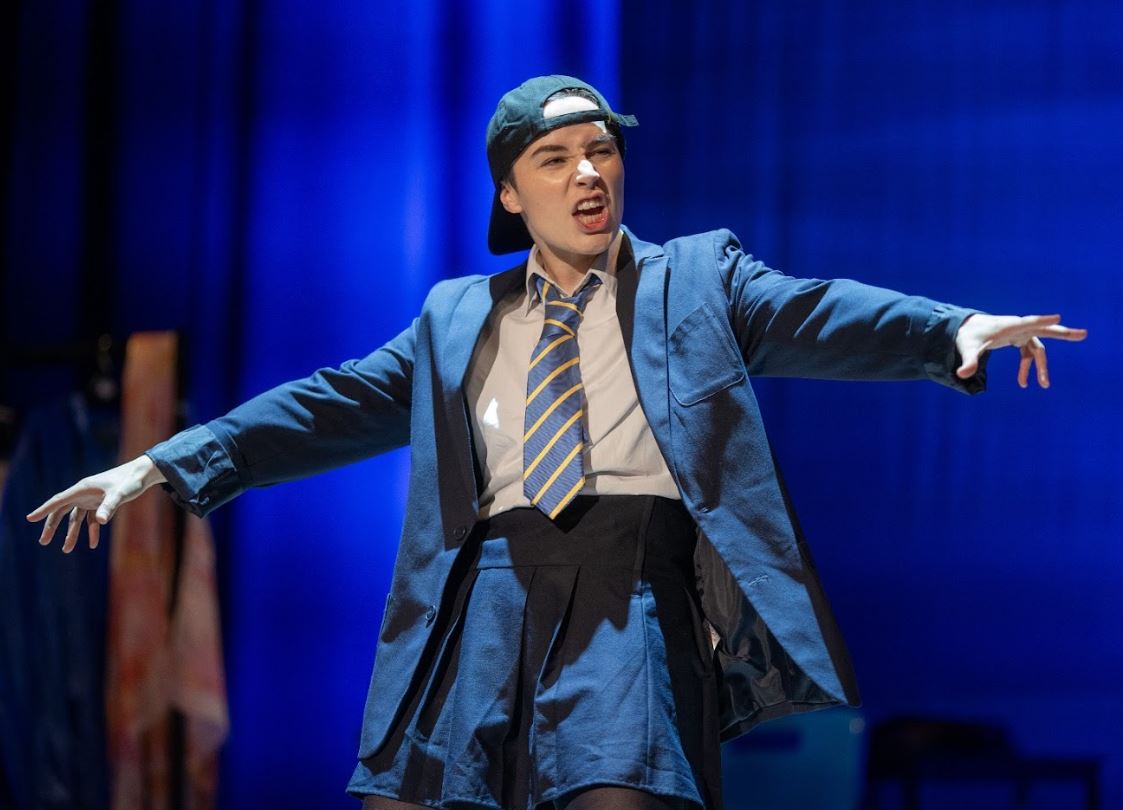
John Godber’s Teechers has long held a special place within British theatre; its combination of sharp social observation, infectious humour and deep affection for education ensuring its enduring popularity. This latest production by the John Godber Company at Reading Rep demonstrates precisely why the play continues to resonate still, decades after its premiere. Cleverly updated for a contemporary audience, this version retains the spirit of the original while weaving in references to modern school life, creating a production that feels both nostalgic and strikingly relevant.
Framed through the perspective of pupils staging their own account of life at Whitewall School, Teechers explores the frustrations, absurdities and occasional triumphs of state education. While Godber’s original commentary on educational inequality remains firmly intact, this updated production embraces the realities of twenty-first-century classrooms. References to COVID, lockdowns, iPhones and social media are seamlessly integrated into the narrative, while observations about the Ebacc (English Baccalaureate), the ongoing battle for drama’s place within the curriculum, and the prevalence of vaping in schools in 2026 generate knowing laughter from the audience. Particularly pleasing is the inclusion of references to Frantic Assembly and its influence on contemporary drama education, a detail that will feel instantly familiar to many secondary school students and teachers alike.
At the heart of the production is an exceptional ensemble whose skill and versatility bring Godber’s world vividly to life. The demands of Teechers are considerable, requiring performers to inhabit a vast range of characters while maintaining clarity and pace. The cast rise to this challenge with remarkable assurance, creating a gallery of memorable figures that feel simultaneously exaggerated and authentic. The teachers are often larger than life, viewed through the playful lens of teenage perception, yet beneath the comedy lies a recognisable truth. Equally, the pupils are portrayed with honesty and warmth, capturing the uncertainty, ambition and vulnerability of young people trying to find their place in the world.
Jo Patmore delivers a particularly memorable performance throughout. Her portrayal of the Head of RE is wonderfully observed, balancing eccentricity and sincerity in a way that feels immediately familiar. There is something hauntingly real about the characterisation; she reminded me instantly of my own RE teacher several decades ago! Patmore’s ability to capture the specific rhythms and mannerisms of a classroom teacher is impressive, and her performance embodies the production’s ability to draw humour from recognition rather than caricature alone. Across her many roles, she demonstrates extraordinary versatility, moving seamlessly between characters while maintaining complete clarity.
Levi Payne is equally compelling. As Salty, he brings warmth, charisma and a natural comic energy that anchors much of the production. His connection with the audience feels effortless, and he captures the youthful enthusiasm and resilience that lie at the heart of the play. In stark contrast, Payne’s portrayal of Oggie introduces a darker edge to the production. His performance is genuinely unsettling, creating a character who feels all too recognisable within the landscape of school life. Payne’s ability to switch between these vastly different roles is hugely impressive, and his physicality and vocal control ensure each character remains distinct.
Sophie Suddaby shines as Miss Nixon, bringing determination, optimism and genuine humanity to the role. Suddaby captures the passion that drives teachers to persevere despite the challenges they face, and her portrayal provides some of the production’s most heartfelt moments. Yet, like her fellow cast members, her greatest achievement lies in her versatility. Throughout the performance she moves effortlessly between a multitude of characters, each clearly defined and instantly recognisable. The speed and precision with which all three performers transition between roles is remarkable, and their collective skill allows the storytelling to remain fluid and engaging throughout.
The play knowingly embraces recognisable school archetypes, from intimidating pupils and eccentric teachers, to over-enthusiastic educational idealists. These stereotypes serve both the comedy and the narrative framework, reflecting the way young people often perceive the adults around them. Yet the performances consistently reveal the humanity beneath these familiar figures. As a result, the audience found itself laughing with delight one moment and reflecting wistfully on its own school experiences the next.
The design is simple yet highly intelligent, allowing the performers and story to remain firmly at the centre of the production. Familiar classroom furniture (desks, chairs and a handful of carefully chosen props) are used creatively to establish a variety of locations. Equally effective is the use of costume, with quick additions and alterations clearly signalling shifts between characters, without disrupting the pace of the action. The result is storytelling of impressive clarity and efficiency, demonstrating how imaginative theatre can flourish without elaborate staging.
What ultimately makes this production so successful is its understanding of both theatre and education as transformative forces. Beneath the comedy lies a sincere appreciation of the role teachers play in shaping lives and nurturing potential. The play celebrates creativity, self-expression and the importance of finding one’s passion, themes that feel increasingly significant within the contemporary educational landscape.
The production’s closing moments are particularly moving. As the final scenes unfolded, I found myself reflecting on my own experiences as a teacher and the inevitable goodbyes that accompany the profession. Watching pupils grow, develop and eventually move on is one of teaching’s greatest privileges, but it is also one of its most poignant realities. The production captures this beautifully, and its final moments carry an emotional resonance that lingers.
Ultimately, this production of Teechers at Reading Rep is yet another hit. Funny, clever and deeply heartfelt, it successfully updates a beloved classic while preserving everything that has made it endure. The exceptional performances, intelligent design and clear, precise storytelling combine to create an evening that is both entertaining and thought-provoking. For younger audience members, it offers a message of hope and encouragement; for older viewers, it serves as a nostalgic reminder of the teachers and classmates who helped shape their lives. Above all, it stands as a wonderful example of theatre’s ability to inform, inspire and connect us through shared experience.
Sam Martin, June 2026
Photography by Ian Hodgson


