
Whistle-stop Excellence
Fleur Barron and Julius Drake
Part one: Songs by Brahms and Schumann
Richmond Concert Society at St Margaret’s, Twickenham, 16th January
Review by Mark Aspen
Bitches, witches and breeches! These, it is said, form the repertoire of the mezzo-soprano. Shame, says I, for I’ve always thought when listening to lady singers that that the mezzo register is my favourite. Now I know it is. And how much wider is the repertoire.

Fleur Barron’s recent concert at St Margaret’s was a whistle-stop affair. She flew in from Zurich, not I hasten to add on a broomstick, at a few hours’ notice to replace the advertised singer, who sadly had to withdraw that very morning with the singer’s nightmare of a zero voice. She came with, and at the recommendation of, renowned pianist Julius Drake. Drake’s skills are in high demand worldwide and he has collaborated with a wide range of well-known opera singers. As soon as Drake’s fingers met the Steinway and Barron began to sing, it was obvious that we were to be in for something really special.

Fleur Barron was given the accolade of a Britten Pears Young Artist last year, and in 2016 was awarded the unique Jackson Prize for Excellence from the prestigious Tanglewood Music Festival. Barron and Drake have often collaborated, but it was remarkable that within an afternoon they were able to present a programme of the highest quality from their mutual repertoire.
Most striking though was Barron’s versatility. Yes, the bitches, witches and breeches were hinted at, but we had a wonderfully characterised range of characters, old and young, male and female, some of the good, the bad, and the ugly, and many many of the beautiful. For her acting skills are quite apparent and it clear that she is a skilful opera performer. Recent major roles have included the title role in Carmen at the Aspen Music Festival [editor’s note: we must disclaim at this point that the Mark Aspen website sponsors the Festival], a role to which she would obviously give pizzazz.
The programme opened with four pairs of songs by Brahms. A spooky start with the first pair Auf dem Kirchhofe (in the churchyard) and Der Tod, das ist die kühle Nacht (death, that is the cool night) set the spine a-tingling. The first, which describes a derelict graveyard in a storm, was sung with a strong definite attack, melting to resignation at the thought of the slumbering coffins. The second song however contrasts death with a song of a young nightingale, which sings of nothing but love, and the piece gave a good opportunity to exhibit the richness of Barron’s mezzo.
The second couple of Brahms’ songs were in a much lighter vein, the playful Spanisches Lied , in which a young girl wonders if she should wake up her sleeping lover, and the complementary Vergebliches Ständchen (futile serenade) a humorous dialogue between a young man who is knocking at the girl’s bedroom door. “Macht auf die Tur” (open up the door) he pleads. She will have none of his presumption, “Gute Nacht, mein Knab,” (good night, my boy). Changes in tempo and switches to a minor key animated the piece and there were light-hearted exchanges between singer and accompanist.
The next pair of songs are more reflective and from an older person’s viewpoint.
Therese, in which the “milchjunger Knabe” (boy fresh from his mother’s milk) questions the older Therese with his eyes. He may have a lot to learn, for the poet in Alte Liebe speaks of finding “den altern Liebesharm” (the grief of old love). This sense of longing, sang so tenderly by Barron, intensifies in the final pair of Brahms’ songs, Unbewegte laue Luft (motionless, tepid air) and Botschaft (message). The wind gets up in the second song “lind und lieblich um die Wange meiner Geliebten” (balmy and delightful around the cheek of my beloved). But to no avail, the love is no longer requited. The intensity of longing brings to mind that lovely untranslatable German word, Sehnsucht, literally a seeking to see (one’s beloved).
Brahms owed much of his early recognition to Robert Schumann and indeed Schumann’s wife Clara rather regarded Brahms as their prodigy. The Schumann legacy was apparent in the set of seven songs by Robert Schumann. Barron’s ability to put across the feeling of the song was obvious in Die Kartenlegerin, a fortune teller reading the cards, in this case a young woman trying to foretell her own prospects of life and love. She is torn between excitement and anxiety as revelations come. She has put aside her sewing when her mother fell asleep over her book, and now plays the cherry-stone game of rich man, poor man … but what’s this, an old crone come to banish happiness. Whoops, it’s real life and Mum’s woken up! “Die Karten lügen nie” (the cards never lie)!
But in Der Schwere Abend (the sultry evening) the young woman walks in the overcast garden with a man. Like the day, their love has lost its shine, and she wishes they were both dead. Barron’s punch on the word Tod (death) shouted anguish. However, when the lovers in Lehn deine Wang’ an meine (rest your cheek on mine) are together the young woman thinks she will Sterb’ ich vor Liebessehnen (die of love’s desire)! A lovely short declaration. In Stille Liebe (silent love) she says she is lost for words, but still manages to sing her “kleine Lied”, a pretty piece in which the delicacy of Barron’s singing was echoed by Drake’s beautifully delicate high piano.
The Schumann songs then took a different direction form the gently lyrical, a sharp about-march to the military, and the heart-breaking dilemma of Der Soldat, the soldier who is in the firing squad detailed to execute his own dear friend. Ironically, of the nine bullets, only his hits the target, the convicted friend’s heart. Gulp! Voice and piano combined, opening in slow march time and reaching the powerful forte crescendo on “das Hertz” (the heart).
And in Tragödie (tragedy) one could almost hear the pathos dripping. In Tragödie I, two young lovers elope and run away to a distant land, but in Tragödie II, tired and lost in a wood, they fall asleep amongst the spring bluebells, but in the night there is a hard frost.
And they perish! … Barron and Drake leave the pathos hanging. (There is a Tragödie III, in which many years later a miller and his girlfriend sit at the same spot where a linden has now grown. It is a warm and happy summer’s evening, yet they start to weep without knowing why.)
Finally with Schumann we were taken on a dreamy trip into the dappled sunshine of the greenwood as Mein Wagen rollet langsam, my carriage slowly rolls on. The occupant half asleep suddenly sees “drei Schattengestalten”, three shadowy forms, who whirls past in a mist, pulling faces at him and chuckling. Maybe there were too many magic mushrooms in that wood!
Mark Aspen
January 2018
Photographs courtesy of Fleur Barron and Julius Drake
Mark Aspen’s review will continue with Songs by Ives, Debussy and De Falla.
The Fragility of Love
La Sylphide
in double bill with Song of the Earth (McMillan, Mahler) or Le Jeune Homme et la Mort (Petit, JS Bach)
English National Ballet, The London Coliseum, until 20th January
La Sylphide
by August Bournonville, music by Severin Løvenskiold
Review by Suzanne Frost
In this hugely contrasting and somewhat obscure double bill, the neoclassical minimalist Das Lied von der Erde is programmed to be followed by La Sylphide, a full on romantic ballet. While the programming is definitely debatable, La Sylphide will always have special place in my heart. It is undoubtedly one of the prettiest ballets I ever had the chance to perform in. As there are only six children needed for this show, we were allowed to be backstage already at half hour call. Our ballet mistress played Madge the witch and she would appear in the dark wings in full make up to wish us good luck while magical fairies were warming up on stage. I believe I can pinpoint this as the exact moment I caught the theatre bug. La Sylphide is somewhat singular in the romantic ballet canon as a supernatural gothic fairy tale with an unhappy ending, giving a poignant melancholic element to an otherwise hugely joyful show.
Set in Scotland, the handsome Highlander James is about to marry the wholesome Effie, when a Sylph, a wood fairy, takes a fancy to him, haunts his dreams and lures him to follow her into the forest literally seconds before his wedding. My first thought at curtains up was that way more ballets should play in Scotland! The swinging kilts bring so much colour, movement and atmosphere to the stage. And the Bournonville style fits so well with traditional Scottish dance. Actually it’s the Danish school of ballet and though ancient, it has aged wonderfully. La Sylphide was famously the first ballet ever to be performed in point shoes by Marie Taglioni in 1832. Just imagine how surreal and otherworldly the effect must have been to that first audience.

The Bournonville style suits small dancers with fast muscle reflexes and usually ballet companies have many members that fit the type. There is a graceful humility about Bournonville, completely contrary to grand Russian ballet gestures. Instead of following any virtuosic technicality with five elaborate bows to disrupt the storyline, the Bournonville solos end the most fantastically fast footed batterie and entrechat six (I dare anyone to cross their legs six times in one jump) with a simple hand gesture, the balletic version of a shrug. A little wink as if saying: yes, you saw right, I just did that! Utterly charming! English National Ballet’s young soloist Isaac Hernández is a beautiful long limbed elegant dancer who celebrates his solos as bursts of energy. I was a bit disappointed that he didn’t finish his assemblées in the second act variation in a grand plié, as is custom in the Peter Schaufuss version. It adds such a nice folkloristic element and I bet it would have looked spectacular on Isaac.

Casting the Sylph is notoriously difficult. It takes such a special kind of dancer: she should be small and cute, overwhelmingly charming but childishly mischievous and most of all, the right ballerina will give the impression to be almost constantly airborne. Jurgita Dronina is a perfect Syph. Not a sound from her point shoes. Light footed and happy, she has the fluffiest softest jumps whenever she is not suspended in endless balances as if time stood still. These contrasts show real quality and control in a dancer. When the Syph dies, killed by James’ attempt to capture and hold her, you get a real sense that something beautiful has been taken from nature, a fluttering, delicate creature killed by human possessiveness. I might have seen a more evil witch in other productions and the ascent of the dead Sylph to heaven could be done as a slightly less religious image but the glorious tartans, the wonderful music by Løvenskiold, the quality of the entire ensemble (I was mesmerized by the flawless footwork in the entrance of Effie’s girlfriends. What arches!) – Pure joy.
Suzanne Frost
January 2018
The Song of the Earth
by Kenneth MacMillan, music by Gustav Mahler
Review by Mark Aspen
As the double bill prelude to the shortcake-tin classical La Syphide, the dynamically angular contemporary ballet, The Song of the Earth is not an obvious choice.
Kenneth MacMillan claimed that the ballet that he would most like to be remembered for creating was The Song of the Earth. It is therefore a fitting choice for the English National Ballet to revive in tribute to MacMillan on the 25th anniversary of his death in October 1992. It faithfully follows both the score and the sentiment of Gustav Mahler’s Das Lied von der Erde, which in itself was inspired by poems written by Chinese Tang dynasty poets.
So how are the two ballets mutually relevant? Both involve rivalry, both involve inevitability of emotions, both involve loss of that is impossible to keep. But the main themes revolve around the contrasts between fragility of love, the transience of earthly things and the eternity of true beauty.
Mahler’s song symphony (he was wary of numbering the symphony to avoid the curse of the Ninth) is a suite of six songs, each ethereally haunting in style, for alternating voices. Antipodean artists, contralto Rhonda Browne and tenor Samuel Sakker richly bring out the ephemeral mystery and brooding power of the song cycle. The ENB Philharmonic Orchestra, conducted by Gavin Sutherland with great insight into the atmosphere of the music, are on top form. Although Mahler foregrounds the woodwind, there are many opportunities for each member of the orchestra to shine in commenting on the themes.
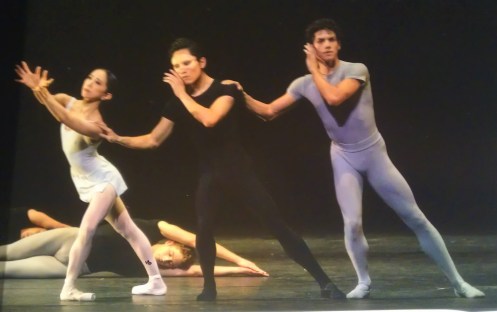
The three central characters are The Man, The Woman and The Messenger of Death. The Man is described by the faux-Asian pentatonic song Three, Von der Jugend (On Youth), and The Woman in the gentle legato song Four, Von der Schönheit (On Beauty), amongst the young girls plucking lotus flowers by the riverbank. (“junge Mädchen pflücken Lotosblumen an dem Uferrande”). Then the tragedy of The Man’s passing, as he is taken by Der Ewige (the eternal one), The Messenger of Death … but they return for her, bringing the promise of renewal. “Die liebe Erde allüberall blüht auf im Lenz und grunt aufs neu … ewig… ewig…” (Everywhere the dear earth blossoms in spring and grows green anew … for ever and ever …).
MacMillan’s blend of classical ballet and contemporary dance gives The Song of the Earth its expressive style. In 1965, when MacMillan premiered the work with the Stuttgart Ballet this was an innovative approach. Indeed the Royal Ballet had rejected the whole concept. If the amalgam of dance styles is potentially uncomfortable for classical dancers, there was little evidence that it overextended the mixed corps de ballet, who are largely secure and confident in delivering the athleticism and articulation that McMillan’s abstract approach demands. Certainly many of the postures may seem inimical to classical ballet (eg leading heels) and some give a nod towards yoga, reflecting the oriental leaning of Mahler’s sources.
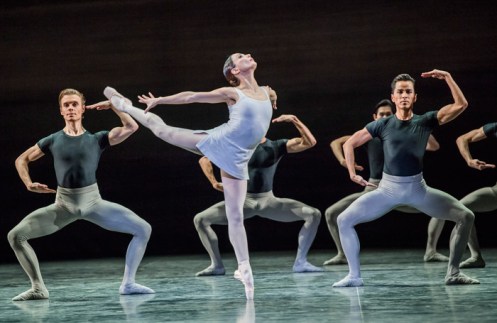
Isaac Hernández (whose dancing was recognised by an award from the President in his native Mexico) danced the The Man with a strength and assurance, portraying one who remains unaware of his own mortality, and which makes his loss so poignant for The Woman. Erina Takahashi (who incidentally is married to James Streeter, La Syphide’s Bimse) brings a delicate lightness to the role of The Woman, touching in her loneliness at his loss. The masked figure of The Messenger of Death is given a demanding choreography, which was impressively delivered in this performance by Soloist, Ken Sarahashi.
Both Mahler and McMillan were going through difficult periods in their lives when they gave themselves to the creative processes that evolved as The Song of the Earth. McMillan saw the message of the work as “a sort of revelation achieved through death”. But in spite of the weighty premise of the work, the concluding feel, as music and choreography hang in the concluding cadenza, “… ewig… ewig…”, is one of elation, that death is not an end but a beginning.
Mark Aspen
January 2018
Photography by Tristram Kenton, Laurent Liotardo, Max Mukhamedov and Jason Bell
No Sleep till Curtain
Sleeping Beauty
by Ben Crocker
Edmundians, Cheray Hall, Whitton, until 27th January
Review by Matthew Grierson
The one thing about this Sleeping Beauty that isn’t charming is the prince – and that’s only because he’s called Orlando rather than having the more common panto soubriquet. The Edmundian Players’ production of the fairy tale, on this weekend and next in Whitton, is a sterling, stirring orchestration of cast and crew to warm the heart in these cold days.
From the off, its ambition is apparent. The lively Billy (Ellen Walker), this play’s answer to Buttons, leads the palace cleaners in a well-drilled chorus across a bold, impressive and, as it turns out, versatile set. He then fills us in on the plot – don’t worry, there isn’t much – before the mode deftly switches to physical comedy and wordplay for his exchange with King Norbert (Becky Halden). Nobby demands Billy bring his footstool, but no sooner does the royal personage mount the step than he leaps off it and strides across from stage right to stage left then back again, and so on, reciting the 26 names he is about to christen his daughter (Aurora through to Zanita), while all the time Billy struggles to keep pace with him.
Up next in the overture of characters is our dame, Dave Young as Queen Dorothy, who resembles nothing so much as Steve Pemberton of the League of Gentlemen essaying a loose impersonation of our own HM.
Queen Dotty then coaxes Kitty on stage – and a big hand, or paw, for Isabel Espi, who is playing the palace pet complete with sling, having sustained what looks like a sprained wrist. Both in their own way are central to the play: Queenie with her undoubtable presence and humour keeping the energy up, and Kitty as an adorable constant, offering the occasional “meow” as a wry comment on proceedings. The cheer she gets when she is blessed with the courage of a lion and mimes along to an MGM-style roar is well earned indeed. Rounding out the cast of goodies are Beautiful, Thoughtful and Peaceful, the three Fairy Godmothers who arrive in time to bless the infant princess in the form of rhyme …
But are rudely upstaged by the wicked Carabosse and her talking cat Spindleshanks (top marks to scriptwriter Ben Crocker for the name, indicative of his verbal dexterity). As Billy has not invited them to proceedings, the baddies are (super)naturally there to curse Aurora to death-by-spinning-wheel when she reaches maturity. This fabulous pair, played by Amelia Kirk and Clare Blake respectively, offer such good-value villainy that the audience is often caught between laughter and booing when they appear, and they squabble for instance over which of them will get to pretend to be a little old lady or simple serving wench to deceive Aurora and Orlando. And how Kirk manages to keep her elaborate headgear on throughout the play, while still striding commandingly about the place, is a marvel. She and Spindleshanks are also heralded by increasingly arch musical cues, so likewise to be lauded for their work are MD Roger Swift and effects technician Paul Wiz Baker.

Not that the rest of the production team doesn’t merit praise: costumes and music sparkle throughout, often literally, in testament to the technical ambition that the play fulfils … while helping itself to a few stylings from the animated version in the process. Most of the eighteen-strong cast effect several costume changes during the course of the show, and the flats are switched with similar frequency to become variously the palace throne room, the kitchens, Carabosse’s lair, Dreamland and the town centre. There are a couple of what one might call technical hitches when drapes drop unexpectedly, and another when the singalong lyrics to “Proper Cup of Coffee” should pop down on a different drape and miss their cue, but the cast, whether young or less young, remain unruffled and keep the show moving admirably.
The curtain is on the whole effectively used to screen these complicated changes, and it serves as the palace garden backdrop against which grown-up Aurora and Orlando meet for the first time. Well, I say “grown-up”, but Kathryn Bedell and Mary McGrath are taking on big parts for their age, and acquit themselves well, shining especially when it comes to the singing and dancing, with Aurora’s dream song solo a singular achievement. The larger musical numbers are equally accomplished, and this is nowhere clearer than at the start of the second act when a cast of somnambulant courtiers and zombies are led through “Thriller” in Carabosse’s lair by the bad fairy herself, only to switch into choreography of a different sort when there is a Keystone Cops-style run-around, culminating in a “They’re behind you!” set piece.
I realise that I’ve more than usually resorted to a summary of the show here rather than review it as such, but the Edmundians’ production is one that’s hard to fault – not only attempting what you’d expect of larger, more professional productions but doing so with aplomb. If there were one note I would offer, it would be that the production is so good that the cast can afford to be more confident, upping the tempo and giving the songs just that little bit more oomph. But this is a first night, and I’m sure this will come naturally as the show goes on. All I can say is that, when the production wraps up with Pharrell Williams’ “Happy”, it certainly captures the audience’s, and this reviewer’s, mood.
Matthew Grierson
January 2018
Photography by Edmundo Sostenitore
Joyful Dreaming
The Nutcracker
Victor Smirnov-Golovanov, music by Pyotr Tchaikovsky
Moscow City Ballet, Richmond Theatre
with Swan Lake until 21st January
Review by Suzanne Frost
Moscow City Ballet is one of those companies that ride on the wave of Russian ballet’s reputation for excellence – but they are not the Bolshoi. Just to make that clear. However, with their extensive touring schedule, they do bring classical ballet productions to all corners of the world and probably function as a first introduction to the art form for many people far and wide … and as a first introduction this works just fine.

The philosophy behind Victor Smirnov-Golovanov’s staging seems to be more is more. This Nutcracker is prop-tastic, the limited stage of the Richmond Theatre is full of people holding lots of stuff. Well it is Christmas after all: there’s teddy bears and dolls, champagne glasses and flower bouquets and animal masks etc. etc.
The first act at family Silbergaus’ Christmas Eve party can be mime heavy and Golovanov makes a welcome effort to do much of the storytelling through dancing. The three automatic dolls that Uncle Drosselmeyer brings to the party are used as a clever storytelling device, acting out the legend of the battle of the Nutcracker against the Mouse King so that ties in nicely. Clara recognizes herself in the ballerina doll drawn into the fight and learns what to do for later when the action gets real. A special mention should go to Kseniya Eriusheva who plays Clara’s brother Fritz (all the boy children are played by female ensemble members): full of energy and enthusiastic acting, she also has by far the best technique and professionally trained feet and legs. The technical standard within the company varies immensely and there are some girls in the chorus line who can count themselves very lucky to be called professional dancers. Golovanov’s ideas and choreography are mostly very nice, fast paced and pretty. The Christmas party is sufficiently festive; the magical elements give mystery. I liked the Snowflakes in their fluffy longer tutus. But occasionally I didn’t get the choices: why, on the most sensual and swinging B motive of the Spanish dance would you let the ballerina do fouettées, a snappy sharp turn that needs an even rhythm? But all the divertissement get to show off their pirouettes, fouettées from everyone seems to be a thing. The Russians love virtuosity. But, as I mentioned, not everyone at Moscow City Ballet is on the same level.
One of the challenges of staging The Nutcracker is to tie the two acts together: the first full of storytelling, the second a random suite of divertissement and waltzes. Golovanov’s explanation is that everything from the fighting mice to the waltzing flowers is a dream Drosselmeyer brewed up for his godchild Clara, acting a bit as the BFG of ballet. Works for me. Nobody need a logical explanation for a Sugar Plum Fairy reigning over the Kingdom of Sweets anyway. But then once he conjures up a dream prince for Clara, Drosselmeyer suddenly seems jealous and fights for her affection, a dramaturgical decision I didn’t understand at all. The dream pas de deux for Clara and her prince is arguably some of the most beautiful music of the entire score and I liked a lot of the choreography here – until Drosselmeyer kept pulling Clara back and forth across the stage away from her prince. Daniil Orlov is quite a handsome fellow and his Drosselmayer was a charming, slightly geeky presence on stage but this twist in the story gave me a taste of creepy uncle.
Liliya Orekhova is announced in the programme as the face of the company and Golovanov’s favourite dancer so I had high expectation. She does indeed look like a picture perfect ballerina with a ruling stage presence and I assume she will be lovely in the forthcoming Swan Lake but here, she doesn’t actually get to do very much. The grand pas de deux is done by Clara, now in a tutu. The adage is fairly acrobatic and looks like hard work. Talgat Kozhabaev is a solid partner and a charming prince. The choreography for the Sugar Plum Fairy variation is quite hard and accentuated, which suits an energetic dancer like Ksenia Stankevich – but not necessarily Tchaikovsky’s delicate glockenspiel music. The Hungarian Sinfonietta Orchestra under Igor Shavruk seems on good form (in their little makeshift pit) adding to a rich ballet experience that occasionally seems fit to burst the limits of Richmond Theatre.
Moscow City Ballet are keen to keep alive the tradition of classical Russian ballet. I’m always a bit weary of anyone trying to preserve anything in art, as it always seems so dead set on conservatism and the good old days. As a touring company, they have a valid existence, as Moscow ballet is often bringing ballet to the provinces, giving especially children a chance to experience their first big classical ballet production. But in London, the Royal Ballet offers a bog-standard traditional version of The Nutcracker with the added bonus of perfectly stretched knees and pointed toes. Just saying. For the ballet connoisseur, Moscow ballet is a tad rough around the edges. For the novice, the once a year theatregoer and the many, many children in the sold-out Richmond theatre, I think this was a joyful production with coherent storytelling and the right amount of kitsch. Good enough.
Suzanne Frost
January 2018
Images courtesy of PMB Presentations
Gentle Humanity
Seven Letters
by Rian Flatley
Noel Coward Studio, Hampton Hill Theatre, until 20th January
Review by Genni Trickett
If you could see into your future, even for fifteen seconds, would you do it? What do you think you would see? Would fifteen seconds be enough?
Such are the musings of Faye, a feisty, Irish octogenarian currently residing in The Pines nursing home. It seems a strange train of thought for a lady of advanced years; after all, how far ahead would she be able to see? But Faye and her friends Lena and Tempie prefer to live on Memory Lane rather than in The Pines, and who can blame them?
As they settle down with an endless supply of tea, their routine demolition of the crossword is interwoven with reminiscences, flights of fancy and confidences. These ladies have been through a lot over the years. There have been happy times, hard times and devastating times, and they have faced them all with fortitude. They are survivors. Through monologues, flashbacks and song, we are privileged to push aside the curtain of time and peep into their lives.

Top-billing clearly goes to Faye, played with mercurial brio by Teresa Jennings. She talks the most, says deliberately provocative and outrageous things and is clearly used to being the centre of attention. In other hands the more muted Tempie and Lena might have faded entirely into the background; however, Clare Gollop and Kate Winder are not about to let that happen. Gollop’s Tempie hides a kind heart beneath a gruff exterior, and Winder, as Lena, has the smile of an angel – appropriately, as it happens. Writer Rian Flatley’s sparkling, witty dialogue is entertaining, but the gentle humanity of the script is what allows all three actresses to make their characters real, three-dimensional people. Their monologues are funny and touching, and give a fascinating glimpse into a time long past.
Less successful are the flashbacks involving Faye’s younger self, played by Stacey Leigh. While Leigh makes a sympathetic job of the role, she is too different from the older Faye for us to feel any emotional connection between the two of them. This feeling of distance is exacerbated when she sings, as her accent switches abruptly to American, emphasising the disparities rather than the similarities between them. Since there is no “middle-aged” Faye, and we hear nothing about her life between vampy young club singer and elderly care home resident, it is difficult to empathise with her progression. Similarly with Tempie; we hear about the devastation of her early years but nothing of note between then and now, and it is hard to believe that such a resolute woman would not have pulled herself up by her bootstraps and made something of her life. What happened to her in between? We will never know.
The relationship between the three ladies and their young care worker is beautifully handled in the script, and their description of her as a “window” painfully, heartbreakingly real. Unfortunately, Alice Taylor’s depiction of perky, kindly, chavvy Summer is laboured and many of her best lines marred by over-emphasis. In another production this might not have mattered, but when set against the masterly acting of Jennings, Gollop and Winder it jars. She is at her best when she sings; set to music her delivery is pure and poignant.
Despite the many trials suffered by the long-suffering trio, the tone of the play is fairly upbeat – right until the end. Flatley, who also directed the play, leaves our ladies in a state of uncertainty, helplessness and apprehension. While this may be upsetting, it is clearly a deliberate and considered decision. Flatley is making an important point; she wants us to know that, while death may be scary, life is infinitely more so. Particularly when one is old.
Nevertheless, to spend an evening in the company of Faye, Tempie and Lena is a pleasure. Their humour is infectious, and their courage and resolute determination give us hope. We feel that, despite everything, they can achieve anything they want to achieve. Maybe one of them will even finish that crossword.
Genni Trickett
January 2018
Photograph courtesy of Rian Flatley
Breaking the Fourth Wall
Suff’ring
OSO Arts Centre, Barnes, until 20th January
Review by Matthew Grierson
I would have liked to have told you more about StraightUp Productions, who are putting on Suff’ring at the Old Sorting Office arts Centre in Barnes until Saturday, as both myself and (because she gets a say) Mrs Grierson enjoyed the evening. But perhaps it’s appropriate that the company doesn’t supply a programme, so cast and crew have to remain anonymous.
It’s appropriate because, first, it suggests a lack of preparation entirely in keeping with the disorganised, nameless and fictitious company that is staging the play about suffragettes around which this play takes place. Second, there is every chance that the actual cast feel such sympathy with the pitiful performers they portray that they are embarrassed to declare themselves. Oh, and – third – it makes my job easier, as I only have one set of actors to refer to.
If this sounds an unduly complicated way to begin a review, it also reflects the tricky opening of the production itself. The first scene of this play about suffragettes is actually the final scene of a show about the Vietnam War, and it quickly becomes apparent that real action is taking place in a fringe theatre rather than a parlour around the time of the First World War, as you might have expected. Once the marines are offstage, there is a riot of cast and crew, busying themselves in preparation for (fictional) director Helena Pickford’s magnum opus about the women’s suffrage movement. At this point, anyone who has ever participated in theatre at any level will laugh knowingly at the chaos of lost props and missing actors. Or wince.

Uptight technician Nicky, obsessed with health and safety, is a particular highlight of this sequence, and it’s a shame that she remains true to professional form and never steps onstage during the “action”. However, as with so many productions, this one is held together by the stage manager – in this case, nervy Kim, who conveys with beautiful precision her increasing desperation as the cast absences mount up. Thrusting herself into the role of Walter Greenslade, vacated first by a missing miss and then the star’s Spanish husband, Esteban, Kim quickly builds up to gestures ever more dramatic in order to fill the gaps left by her talent. When she is told by Isabel – or is it Connie? – that women have the vote in Australia and New Zealand, the suffragette points into opposite wings, and, in character, Kim repeats the gesture in exaggerated form as though a snooker player leaning in for a difficult shot. She’s only outdone late in the second act, when a false arm is deployed by another actor who has pulled herself out of a body bag that has been hidden in the wardrobe. You’re not following this? You have to be there. No, really. You have to be there.
To single out Nicky and Kim is not to deny the quality of a largely strong ensemble cast (would that I could name them). Sisters Violet and Connie – or is it Isabel? – and the director’s Moldovan partner gamely tackle anything that comes their way, as do the two Marines who have inveigled themselves into proceedings so they can catch the eye of Hollywood bigshot Tony Branch, who is, improbably, in the audience. The show is thus an object lesson in what happens when every performer is in it for themselves, and their exaggerated, badly judged performances work when they are part of the performance. However, Branch himself is just a poor performance in the supposed reality of the play, lacking rhythm and spouting his dialogue in a cod-American accent that doesn’t help matters. Similarly, the elderly Ethel, as portrayed by Joyce, could be a real hoot with her impromptu obscenities and politically incorrect outbursts, but her comic timing is hit and miss.
It’s not always easy, therefore, to appreciate the catastrophic play being staged, as the play framing it exhibits the same sloppy tendencies from time to time. The behind-the-scenes shambles, while never close to being an actual shambles, is not as orchestrated as a farce needs to be to keep its humour sharp, and particularly in the opening hustle and bustle it’s not always clear what’s going on as storylines are set up. The play will surely be seen in the line of Noises Off and, inevitably, The Play that Goes Wrong and its ilk, so it’s important that it have a clarity of direction, especially if it wants to make the West End transfer to which the (fictional) director aspires.
When the (actual) direction is clearer, there are several clever juxtapositions, showing what can be achieved if things go exactly wrong. For instance, the sound cues have become mixed up, so when Mr Greenslade makes a dramatic entrance, he is heralded not by a creaking door but by a gunshot from the previous play. Similarly, a crate that is supposed to contain a stolen bombshell drops its metaphorical payload in the form of the original Mrs Greenslade and her (fictional) real-life ex-husband, in front of her (fictional) real-life current spouse, Tony.
In case there’s any doubt about the kinds of film that this auteur makes, by the way, he tells the hapless (fictional) director Helena during the interval – sorry “interval” – that he wants to see the play get grittier. When she relays this note to her cast, they duly oblige, throwing swears and drugs into the mix with free abandon. At both levels, the play does run a constant risk of doing too much, but manages to draw it into a creditable crescendo in which both Vietnam and suffrage shows are playing simultaneously ¬– and makes so spectacular a use of a helicopter onstage that I suspect the producers are begging the comparison to Miss Saigon.
At this point, there’s no need for the show to go any further … though it does. Rather than let us enjoy the ham-fisted and earnest attempts of the “cast” to sell the importance of gender parity – not to mention the futility of war – there is a protracted ending in which these messages are hammered home in the fates that befall the different characters, with the men dispatched in ignominy and the women’s doughty character vindicated. Again, the frame play veers too close to the play within it, which the “cast” themselves have already critiqued for being “too factual” and having atrocious dialogue.
Despite a few mentions of Barnes, it’s clear that the show originated in Edinburgh, where it will have done best. Not only does that set-up make sense of the supposed need for a quick turnaround between shows, it would also have kept the piece tighter, without the bagginess that detracts from an otherwise fine, funny and cleverly conceived production.
Matthew Grierson
January 2018
Image courtesy of StraightUp Productions
Vintage Blues
BluesClub
The Eel Pie Club, Twickenham, 11th January
Review by Vince Francis
A welcome return to the Eel Pie Club last Thursday, to see the first gig of the year featuring BluesClub. I wouldn’t claim to be an aficionado of the genre, but, as a sometime guitar player, I’m well aware of the history of blues music and how it has influenced much of the popular music of western culture, including Jazz, Folk and Country & Western. Apart from all that, I do enjoy the occasional immersion in the baptismal font that is a live blues gig.

This particular area of London also has a noble history in taking the blues to its bosom and continuing the form. The Eel Pie Club acknowledges in its name the original home of British blues on Eel Pie Island, a venue which provided the seedbed for talent such as Alexis Korner, Long John Baldry, Eric Clapton, The Rolling Stones and many, many others. I think it was B. B. King who said that without the interest shown by the British in the late 50s and early 60s, the form might well have died out. It’s also fair to say that the British blues scene introduced (re-introduced?) the form to the mainstream U.S. audience. Today, of course, there is a fairly healthy scene, both here in London and elsewhere in the country and considerable credit is due to people like Warren Walters and Gina Way, who continue to walk the walk with regard to live music.
Being a geek, the first thing I noticed was the banner at the back of the stage advertising the club and using the image of a Gibson Les Paul guitar to underline the point. All fine and well until a recce of the kit onstage revealed everything guitar related to be Fender. Just sayin’.
On this particular evening, the BluesClub’s stellar line up was:
• Guy Fletcher – Keys and Steel Guitar
• William Topley – Vocals
• Peter Hope-Evans – Harmonica and Jew’s Harp
• Paul Beavis – Drums
• Robbie McIntosh – Guitar
• Elliott Randall – Guitar
• Alan Rogan – Fender Bass


Each of the above has a very respectable CV and this was demonstrated in the opening number, a cool version of Taj Mahal’s 1968 track She Caught the Katy, probably most famously known for underscoring the introduction to the 1980 film The Blues Brothers.
It quickly became apparent that there was an issue with Elliott Randall’s amplification during an otherwise slick performance of Junior Reed’s I Ain’t Got You. This meant his solo went unheard which I felt was a shame for a musician of this standing. As vocalist and front man William Topley wryly observed, vintage gear sometimes breaks down and needs a little TLC – a bit like vintage people, really. In this instance, Robbie McIntosh stepped in with the solution of plugging Elliot’s guitar into the spare channel on his amp, which got us to the interval effectively, after which the original amplifier was back in the line and working.
Peter Hope-Evans deserves a mention for staying power on harmonica and Jew’s harp. Always in there with an appropriate musical flourish to underpin the number and ready to step forward as required.


I also liked drummer Paul Beavis’s work: crisp, enthusiastic and, again, ever ready with a tasteful fill to drive matters forward.
But, overall, it feels churlish to critique musicians of this standard and experience in detail. Suffice it to say that this is a band that admirably demonstrates what professional standard live playing should be and which is well worth booking tickets for.
Of the numbers, the standouts for me were the trance like, Latin influenced Meet Me at the Clubhouse, the whacky, cross-rhythmed I’m Drunk and the very tasty lap steel work from Guy Fletcher in Bring It to Jerome.
I don’t know if I imagined this, but I felt there was a further nod to the area’s illustrious blues past in William Topley’s vocals. I thought he sounded a bit like Long John Baldry – and I intend that as a compliment. Baldry and his Hoochie Coochie Men band were regulars at the Eel Pie Island Hotel in the 60s and the legend goes that Baldry provided the launch pad for Rod Stewart’s career, having heard him busking at Twickenham Station.
I like this club a lot. It fulfils a need for properly equipped and managed performance spaces. The 11:00 p.m. curfew keeps things sweet with the neighbours and means you’re not tempted into a 3:00 a.m. session (believe me, I could be). As indicated earlier, Warren and Gina have a long-standing and heartfelt commitment to live music, which I find admirable.
Every venue has its own quirks and limitations and the EPC is no exception. You need to be in the queue early in order to give yourself a chance at getting a seat. It can get very crowded, although I’ve found the crowd to be very friendly each time I’ve been. Also, I would have liked to have heard the solos more forward in the mix, but this might have been due to where we were seated.
And a final thought. I don’t want to guess at the average age, but looking around the audience, I was struck at one point by the soft shimmer of grey ponytails nodding sagely to old school riffs in the dimmed lights. I do wonder what’s going to happen to this music when this generation of performers and fans finally hangs up their Strats. I said earlier that there is a fairly healthy scene at the moment, with some brilliant young players, such as John Mayer coming through. I hope they continue to acknowledge the roots – of the music, that is.
Vince Francis
January 2018
Photography by Pat Stancliffe
Skilful Subtle Dark Comedy
Marie
by Sarah MacGillivray and Phil Bartlett
Old Sorting Office, Barnes, 11th and 12th January
Review by Eleanor Lewis
In a previous review last year, I enthused about how fabulous actors are. I’d been to see a new play in a tiny little theatre over a pub in Camden on one of the hottest days of the year, and just after the Grenfell fire. Three actors gave it their all while their audience sat on benches (at least it felt like benches) in the dark, ready for a new experience and to be taken out of themselves. The Leviathan we call The Arts has to keep moving forward but it’s a frustrating and only intermittently rewarding working life for the actors and writers who make that happen. A sweaty pub in Camden (welcoming and civilised though it was) is a long way from the thrill of the West End.
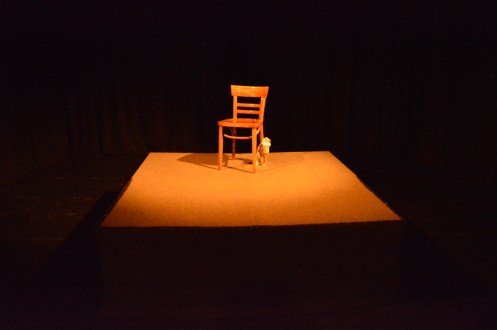
Sarah MacGillivray and Phil Bartlett’s new play Marie is mainly concerned with one of these ‘key workers’. Though described in the publicity as “a darkly comic new play inspired by the life of Mary Queen of Scots”, it isn’t really. It’s definitely a darkly comic new play but whether it’s inspired so much by the life of Mary Queen of Scots or the grindingly frustrating life of young actors trying to get a break is at least a moot point.
The play is the story of two women. Chirpy landlady Liz runs a London pub with her husband Barry. Marie, an aspiring actress from Edinburgh, arrives at the pub after a difficult first couple of hours in the capital and is given a job and a home. From then on Marie pursues acting jobs and Liz runs weekly history nights at the pub at which people turn up as costumed, historical characters and do some sort of ‘turn’.
Marie encounters the usual difficulties whilst going to auditions, including a misdescribed porn film, but begins to enjoy playing Mary Queen of Scots at the pub’s history night. Eventually a recall from the RSC yields a job and from then on there’s a gentle but significant change in pace. Events begin to take their toll on Marie in disturbing ways that would amount to spoilers if described here. Suffice to say that what starts as an endearing tale ramps up into something that might have resulted from a collaboration between Hitchcock and Alan Bennett.
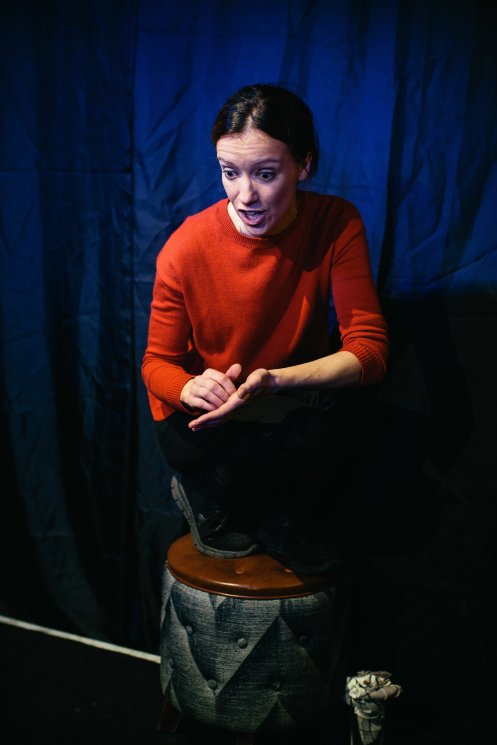
Being a one-woman show, Sarah MacGillivray plays all parts, switching from London Liz to Edinburgh Marie with occasional interventions from husband Barry and various other characters. MacGillivray is a skilful, subtle actor, she does justice to the tight, focussed writing and draws her audience gradually closer without making either main character needy or unsympathetic. In one of the OSO’s studio spaces, alone on stage under soft lighting with only a tea towel and a glass for support, this is an impressive performance.
(The tea towel and the glass for most of the time were the only props (aside from a chair) and used exclusively by Liz, which made the transfer between characters slightly unbalanced, Marie, I think, would have benefitted from a prop of some sort – bag maybe? – to make the change of identity a little sharper.)
Marie is a great piece of writing, well performed and at little over an hour it’s entertaining, funny and time well spent. Recommended.
Eleanor Lewis
January 2018
Photography by Laura Sedgwick and Phil Bartlett
Mark Aspen’s New Year Quiz
In expectation yet more great theatre locally in 2018, here are twenty questions, all on a local thespian theme.
If you are looking for help, there are many clues here at Mark Aspen, just follow the great theatre photographs of a year in the theatre!
- One hundred and ten years ago Leopold Glasspoole set up a local theatre company, which is still thriving today. What is it now called?

Photograph by Ace
- In Jonathan Dove’s new opera adaptation of a Jane Austen novel, the Crawfords sing of the “follies and grottos of Twickenham”. Which novel?

Photograph by Robert Workman
- On 16th January, it will be ten years since a local theatre was officially opened, having been in use for some while. Which theatre?
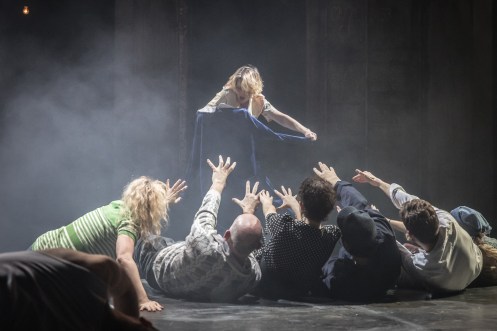
Photograph by Marc Brenner
- The Temple to Shakespeare was built in 1756. In whose garden?
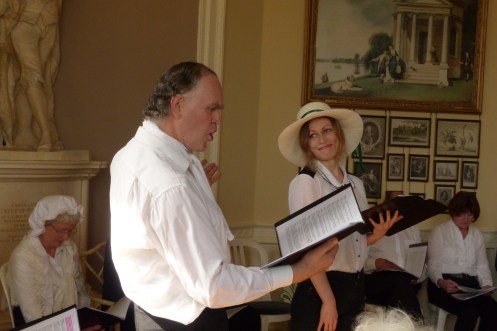
Photograph by Christina Bulford
- In October a new theatre was opened opposite Twickenham railway station. What is it called?
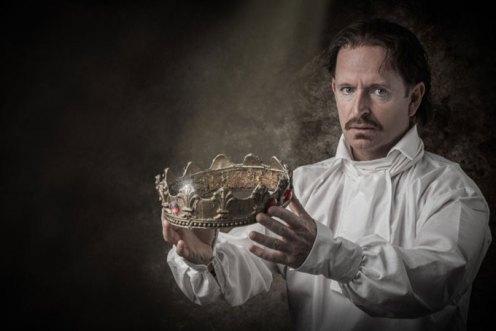
Photograph courtesy of Ian Hughes
6 The present Q2 theatre performs at The Avenue. But the original Q theatre opened to the public on Boxing Day, 1924. Which landmark did it face?

Photograph by Connor Ballard-Pateman
7 The tenor John Templeton (1802-1886) sang in the first English production Don Giovanni and The Magic Flute. Which local theatre now stands near his house?

Photograph by Christina Bulford
8 Which opera by Philip Glass had its UK premiere last year in Hampton?

Photography by Stephanie at stephotofocus.com
9 Which songwriter was born at 131 Waldegrave Road, Teddington?

Photograph courtesy of Venture Wolf
10 “With his receding hairline and goatee beard, he is one of those theatre critics who could normally find something good to say about almost any production with a particular penchant for leading actresses”. Which local theatre reviewer is the British Theatre Guide describing?

11 Which Grade II* listed theatre has the largest collection of fully restored Victorian scenery in the world?

12 Which European president had his stage plays premiered at The Orange Tree Theatre in Richmond?
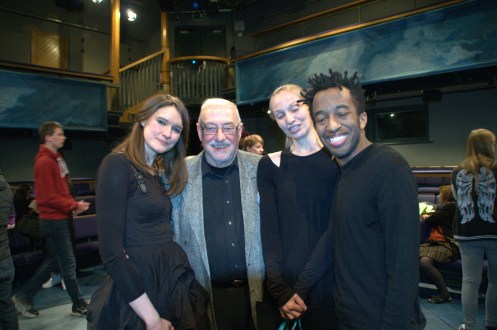
Photograph by Christina Bulford
13 In February 1603 a month before her death, William Shakespeare once again brought his company of actors to a local venue to perform for Queen Elizabeth. Where was it?

Photograph by Step-on-Stage Productions
14 Richmond Theatre was opened in 1898. Who was the architect who designed it?
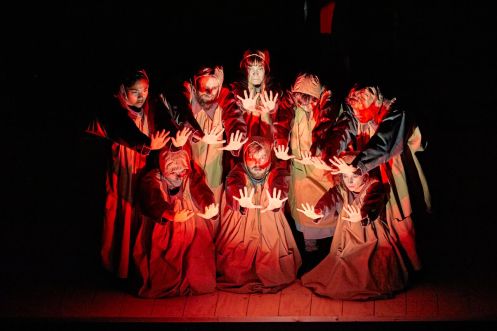
Photograph by Brinkhoff Mögenburg
15 Which famous local artist was baptised in the Actors’ Church, St Paul’s, Covent Garden?

Photograph by Col Whitbread
16 In 1934 Errol Flynn’s first major film role in Murder at Monte Carlo was shot where?

Photograph courtesy of Britain Express
17 The Richmond Shakespeare Society has been performing Shakespeare’s plays annually in the open air since 1934. In recent years, these have been put on in various locations in York House, Twickenham. What was the previous venue for the open-air performances?
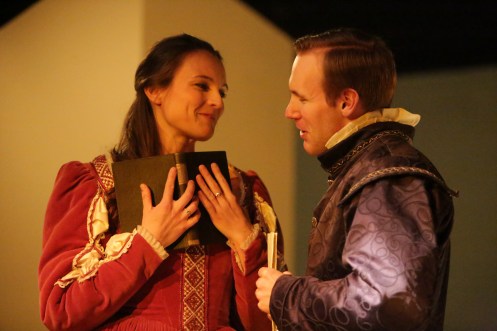
Photograph by Simone Sutton
18 What is the official name of the theatre that would you find next to Barnes Pond?
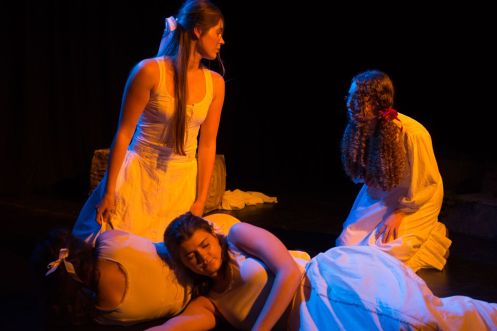
Photography by Marc Pearce
19 Which Twickenham poet mocked special effects in the theatre in these words: “Gods, imps, and monsters, music, rage, and mirth/ A fire, a jig, a battle, and a ball / Till one wide Conflagration swallows all.”

Photography by Craig Sugden
20 Who was the theatre and music hall impresario who had a lavish houseboat built on the Thames at Hampton, which included a full sized concert-hall and theatre?
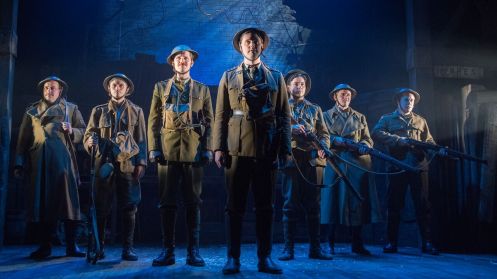
Photograph by Alastair Muir
Mark Aspen
January 2018
Answers will be published next week.
A Devilish Dormouse, but a Kind Monster !
Alice in Winterland
by Ciaran McConville adapted from the stories and poems of Lewis Carroll
RTK Productions at The Rose Theatre, Kingston until 7th January
We asked two of our younger reviewers to share their thoughts on Alice in Winterland, to complement Mark Aspen’s review. Evie and Milly write:
Review by Evie Schaapveld (aged 7)
I loved the parts where they showed the Jabberwock and the Bandersnatch, because how they made them was very creative.
The Bandersnatch was very kind even though he looked very ferocious, and he looked like a half skeleton, half the Jabberwock, and half cat. I was terrified by the Jabberwock and he looked like an enormous pterodactyl skeleton.

The blue caterpillar was very good, and very funny, and they made him very long. I liked the stairs on the stage and I liked how they had two Alices. One was in her own house, the other was the one who went to wonderland.
Evie Schaapveld
December 2017
Review by Milly Stephens (aged 12)
I thought that it was a wonderful twist on the original story by Lewis Carrol. It was full of hope, bravery and adventure, but can bring a tear to your eye.
I loved the play because it had a range of characters. Some of my favourite were, the mad March Hare, the operatic Queen of Hearts and the cute but devil souled Dormouse.
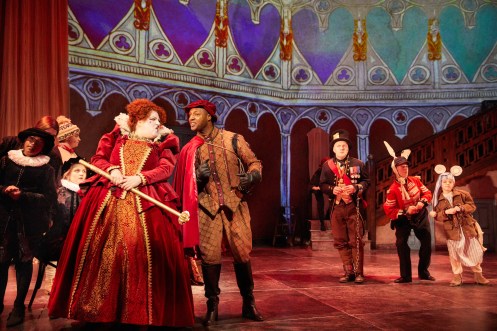
I recommend it for all ages because you can never be too old or too young for a magical tale.
Milly Stephens
December 2017
Photography by Mark Douet

 Mark Aspen