
Uneasy Rests the Head
L’Incoronazione Di Poppea
by Claudio Monteverdi, libretto by Giovanni Francesco Busenello
Ensemble OrQuesta at Arcola Theatre, Dalston until 30th July
Review by Patrick Shorrock
The wonderful Grimeborn Opera Festival celebrates its fifteenth season at the Arcola Theatre, Dalston, with a musically fine performance of Monteverdi’s most ambivalent opera, The Coronation of Poppea in Italian with surtitles. By throwing off the constraints of big opera house performance, Grimeborn has been able to develop an innovative approach that not only covers the standard repertoire but puts on neglected pieces that nobody else would dare risk. It seems to be acquiring an increasing musical confidence in doing this.
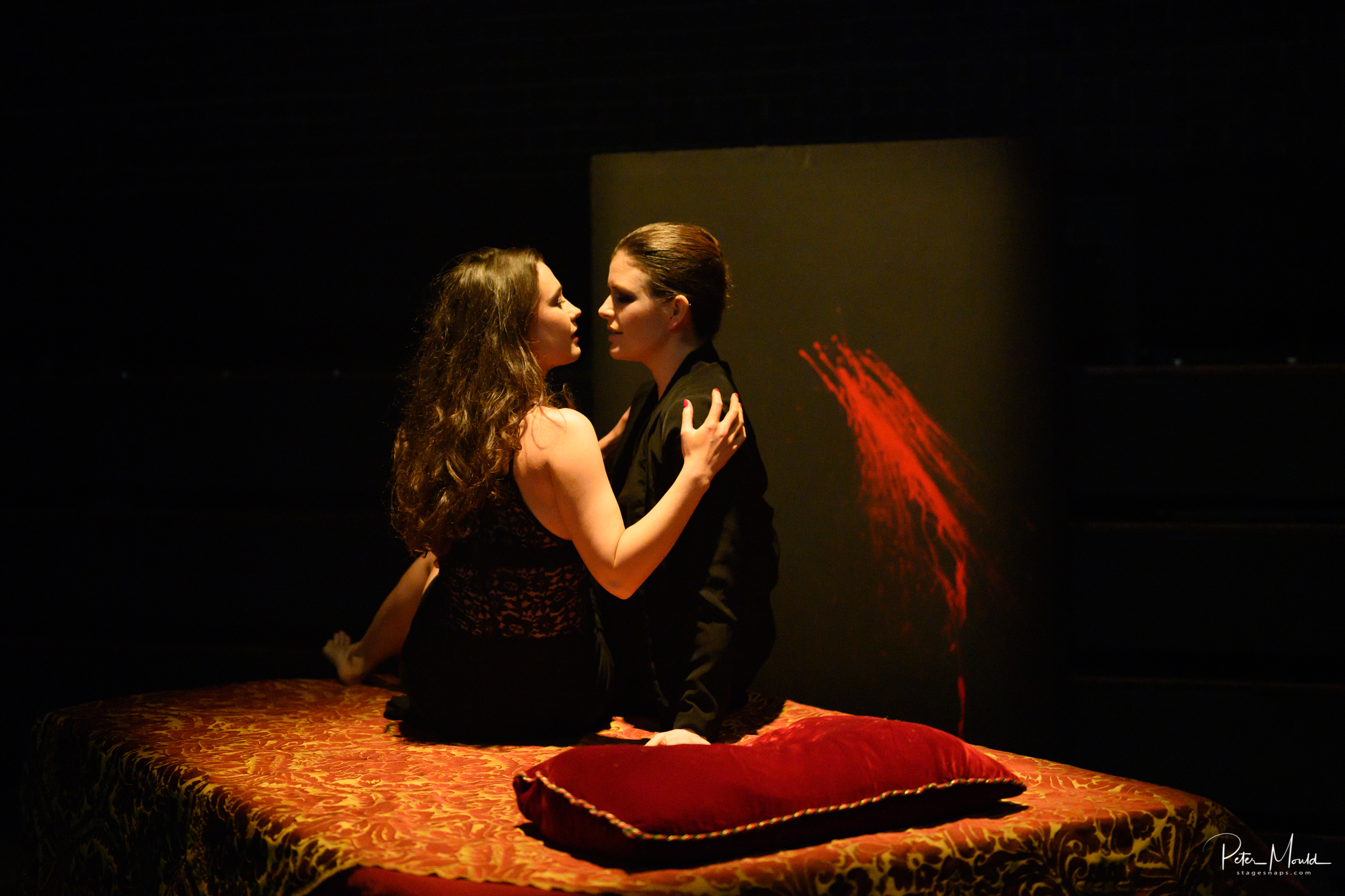
Poppea – not quite standard repertoire – is a strange piece in many ways, not least by having the emperor Nero as its (anti)hero. There is an awful lot of recitative, but also possibly the most ravishing closing duet in all baroque opera (maybe not even by Monteverdi, just to add to the ambivalence). Nero and Poppea rejoice together at her being crowned as his new empress, and time seems to stand still at their mutual musical rapture. And yet they have had to dispose of a number of people opposing this marriage (including his tutor Seneca, and current wife Ottavia) which we have seen them do with no hint of conscience or regret. Helen May – sweetly voiced but neurotically anxious as Poppea – and Julia Portela Piňőn’s dark toned Nero blended beautifully, although Piňőn was not remotely convincing as a psychopathic tyrant. I’m really not sure what the point of giving the role to a mezzo is when there are so many good countertenors around.
Read more…Let’s Tryst Again
Le Nozze di Figaro
by Wolfgang Amadeus Mozart, libretto by Lorenzo da Ponte, after Pierre Beaumarchais
West Green House Opera, Hartley Wintney until 24th July
Review by Mark Aspen

As a hush descends on the pavilions around the Theatre on the Lake, a lively wind blows across the gardens of West Green House, bringing with it the perfume of flowers, and setting the vast canvas roof feathering with a loud crack. It is the perfect cue to Mozart’s breezy overture to his commedia per musica, Le Nozze di Figaro, surely his best known, and often regarded as his greatest overture.
Le Nozze di Figaro is based on La Folle Journée (the crazy day), the second play of Beaumarchais’ Figaro trilogy. The first play is Le Barbier de Séville, the source for Rossini’s opera Il Barbiere di Siviglia.
Read more…Bengal Fire
Chasing Hares
by Sonali Bhattacharyya
Young Vic and Theatre Uncut at the Young Vic, Waterloo until 13th August
Review by Heather Moulson
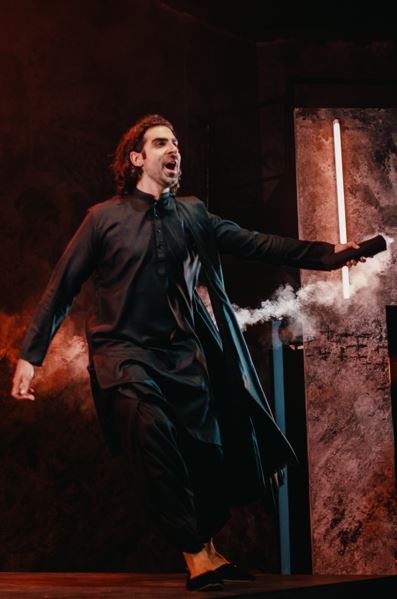
Poverty, desperation, vast unemployment and an exploitive situation; these were the issues explored in Sonali Bhattacharyya’s new play Chasing Hares. Set in West Bengal, the stark open set had a floor of loose sand and a revolving square, leaving the actors to work hard to create the scenes. The simplicity of this design worked well, with employee’s shoes left outside a factory sign … the sign that indicated an exploitative factory.
Read more…Shooting Pains
Assassins
music and lyrics by Stephen Sondheim, book by John Weidman
BB Theatre Productions at Oakwood Centre, Woodley until 24th July
Review by John Davies

Performing Sondheim is a challenge for any company; conveying the complexity of emotions across a multitude of characters in Assassins doubly so; then making the disparate stories work as a seamless whole – triple whammy! BB Theatre Productions’ recent show, at the Oakwood Centre in Woodley, rose magnificently to those challenges with cast, production team and musicians combining expertly to deliver an enthralling evening.
Read more…Gentle Murm’ring Stream
Acis and Galatea – The Sixteen in Concert
by George Frideric Handel, libretto by John Gay
West Green House Opera at the Theatre on the Lake, Hartley Wintney until 22nd July
Review by Mark Aspen
“Lovers and madmen have such seething brains … that apprehend more than cool reason ever comprehends”. Thus says Duke Theseus, just before he also implicates the poet in one of A Midsummer Night’s Dream ’s many well-known epigrams, “the lunatic, the lover and the poet …”
He could well be talking about the love-besotted shepherd, Acis, and the raging giant cyclops, Polyphemus, whose brains seethe in their very differing pursuits of the beautiful water nymph, Galatea … whose romanticism is certainly poetic.

Here we have the perilous love-triangle described in Book xiii of Ovid’s Metamorphoses, the root source of John Gay’s libretto for Handel’s Acis and Galatea. This particular one of Ovid’s collection of transformation stories was very popular with baroque period composers and their librettists. Indeed Handel had already used the tale in his serenata, Aci, Galatea e Polifemo, which was commissioned by the Duchess Aurora Sanseverino for the celebrations in Naples of the wedding her niece, just over a decade earlier.
Handel’s Acis and Galatea is a tale of two halves. Act One is a carefree idyll of joy and happiness, Act Two, with the intervention of Polyphemus, takes a threatening, and ultimately (or rather penultimately) tragic, turn.
Read more…Gilbert and George
Homage to George Grossmith
by Tim Shaw and J.J.Leppink
Blue Fire Theatre Company at the Mary Wallace Theatre, Twickenham, then at The Space on the Mile, Edinburgh Fringe until 27th August
Review by Andrew Lawston

Blue Fire Productions is presenting two of its Edinburgh Fringe Festival shows – Diary of a Nobody and Gilbert and Sullivan’s Nightmare as a double bill entitled Homage to George Grossmith. This is a reference both to the co-author of George and Weedon Grossmith’s 1892 book Diary of a Nobody, adapted by Tim Shaw, and to the fact that George Grossmith was a principal performer in the D’Oyly Carte Opera Company, originating many of the baritone roles in Gilbert and Sullivan’s comic operas. Producer Lottie Walker gives a brief introduction before the first show, and we begin without further ado.
Read more…Polished Performances
Two Cleaners
by Chiara Arrigoni
Festival of New Theatre, at Questors Studio, Ealing until 23rd July
Review by Heather Moulson
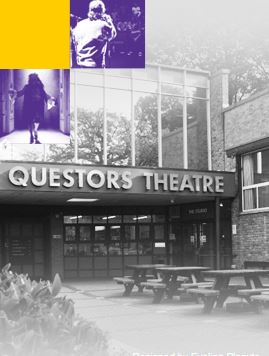
Concluding the innovative Festival of New Theatre at the wonderful Questors, we saw a fitting and strong production. After an impressive week of plays and workshops, Two Cleaners was an apt climax. The starkness of the studio in which the barren setting of this two-hander took place was an appropriate one. The writer Chiara Arrigoni was said to be inspired by Pinter’s The Dumb Waiter, and had paid a justifiable homage to that iconic play. The layers were stripped away at a slick pace.
Read more…Love in a Heatwave Climate
On Me
by Caroline Lamb
Mute
by Emily Glaze
Festival of New Theatre, at Questors Studio, Ealing until 23rd July
Review by Andrew Lawston
The Questors Studio is a black box of air-conditioned solace on the hottest day of the year until the next day. A crowd of theatregoers has braved the heatwave, only to step inside the auditorium and breathe a deep sigh of relief at the blanket of cool air that cocoons them throughout two brand new plays. Festival Producer Alex McDevitt gives a short introduction to the evening, including the fact that three of the five plays selected – from over three hundred submissions – were written by women, including the two that we are about to see.
Other than the writers’ gender, however, these are two very different pieces.
Read more…Jill Beats the Beanstalk
Jack and the Beanstalk
by Louis Rayneau
Future Spotlight Productions at Kidzania London, Westfield, Shepherd’s Bush, then streaming on Broadway on Demand from 22nd July, prior to UK cinema release.
Review by Viola Selby
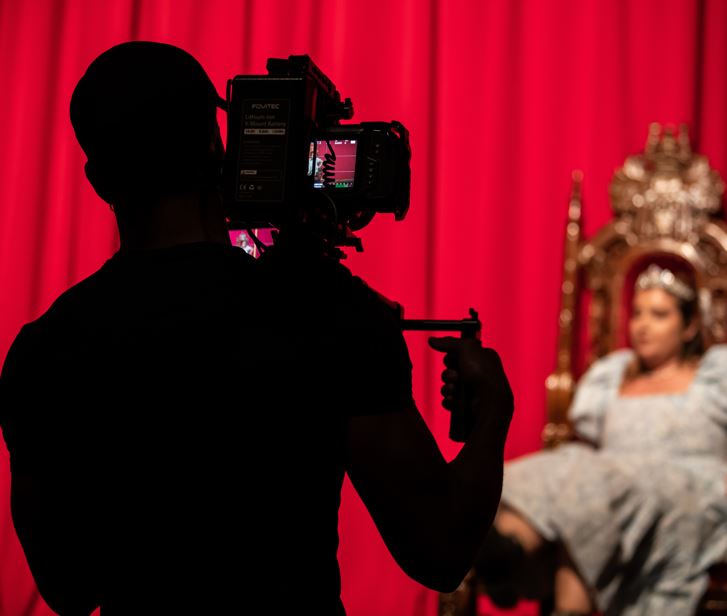
KidZania is a world of its own, a kingdom for the kids to try out so many different careers and become inspired for their future; and this is just what this musical film production of Jack and the Beanstalk is, a true inspiration for rising and new talent and the magic that can be achieved with such a capable and confident cast and crew in just two days of filming. It is a refreshingly modern twist on the much loved classic.
Read more…Souls, Struggles, and Spin
Clorinda Agonistes
by Shobana Jeyasingh, music by Claudio Monteverdi and Kareem Roustom
Shobana Jeyasingh Dance and Sadler’s Wells at The Grange Festival, The Grange, Northington until 14th July, then on tour until 16th November
World Premiere. Part of Baroque Counterpoint
Review by Mark Aspen
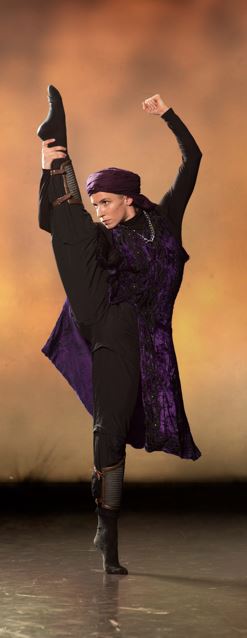
Crusade is a word that must nowadays be used with great circumspection. Cultures have now become less polarised, but in 1591 when the Italian epic poet Torquato Tasso wrote his Gerusalemme liberata, he took an entirely different approach. A poem about the Siege of Jerusalem in 1099 and the First Crusade, it is highly romanticised and weaves in an imaginative mythology. The spin is doctored towards the European standpoint.
Choreographer Shobana Jeyasingh’s new work Clorinda Agonistes focusses in on one character of Tasso’s twenty canto poem, the Muslim maiden warrior Clorinda. It contrasts and compares the Clorinda of 1099 with women, Clorindas, in the Middle East in 2022. At a time when cultures are (trying to become) more integrated, this could be a polemic on religious identity or on feminism. It is neither. It is a balanced, inspired and powerfully gripping account and one that asks more questions than it answers.
Read more…

 Mark Aspen